

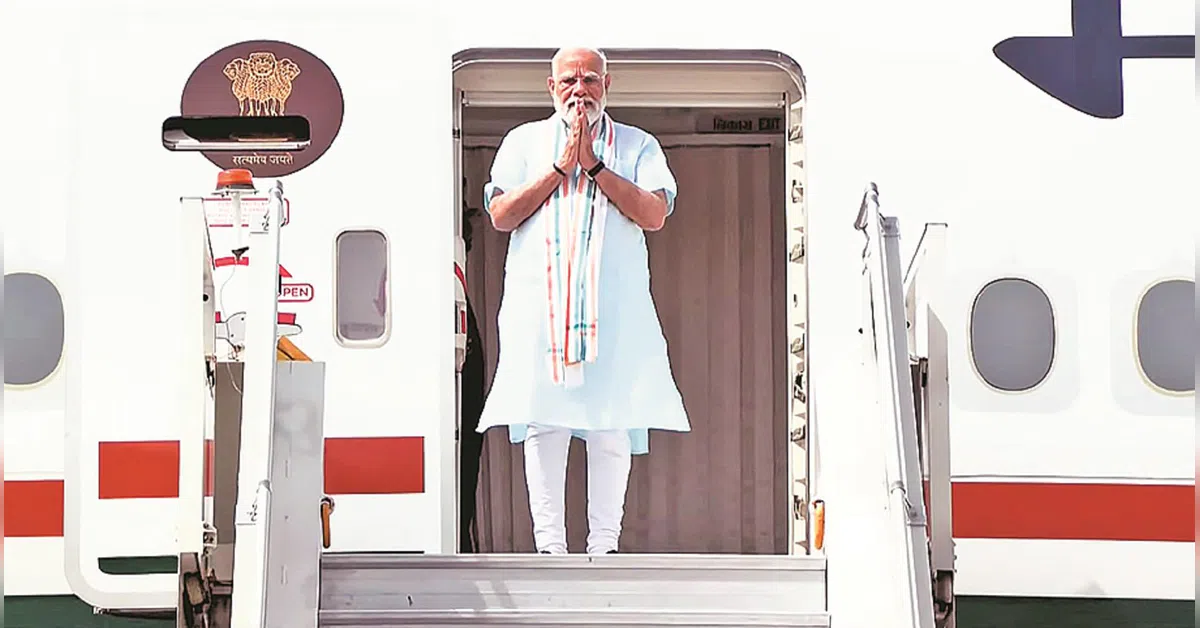
New Delhi, [Date of Publication, e.g., May 21, 2024] – Prime Minister Narendra Modi concluded a high-stakes, five-nation foreign tour from May 15 to 20, a diplomatic blitz that has been hailed as a significant stride in India’s global engagement and economic ambitions. The rigorous itinerary saw the Prime Minister engaging with over 50 chief executive officers (CEOs) of leading global companies, securing fresh investment commitments totalling nearly $40 billion for India, alongside fostering deeper strategic partnerships in critical sectors such as defence, energy, and connectivity.
The Ministry of External Affairs (MEA) confirmed on Thursday that these new pledges, encompassing business expansion plans and new ventures, underscore the growing international confidence in India’s robust economic trajectory. Beyond the immediate financial commitments, the tour laid the groundwork for enhanced technological collaboration, trade expansion, and geopolitical influence, reinforcing India’s position as a pivotal player on the global stage.
A Whirlwind Diplomatic Calendar: Tracing the Prime Minister’s Journey
Prime Minister Modi’s extensive tour, which encompassed the United Arab Emirates, the Netherlands, Sweden, Norway, and Italy, was characterized by a relentless schedule of bilateral meetings, multilateral summits, and high-level corporate engagements. Each stop was strategically chosen to advance India’s economic and strategic interests, culminating in a series of landmark agreements and renewed commitments.
First Stop: UAE – Forging Deeper Economic and Strategic Bonds
The Prime Minister’s journey commenced on May 15 in the United Arab Emirates (UAE), a nation with which India shares burgeoning economic and strategic ties. This initial leg of the tour proved particularly fruitful, with India and the UAE signing a series of landmark pacts designed to deepen their multifaceted partnership. Central to these agreements was a significant pledge by Abu Dhabi to invest $5 billion in India, signaling robust confidence in the Indian market.
Beyond financial commitments, the discussions yielded tangible outcomes in crucial sectors. Agreements were forged on strategic petroleum reserves, ensuring India’s energy security through stable supply chains. Long-term liquefied petroleum gas (LPG) supply agreements were also finalized, critical for India’s domestic energy needs and welfare initiatives. Furthermore, defence cooperation received a substantial boost, with both nations committing to enhance joint exercises, technology sharing, and procurement. The maritime sector also saw new pacts on shipping, aimed at streamlining logistics and enhancing trade connectivity between the two nations, leveraging their strategic geographical positions. This foundational visit set a strong precedent for the subsequent engagements, emphasizing India’s intent to build durable and mutually beneficial relationships.
European Engagements: Netherlands, Sweden, Norway, and the Nordic Summit
Following the UAE, Prime Minister Modi’s itinerary transitioned to Europe, where he engaged with leaders and business communities in the Netherlands, Sweden, and Norway. These visits were instrumental in strengthening India’s ties with key European economies and exploring new avenues for cooperation in innovation, technology, and green energy.
In Oslo, the Prime Minister participated in the third India-Nordic Summit, a critical platform for enhancing collaboration with the Nordic countries known for their technological prowess, sustainable practices, and innovation ecosystems. On the margins of this summit, he held constructive bilateral meetings with his counterparts from Iceland, Finland, and Denmark. These discussions focused on a range of shared priorities, including climate action, renewable energy, digital transformation, and fostering greater people-to-people connections. The Nordic nations, with their advanced expertise in areas like artificial intelligence, quantum computing, and sustainable urban development, represent ideal partners for India’s ambitious growth agenda, particularly its ‘Make in India’ and ‘Digital India’ initiatives. The dialogues explored pathways for greater investment in green infrastructure, clean energy technologies, and fostering a startup ecosystem through knowledge exchange and collaborative research.
Culmination in Italy: Bolstering Trade and Defence Ties, Paving Way for IMEC
The final stop of the Prime Minister’s five-nation tour was Rome, Italy, where the diplomatic efforts culminated in significant outcomes. Prime Minister Modi’s meeting with his Italian counterpart, Giorgia Meloni, marked a pivotal moment in India-Italy relations, characterized by an ambitious vision for future collaboration. The two leaders jointly set an aggressive target of increasing bilateral trade to 20 billion euros by 2029, a testament to the untapped potential in their economic partnership.
Beyond trade, defence industrial cooperation emerged as a key highlight. Both nations committed to deepening their engagement, focusing on technology partnerships, design, and co-production of defence equipment. This strategic shift aims to create new opportunities in advanced aerospace systems, helicopters, naval platforms, marine armament, and next-generation defence technologies, signaling a move towards greater indigenous manufacturing and reduced reliance on imports for India. MEA officials highlighted the commitment to move beyond buyer-seller relationships to true co-development and co-production models.
Discussions also progressed significantly on the establishment of a virtual trade corridor, an initiative aimed at streamlining trade processes, reducing logistical hurdles, and enhancing the efficiency of bilateral commerce. Secretary (West) in the MEA, Sibi George, confirmed that this digital pathway would facilitate smoother trade flows and greater transparency.
A humanitarian and economic agreement was also inked, facilitating the mobility of nurses from India to Italy. This pact addresses Italy’s pressing shortage of healthcare professionals while providing valuable overseas employment opportunities for skilled Indian nurses, further strengthening people-to-people ties and leveraging India’s rich human capital.
Perhaps one of the most strategically significant outcomes from the Rome visit was the leaders’ agreement to work together for the early implementation of the India-Middle East-Europe Economic Corridor (IMEC). Both Prime Ministers recognized IMEC’s transformational potential in reshaping and promoting global trade, connectivity, and prosperity. To translate this vision into concrete action, they agreed that the first IMEC ministerial meeting, tasked with taking specific steps for advancing this ambitious initiative, should take place in 2026. This corridor is poised to become a critical artery for global commerce, offering an alternative and efficient trade route that bypasses traditional choke points and fosters regional integration.
The Economic Dividend: A Flood of Investment and Business Expansion
The economic outcomes of Prime Minister Modi’s foreign tour represent a substantial boost to India’s investment landscape, affirming its status as a preferred destination for global capital. The proactive engagement with industry leaders has translated into tangible commitments that are set to fuel growth across key sectors.
$40 Billion in Fresh Commitments: A Testament to India’s Growth Story
During his extensive engagements across the five nations, Prime Minister Modi met with over 50 chief executive officers (CEOs) of large global corporations. These high-level interactions were not merely ceremonial but focused on concrete investment proposals and expansion plans. The result was a remarkable commitment of nearly $40 billion in fresh investments into India. This figure is particularly significant given that many of these companies already have a substantial presence in the Indian market, with their cumulative investment and business exposure amounting to approximately $180 billion. This existing foundation underscores a sustained and deepening interest in India’s economic potential.
MEA spokesperson Randhir Jaiswal emphasized that these companies are "making new investments in the country to take advantage of India’s growth story." The Prime Minister’s ability to directly engage with global business leaders, articulate India’s policy reforms, and highlight its demographic dividend and burgeoning consumer market played a crucial role in securing these commitments. The focus of these new investments spans several critical and emerging sectors, signaling a strategic alignment with India’s national priorities.
Strategic Sectors Take Center Stage: Defence, Energy, and Connectivity
The fresh investment pipeline and strategic collaborations are heavily concentrated in areas deemed vital for India’s long-term economic and technological self-reliance. Several projects are already in the pipeline across a diverse range of verticals.
Semiconductors: A significant portion of the anticipated investments is directed towards the semiconductor industry, a sector identified as crucial for national security and technological sovereignty. Global chipmakers are increasingly looking at India as a potential manufacturing hub, driven by government incentives under the India Semiconductor Mission and the availability of a skilled workforce. These investments are expected to bolster India’s efforts to establish a robust domestic semiconductor ecosystem, reducing reliance on global supply chains and fostering innovation in electronics manufacturing.
Logistics and Green Infrastructure: The tour also attracted substantial interest in logistics and green infrastructure. With India’s rapidly expanding economy, efficient logistics networks are paramount. Investments in warehousing, cold chains, and multimodal transportation hubs will enhance supply chain resilience and reduce costs. Simultaneously, the focus on green infrastructure, including renewable energy projects, electric vehicle charging networks, and sustainable urban development, aligns with India’s ambitious climate targets and its commitment to a low-carbon future. These projects not only attract foreign capital but also facilitate technology transfer and promote sustainable development practices.
Technology and Other Verticals: Beyond these core areas, commitments were secured in various other technology verticals, including artificial intelligence, digital services, and advanced manufacturing. These investments are expected to drive innovation, create high-skilled jobs, and integrate India further into the global technology landscape.
Defence Industrial Cooperation: The commitment to deepen defence industrial cooperation, particularly with Italy, stands out as a strategic imperative. The focus is on moving beyond mere procurement to genuine technology partnership, design, and co-production of sophisticated defence equipment. This includes creating new opportunities in high-value segments such as aerospace systems, advanced helicopters, naval platforms, marine armament, and next-generation defence technologies. This push for indigenization and co-development aims to bolster India’s ‘Make in India’ in defence and potentially position the country as an exporter of military hardware.
Concrete examples of this growing defence partnership were highlighted by Sibi George, Secretary (West) in the MEA. Adani Defence and Aerospace Limited and Italy’s Leonardo SpA (formerly Finmeccanica) have announced a partnership for the procurement and indigenization of helicopters and pilot training, indicating a comprehensive approach to defence capabilities. The Indian Navy is also acquiring Black Shark torpedoes from the Italian firm Fincantieri-WASS, enhancing its underwater warfare capabilities. Furthermore, Leonardo is actively discussing a proposal for a joint venture with Bharat Heavy Electricals Limited (BHEL) for enhancing the supply of super rapid gun mounts and local production in India, signifying a commitment to long-term technology transfer and domestic manufacturing.
Energy Security and Connectivity: The agreements with the UAE on strategic petroleum reserves and long-term LPG supply are pivotal for India’s energy security, ensuring stability in crucial energy imports. The discussions on setting up a virtual trade corridor, as noted by Secretary (West) Sibi George, aim to digitalize and streamline trade processes, enhancing efficiency and reducing friction in cross-border commerce. The agreement on the India-Middle East-Europe Economic Corridor (IMEC) with Italy holds immense potential to transform global trade routes, offering a robust and efficient alternative for connecting Asian, Middle Eastern, and European markets, with India at its eastern anchor.
Official Endorsements and Political Discourse
The successful conclusion of the Prime Minister’s tour prompted enthusiastic endorsements from key government officials, who highlighted the comprehensive nature of the diplomatic achievements and their profound implications for India’s future. The positive reception, however, was also met with political commentary, underscoring the domestic scrutiny that accompanies such high-profile international engagements.
MEA’s Perspective: A Comprehensive Diplomatic Triumph
The Ministry of External Affairs, through its senior spokespersons and secretaries, provided a detailed account of the tour’s outcomes, framing it as a resounding diplomatic triumph. Randhir Jaiswal, MEA spokesperson, meticulously outlined the impressive figures of global CEO engagements and the substantial investment commitments. His statements underscored the government’s narrative of India as an increasingly attractive investment destination, driven by its robust growth story and enabling policy environment. The emphasis on pipeline projects in cutting-edge sectors like semiconductors, green infrastructure, and technology highlights a strategic alignment with India’s long-term economic development goals.
Sibi George, Secretary (West) in the MEA, offered further insights, particularly on the nuances of the bilateral agreements. His detailed comments on the deepening defence industrial cooperation with Italy, including specific projects like the Adani-Leonardo partnership for helicopters and pilot training, and the Indian Navy’s acquisition of Black Shark torpedoes, showcased the tangible progress in strategic sectors. George’s mention of discussions for a virtual trade corridor also pointed to efforts to modernize and streamline economic interactions, demonstrating a forward-looking approach to global trade. The MEA’s comprehensive briefings aimed to project an image of a confident and strategically active India on the global stage, effectively leveraging diplomatic channels for national development.
Commerce Minister Goyal Hails "57 Outcomes" and Strategic Leverage
Adding to the official endorsements, Union Commerce and Industry Minister Piyush Goyal addressed a press conference at the Bharatiya Janata Party’s national headquarters in New Delhi, where he unequivocally lauded the Prime Minister’s tour. Goyal asserted that the five-nation visit resulted in as many as "57 outcomes," a figure he used to emphasize the breadth and depth of the achievements.
According to Goyal, the visit is poised to significantly strengthen several of India’s strategic missions. He highlighted its anticipated positive impact on India’s semiconductor mission, crucial for technological self-reliance; energy security, through diversified partnerships and stable supply chains; and defence manufacturing and exports, positioning India as a more capable and self-reliant nation in defence production.
Goyal also underscored how India strategically leveraged three of its recently signed free trade agreements (FTAs): those with the UAE, the four-nation European Free Trade Association (EFTA), and the broader European Union. He stated that the PM’s visit has effectively "opened up several avenues for our exporters and laid the foundation for significant investments into India," indicating a direct link between diplomatic engagement and tangible economic benefits for Indian businesses and the economy at large.
Defending the Diplomatic Offensive: A Political Rebuttal
The Minister’s press conference was not solely focused on policy achievements but also delved into the political dimension of the Prime Minister’s foreign engagements. Goyal took the opportunity to counter criticism from opposition leaders, specifically addressing remarks made by Congress leader Rahul Gandhi regarding the PM’s tour. Goyal dismissed Gandhi’s criticism as stemming from "frustration and anger" due to repeated electoral losses, thereby framing the opposition’s stance as politically motivated rather than substantive.
In a broader defence of the Prime Minister’s international standing, Goyal highlighted that PM Modi has been conferred with an unprecedented 32 honours by various countries and international organizations. He proudly stated that the Prime Minister is the only world leader to receive so many accolades, including prestigious honours from Islamic countries such as the UAE, Saudi Arabia, and Bahrain, a point often emphasized by the ruling party to showcase Modi’s global acceptance and India’s enhanced diplomatic footprint.
Furthermore, Goyal also touched upon domestic policy achievements, linking them to the Prime Minister’s leadership. He asserted that PM Modi has consistently defended the interests of India’s farmers, citing the government’s commitment to not reducing the subsidy on fertilizers since 2014. This statement served to connect the government’s international successes with its domestic welfare policies, presenting a holistic picture of effective governance under the Prime Minister’s stewardship.
Implications for India and Global Partnerships
Prime Minister Modi’s five-nation tour represents more than just a series of bilateral meetings and investment pledges; it embodies a strategic repositioning of India on the global stage. The outcomes carry profound implications for India’s economic trajectory, its geopolitical influence, and the nature of its partnerships worldwide.
Bolstering India’s Economic Trajectory and Global Standing
The securing of $40 billion in new investment commitments is a powerful testament to the international confidence in India’s economic resilience and growth potential. These investments, particularly in high-tech sectors like semiconductors, green infrastructure, and advanced manufacturing, are crucial for job creation, technological advancement, and enhancing India’s manufacturing capabilities under the ‘Make in India’ initiative. By attracting foreign capital and expertise, India can accelerate its industrial growth, diversify its economy, and integrate more deeply into global value chains. This influx of capital also reinforces India’s image as a stable and attractive destination for foreign direct investment (FDI), further bolstering its global economic standing. The ability to leverage existing Free Trade Agreements with the UAE, EFTA, and the EU signifies a mature approach to trade diplomacy, opening new markets for Indian exporters and creating a more predictable environment for international businesses. This will inevitably contribute to India’s ambition of becoming a $5 trillion economy, driven by innovation and global partnerships.
Deepening Strategic Autonomy through Defence Collaboration
The emphasis on defence industrial cooperation, particularly with Italy, marks a strategic shift in India’s defence procurement policy. Moving towards technology partnership, design, and co-production models for aerospace systems, helicopters, naval platforms, and next-generation defence technologies is pivotal for enhancing India’s strategic autonomy. This approach aims to reduce India’s long-standing reliance on defence imports, foster indigenous manufacturing capabilities, and create a robust domestic defence industrial base. The partnerships with companies like Leonardo and Fincantieri-WASS, and their potential collaborations with Indian entities like Adani Defence and BHEL, signify a commitment to technology transfer and skill development. Ultimately, this will not only make India more self-reliant in its defence needs but also potentially position it as a significant defence exporter, contributing to its geopolitical influence and economic growth.
Charting New Connectivity Pathways: The Promise of IMEC
The agreement with Italy for the early implementation of the India-Middle East-Europe Economic Corridor (IMEC) is perhaps one of the most significant geopolitical outcomes of the tour. IMEC holds the transformational potential to reshape global trade and connectivity, offering a multi-modal transportation network that promises to be faster, more efficient, and cost-effective than existing routes. For India, IMEC provides a crucial strategic link to Europe, bypassing traditional sea lanes and potentially mitigating vulnerabilities associated with current global trade routes. Economically, it can unlock enormous trade opportunities, reduce logistics costs for Indian goods, and foster greater regional integration across Asia, the Middle East, and Europe. Geopolitically, IMEC represents a counter-narrative to other connectivity initiatives, underscoring India’s commitment to rules-based, transparent, and sustainable infrastructure development, thereby enhancing its influence in the Indo-Pacific and beyond. The agreement for the first ministerial meeting in 2026 demonstrates a concrete timeline for advancing this ambitious project.
Human Capital and Bilateral Trust
The agreement for facilitating the mobility of Indian nurses to Italy highlights a unique dimension of India’s foreign policy – leveraging its human capital for mutual benefit. This pact addresses Italy’s critical shortage of healthcare professionals while providing valuable overseas employment opportunities for skilled Indian nurses, contributing to remittances and enhancing their professional growth. Such agreements build deeper bilateral trust and strengthen people-to-people ties, which are essential for sustainable diplomatic relations. It also showcases India’s soft power, demonstrating its ability to contribute positively to global challenges through its demographic dividend and skilled workforce. Beyond the economic benefits, such initiatives foster a sense of shared humanity and cooperation, reinforcing India’s image as a responsible global partner.
In conclusion, Prime Minister Modi’s five-nation tour was a comprehensive diplomatic offensive that yielded substantial economic and strategic dividends. From securing billions in investments and fostering critical technological collaborations to advancing defence co-production and charting new global trade corridors, the tour has undeniably strengthened India’s position on the world stage. The outcomes underscore India’s growing confidence and its proactive approach to engaging with global partners for mutual prosperity and strategic advantage, setting a robust foundation for its future international relations and domestic growth.
