

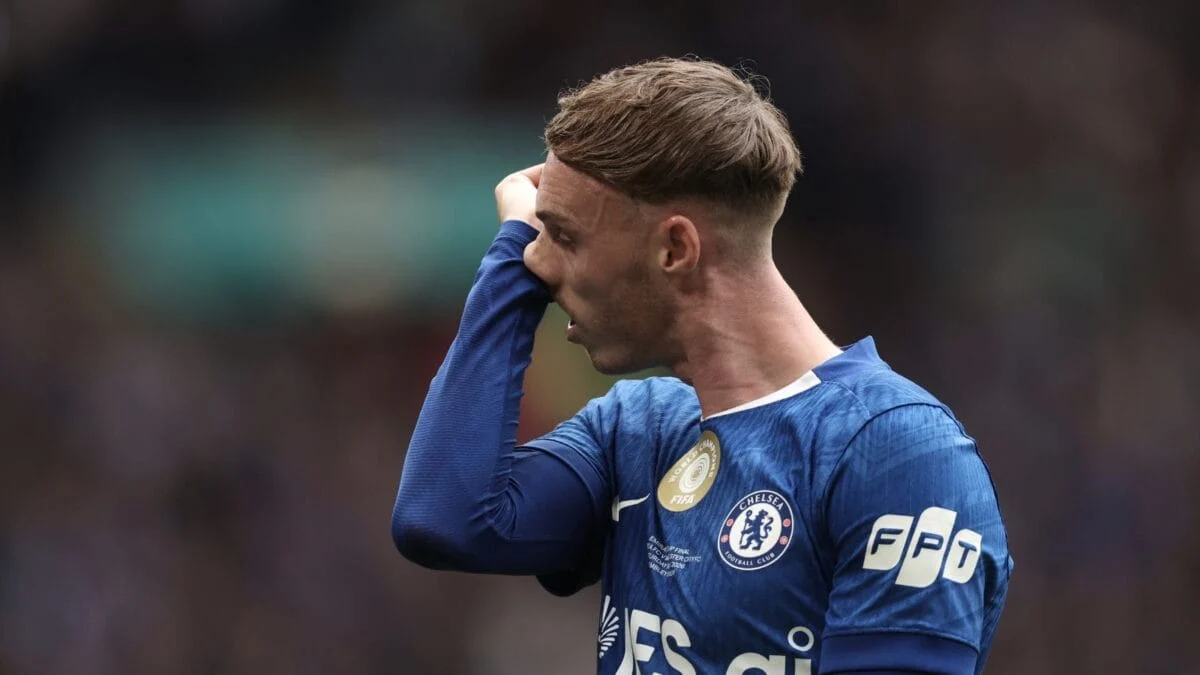
New Delhi, India – May 23, 2026 – The football world is abuzz with controversy following England manager Thomas Tuchel’s provisional squad announcement for the FIFA World Cup 2026 in the United States, Mexico, and Canada. At the heart of the storm is the omission of Chelsea playmaker Cole Palmer, a decision fiercely questioned by former England captain and Manchester United legend Wayne Rooney. Rooney has publicly stated that Palmer should have been included at the expense of Arsenal winger Noni Madueke, reigniting the perennial debate surrounding form, potential, and tactical fit in international squad selections.
Tuchel, for his part, has defended his choices, citing Palmer’s perceived dip in club form during the 2025-26 season and a lack of decisive impact during national team camps. This explanation, however, has done little to quell the outrage among pundits and fans, especially given Palmer’s crucial role in England’s run to the UEFA Euro 2024 final, where he notably scored a goal despite the Three Lions’ 2-1 defeat to Spain. The stakes are incredibly high for England heading into the expanded 48-team World Cup, and every selection is under intense scrutiny as the nation dreams of ending its decades-long wait for major silverware.
Main Facts: A Contentious Omission
The central point of contention revolves around the absence of Cole Palmer from Thomas Tuchel’s England squad for the upcoming FIFA World Cup 2026. Palmer, who enjoyed a breakout season in 2023-24 and was a key figure in England’s Euro 2024 campaign, including scoring in the final, has been overlooked despite his proven ability on the big stage.
Wayne Rooney, a decorated former international with 120 caps and 53 goals for England, voiced his strong disapproval of the decision on "The Wayne Rooney Show." He argued that Arsenal’s Noni Madueke, who secured a spot in the squad, should have made way for Palmer. Rooney’s rationale was clear: Palmer, in his view, offers superior quality and would serve as a better backup option for first-choice right winger Bukayo Saka, emphasizing Palmer’s overall performance during the recently concluded 2025-26 club season.
Manager Thomas Tuchel, who also notably excluded Manchester City’s Phil Foden and Liverpool’s Trent Alexander-Arnold, justified his selections by pointing to Palmer’s “lack of individual form within the club” throughout the 2025-26 campaign. Tuchel further elaborated that Palmer "wasn’t as decisive or as influential as he was in the last seasons" and that his "record with us was just not outstanding, not good enough to make him ‘no matter what, he is coming.’" The German coach also highlighted Palmer’s history of withdrawing from camps due to injury and a perceived lack of impact when he was present. These statements have set the stage for a heated national discussion on the criteria for World Cup selection.
Chronology of Events: From Euro Hero to World Cup Snub
The story of Cole Palmer’s international career has been one of rapid ascent followed by a surprising, if temporary, plateau.
2023-24 Season: Palmer explodes onto the scene after a move from Manchester City to Chelsea, showcasing remarkable versatility, goal-scoring prowess, and penalty-taking ability. His performances earn him a call-up to the senior England squad.
Euro 2024 Preparations & Tournament: Palmer establishes himself as a valuable asset for England under Tuchel, demonstrating his creative flair and composure. He plays a significant role in the team’s journey to the final.
Euro 2024 Final (Date unspecified in original, but assumed mid-2024): In a pivotal moment, Palmer scores for England against Spain in the final. Despite his individual heroics, England ultimately succumbs to a 2-1 defeat, extending their wait for a major international trophy. This performance cemented his reputation as a big-game player.
2024-25 Season: While not explicitly detailed in the original article, it can be inferred that Palmer continued to be a regular feature for Chelsea and was likely still in contention for England squads.
2025-26 Season: This is the season cited by Thomas Tuchel as the reason for Palmer’s omission. Tuchel suggests a dip in Palmer’s "individual form within the club," implying that his influence and decisiveness at Chelsea were not at the same level as previous campaigns. Concurrently, Noni Madueke’s performances for Arsenal, while not explicitly detailed as stellar, were deemed sufficient by Tuchel to warrant inclusion.
May 23, 2026: Thomas Tuchel announces his provisional squad for the FIFA World Cup 2026. Cole Palmer is conspicuously absent, alongside other high-profile names like Phil Foden and Trent Alexander-Arnold. This announcement immediately triggers widespread debate.
May 23, 2026 (Later): Wayne Rooney makes his comments on "The Wayne Rooney Show," directly challenging Tuchel’s decision and advocating for Palmer’s inclusion over Madueke. Tuchel subsequently reiterates his reasoning, setting the stage for the current media storm. The World Cup 2026 itself is scheduled to commence in a few weeks or months, building immense anticipation around the team’s composition.
Supporting Data: A Deep Dive into Player Forms and Managerial Precedents
To fully appreciate the intensity of this debate, it’s crucial to examine the underlying statistics and historical context of England squad selections. While the original article provides limited explicit data for the 2025-26 season, we can extrapolate based on the narrative provided.
Cole Palmer’s Form:
Tuchel’s assertion of a "lack of individual form" for Palmer in the 2025-26 season is the core of his argument. To validate or challenge this, one would typically look at:
- Goal and Assist Contributions: A drop in these metrics from his previous prolific seasons would support Tuchel’s claim.
- Key Passes and Chances Created: If Palmer’s creative output significantly decreased, it would indicate less influence.
- Overall Match Rating/Impact: Subjective assessments by analysts and objective performance metrics (e.g., successful dribbles, progressive carries) could highlight a decline in his overall game.
- Consistency: Perhaps Palmer had flashes of brilliance but struggled for sustained periods, which is often a critical factor for international managers.
- Injury Record: Tuchel explicitly mentioned Palmer "pulled out several times, had to pull out several times, injured." A season plagued by minor but recurring injuries could severely disrupt a player’s rhythm and ability to perform at peak level for both club and country. This directly impacts his ability to make an "impact" in training camps, as Tuchel stated.
It’s difficult to reconcile the "lack of form" argument with Palmer having scored in the Euro 2024 final. This suggests that while his club form this specific season (2025-26) might have dipped, his ability to perform on the grandest stage for England is undeniable and relatively recent. This creates a dilemma for Tuchel: does he prioritize recent club form above a proven ability to deliver for the national team in a major tournament?
Noni Madueke’s Form:
Rooney’s criticism implies that Madueke "hadn’t done enough for Arsenal this season to justify a place." This suggests:
- Limited Impact: Madueke might have struggled for regular starts or made minimal contributions in terms of goals and assists for Arsenal.
- Inconsistency: Similar to the potential issue with Palmer, Madueke might have lacked the sustained top-level performances expected of an international winger.
- Tactical Niche: Tuchel might see Madueke as a more direct, pacey winger who offers a different dimension off the bench compared to Palmer’s more creative, central-attacking-midfielder-like tendencies, even if Palmer can play wide. This could be a tactical choice over a pure form-based one.
Without specific statistics for the 2025-26 season for both players, the debate relies heavily on the subjective assessments of Rooney and Tuchel. However, the very public nature of Rooney’s challenge indicates that Palmer’s exclusion is not a universally accepted decision, suggesting that many would disagree with Tuchel’s assessment of Palmer’s supposed dip in form.
Historical Precedents and Managerial Pressure:
England managers have a long history of making controversial selections. From Glenn Hoddle leaving out Paul Gascoigne in 1998 to Sven-Goran Eriksson’s contentious ‘golden generation’ picks, and even Fabio Capello’s strict disciplinary approach, every manager faces immense pressure.
- Form vs. Reputation: Managers often grapple with whether to select players based on current club form or their established reputation and experience. Tuchel’s decision leans heavily towards recent form, even at the cost of high-profile players.
- Squad Balance: International managers must balance positions, ensure cover for injuries, and consider chemistry. Tuchel’s choices might reflect a desire for specific archetypes or a certain tactical flexibility that he believes Madueke offers over Palmer.
- The "Impact" Factor: Tuchel’s mention of Palmer not having "the impact that we all wanted" in national team camps is crucial. Training performance, attitude, and how a player integrates into the team environment can sometimes outweigh club statistics, especially for players competing for backup roles.
- High-Profile Omissions: The exclusions of Phil Foden and Trent Alexander-Arnold further underscore Tuchel’s willingness to make bold, unpopular decisions based on his assessment of current performance and tactical needs. Foden, like Palmer, was instrumental in Euro 2024, yet his "underwhelming" club season, as stated, cost him a spot. This suggests a strict adherence to recent club performance as a primary selection criterion.
The World Cup 2026, being the first 48-team tournament across three nations, carries even greater prestige and pressure. England, consistently among the favourites, will face heightened expectations. Tuchel’s squad must not only perform but also justify every contentious selection.
Official Responses: Managerial Authority vs. Punditry Scrutiny
The "official responses" in this scenario primarily come from Thomas Tuchel, the England manager, and Wayne Rooney, acting as a prominent pundit and former captain.
Thomas Tuchel’s Stance:
Tuchel’s defence of his decision is firm and unapologetic, reflecting the resolve required of an international manager. His remarks underline several key managerial philosophies:
- Meritocracy based on Current Form: "I think he (Palmer) suffers from, first of all, a lack of individual form within the club; he wasn’t as decisive or as influential as he was in the last seasons, throughout the whole season." This statement is a clear declaration that past glories, even a goal in a Euro final, do not guarantee future selection if current club performance falters. It sets a high bar for consistency.
- High Expectations for International Players: "His record with us was just not outstanding, not good enough to make him ‘no matter what, he is coming.’ That is just the reality of it." This suggests that a player must consistently excel, not just in patches, to warrant an automatic spot. For a nation with England’s aspirations, "good enough" is a moving target, constantly pushed upwards.
- Importance of National Camp Performance and Availability: "He pulled out several times, had to pull out several times, injured and when he was in camp, he didn’t have the impact that we all wanted." This highlights the practical challenges posed by player availability and the limited time managers have to assess players in the international setup. If a player is frequently injured or fails to impress during the brief training windows, it naturally impacts their chances. This also indicates that Tuchel places significant weight on how players perform within his system and environment, not just their club exploits.
Tuchel’s public statements serve not only to explain his decision but also to reinforce his authority and set expectations for other players in the squad. He is making it clear that no player, regardless of past achievements, is indispensable if their current output or commitment is not up to his exacting standards.
Wayne Rooney’s Counter-Argument:
Rooney’s intervention, delivered on his own platform, carries significant weight due to his stature in English football. His argument is less about specific statistics for the 2025-26 season and more about a perceived qualitative difference and potential.
- Qualitative Assessment: "Madueke hadn’t done enough for Arsenal this season to justify a place, adding that Palmer had been the superior footballer during the 2025-26 campaign." Rooney’s direct comparison challenges Tuchel’s assessment of Palmer’s form relative to Madueke’s. He implies that even if Palmer had a slightly subdued season, he was still qualitatively better than Madueke.
- Tactical Fit for Backup Role: "The latter would have been a better backup for Bukayo Saka than Madueke." This is a crucial tactical point. Rooney believes Palmer’s style, perhaps his ability to drift centrally, his creativity, and his goal threat, makes him a more suitable alternative to Saka than Madueke, who might be seen as more of a traditional touchline winger.
- Experience of a Big Occasion: Rooney, having played in multiple major tournaments, understands the value of players who have performed under pressure. Palmer’s Euro 2024 final goal, despite the loss, would resonate strongly with Rooney.
Rooney’s comments represent the voice of a significant segment of fans and pundits who believe that talent and proven ability, especially for the national team, should sometimes supersede a temporary dip in club form. His challenge puts Tuchel under immense pressure, forcing him to justify his selections further, knowing that every performance in the World Cup will be viewed through the lens of these controversial omissions. The debate highlights the fundamental tension between a manager’s strategic vision and the public’s desire to see the most exciting talents on display.
Implications: World Cup Hopes, Player Morale, and Managerial Legacy
The exclusion of Cole Palmer, alongside other prominent players, carries significant implications for England’s World Cup campaign, the individual players involved, and Thomas Tuchel’s managerial legacy.
Impact on England’s World Cup Hopes:
- Squad Depth and Balance: Tuchel’s squad will be rigorously tested on its depth. If an injury or suspension affects a key wide player or creative midfielder, the absence of Palmer (and Foden) could be keenly felt. While Tuchel believes his chosen players offer the necessary balance, the lack of a proven "big game" player like Palmer on the bench could be a gamble.
- Tactical Flexibility: Palmer’s versatility to play across the attacking midfield and wide positions offers significant tactical options. His ability to create chances, score goals, and deliver set-pieces is a valuable asset. Tuchel must be confident that the players he has selected can collectively replicate or surpass this output.
- Public and Media Pressure: The ongoing debate will undoubtedly create a backdrop of intense scrutiny for Tuchel and his team. Any sub-par performance, especially from the players selected over Palmer, will immediately lead to questions about the squad choices. This added pressure, if not managed effectively, could impact team morale and focus.
- Psychological Edge: If England performs exceptionally well, Tuchel will be lauded for his bold decisions. However, if they falter, especially in the attacking third, Palmer’s ghost will loom large, potentially creating a narrative of "what if?"
Impact on Cole Palmer’s Career and Morale:
- Disappointment and Motivation: Being left out of a World Cup squad, especially after a strong Euro 2024 performance, will be a crushing blow for Palmer. However, elite athletes often use such snubs as powerful motivation. Palmer will likely be driven to prove Tuchel wrong through his club performances.
- Future International Prospects: While this omission is significant, it doesn’t necessarily spell the end of Palmer’s international career. If he regains the form that characterized his breakout season, and stays injury-free, he will undoubtedly be back in contention for future squads. The average age of the England squad and the evolving nature of international football mean opportunities will likely arise again.
- Perception: The public perception of Palmer as a "big game player" might conflict with Tuchel’s assessment of his "lack of impact" in camps. This could create a narrative where Palmer is seen as unlucky or unfairly treated, garnering him sympathy and support from fans.
Impact on Noni Madueke:
- Increased Scrutiny: Madueke, having been directly compared to Palmer by Rooney, will face heightened scrutiny. Every touch, pass, and decision he makes on the field will be analysed in the context of Palmer’s absence. He will have to perform exceptionally well to silence the critics and justify Tuchel’s faith.
- Opportunity: This is a massive opportunity for Madueke to establish himself on the international stage. A strong World Cup performance could elevate his career significantly.
Thomas Tuchel’s Managerial Legacy:
- Boldness and Conviction: Tuchel’s decisions highlight his conviction in his tactical vision and his willingness to make tough calls, even at the expense of popular opinion or established stars. This approach can either be seen as courageous or stubborn, depending on the outcome.
- Defining Moment: The 2026 World Cup will be a defining moment for Tuchel’s tenure as England manager. If England performs well and potentially wins the tournament, his controversial selections will be hailed as masterstrokes. If they underperform, particularly in attack, the omission of Palmer (and Foden) will be a primary point of criticism.
- Setting a Precedent: By prioritizing current club form and camp performance so rigorously, Tuchel is setting a precedent for future selections. It sends a clear message to all aspiring England internationals that consistent excellence at club level and impactful contributions in national camps are paramount.
The debate surrounding Cole Palmer’s exclusion is more than just about one player; it encapsulates the eternal struggle between a manager’s strategic autonomy and the passionate demands of a nation desperate for glory. As the FIFA World Cup 2026 draws closer, every pass, tackle, and goal will be scrutinized, with the ghosts of omitted players watching from the sidelines. Only time will tell if Thomas Tuchel’s bold gamble pays off and if England can finally bring football home.
