

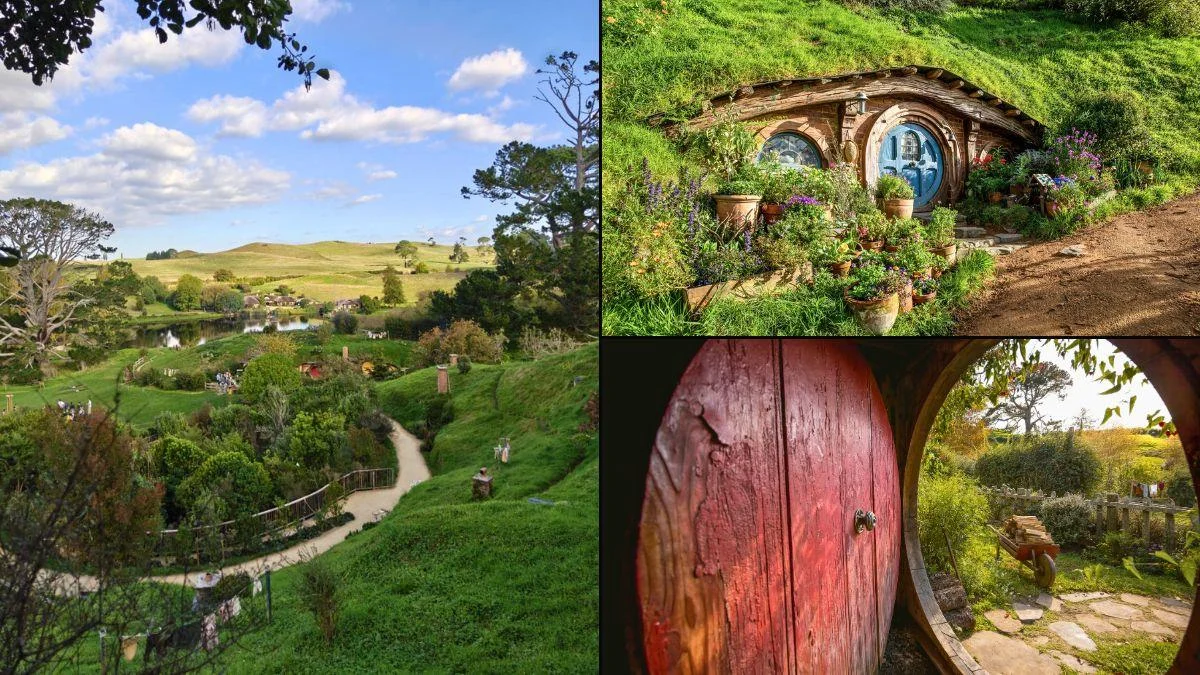
MATAMATA, NEW ZEALAND – For many, the industrial miracle of cinema is a distant concept, understood through credits and box office figures. However, for a generation raised on the cinematic adaptations of J.R.R. Tolkien’s work, the boundary between the "industrial" and the "magical" was blurred long ago. What began as a 1,250-acre sheep farm in the Waikato region has evolved into one of the world’s most significant examples of "set-jetting" tourism: Hobbiton.
Today, the site stands not merely as a relic of Peter Jackson’s The Lord of the Rings and The Hobbit trilogies, but as a permanent, living monument to high-fantasy world-building. As the site expands its offerings to include fully realized interior Hobbit Holes, the transition from a temporary film set to a permanent cultural landmark offers a unique case study in cinematic archaeology and international tourism.

The Genesis of a Landmark: A Chronology of Construction
The transformation of the Alexander family farm into the Shire was a process defined by serendipity and immense logistical coordination. In 1998, director Peter Jackson conducted a helicopter survey of the North Island, searching for a landscape that felt "untouched by time." The rolling green hills of Matamata, characterized by their lack of power lines, roads, or modern buildings, provided the perfect canvas.
1998–1999: The Initial Incursion
The legend of Hobbiton’s founding is well-regarded in local lore. Location scout David Comer reportedly arrived unannounced at the Alexander homestead, interrupting the family during a rugby match. The pitch was simple yet audacious: to transform their working sheep farm into a centerpiece for a massive fantasy production.

Construction began in March 1999. In an unprecedented move for a film production, the New Zealand Army was drafted to provide the heavy lifting. Using heavy earthmoving machinery, the military cut 1.5 kilometers of road into the site and reshaped the hillsides to accommodate 39 temporary Hobbit Hole facades. The initial construction used polystyrene, plywood, and temporary timber—materials intended to be demolished once the cameras stopped rolling.
2002–2010: From Ruins to Recovery
When filming for The Lord of the Rings wrapped, the set was slated for destruction. However, a period of heavy rain stalled the demolition process. In the interim, the skeletal remains of the Shire began to attract "unauthorized" fans. By 2002, the Alexander family and the production company recognized the site’s potential, initiating guided tours of the remaining fragments.

The true turning point occurred in 2010. When Jackson returned to film The Hobbit trilogy, the decision was made to rebuild Hobbiton using permanent materials. Unlike the first iteration, these structures were built from stone, brick, and treated timber, ensuring that the Shire would remain a permanent fixture of the New Zealand landscape.
Technical Specifications and Site Architecture
Hobbiton today spans 12 acres of the larger 1,250-acre Alexander farm. The site features 44 Hobbit Holes, each designed with meticulous attention to detail that mirrors Tolkien’s original descriptions of "comfort" and "rural English influence."

The English Midland Influence
Tolkien’s vision for the Shire was deeply rooted in the rural landscapes of the English Midlands, specifically Worcestershire and Warwickshire. The site’s organization reflects this, divided into "Farthings" (an old English term for a fourth part of a land division). The architecture utilizes "forced perspective"—a technique where Hobbit Holes are built at different scales (from 60% to 100% scale) to make the human actors look smaller or the wizard Gandalf look larger.
The Landscape as a Character
The site’s flora is as curated as its architecture. The "Party Tree," a towering Monterey pine, was identified during the initial 1998 survey as the natural center of the village. For the 2010 rebuild, an artificial oak tree was constructed above Bag End, featuring 200,000 hand-painted silk leaves imported from Taiwan to ensure the tree looked identical to its appearance in the original trilogy.

The Visitor Experience: A Guided Fellowship
The modern tour begins at "The Shire’s Rest," a central hub where visitors are transported via green buses into the set. The transition is immediate; as the bus crests the hill, the modern world is replaced by the undulating greenery of Middle-earth.
The Ascent to Bag End
The tour follows the exact path Gandalf took in the opening scenes of The Fellowship of the Ring. Guides, such as the seasoned "Paul," lead groups through the narrow, winding lanes, pausing at the incline where Frodo Baggins famously met the Grey Pilgrim.

The climb culminates at Bag End, the residence of Bilbo and Frodo Baggins. The iconic green door, framed by a sign reading "No admittance except on party business," offers a panoramic view of the entire village. From this vantage point, the scale of the achievement is visible: the working mill, the stone bridge, and the smoke-curling chimneys of the lower dwellings.
The Interior Revolution
For over two decades, the "magic" of Hobbiton was largely skin-deep; the Hobbit Holes were mere facades, with interior scenes filmed on soundstages in Auckland. However, in a significant expansion of the visitor experience, the site has recently unveiled fully realized interiors on Bagshot Row.

Stepping into the "Proudfoot" home (or "Proudfeet," as the films jokingly correct) reveals a "tube-shaped hall" exactly as Tolkien described. The interiors are a masterclass in set dressing:
- The Kitchen: Stocked with jars of preserves, copper pots, and "faux" food that appears ready for a second breakfast.
- The Bedroom: Featuring a four-poster bed tucked into the curve of the hill, adorned with embroidered cushions and dried flowers.
- The Study: A cramped, cozy space filled with ledgers, ink bottles, and weathered maps of Middle-earth.
These spaces are interactive, allowing visitors to sit at the tables and touch the craftsmanship, bridging the final gap between the screen and reality.

Economic and Cultural Implications
The impact of Hobbiton on New Zealand’s economy and global identity cannot be overstated. According to data from Tourism New Zealand, one in five international visitors cites The Lord of the Rings as a primary reason for their visit.
The "Middle-earth" Brand
New Zealand has successfully branded itself as the "Home of Middle-earth." This association has provided a massive boost to the Waikato region, turning the small town of Matamata into a global tourism destination. The site employs hundreds of local staff, from gardeners and maintenance crews to guides and brewers at the Green Dragon Inn.

The "Frieren" Connection and the Future of Fantasy
The enduring relevance of the Shire is seen in its influence on modern media. Many visitors today carry references to newer works, such as the acclaimed anime Frieren: Beyond Journey’s End. This series, which explores what happens to heroes after their quest is over, finds a spiritual home in Hobbiton. The Shire represents the "Peace" that fantasy heroes fight for—the quiet, domestic life that exists after the Ring is destroyed.
Official Perspectives: The Guide’s View
While the site is a commercial juggernaut, the staff emphasizes the emotional weight of the experience. "We get people from all over the world," says Paul, a veteran guide. "Some arrive with no context, and they leave amazed by the gardens. But then you have the ones who stand in the kitchen of a Hobbit Hole with tears in their eyes. For them, this isn’t a movie set; it’s a childhood home they finally get to visit."

The site’s management continues to work closely with the Alexander family and the Tolkien estate to ensure that any new developments maintain the "integrity of the Shire." The goal is a delicate balance: providing a modern tourist experience without breaking the spell of the 1950s agrarian utopia Tolkien envisioned.
Conclusion: The Long Road Home
Leaving the Shire, much like the ending of The Return of the King, carries a sense of "bittersweet melancholia." The experience of Hobbiton suggests that the pull of the road—the desire for adventure—is only half of the human story. The other half is the desire for the Shire: a place of safety, strawberries with cream, and the warmth of a hearth.

As visitors return to the heat of cities like Delhi or the bustle of London, they carry back more than just photographs. They carry the confirmation that for a few hours, the half-realities of childhood dreams were made tangible in the hills of Matamata. As Samwise Gamgee famously asked on the slopes of Mount Doom, "Do you remember the Shire, Mr. Frodo?" For the thousands who make the pilgrimage each year, the answer is now a definitive "yes."
Fact Box: Hobbiton by the Numbers

- Total Hobbit Holes: 44
- Site Area: 12 acres (within a 1,250-acre farm)
- Construction Duration: 9 months (original), 2 years (permanent rebuild)
- Distance from Auckland: Approx. 2 hours
- Key Landmark: The "Party Tree," a 100-year-old Monterey Pine.
The writer was a guest of Tourism New Zealand.
