

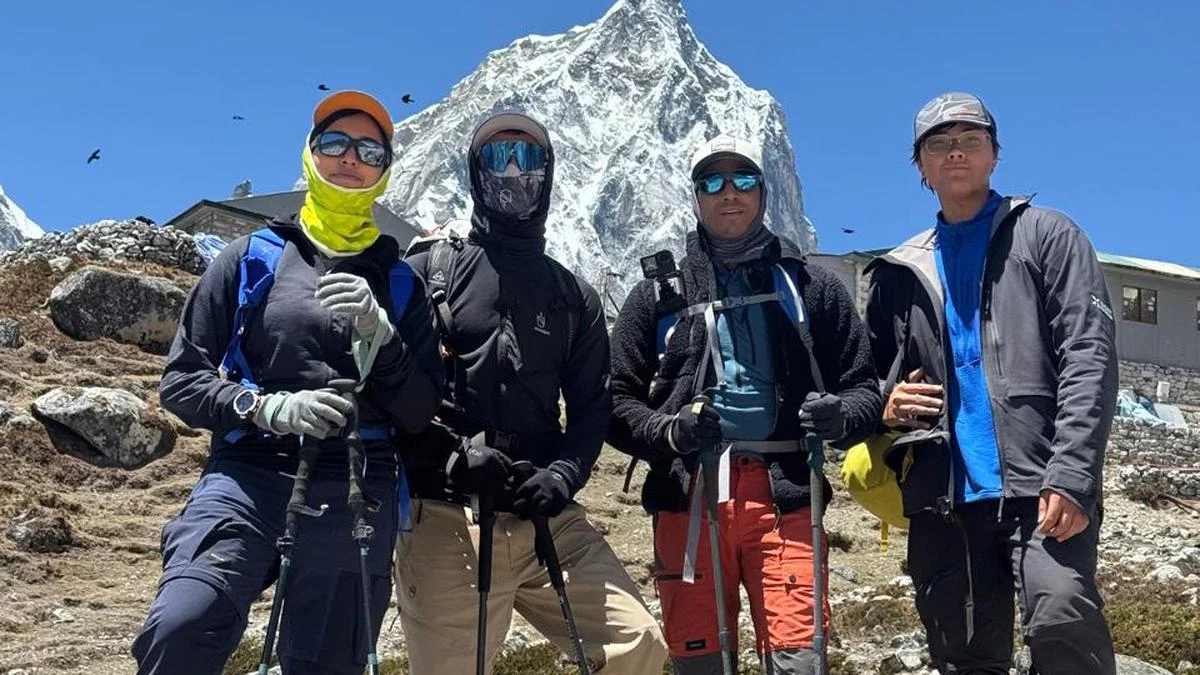
KATHMANDU / CHENNAI — In a staggering display of endurance, technical skill, and youthful resolve, 16-year-old Nisha Sasikumar has etched her name into the annals of mountaineering history. On the morning of May 25, 2026, the Chennai-born climber stood atop Mount Everest, the highest point on Earth, becoming one of the youngest individuals globally to conquer the 8,848.86-meter peak via the treacherous South Col route from Nepal.
The achievement marks a significant milestone not only for the teenage prodigy but for the Indian mountaineering community, further cementing the nation’s growing presence in high-altitude adventure sports. Climbing as part of an elite expedition, Sasikumar’s success is the culmination of years of rigorous physical conditioning and a relentless pursuit of the "Seven Summits"—the highest peaks on each of the seven continents.
Main Facts: A Record-Breaking Ascent
Nisha Sasikumar reached the summit at precisely 16 years and 80 days of age. While the quest for "youngest" records has become increasingly scrutinized by international climbing bodies, Sasikumar’s ascent was conducted under the strict regulatory framework of the Nepalese Department of Tourism, which mandates a minimum age of 16 for Everest permits.
The expedition was organized by Elite Exped, a premier mountaineering company known for its high success rates and led by world-renowned climbers. Sasikumar’s journey to the "Roof of the World" was not an isolated feat of luck but a calculated tactical operation. She utilized the South Col route, which, while the most popular path, presents harrowing challenges including the Khumbu Icefall, the Lhotse Face, and the notorious "Death Zone" above 8,000 meters.
"This journey taught me the importance of resilience, preparation, and believing in yourself, even in the toughest conditions," Sasikumar stated in a press release issued during her safe descent to Base Camp. Her words resonate with a maturity that belies her years, reflecting the psychological toll and spiritual growth inherent in high-altitude climbing.
The Statistics of the Summit
- Climber: Nisha Sasikumar (Chennai, India)
- Age at Summit: 16 years, 80 days
- Peak Altitude: 8,848.86 meters (29,031.7 feet)
- Date and Time: May 25, 2026, early morning
- Route: South Col (Nepal)
- Expedition Partner: Elite Exped
Chronology: From the Plains of Chennai to the Himalayan Heights
Nisha Sasikumar’s path to Everest began far from the snow-capped peaks, in the humid, sea-level coastal city of Chennai. Her journey is a testament to a decade of escalating challenges.
Early Foundations and Continental Conquests
Sasikumar did not begin her career on Everest. Her trajectory followed the classic "Seven Summits" progression, designed to acclimate the body and mind to varying terrains and extreme climates.
- Mount Kilimanjaro (Africa): Her first major foray into high altitude, where she tested her physiological response to thin air.
- Mount Elbrus (Europe): A transition into technical ice climbing and sub-zero temperatures in the Caucasus Mountains.
- Mount Kosciuszko (Australia) & Carstensz Pyramid (Oceania): Completing the dual versions of the Australian continental peak, including the technical rock climbing required for the Carstensz Pyramid in Indonesia.
- Aconcagua (South America): Reaching the summit of the highest peak outside of Asia, a grueling trek in the Andes that served as the final "litmus test" for Everest-readiness.
The 2026 Everest Campaign
The Everest expedition began in early April 2026, when Sasikumar arrived in Kathmandu. The chronology of the final weeks highlights the methodical nature of modern Himalayan climbing:
- April 10–25: Trek to Everest Base Camp (EBC) at 5,364 meters. This phase is crucial for natural acclimatization.
- May 1–15: Multiple "rotations." Sasikumar and her team climbed to Camp 1 and Camp 2, then descended back to Base Camp. These rotations "train" the blood to carry more oxygen by exposing it to higher altitudes before returning to lower elevations to recover.
- May 20: The "Weather Window" was identified. Meteorologists predicted a period of low wind speeds and clear skies.
- May 21–24: The Push. The team moved from Base Camp through the Khumbu Icefall to Camp 2, then upward to Camp 3 on the Lhotse Face, and finally to Camp 4 on the South Col (7,900m).
- May 24 (Night): The Summit Bid. Leaving Camp 4 under the cover of darkness to reach the summit by dawn, navigating the Balcony and the Hillary Step.
- May 25 (Morning): Summit achieved.
Supporting Data: Technical Rigor and Physiological Challenges
Mountaineering at 16 presents unique physiological and logistical hurdles. Medical experts often debate the impact of extreme altitude on a developing adolescent body, particularly concerning brain development and bone density. However, Sasikumar’s team utilized advanced supplemental oxygen protocols and constant medical monitoring to mitigate these risks.
The Elite Exped Strategy
Elite Exped, the agency managing her climb, is spearheaded by veterans of the "14 Peaks" challenge. Their strategy for Sasikumar involved a high Sherpa-to-climber ratio, ensuring that technical safety and load-bearing were handled by the world’s most experienced high-altitude workers. This allowed Sasikumar to focus on her movement and breathing, which is critical for younger climbers whose lung capacity is still maturing.
Comparative Context
Sasikumar joins a select group of young Indian climbers who have conquered Everest. She follows in the footsteps of Malavath Poorna, who in 2014 became the youngest girl to summit at age 13 (from the Tibetan side, where age limits were then different). Sasikumar’s achievement via the South Col (Nepal) is particularly notable due to the stringent 16-year-old age floor currently enforced by the Nepalese government, making her essentially the youngest age-eligible climber allowed on that route.
Official Responses: National Pride and Professional Praise
The news of Sasikumar’s success has triggered a wave of congratulatory messages from government officials, sporting bodies, and the mountaineering community.
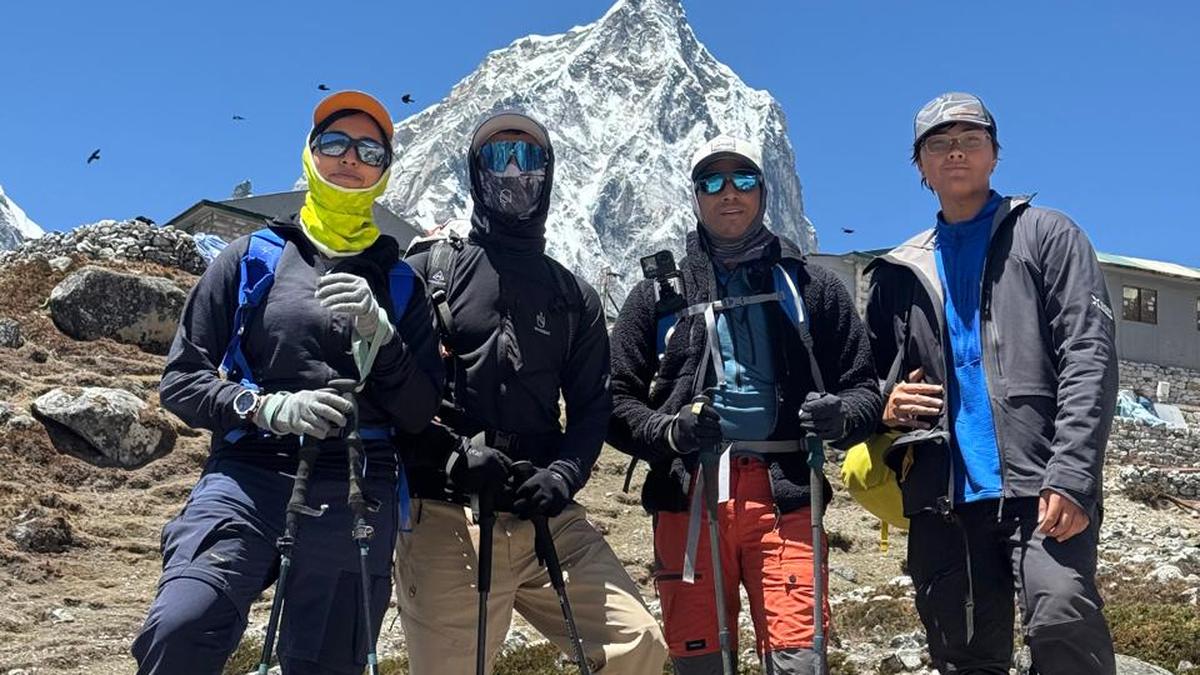
The Indian Mountaineering Foundation (IMF) released a statement praising her discipline:
"Nisha Sasikumar represents the new face of Indian adventure sports. Her meticulous approach to the Seven Summits challenge shows a level of professionalism usually reserved for seasoned veterans. To see a young woman from Chennai reach the top of the world is a moment of immense pride for the entire nation."
Elite Exped Spokesperson:
"Nisha showed incredible mental fortitude. Everest is 10% physical and 90% mental. On the South Col, when the winds picked up and the temperature dropped to -40 degrees, she remained calm and followed every technical instruction perfectly. She is a natural born climber."
Tamil Nadu State Sports Authority:
"We are exploring ways to support Nisha’s remaining expeditions. Her achievement serves as an inspiration to millions of young girls in South India, proving that geographical origins are no barrier to reaching the highest heights."
Implications: The Road to the "Grand Slam"
Nisha Sasikumar’s journey is far from over. Her successful Everest summit is a pivotal "check-off" in her quest for the Seven Summits, but two major hurdles remain on her calendar for 2026.
The Upcoming Schedule
- June 2026 – Denali (North America): Located in Alaska, Denali is often considered more difficult than Everest in terms of sheer cold and the logistical requirement for climbers to haul their own sleds.
- November 2026 – Vinson Massif (Antarctica): The final leg of her journey. This will require navigating the most remote wilderness on the planet.
If she completes these, Sasikumar will become one of the youngest people in history to complete the Seven Summits, a feat that would place her in an elite category of global explorers.
The Impact on Youth Mountaineering
Sasikumar’s success reignites the conversation regarding youth in extreme sports. While her ascent was safe and successful, it highlights the need for rigorous vetting and training for young athletes. Her story serves as a blueprint for how "youth records" should be pursued: not through haste, but through a multi-year, multi-peak progression that builds the necessary skill set before attempting an 8,000-meter peak.
Gender and Representation
In a sport historically dominated by men and climbers from mountainous regions, Sasikumar’s identity as a young woman from the plains of South India is revolutionary. She shatters the stereotype of the "Himalayan climber," proving that with access to the right training facilities and a relentless work ethic, the summit is accessible to anyone.
As Nisha Sasikumar continues her descent toward the thicker air of the Khumbu Valley, she carries with her more than just a record. She carries the aspirations of a generation of Indian athletes looking toward the horizon, ready to scale their own metaphorical and literal mountains. Her eyes are already set on the Alaskan wilderness of Denali, but for now, the girl from Chennai stands as a beacon of what is possible when preparation meets opportunity at the edge of the atmosphere.
