

Mumbai, India – July 7, 2026, 06:00 AM IST – In a decision that has sent ripples through the cricketing fraternity, the Board of Control for Cricket in India’s (BCCI) senior selection committee on Monday announced the squad for the upcoming three-match T20 International (T20I) series against Zimbabwe later this month. The notable omission from the 15-man roster was none other than Sanju Samson, India’s Player of the Tournament from the T20 World Cup held just months ago in February-March.
While official sources within the BCCI and the selection committee have vehemently asserted that Samson has not been "dropped" but rather "rested," the decision has sparked widespread debate. The move, they claim, is part of a broader strategy to manage player workloads, blood new talent, and explore a wider pool of options ahead of a demanding international calendar. However, for a player who was instrumental in India’s recent T20 World Cup triumph and is primarily a T20 specialist, his exclusion from even a ‘fringe’ tour raises pertinent questions about consistency in selection policies and the future trajectory of India’s T20 squad.
Main Facts: The Unfolding Narrative
A World Cup Hero’s Absence
The announcement of the Indian squad for the Zimbabwe T20Is, scheduled to commence on July 23 in Harare, immediately drew attention due to the absence of Sanju Samson. The charismatic wicketkeeper-batsman, who captivated audiences and steered India to T20 World Cup glory earlier this year, was widely expected to feature, especially given his recent heroics. His designation as the ‘Player of the Tournament’ underscored his pivotal role in India’s campaign, making his omission particularly striking.
According to reliable sources privy to the decision-making process, the rationale behind Samson’s exclusion is primarily to "rest" him. This break, they suggest, aims to provide an opportunity for promising young talents like Prabhsimran Singh, who impressed with a decent Indian Premier League (IPL) season for Punjab Kings, to gain international exposure. The selection committee, led by Ajit Agarkar, reportedly views these tours as crucial platforms for assessing the readiness of uncapped or less experienced players for the rigours of international cricket.
Other Key Players Also ‘Rested’
Samson is not the sole high-profile player to be granted a break. The selection committee has also opted to rest a quartet of other significant players: all-rounder Axar Patel, fast bowler Harshit Rana, spin-bowling all-rounder Washington Sundar, and left-arm pacer Arshdeep Singh. The reasoning provided for these players is more straightforward: the packed schedule, with the One Day Internationals (ODIs) against England concluding on July 19, leaving a mere four-day turnaround before the first T20I in Zimbabwe. These players, particularly Axar and Arshdeep, have been integral parts of India’s multi-format campaigns over the past six months, enduring a relentless cricketing calendar without substantial breaks. While the rationale for them seems clear due to their multi-format commitments, the "rest" for Samson, a player predominantly active in the T20 format, invites deeper scrutiny.
The Indian Express has learned that despite his absence from the Zimbabwe tour, Samson is firmly in the plans for the upcoming Asian Games in September, indicating that his omission is indeed a strategic pause rather than a definitive move away from his services.
Chronology of Events: From Triumph to ‘Rest’
The T20 World Cup Glory (February-March 2026)
Sanju Samson’s journey to becoming the ‘Player of the Tournament’ in the T20 World Cup was nothing short of cinematic. Having initially faced an uncertain start to India’s campaign, his inclusion midway through the tournament proved to be a game-changer. His philosophy, often articulated as prioritizing a high-impact 30-run knock over a century in a losing cause, perfectly aligned with the demands of modern T20 cricket. This high-risk, aggressive approach, coupled with his impeccable timing and elegant strokeplay, provided the much-needed impetus to India’s batting lineup.
In the crucial must-win game against Zimbabwe in Chennai, following a patchy start for India, Samson’s arrival in the XI transformed the team’s fortunes. What followed was a remarkable display of consistent, match-winning performances. In the final three matches of the tournament, Samson registered scores of 97 not out, 89, and 89 – a run of form that would be difficult for any batsman to replicate on such a grand stage. All three innings were pivotal in securing India’s victories, culminating in their triumphant World Cup campaign. His ability to perform under immense pressure and deliver impactful performances cemented his status as a key component of India’s T20 setup.
Post-World Cup Form and Recent Struggles
The glow of World Cup success, however, did not translate into immediate consistency in the subsequent international assignments. India’s first series after the T20 World Cup saw them tour Ireland. Here, Samson’s scores of 5 and 0 raised the first few eyebrows regarding his post-tournament form. This dip continued into the early stages of the series against England. In the opening T20I at Chester-le-Street, Samson managed just 1 run before making way for Vaibhav Sooryavanshi in the subsequent fixture in Manchester.
The decision to drop him from the playing XI in England itself was perceived by many pundits and fans as a harsh call, especially given his recent World Cup heroics. Just two days after being sidelined from the XI, the news of his "rest" for the Zimbabwe tour further amplified discussions about his standing in the team and the selection committee’s immediate plans. This sequence of events — from a World Cup defining performance to being benched and then rested — forms a critical timeline in understanding the current state of affairs.
The Zimbabwe Squad Announcement (Monday, July 7, 2026)
The official squad announcement by the BCCI on Monday evening, though widely anticipated, notably lacked any explicit reasons for Samson’s omission. The press release did, however, include a note detailing that Shivam Dube would replace the injured Nitish Kumar Reddy in the ODI team for the ongoing series against England. The absence of a similar explanatory note for Samson’s high-profile ‘rest’ initially fuelled speculation, which was later addressed by board sources clarifying the "rest" narrative. This lack of initial transparency from the BCCI often leaves room for conjecture and puts the onus on unofficial sources to provide context, which can sometimes lead to misinterpretations.
Supporting Data and Context: Decoding the Decision
The ‘Rest’ Rationale: Managing Player Workload
The official narrative surrounding Samson’s absence, along with that of Axar Patel, Arshdeep Singh, Harshit Rana, and Washington Sundar, centres on player workload management. The Indian cricketing calendar has become increasingly demanding, with back-to-back international series, domestic tournaments, and the IPL ensuring players are almost constantly on the road. For multi-format players like Axar and Arshdeep, who have been playing "non-stop cricket for the last six months without a considerable break period," a rest is a justifiable and often necessary measure to prevent burnout and injuries.
However, the application of this rationale to Sanju Samson, a player who primarily features in India’s T20 setup and has not been subjected to the same rigorous multi-format schedule, raises questions. While selectors insist they have "seen enough of his potential and what he can offer to the team," the timing of this rest, immediately after a period of relative underperformance post-World Cup, makes it a nuanced decision. A source within the Indian board reiterated, "As far as Sanju’s case, he is rested like Axar and Arshdeep." This statement suggests a uniform application of the resting policy, even if the individual player’s specific workload might differ. It could also imply a strategic decision to use this lull in his performance as an opportune moment to test other options without overtly ‘dropping’ a World Cup star.
Opportunities for New Talent: The Zimbabwe Blueprint
The tours to nations like Zimbabwe have historically served as crucial proving grounds for India’s emerging talents. These series, often scheduled during less critical periods, provide a low-pressure environment for uncapped or fringe players to showcase their skills on the international stage. This philosophy is evident in the current squad selection.
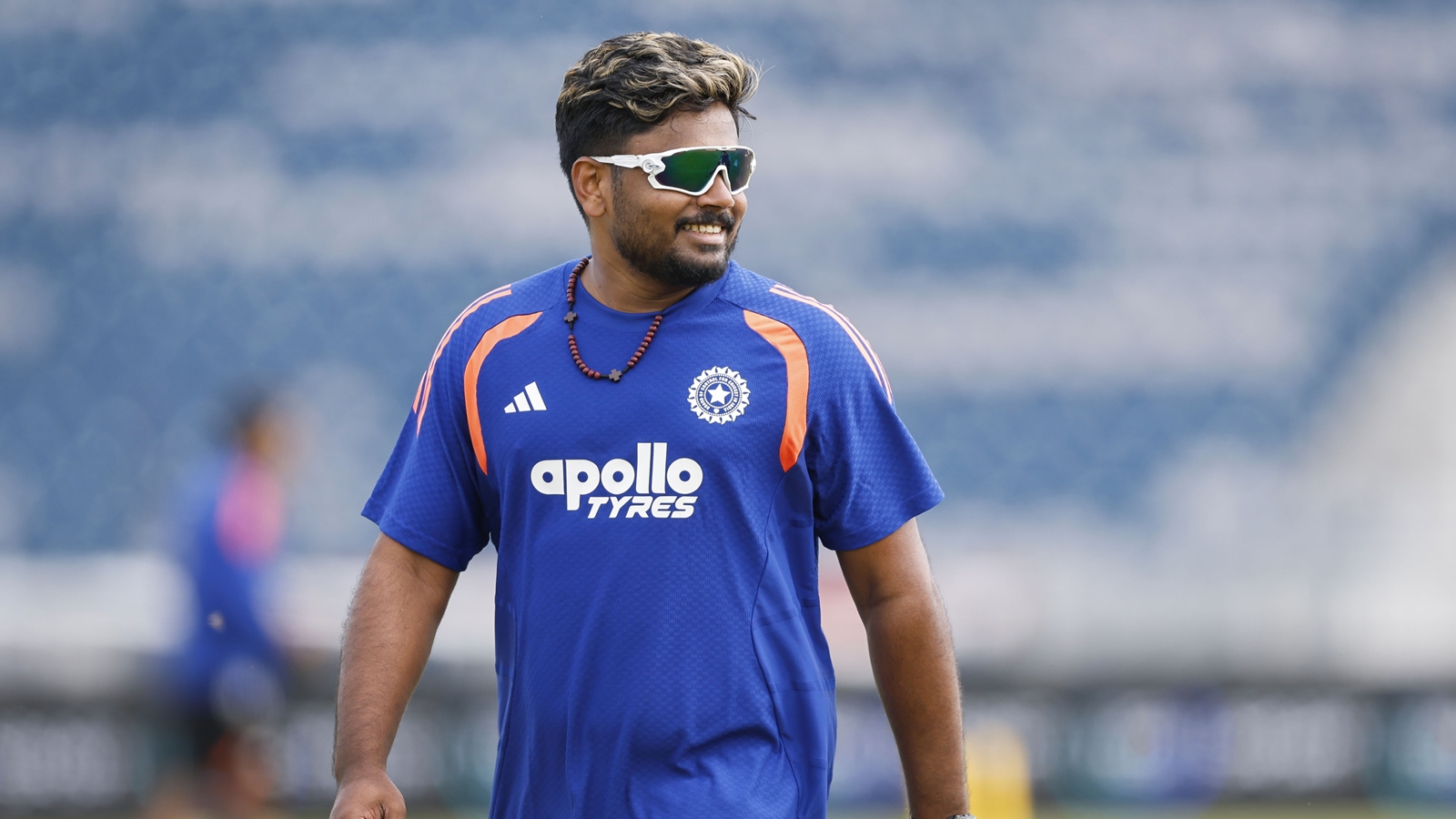
Prabhsimran Singh, whose impressive performances for Punjab Kings in the recent IPL, earned him a call-up, is a prime example. His inclusion, explicitly cited as a reason for Samson’s rest, highlights the committee’s intent to broaden the wicketkeeper-batsman pool. Similarly, Vaibhav Sooryavanshi, who replaced Samson in the playing XI against England, is now set to receive more opportunities, solidifying his pathway into the national setup.
The selection committee is also actively looking to cultivate a robust pace bowling contingent. "The selectors were keen to try young players and that is why you will see young pacers like Ashok Sharma, Yash Thakur and Mayank Yadav getting a chance. There is a decent pool of pacers which the selection committee wants to create," revealed a board source. This focus on building depth across all departments, especially in pace, is a long-term strategic objective for Indian cricket, ensuring a continuous supply of talent.
Strategic Squad Composition: Balancing Experience and Youth
The composition of the squad for the Zimbabwe tour reflects a careful balance between providing opportunities for new faces and maintaining a degree of continuity and leadership. Shreyas Iyer, who recently took over the captaincy, could not be rested, as the selectors are keen to embed him in his leadership role and provide him with consistent match practice. Similarly, Tilak Varma, who has been appointed vice-captain, is also being given more opportunities to grow into a senior role within the team.
Samson’s absence also has implications for the overall batting lineup. With Samson, a prominent right-hander, out of the squad, the batting order becomes notably "left-hander heavy." Shreyas Iyer remains the lone established right-hander among the frontline batsmen, unless Prabhsimran Singh gets a game. This could present a strategic challenge, especially against certain bowling attacks.
Meanwhile, Rinku Singh earns a recall to the squad. In the absence of Hardik Pandya, who often fulfils the finisher’s role, India has been short on options for this crucial position, particularly during the UK trip. Rinku’s inclusion is a clear indication of the selectors’ desire to solidify the lower middle order with a proven finisher. Ishan Kishan, another dynamic left-handed wicketkeeper-batsman, has emerged as the first-choice wicketkeeper for this series in Samson’s absence, further highlighting the evolving dynamics within the squad.
The Sanju Samson Enigma: Impact vs. Consistency
Sanju Samson’s career has often been described as an enigma, a testament to his undeniable talent coupled with periods of fluctuating form. His personal philosophy, famously stating he would "happily take a 30 that makes an impact in a game over a century in a losing cause," encapsulates his high-risk, high-reward approach to T20 cricket. This mindset, prioritizing impactful contributions over statistical milestones, has made him a match-winner on his day, as evidenced by his T20 World Cup performances.
However, this very approach can sometimes lead to inconsistent returns. While selectors insist they have seen enough of his potential, his recent low scores (5, 0 vs Ireland; 1 vs England) following his World Cup heroics illustrate the challenge. The dilemma for the selection committee lies in balancing the proven match-winning ability and high ceiling of a player like Samson against the need for sustained consistency and the development of a broader talent pool. His ‘rest’ could be interpreted as a strategic move to address this balance, allowing him a mental and physical break while simultaneously exploring other options without permanently sidelining a player of his calibre.
Official Responses and Behind-the-Scenes Insights
Selector’s Viewpoint (Ajit Agarkar & Co.)
The senior selection committee, under the chairmanship of Ajit Agarkar, has been proactive in communicating their stance on Samson’s omission. Those involved in the decision-making process have been keen to emphasize that Samson’s exclusion is not a demotion. "Samson hasn’t been dropped and neither has the selection committee decided to move on from the opener," a source affirmed. This statement aims to quell any speculation about his long-term future with the national team.
The committee’s overarching strategy, particularly for "small tours" like Zimbabwe, is to "try the fringe players." This approach aligns with historical precedents where many Indian players have made their international debuts during tours to Zimbabwe. The selectors believe they have a clear understanding of "what he can offer to the team" from Samson, implying that further evaluation of his specific skillset isn’t the primary goal of this particular series. Instead, the focus shifts to players whose potential needs to be assessed at the international level.
Board Sources’ Clarifications
Sources within the Indian board have consistently echoed the "rest" narrative, reinforcing the idea that Samson’s absence is a tactical decision. They highlight the intention to "create a decent pool of pacers" and explore other batting options. The confirmation that Samson "will be traveling with the Indian team for the Asian Games in September" serves as a tangible reassurance of his continued relevance and future involvement in India’s T20 plans. This pre-emptive clarification aims to mitigate potential media backlash and fan discontent, positioning the decision as a planned strategic rotation rather than a punitive measure.
The Head Coach’s Role (Gautam Gambhir)
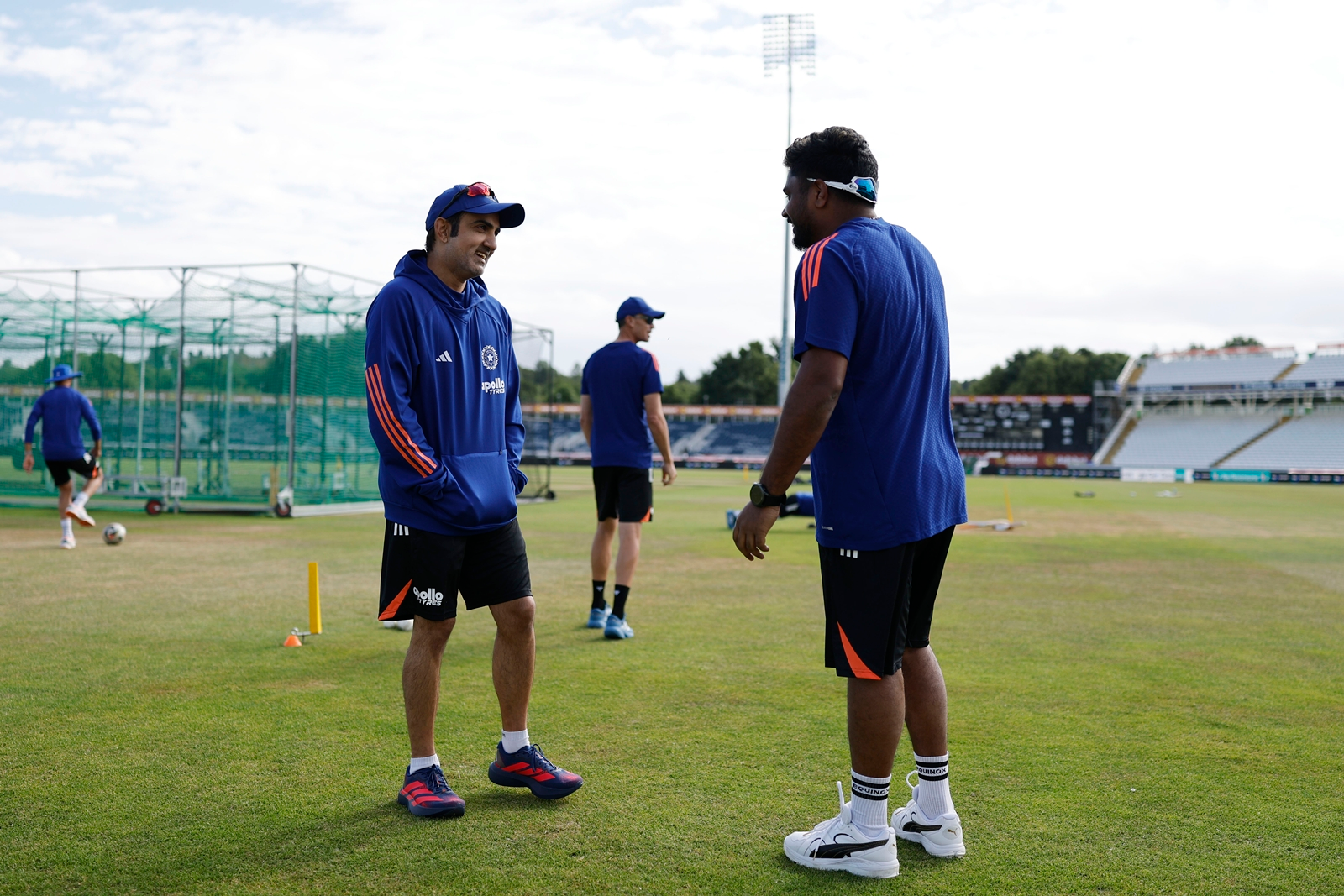
While no direct statements from India’s head coach Gautam Gambhir regarding Samson’s omission have been released, his presence with Samson during a training session in England (as depicted in the accompanying image) suggests a professional working relationship. As head coach, Gambhir would undoubtedly be aligned with the selection committee’s vision for building bench strength and managing player workloads. His strategic acumen and emphasis on team composition are well-known, and it is likely he supports the decision to utilize these tours for talent assessment and development, even if it means resting a star performer.
Implications and Future Trajectories
For Sanju Samson: The Road Ahead
For Sanju Samson, the ‘rest’ for the Zimbabwe tour presents a dual challenge. On one hand, it offers a physical and mental break after an intense World Cup and subsequent series. On the other, it disrupts his momentum and places him in a precarious position where he must continuously prove his indispensability despite being a T20 World Cup hero. His immediate future appears to be the Asian Games, providing another platform to reaffirm his capabilities. However, the rise of Ishan Kishan as a primary wicketkeeper-batsman option, coupled with the emergence of Prabhsimran Singh, means Samson faces heightened competition. He will need to maintain his form and continue delivering impactful performances to cement his place in an increasingly competitive Indian T20 squad. The psychological impact of being a ‘rested’ star, especially after recent low scores, cannot be underestimated.
For Indian Cricket: Deepening the Bench
This selection strategy underscores Indian cricket’s ongoing commitment to building a robust talent pipeline across all formats. The decision to rotate key players, even a T20 World Cup star, immediately after a major triumph, highlights a proactive approach to player management and succession planning. While it carries the risk of disrupting team chemistry or impacting player morale, it simultaneously offers invaluable opportunities for young talents to gain international experience. These ‘fringe’ tours are crucial for identifying future stars, assessing their temperament under pressure, and preparing them for bigger challenges. The emphasis on developing a strong bench ensures that India remains competitive even when frontline players are rested or unavailable.
Historical Precedents and Lessons Learned
The current situation with Sanju Samson is not without historical precedent. The original article reminds us of Yashasvi Jaiswal’s omission from India’s 2024 tour to Zimbabwe, where selectors chose to give an opportunity to Abhishek Sharma instead. Abhishek went on to score a hundred and cemented his place, while Jaiswal had to wait longer for a consistent run in the T20I setup. This example illustrates both the potential rewards and risks of such selection policies. While it can unearth new talent, it can also disrupt the rhythm and confidence of established or promising players. The delicate balance between managing workload, developing new talent, and rewarding consistent performance remains one of the most complex challenges for any national selection committee. The lessons learned from past decisions, both successful and contentious, will undoubtedly inform future strategies.
Conclusion: A Glimpse into India’s Evolving T20 Strategy
Sanju Samson’s ‘rest’ for the Zimbabwe T20I series, immediately following his T20 World Cup heroics, is a multifaceted decision that offers a clear glimpse into India’s evolving T20 strategy. It is a calculated move aimed at broadening the talent pool, managing the workload of key players, and providing opportunities for emerging stars. While the official narrative frames it as a strategic rest rather than a dropping, the timing and context inevitably spark debate about consistency and player management.
As India navigates a packed international schedule and seeks to maintain its dominance across formats, these strategic rotations will likely become more common. The Zimbabwe tour will serve as a crucial litmus test for the new faces, while for Samson, the path forward involves demonstrating his enduring impact and adaptability to secure his long-term place in a fiercely competitive national squad. The unfolding narrative will undoubtedly shape not only Samson’s career but also the future direction of Indian T20 cricket.
