

By News Desk
The historical narrative of Mumbai’s real estate market has long been one of scarcity and prestige, dictated by a rigid north-south axis. For decades, the "Island City" held an iron grip on the definition of luxury, with South Bombay (SoBo) serving as the undisputed apex of social and financial status. However, a seismic shift is underway. Mumbai’s real estate story is no longer being written by legacy alone; it is being authored by massive infrastructure interventions.
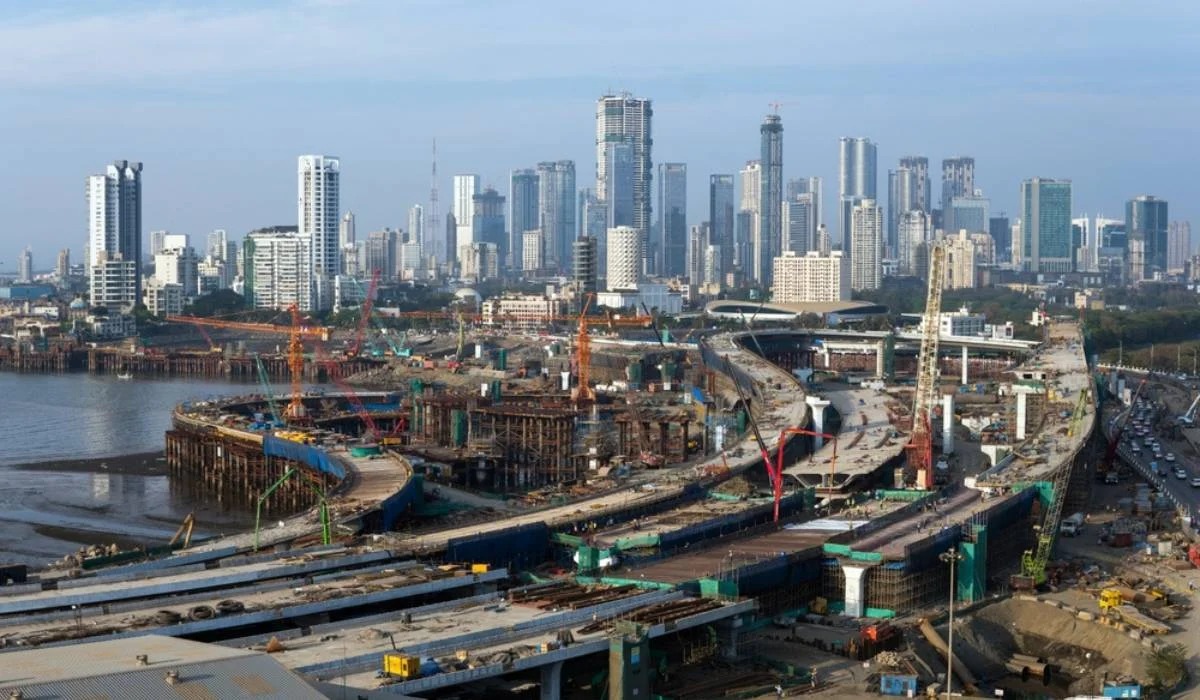
From the sweeping curves of the Coastal Road to the sprawling reaches of the Mumbai Trans Harbour Link (MTHL) and the expanding Metro network, infrastructure is no longer a secondary amenity—it has become the primary driver of capital appreciation and urban migration. This transformation is dismantling the old hierarchies, turning former "suburbs" into premium residential hubs and creating a polycentric urban landscape.
1. Main Facts: The New Determinants of Property Value
In the contemporary Mumbai market, the proximity to a Metro station or a high-speed arterial road is a more significant predictor of price growth than a traditional "prime" PIN code. Real estate experts and market trackers are observing a fundamental decoupling of luxury from geography.
The End of the "Island City" Monopoly
Historically, luxury was defined by a South Mumbai address. Today, "prime" is being redefined as a combination of accessibility, lifestyle quality, and modern infrastructure. This has led to the emergence of "Suburban Luxury" in micro-markets such as Goregaon, Malad, Kandivali, and Borivali. These areas are no longer just residential dormitories for the workforce; they are becoming self-sustaining ecosystems offering a quality of life that often surpasses the congested quarters of the traditional city center.
Infrastructure as a Direct Value Driver
Data indicates that infrastructure projects in Mumbai are now direct catalysts for capital appreciation. According to the Mumbai Property Exchange infra-impact tracker, residential markets within a 1 km radius of a functional Metro station typically experience a 20% to 35% surge in property value within just 24 months of the line becoming operational. This "Metro Effect" is a consistent pattern that has emboldened both developers and investors to pivot toward infrastructure-led corridors.
2. Chronology: The Evolution of Mumbai’s Urban Sprawl
To understand the current boom, one must look at the chronological evolution of the city’s connectivity, which has moved through three distinct phases:
Phase I: The Suburban Railway Era (Pre-2010)
For over a century, Mumbai’s growth followed the linear path of the Western, Central, and Harbour railway lines. Development was dense and clustered around stations. Luxury was confined to the southern tip because the commute from the north was grueling and unpredictable.
Phase II: The Initial Road and Link Expansion (2010–2020)
The construction of the Eastern Freeway and the Bandra-Worli Sea Link began to break the north-south bottleneck. However, these projects primarily benefited the existing elite or eased travel between established hubs. The suburbs remained "secondary" in the eyes of the ultra-wealthy.
Phase III: The Multi-Modal Explosion (2021–Present)
The current era is defined by the simultaneous rollout of the Metro Masterplan, the Coastal Road, and the MTHL. This phase is unique because it provides "grid-like" connectivity rather than just linear paths. The operationalization of Metro Lines 2A and 7 has finally decoupled the Western Suburbs from the notorious traffic of the Western Express Highway (WEH), while the MTHL has effectively "shrunk" the distance between the island city and the mainland (Navi Mumbai).
3. Supporting Data: The Impact of Key Connectivity Projects
The scale of appreciation is best understood through the specific data points associated with Mumbai’s latest engineering marvels.
The Metro Effect in the Western Corridor
With Metro Lines 2A and 7 now fully operational, the "commute predictability" factor has skyrocketed. In markets like Borivali and Kandivali, property prices have seen an uptick of 15% to 20%. Buyers who previously shunned these areas due to the 90-minute commute to commercial hubs like BKC or Andheri now find these micro-markets "practical luxury zones."
The Coastal Road and Travel Time Compression
The Mumbai Coastal Road is perhaps the most significant psychological game-changer for the city’s elite. By reducing the travel time between South Mumbai and the Western Suburbs from 60 minutes to a mere 15 minutes, the project has triggered a 15% to 25% impact on property prices in nearby nodes. This road has effectively brought the suburbs into the "inner circle" of the city’s geography.
The MTHL and the "Third Mumbai"
The Mumbai Trans Harbour Link (Atal Setu) has fundamentally altered the Navi Mumbai narrative. By cutting travel time from Sewri to Chirle from 90 minutes to 20 minutes, the link has catalyzed a massive interest in the "Third Mumbai" region. Emerging markets like Ulwe and Panvel are estimated to see a 30% to 40% price uplift as they transition from affordable housing pockets to strategic residential and logistics hubs.
4. Official Responses and Industry Perspectives
Developers and urban planners are recalibrating their strategies to align with this infrastructure-led demand. According to industry leaders, the focus has shifted from "location" to "ecosystem."
The Developer’s Pivot: Integrated Townships
The Director of CCI Projects notes that the rise of integrated developments and township-style formats is accelerating. "Luxury homebuyers are clearly leaning toward environments that offer more than a standalone tower," the Director states. In suburban markets where land parcels allow for scale, developers are building gated communities with wellness zones, private amenity decks, and sports infrastructure—features that are structurally impossible to replicate in the land-constrained South Bombay.
The Consumer Shift: "Living Better" vs. "Living Closer"
Market analysts observe a generational shift in buyer psychology. For the modern high-income earner, the prestige of a SoBo address is often outweighed by the desire for open green spaces, better air quality, and modern construction standards. The conversation has shifted from "living closer to the city" to "living better within the city."
Government and Planning Perspectives
The Mumbai Metropolitan Region Development Authority (MMRDA) and other state agencies have emphasized that the goal of these projects is to "decongest and decentralize." By creating high-speed links to the suburbs and Navi Mumbai, the government is successfully pushing the commercial and residential center of gravity further north and east, creating a more balanced urban economy.
5. Implications: The Future of Mumbai’s Real Estate
The compounding effect of these infrastructure projects suggests that Mumbai is entering a long-term growth cycle that will redefine its socio-economic fabric.
The Rise of the Polycentric City
Mumbai is evolving into a city with multiple "prime" centers. BKC was the first successful shift; now, Goregaon-Malad and Navi Mumbai are following suit. This decentralization reduces the pressure on the old city’s infrastructure and allows for more sustainable urban growth.
Luxury as a "Standardized Expectation"
In the new suburban luxury hubs, high-end amenities are no longer "add-ons." Gated communities with 24/7 security, clubhouses, and integrated retail are becoming the standard expectation for the middle and upper-middle class. This "democratization of luxury" is forcing developers in older districts to innovate or face stagnation.
The Commercial-Residential Nexus
The upcoming Navi Mumbai International Airport is expected to unlock a new commercial cluster. Historically, airports create surrounding ecosystems of hospitality, warehousing, and office spaces. This will, in turn, strengthen residential demand in the surrounding areas. The strongest beneficiaries will be integrated developments that can support the lifestyle needs of an expanding global workforce.
Investment Outlook
For investors, the "infrastructure-led corridor" is currently the safest and most lucrative bet. While traditional markets may offer stability, the "alpha" or outsized returns are being found in the zones of transition—where a new Metro line or a sea link is about to be commissioned.
Conclusion: A Compounding Effect on Value
The current cycle in Mumbai’s real estate is historically unique because multiple large-scale infrastructure projects are unfolding simultaneously. This is not a series of isolated improvements but a comprehensive re-engineering of the city’s mobility.
Luxury housing is no longer confined to a narrow set of traditional addresses. It is spreading across corridors where the quality of the living experience can match, and in some cases exceed, the offerings of older premium pockets. As travel times shrink and "integrated ecosystems" become the preferred way of living, the value proposition of Mumbai real estate will continue to be anchored in one inescapable truth: in a city as dense as Mumbai, time and space are the ultimate luxuries—and infrastructure is the only way to provide them.
