

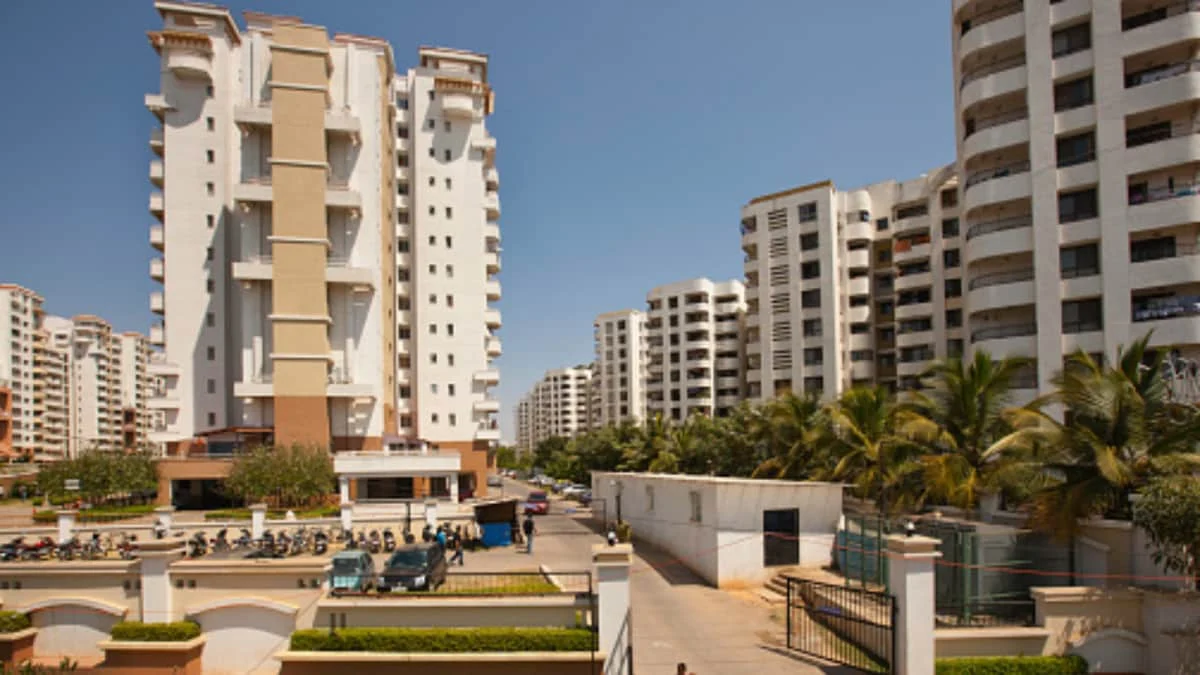
BENGALURU – In a significant recalibration of India’s premium real estate landscape, the southern corridor has emerged as a formidable rival to the traditional luxury bastions of Mumbai and Delhi-NCR. A groundbreaking report released on Tuesday reveals that the fiscal year 2025-26 was a watershed moment for the region, with Hyderabad, Bengaluru, and Chennai collectively facilitating the sale of 811 ultra-luxury homes—defined as properties priced at Rs 10 crore and above.
The total transaction value for these elite residences reached a staggering Rs 11,246 crore, signaling a robust appetite for high-end living among India’s growing class of ultra-high-net-worth individuals (UHNWIs). However, the most striking takeaway from the data is the decisive shift in leadership: Hyderabad has officially overtaken Bengaluru to become the undisputed titan of South India’s ultra-luxury housing market.
Main Facts: A Three-City Comparison of Stratospheric Growth
The joint report, titled ‘Southern India High-End Luxury Housing’ and authored by India Sotheby’s International Realty and CRE Matrix, provides a granular look at a market that was once considered a niche segment but has now moved into the mainstream of real estate investment.
According to the findings, the distribution of wealth and property acquisition across the three major southern hubs is as follows:
- Hyderabad: The city led the pack by a massive margin, recording 625 ultra-luxury sales with a cumulative transaction value of Rs 8,562 crore.
- Bengaluru: Long considered the "Silicon Valley of India" and the primary driver of regional wealth, Bengaluru secured the second spot with 128 units sold, totaling Rs 1,957 crore.
- Chennai: The coastal metropolis maintained its reputation for conservative but steady growth, recording 58 sales worth Rs 727 crore.
The data highlights a significant "volume gap." Hyderabad’s sales volume was nearly five times that of Bengaluru, suggesting that while Bengaluru remains a tech powerhouse, the physical manifestation of wealth through sprawling, high-value estates is currently more prevalent in the Telangana capital.
Chronology: From Pandemic Recovery to the 2026 Boom
To understand the current surge, one must look at the trajectory of the southern property market over the last five years.
The Post-Pandemic Pivot (2021-2022)
Following the COVID-19 lockdowns, buyer preferences underwent a radical shift. The "work-from-home" culture and a renewed emphasis on wellness led to a demand for larger living spaces. In this period, Bengaluru initially led the charge as tech founders and senior executives sought out villas in the city’s outskirts.
The Infrastructure Acceleration (2023-2024)
Hyderabad began its ascent during this period, fueled by aggressive infrastructure development, including the completion of the Nehru Outer Ring Road (ORR) and the expansion of the IT corridor toward the West. The state government’s proactive urban planning made large land parcels available for high-end development, something Bengaluru struggled with due to its infamous traffic congestion and fragmented land records.
The 2025-26 Peak
By the current fiscal year, the "wealth effect" from India’s booming stock market and the proliferation of "Global Capability Centres" (GCCs) in the South reached a boiling point. The Sotheby’s-CRE Matrix report confirms that 2025-26 has been the most successful year for the Rs 10 crore+ segment in history, with Hyderabad capturing the lion’s share of the momentum.
Supporting Data: The "Space Value" Proposition
The report dives deep into why Hyderabad has managed to pull ahead so significantly. The answer lies in the "value per square foot" and the sheer scale of the properties being offered.
The Rs 10 Crore Benchmark
When an investor spends Rs 10 crore in these cities, the physical product they receive varies dramatically:
- Hyderabad: Buyers can expect an average of 6,210 sq. ft. for their investment. This "palatial scale" is a primary driver for HNWIs who prioritize expansive floor plans and private amenities.
- Chennai: The same investment yields approximately 4,290 sq. ft., reflecting the premium commanded by established coastal neighborhoods and legacy locations.
- Bengaluru: Despite its status, Bengaluru offers the least amount of space for the price point, averaging 3,930 sq. ft. The high cost of land in prime areas like Indiranagar, Lavelle Road, and Koramangala means buyers pay more for location than for square footage.
Emerging Micro-Markets
The report identifies specific "billionaire rows" that are driving these numbers:
- Kokapet (Hyderabad): Described as the "Manhattan of Hyderabad," this area has seen high-rise luxury apartments and gated communities that rival international standards.
- Rajanukunte (Bengaluru): As the city center becomes saturated, North Bengaluru—specifically Rajanukunte—has emerged as the preferred destination for those seeking luxury villas away from the urban sprawl.
Official Responses: Insights from Industry Leaders
The release of the report has sparked intense discussion among real estate analysts and stakeholders.
Ashwin Chadha, CEO of India Sotheby’s International Realty, noted that the South Indian market is no longer a monolith. "The luxury housing market in South India has evolved into three distinct identities," Chadha explained. "Hyderabad is the leader in terms of scale and volume. Bengaluru is defined by its rapid transaction momentum and a younger demographic of buyers. Chennai remains the bastion of legacy wealth, where prestige is tied to specific, historic neighborhoods."
Chadha further suggested that Bengaluru’s lower numbers might be deceptive. "While the volume in Bengaluru is lower, the speed at which units are sold remains high. We expect Bengaluru to see a significant acceleration in the next 18 months as new, ultra-premium inventory hits the market."
Abhishek Kiran Gupta, CEO and Co-founder of CRE Matrix, emphasized the structural fundamentals of the Hyderabad market. "This is a strategic turning point. Hyderabad’s leadership isn’t just a fluke; it’s supported by better space value and a consistent demand for large-format residential units. For the first time, we are seeing the ‘Mumbai-style’ luxury price points being met with ‘Texas-style’ space offerings in Hyderabad."
Gupta added a note for investors: "The data shows that you cannot treat South India as a uniform market. A strategy that works in the high-density tech hubs of Bengaluru will not necessarily translate to the expansive, infrastructure-led growth of Hyderabad."
Implications: What This Means for the Future of Urban India
The shift in luxury home sales carries profound implications for urban planning, state economies, and the broader real estate sector.
1. Revenue Windfalls for State Exchequers
The Rs 11,246 crore in sales represents a massive influx of stamp duty and registration revenue for the state governments of Telangana, Karnataka, and Tamil Nadu. These funds are increasingly being reinvested into the very infrastructure that attracts luxury buyers, creating a "virtuous cycle" of growth.
2. The Rise of "Vertical Luxury"
While South India was traditionally a market for independent bungalows and villas, the report highlights a shift toward ultra-luxury high-rises. In Hyderabad’s Kokapet and Bengaluru’s central business district, developers are now offering "sky-villas" with amenities such as private pools, concierge services, and advanced home automation, catering to a globalized Indian elite.
3. Impact on Middle-Income Housing
There are concerns that the "luxury fever" could push land prices to a point where affordable and middle-income housing becomes unviable within city limits. As developers pivot to high-margin luxury projects, the "missing middle" of the housing market may find themselves pushed further to the urban periphery.
4. Magnet for Foreign Investment
The transparency provided by RERA (Real Estate Regulatory Authority) and the professionalization of the sector, as evidenced by this report, are making Indian real estate an attractive asset class for Non-Resident Indians (NRIs) and foreign institutional investors. The "South India story" is now being marketed globally as a stable alternative to the volatile real estate markets of the West.
Conclusion: A New Hierarchy of Prestige
The findings of the ‘Southern India High-End Luxury Housing’ report confirm that the center of gravity for Indian real estate is shifting South. While Mumbai may still hold the record for the most expensive individual apartments, the sheer volume of high-value transactions in Hyderabad suggests a broader, more sustainable base of wealth.
As Bengaluru grapples with the challenges of its own success—congestion and high land costs—it must reinvent its luxury offering to compete with the sprawling, modern estates of Hyderabad. For now, the "City of Pearls" wears the crown, proving that in the world of ultra-luxury, space, infrastructure, and vision are the ultimate currencies of success.
