

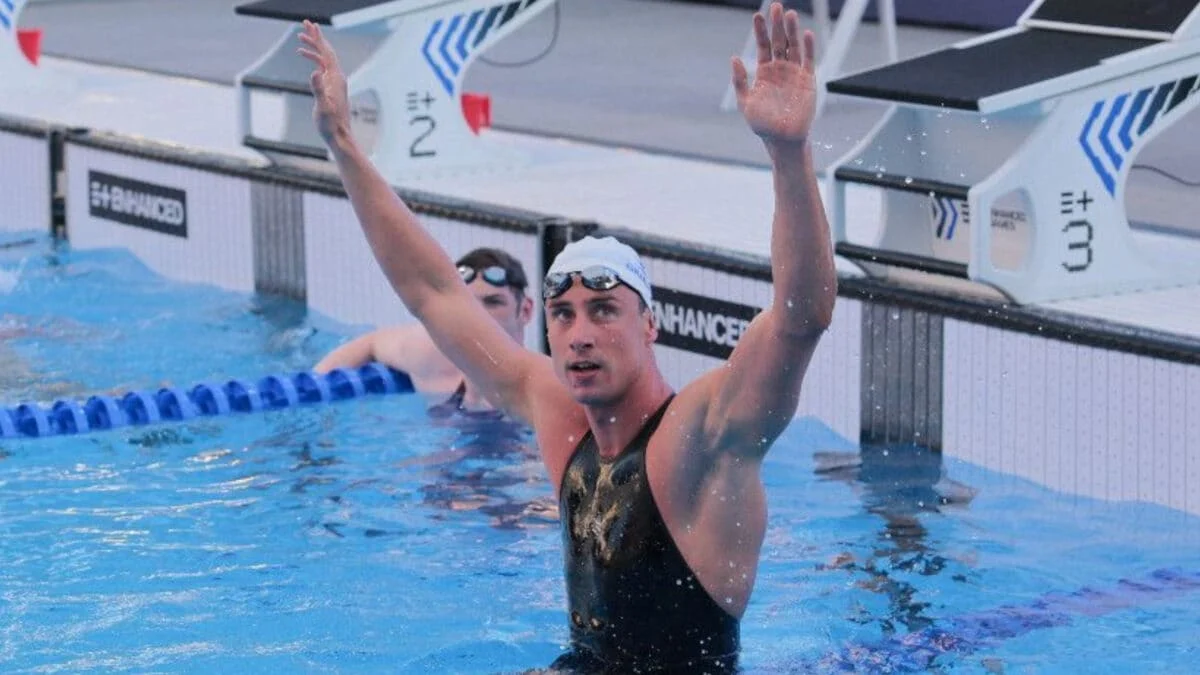
Las Vegas, Nevada – May 25, 2026 – In a spectacle designed to challenge the very foundations of traditional sports, Greek swimmer Kristian Gkolomeev plunged into the pool at the inaugural Enhanced Games in Las Vegas on Sunday, emerging moments later having clocked a time faster than the official men’s 50m freestyle world record. His electrifying 20.81 seconds would have sent shockwaves through the aquatic world, had it not been achieved under the controversial banner of an event that openly permits performance-enhancing drugs and banned technological aids. The mark, despite its raw speed, will not be etched into the annals of official sporting history, underscoring the profound chasm between this radical new competition and the established global athletic order.
The Enhanced Games, a brainchild of proponents advocating for "athlete freedom" and "scientific advancement," positioned itself as a bold alternative to the Olympic model, where the strictures of anti-doping regulations and equipment bans are cast aside. While Gkolomeev’s astonishing swim secured him a reported $1 million prize and the headline moment, it simultaneously ignited fresh debate on the ethics, safety, and future trajectory of human athletic endeavor.
Main Facts: A New Frontier in Athleticism, or a Dangerous Experiment?
The inaugural Enhanced Games concluded its first full day of competition in Las Vegas, leaving a trail of both record-breaking potential and profound controversy. The event, which included disciplines across swimming, athletics, and weightlifting, was meticulously crafted to push the boundaries of human performance, unburdened by the conventional rules governing mainstream sport.
The Golden Splash: Gkolomeev’s Unofficial Triumph
Kristian Gkolomeev, an Olympian with a history in traditional competition, delivered the most significant athletic achievement of the day. In the men’s 50m freestyle, he powered through the water to finish in an astounding 20.81 seconds. This time decisively surpassed the current official world record of 20.88 seconds, set just two months prior by Australian phenom Cameron McEvoy. The performance, undoubtedly aided by the explicit permission to use performance-enhancing substances and the wearing of previously banned "supersuits," earned Gkolomeev not only acclaim within the Enhanced Games’ ecosystem but also a staggering $1 million bonus for breaking a recognized world mark. The roar from the Las Vegas crowd was palpable, a testament to the raw speed witnessed, regardless of its legitimacy in the wider sporting context.
The Track’s Tumult: Kerley’s Bold Claims Fall Flat
In stark contrast to the aquatic success, the track events presented a more chaotic and less record-shattering narrative. American sprint star Fred Kerley, a prominent name attracted to the Games by its financial incentives, had been one of the most vocal proponents, boldly predicting that Usain Bolt’s legendary 9.58-second world record in the 100m sprint would be "destroyed" at the Enhanced Games. However, Kerley’s victory in the men’s 100m final ultimately clocked in at 9.97 seconds. While a respectable time for many, it fell dramatically short of his audacious prediction. To put it in perspective, his winning time would have placed him at the back of an Olympic final field, a far cry from the bronze medal performance he achieved in the 2024 Summer Olympics. The race itself was marred by multiple false starts and delays, with sprinters having to be reset in the blocks four separate times due to infractions and even untied shoes, indicating a level of disorganization that detracted from the supposed "elite" nature of the competition.
The Enhanced Ethos: Freedom and Science Above All
The Enhanced Games organizers articulate a philosophy centered on "athlete liberation," arguing that sportsmen and women should have the autonomy to make choices about their bodies and training, including the use of scientific and medical enhancements, provided these are undertaken with appropriate supervision. They frame their event as a progressive step towards unlocking the full potential of human performance, unhindered by what they deem arbitrary restrictions of traditional sports bodies. This ethos directly challenges the long-held principles of fair play and the "level playing field" that underpin conventional athletic competition.
The Uncounted Feat: Records Without Recognition
The fundamental reason Gkolomeev’s superlative swim, and any other potentially record-breaking performances, will not be recognized globally stems from the Enhanced Games’ core tenet: the open allowance of performance-enhancing drugs (PEDs) and certain technological advancements like "supersuits." These are universally banned by mainstream sports federations and anti-doping agencies such as the World Anti-Doping Agency (WADA). The very conditions under which these records are set render them incompatible with official athletic standards, effectively isolating the Enhanced Games from the established sporting world.
A Mixed Bag of "Records": An Outlier Success?
Perhaps one of the most telling aspects of the inaugural Enhanced Games was that Gkolomeev’s 50m freestyle swim stood as the only performance across the four hours of competition that genuinely surpassed an existing official world record. Despite the widespread expectation—and the explicit intention—that a multitude of records would fall under enhanced conditions, the absence of similar breakthroughs in athletics and weightlifting raised questions. Did this suggest a limit to how much even enhancement can improve performance, or was Gkolomeev’s achievement simply an outlier, a perfect storm of talent, technology, and pharmacology converging at the right moment?
Chronology: From Concept to Controversy
The journey of the Enhanced Games from a radical idea to a live, if controversial, event in Las Vegas has been marked by audacious pronouncements, significant financial backing, and a relentless media spotlight.
The Genesis of a Gilded Arena
The concept of the Enhanced Games first surfaced as a provocative idea championed by figures like Aron D’Souza, a venture capitalist and entrepreneur. D’Souza and his collaborators envisioned a sporting event free from what they perceived as the oppressive and hypocritical anti-doping regulations of traditional federations. Their argument posited that athletes should be empowered to explore the full extent of human potential, with scientific and medical support, rather than being penalized for seeking enhancement. Initial announcements of the Games, backed by substantial venture capital, were met with a firestorm of reactions, ranging from curious intrigue to outright condemnation from across the sporting and ethical spectrum.
Recruiting the Enhanced Elite
A cornerstone of the Enhanced Games’ strategy has been to attract top-tier athletes through compelling financial incentives. Reports detailed guaranteed base salaries for participants, a significant $250,000 prize for event winners, and substantial bonuses for any athlete who could surpass recognized world records. It was this financial allure that proved instrumental in drawing athletes like Australia’s former world champion swimmer James Magnussen, American sprinter Fred Kerley, and, of course, Kristian Gkolomeev. For many, the promise of financial security, potentially higher than what they could achieve in traditional sports, or simply the opportunity to compete without the constant threat of doping infractions, seemed to outweigh the significant ethical and reputational risks associated with the controversial competition. Athletes often spoke of a desire to "push the limits" or to reclaim agency over their own bodies and careers.
The Road to Las Vegas
In the months leading up to the May 25, 2026, event, media interest intensified. The Enhanced Games became a focal point for global debate, with news outlets, scientific journals, and sports commentators dissecting every aspect of its premise. Fred Kerley, in particular, became a de facto spokesman for the track and field contingent, his bold predictions about shattering Usain Bolt’s record generating significant buzz and setting lofty expectations for the Games’ potential. Meanwhile, organizers in Las Vegas finalized logistical preparations, transforming a conventional venue into an arena suitable for this unprecedented sporting spectacle, complete with medical facilities to monitor athletes under their "medically supervised" enhancement model.
Event Day: May 25, 2026 – A Day of Daring and Disappointment
The atmosphere in Las Vegas on Sunday was electric, a unique blend of sporting event, scientific experiment, and high-stakes entertainment. Spectators gathered, eager to witness what enhanced human performance truly looked like. The swimming events kicked off the "world record watch," with the sight of athletes in technologically advanced "supersuits" — previously banned for giving an unfair advantage — cutting through the water. It was in this environment that Kristian Gkolomeev delivered his defining performance. The collective gasp as his time flashed on the scoreboard, followed by an immediate eruption of cheers, marked the day’s high point.
However, the track and field events that followed struggled to maintain this momentum. The men’s 100m final, in particular, became emblematic of the challenges. The repeated false starts and delays created an anticlimactic tension, culminating in Kerley’s 9.97-second victory, which, while respectable, failed to live up to the pre-event hype. The promised destruction of records simply didn’t materialize across the board, leaving many to wonder if the enhancements were as universally transformative as advertised. Weightlifting and other events proceeded with enthusiasm from participants but did not yield any further "world records."
Immediate Aftermath and Reflection
In the immediate aftermath, organizers of the Enhanced Games celebrated Gkolomeev’s swim as a validation of their vision, a tangible demonstration of what is possible when athletes are "liberated." However, they also faced the reality that widespread record-breaking had not occurred, tempering some of the more hyperbolic predictions. Athletes expressed a range of emotions; winners like Gkolomeev celebrated their financial windfall and personal bests, while others undoubtedly reflected on performances that, despite enhancement, did not match their aspirations or the bold promises of the Games. The global sporting community, meanwhile, doubled down on its condemnation, reinforcing the unofficial status of any records set.
Supporting Data: The Science, The Money, and The Records
The Enhanced Games is more than just a competition; it’s a living experiment that merges performance, finance, and technology in a highly controversial cocktail. Understanding the specifics of these elements is crucial to grasping its impact.
Performance Metrics: Real Gains or Statistical Noise?
Gkolomeev’s Leap: Kristian Gkolomeev’s 20.81s in the 50m freestyle is objectively fast. To shave 0.07 seconds off an existing world record in such a short, explosive event is a significant improvement. Historically, the introduction of full-body "supersuits" between 2008 and 2009 led to an unprecedented number of swimming world records being broken, many of which still stand or took years to surpass after the suits were banned. These suits, which enhance buoyancy, reduce drag, and provide muscular compression, combined with the use of PEDs like anabolic steroids (for strength and recovery) or erythropoietin (EPO for oxygen delivery), could plausibly account for such a fractional but crucial gain. The question remains: how much was suit, how much was drug, and how much was Gkolomeev’s inherent talent?
Kerley’s Plateau: Fred Kerley’s 9.97s, while a sub-10-second sprint, is a full 0.39 seconds slower than Usain Bolt’s 9.58s. In elite sprinting, this is an eternity. Even with performance-enhancing drugs that could boost power, speed, and recovery, the intricate biomechanics and technical precision required for a truly world-beating 100m sprint are incredibly difficult to optimize. Steroids might aid muscle mass and explosiveness, and stimulants could sharpen focus, but they cannot inherently perfect technique or overcome a bad start. The chaotic nature of the 100m final, with multiple false starts, also likely impacted overall performance, disrupting rhythm and mental focus, regardless of enhancement. The fact that his time would have barely made the 2024 Olympic final (where he won bronze, implying he’s capable of much faster) highlights that even with enhancement, factors like race conditions, psychology, and inherent limits still play a critical role.
The "Only Record" Anomaly: The single "world record" performance raises a critical question: why not more? If the premise is that unchecked enhancement will unlock a cascade of new records, one record across three disciplines seems underwhelming. This could suggest several things:
- The limits of enhancement are still significant, even with PEDs.
- The participant pool, while including some stars, might not yet represent the absolute peak of enhanced human potential.
- The specific combination of athlete, enhancement, and discipline (e.g., the significant impact of supersuits in swimming) might have been uniquely optimal for Gkolomeev.
The Economic Engine of Enhancement
The financial model of the Enhanced Games is a powerful draw. Guaranteed base salaries for participation, irrespective of performance, offer a level of financial security many athletes in less-mainstream sports or those nearing the end of their careers might not find elsewhere. The $250,000 prize money for event winners far exceeds what many athletes earn at smaller traditional competitions, and even rivals some major events. Gkolomeev’s $1 million bonus for breaking a recognized world record is an astronomical sum for a single swimming event, designed to create high-stakes drama and incentivize truly exceptional performances. This financial structure directly targets athletes who might be disillusioned with the economic realities of traditional amateur or professional sports, offering a clear monetary reward for embracing the enhanced model.
The Role of Technology: Beyond Biology
The re-introduction of "supersuits" in swimming is a prime example of the technological dimension of the Enhanced Games. These full-body polyurethane or rubberized suits, such as those made famous by Speedo’s LZR Racer, were banned by FINA (now World Aquatics) in 2009 after a period where an unprecedented 130 world records fell in a single year. Their effectiveness lies in reducing drag, increasing buoyancy, and compressing the body for a more streamlined profile, effectively making swimmers faster without any biological enhancement. Beyond swimming, the Games could potentially explore other technological aids, from advanced footwear in athletics to exoskeletons or specialized lifting gear in weightlifting, further blurring the lines between human and machine performance.
The Doping Dilemma: A Controlled Experiment?
The Enhanced Games’ unique stance on doping is its defining characteristic. Organizers claim a "medically supervised" approach, arguing that banning drugs pushes usage underground, making it more dangerous. By openly permitting and monitoring the use of PEDs, they contend they can ensure athlete safety. However, this is a highly contentious claim. Commonly used PEDs in swimming and sprinting include anabolic-androgenic steroids (for muscle growth, strength, and recovery), human growth hormone (HGH, for muscle and tissue repair), EPO (for increased red blood cell count and oxygen delivery), and various stimulants. While medical supervision might mitigate some immediate risks, the long-term health consequences of such substances—including cardiovascular issues, liver damage, hormonal imbalances, psychological effects, and an increased risk of injury—are well-documented and profoundly concerning, regardless of oversight. The Games essentially become a public human experiment, raising significant ethical questions about informed consent and the ultimate responsibility for athlete welfare.
Official Responses: A Chasm Between Ideologies
The emergence of the Enhanced Games has created an irreconcilable divide between its proponents and the established institutions of global sport, each side firmly entrenched in its own philosophical and ethical framework.
The Enhanced Games’ Visionaries Speak
Aron D’Souza and the leadership of the Enhanced Games articulate a vision of athletic liberation. They frequently emphasize themes of "athlete freedom," arguing that adult competitors should have the autonomy to make choices about their own bodies and careers, including the use of scientifically-backed performance enhancements. Their narrative suggests that traditional sports bodies are paternalistic and stifle innovation, forcing athletes to compete under restrictive and often economically disadvantageous conditions. They position the Games as a transparent alternative, where scientific curiosity and the pursuit of ultimate human potential are paramount, openly embracing a model they believe is more honest than the "cat and mouse" game of traditional anti-doping. Their response to critics often involves accusations of hypocrisy against traditional sports, suggesting that a ban on enhancements merely creates a black market and that open, medically supervised use is the safer, more ethical path.
The Guardians of Traditional Sport React
The condemnation from traditional sports bodies has been swift, strong, and unequivocal. Organizations such as World Aquatics, World Athletics, the International Olympic Committee (IOC), and the World Anti-Doping Agency (WADA) have universally denounced the Enhanced Games. Their arguments center on the fundamental principles of fair play, the integrity of sport, and, crucially, athlete health and safety.
- Integrity and Fair Play: These bodies argue that the essence of sport lies in the fair competition of human talent and dedication, not in pharmacological or technological advantages. Allowing PEDs fundamentally undermines the concept of a level playing field, where victory is earned through natural ability and training.
- Athlete Health and Safety: Despite claims of "medical supervision" by the Enhanced Games, traditional bodies and medical experts warn of the severe and often irreversible long-term health consequences associated with chronic, high-dose use of performance-enhancing drugs. They assert that no amount of supervision can fully mitigate these inherent risks.
- Non-Recognition of Records: All records set at the Enhanced Games are explicitly stated to be unofficial and will not be recognized by any international sporting federation. Furthermore, athletes who participate in the Enhanced Games face potential bans and sanctions from competing in traditional, WADA-compliant events, creating a significant deterrent for many.
- Public Perception: Traditional sports organizations also express concern that the Enhanced Games tarnishes the image of sport globally, transforming it into a potentially dangerous spectacle rather than an inspiring display of human achievement through dedication and natural talent.
Medical and Ethical Experts Weigh In
Beyond the official sporting bodies, a wide array of medical and ethical experts have voiced profound concerns. Medical professionals highlight the profound and often irreversible health risks that participants in the Enhanced Games willingly or unwillingly undertake. They question the definition of "medical supervision" in a context where the explicit goal is to push physiological limits using substances known to cause harm. Ethicists delve into the implications of such competitions for the "spirit of sport," the definition of "human achievement," and the potential for creating a two-tiered system of athletes—those who compete naturally and those who are enhanced. They also raise questions about fairness, particularly concerning access to the most effective and expensive enhancements, which could create a new form of inequality.
Implications: Redefining Sport in the 21st Century
The inaugural Enhanced Games, highlighted by Kristian Gkolomeev’s unofficial world record, represents more than just a single controversial event; it heralds a potential paradigm shift in the ongoing debate about the nature and future of sport itself. Its long-term implications are far-reaching, touching upon sustainability, ethical boundaries, and the very definition of athletic excellence.
The Future Trajectory of the Enhanced Games
The sustainability of the Enhanced Games hinges on its ability to consistently attract top-tier athletes, secure significant funding, and garner public interest. While the initial event created considerable buzz and attracted some notable names, the relatively sparse number of "world records" beyond Gkolomeev’s swim might temper future expectations. The organizers’ vision extends beyond a single event, aiming for expansion in terms of disciplines, global reach, and frequency. However, overcoming the vehement opposition from traditional sports bodies and establishing any form of legitimacy will be an uphill battle. The challenge lies in transitioning from a controversial spectacle to a recognized, albeit alternative, sporting entity.
Impact on Mainstream Athletics
While the Enhanced Games currently operates on the fringes, its existence could exert subtle pressures on mainstream athletics. The significant prize money offered at the Enhanced Games might force traditional federations to re-evaluate their own financial models and athlete welfare programs, particularly for sports where prize money is less lucrative. It could also spark renewed discussions within WADA and the IOC about the efficacy and ethics of current anti-doping protocols, though it’s highly unlikely to lead to an acceptance of open doping. Instead, it might reinforce the resolve of traditional bodies to uphold their principles. The creation of a "two-tier" system, where athletes choose between natural and enhanced competition, could fracture the sporting landscape, making it more challenging for athletes to transition between the two.
The Enduring Ethical Conundrum
The Enhanced Games thrusts the ethical debate surrounding human potential, technology, and fair play squarely into the public consciousness. It forces a re-examination of what truly constitutes "sport." Is it a celebration of natural human limits, or an exploration of what’s possible with every available scientific and technological tool? The "spirit of sport,"
