

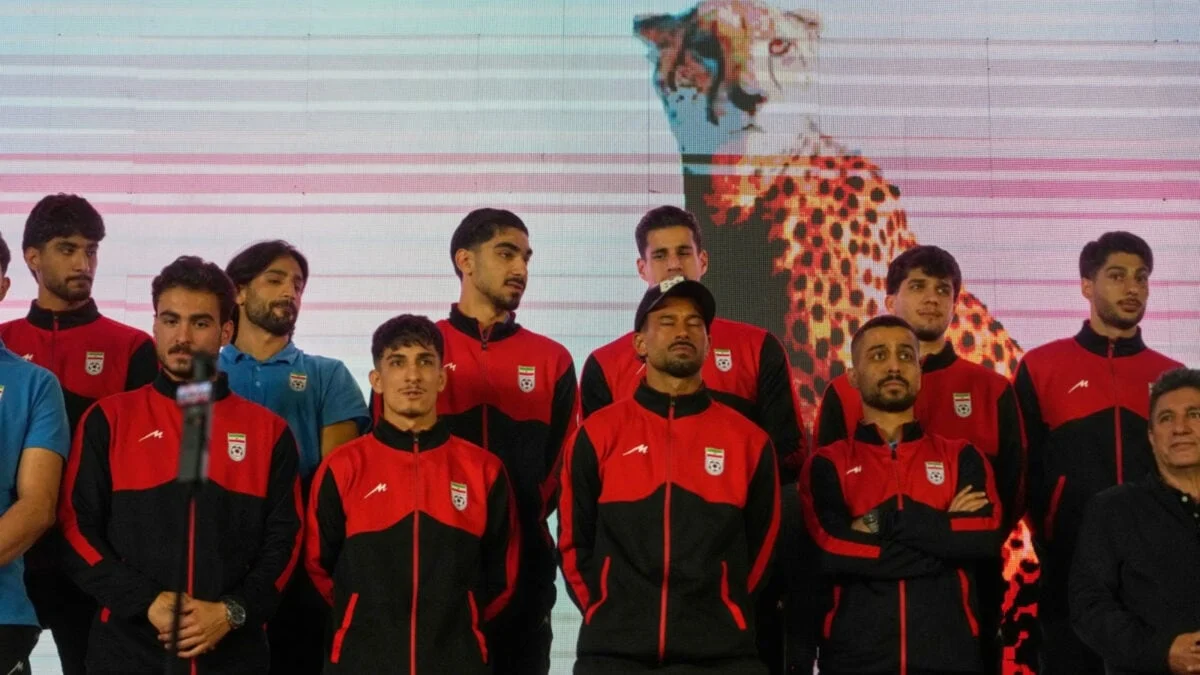
New Delhi, India – May 25, 2026 – In a significant diplomatic breakthrough for international sports, Iran’s national men’s football team has officially secured the necessary visas to participate in the upcoming FIFA World Cup this summer, co-hosted by the United States, Mexico, and Canada. The assurance comes directly from FIFA, following months of intense uncertainty fueled by escalating geopolitical tensions in West Asia, which had cast a long shadow over Iran’s involvement in the global spectacle.
The confirmation, relayed by Iran’s Sports Minister, Ahmad Donyamali, signals a victory for sports diplomacy, demonstrating FIFA’s commitment to uphold the integrity of the tournament against a backdrop of complex international relations. Despite a volatile period marked by reported US and Israeli strikes on Iran earlier this year, which intensified regional instability and disrupted normal travel protocols, the Iranian squad is now poised to make its journey to North America, with training camps strategically planned in Tijuana, Mexico, and Antalya, Turkey.
A Diplomatic Victory Amidst Geopolitical Volatility
The path for Team Melli to the 2026 FIFA World Cup has been anything but straightforward. The announcement on Monday, May 25, 2026, by Iran’s Sports Minister, Ahmad Donyamali, marked the culmination of persistent diplomatic efforts. "The FIFA president promised us that all our players would receive visas. There is no reason why our players shouldn’t receive visas. I hope that all the conditions will be met so that the national team can participate in the tournament in a calm and orderly manner," Donyamali was quoted as saying by ISNA, expressing relief and optimism.
This assurance from FIFA President Gianni Infantino comes at a crucial juncture. The broader geopolitical landscape of West Asia has been particularly fraught, experiencing a significant escalation following reported US and Israeli strikes on Iranian targets earlier in the year. These actions triggered a ripple effect of heightened tensions, impacting travel, trade, and even cultural exchanges, making the prospect of Iranian athletes freely entering the United States for a major international event highly contentious. The uncertainty surrounding visa approvals had been a primary concern, threatening to overshadow Iran’s preparations and potentially compromise the universality of the World Cup.
The FIFA World Cup, as a premier global sporting event, prides itself on transcending political divides, fostering unity, and promoting fair play. However, the unique co-hosting arrangement, with the United States as one of the primary venues, presented an unprecedented challenge given the strained relations between Washington D.C. and Tehran. The prospect of a participating nation facing travel restrictions due to political disputes ran counter to the very spirit of the World Cup, prompting FIFA to step in as a crucial mediator.
FIFA’s intervention underscores its role not merely as a football governing body but as a significant international actor capable of navigating complex political terrains. The organization’s charter emphasizes the separation of sport from politics, a principle that was rigorously tested and ultimately upheld in this instance. By securing these assurances, FIFA has reinforced its commitment to ensuring that sporting merit, not political affiliation, dictates participation in its flagship tournament. This diplomatic success ensures that the focus remains on the beautiful game, allowing athletes from all qualified nations to compete on the world stage without undue political interference.
The Road to Securing Visas: A Chronology of Strategic Moves
The journey to secure Team Iran’s participation has involved a series of strategic decisions and diplomatic overtures, reflecting the complex interplay between sports, politics, and international relations.
Initial Doubts and Escalating Tensions: The year 2026 began with heightened concerns for Iran’s World Cup prospects. Following the reported US and Israeli strikes on Iran, the geopolitical climate in West Asia deteriorated sharply. These events not only raised security alarms but also led to immediate speculation about travel restrictions and potential visa denials for Iranian nationals seeking entry into the United States. For a nation whose football team had qualified for the world’s most prestigious tournament, this uncertainty was a major distraction and a source of considerable anxiety for players, staff, and fans alike. The possibility of political friction preventing a deserving team from participating in the World Cup was a scenario FIFA was keen to avoid.
FIFA’s Decisive Intervention: Recognizing the gravity of the situation, FIFA initiated direct engagement with relevant authorities. The turning point came during the FIFA Congress held in Vancouver, Canada, in April 2026. It was here that FIFA President Gianni Infantino publicly confirmed that Iran would play their World Cup games in the United States as scheduled. This statement was a powerful declaration of intent, signaling FIFA’s unwavering commitment to the principle of inclusive participation. Infantino’s pledge served as the cornerstone of the subsequent efforts to resolve the visa predicament, offering the first concrete assurance that a solution was actively being pursued at the highest levels of football governance.
Strategic Training Camps: Tijuana and Antalya: To circumvent potential direct obstacles related to US visa processing and to provide a stable training environment, a dual-location strategy was adopted for Iran’s pre-tournament preparations. Initially, the team had considered a training base in Arizona, USA. However, this plan was re-evaluated in light of the visa uncertainties.
- Tijuana, Mexico: FIFA approved Iran’s request to shift their primary training camp to Tijuana, a bustling Mexican border city. This move was strategically brilliant. Mexico, as a co-host of the World Cup, is bound by international obligations to facilitate the entry and stay of participating nations. More importantly, basing the team in Tijuana allows for close proximity to the US border, simplifying logistics once the multiple-entry US visas are secured. The Mexican government, under President Claudia Sheinbaum, actively embraced this role, signaling solidarity and a commitment to the spirit of the World Cup. Tijuana offers modern facilities and a climate conducive to athletic training, making it an ideal staging ground.
- Antalya, Turkey: Prior to their move to Mexico, the Iranian national team established a training camp in Antalya, a popular coastal city in southern Turkey. Turkey’s geographical location and its established diplomatic relations with both Iran and Western nations made it a practical choice for initial preparations. This camp served as an essential phase for team cohesion, tactical refinement, and physical conditioning, away from the immediate pressures of the visa situation.
The Visa Application Process: With FIFA’s assurances in hand and strategic training locations secured, the practical steps for visa acquisition began. A contingent of Iranian footballers and support staff traveled from their Antalya camp to the United States embassy in Ankara, Turkey, on Thursday, May 22, 2026. There, they formally submitted their visa applications. This process, typically stringent, was expected to be expedited and facilitated due to FIFA’s direct intervention and the host nations’ commitments. The expectation was that the "multiple-entry visas issued by the United States" would be processed efficiently, allowing for seamless travel between Mexico and the US for matches.
This chronological sequence of events—from initial geopolitical concerns to FIFA’s pledge, the strategic choice of training bases, and the final visa application—illustrates a carefully managed diplomatic effort to ensure Iran’s rightful place in the FIFA World Cup, demonstrating how international sporting bodies can effectively navigate complex political landscapes.
Official Voices and Commitments
The resolution of Iran’s visa situation has been driven by clear commitments from key officials, highlighting the collective will to prioritize sport over political friction. Their statements underscore the principles of international sporting events and the responsibilities of host nations.
Ahmad Donyamali, Iran’s Sports Minister: As the primary voice for Iran on this matter, Donyamali has consistently emphasized the legitimacy of Iran’s participation and the obligations of the host nations. His statement to ISNA—"The FIFA president promised us that all our players would receive visas. There is no reason why our players shouldn’t receive visas. I hope that all the conditions will be met so that the national team can participate in the tournament in a calm and orderly manner"—encapsulates the relief and expectation from the Iranian side. Donyamali’s assertion that "the FIFA World Cup hosts were obliged to issue visas to all participating nations, including footballers and support staff," directly appeals to international sporting protocols, reminding the United States of its commitments as a host. His further comment that "In Mexico, the Iranian national team is expected to obtain multiple-entry visas issued by the United States," clarifies the logistical pathway chosen to facilitate their entry, leveraging Mexico’s hospitality to bridge the diplomatic gap.
Gianni Infantino, FIFA President: FIFA’s top official played a pivotal role in de-escalating the situation. His confirmation at the FIFA Congress in Vancouver in April that "Iran would play their World Cup games in the United States as scheduled" was the decisive moment that set the resolution in motion. Infantino’s stance reflects FIFA’s longstanding policy of separating sport from politics. His commitment was not merely a statement of support but an assurance that FIFA would actively work to overcome any political hurdles. This intervention highlights FIFA’s powerful influence as a global governing body, capable of engaging with national governments to ensure the smooth running and universal participation in its tournaments. Infantino’s leadership in this crisis reinforces the idea that the World Cup is a celebration of global football, where all qualified nations have an inherent right to compete, irrespective of their political affiliations or geopolitical disputes.
Claudia Sheinbaum, Mexican President: Mexico’s role as a co-host has proven to be instrumental in this diplomatic solution. President Sheinbaum’s public affirmation on Monday that "the nation will permit Iran to be based there to avoid United States visa restrictions" was a crucial show of solidarity and practical support. By offering Tijuana as a training base, Mexico provided a neutral and welcoming environment that bypassed the immediate entry challenges into the US. This decision not only demonstrates Mexico’s commitment to its co-hosting duties but also its willingness to act as a bridge in complex international situations. President Sheinbaum’s government facilitated a pathway for Iran to obtain the necessary "multiple-entry visas" for the United States while based on Mexican soil, effectively leveraging the trilateral hosting agreement to overcome a bilateral political impasse.
These official responses collectively demonstrate a concerted effort by FIFA and the co-host nations to ensure the World Cup remains an inclusive and apolitical platform for global competition, successfully navigating a sensitive geopolitical challenge.
Broader Implications: Sports Diplomacy and the Global Stage
The successful resolution of Iran’s visa situation for the 2026 FIFA World Cup carries far-reaching implications, underscoring the enduring power of sports diplomacy and the unique role of global sporting events in an increasingly interconnected yet fragmented world.
Soft Power and Bridging Divides: This incident serves as a powerful testament to sports as a form of "soft power." In an era dominated by geopolitical friction and complex international relations, football—the world’s most popular sport—has once again proven its capacity to transcend political animosities. The sight of Iranian athletes competing in the United States, even amidst lingering tensions, sends a symbolic message of potential cooperation and mutual respect. It offers a rare opportunity for people-to-people interaction and cultural exchange that might otherwise be impossible, creating a temporary, shared space where national identities are celebrated through athletic prowess rather than political rhetoric. This can subtly influence public perceptions and open informal channels of communication, even if formal diplomatic ties remain strained.
Reinforcing FIFA’s Authority and Neutrality: FIFA’s decisive intervention reinforces its stature as a potent international governing body. By successfully navigating such a sensitive political quagmire, the organization has demonstrated its commitment to its charter—which advocates for the separation of sport and politics—and its capacity to enforce it. This precedent strengthens FIFA’s moral authority and its ability to ensure the integrity and universality of its tournaments. It sends a clear message to future host nations that political disputes should not impede the participation of qualified teams, thereby safeguarding the global, inclusive nature of the World Cup. This diplomatic triumph elevates FIFA beyond merely organizing matches; it positions the body as a significant player in global governance and diplomacy.
Psychological Impact and Player Morale: For the Iranian national team, the resolution brings immense relief and a crucial boost to morale. Prolonged uncertainty over visas can be a significant psychological burden, diverting focus from training and tactical preparation. With the visa issue now settled, Team Melli can fully concentrate on their athletic performance, representing their nation on the grandest stage. This clarity allows coaches to finalize logistics, player selections, and game strategies without the looming threat of political interference. The assurance of participation fosters a sense of fairness and validation for the athletes who have worked tirelessly to qualify.
Fan Engagement and Global Unity: The news is a cause for celebration for Iranian football fans worldwide, who can now eagerly anticipate their team’s participation without reservation. More broadly, it reinforces the World Cup’s status as a unifying global spectacle. When all qualified nations are present, the tournament truly embodies its spirit of international camaraderie and competition. It allows fans from diverse backgrounds to come together, celebrate the sport, and witness the best teams compete, fostering a sense of shared humanity that transcends national borders and political differences.
Setting a Precedent for Future Events: This incident could set an important precedent for future major international sporting events. As global politics become increasingly intricate, the challenge of hosting multi-national tournaments will inevitably face similar tests. FIFA’s successful handling of the Iranian visa situation provides a valuable blueprint for how international sports organizations, in collaboration with host governments, can proactively address and resolve politically charged logistical hurdles. It emphasizes the importance of clear commitments, strategic planning, and the unwavering dedication to the principles of fair and inclusive competition.
In essence, the resolution of Iran’s World Cup visa dilemma transcends a mere administrative detail. It stands as a testament to the enduring power of sports diplomacy, FIFA’s diplomatic efficacy, and the collective global desire to see the "beautiful game" played out on an inclusive and equitable world stage.
Looking Ahead: The World Cup Awaits
With the visa hurdle now firmly behind them, Iran’s national football team can fully pivot their attention to the monumental task ahead: competing in the FIFA World Cup 2026. The tournament, co-hosted by the United States, Mexico, and Canada, is set to kick off on June 11, promising a month-long celebration of global football.
The Iranian squad will leverage their strategic training camps in Antalya, Turkey, and Tijuana, Mexico, to fine-tune their preparations. These locations offer diverse environments for training, from the Mediterranean climate of Turkey to the dynamic border city of Mexico, allowing the team to acclimatize and optimize their physical and tactical readiness for the challenges of the tournament. The focus will now shift entirely to on-field performance, team cohesion, and strategic execution.
For Team Melli, participation in the World Cup is not just about football; it’s about national pride, global representation, and showcasing the resilience of its athletes. Having navigated a complex geopolitical landscape to secure their place, the team will undoubtedly carry an added sense of purpose and determination onto the pitches of North America. The world will be watching as Iran steps onto the global stage, a testament to the power of sport to unite, even in the face of significant international challenges. The FIFA World Cup 2026 is poised to be an unforgettable event, and Iran’s presence will be a powerful reminder of football’s enduring capacity to triumph over adversity.
