

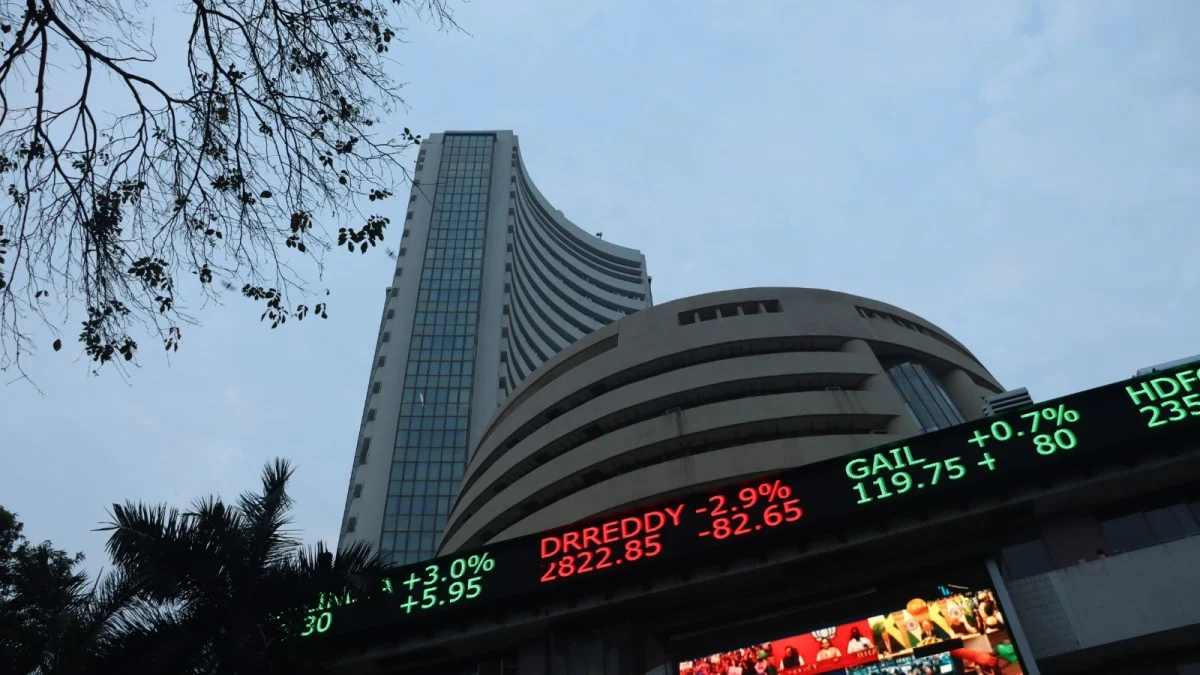
NEW DELHI, India – May 27, 2026 – Indian equity benchmarks concluded Tuesday’s trading session on a largely subdued note, reflecting a cautious investor sentiment amid a confluence of mixed global cues and pronounced sector-specific movements. While the headline indices registered minor declines, a robust performance in the automotive and metals sectors provided a crucial counterbalance to the drag exerted by heavyweight financial stocks. The day’s trading underscored a persistent theme of discerning capital allocation, with investors actively rotating between sectors in pursuit of resilient growth stories and value opportunities.
The benchmark BSE Sensex, a barometer of India’s top 30 companies, shed 141 points, or 0.19%, to close at 75,867. Meanwhile, the broader Nifty 50, representing the 50 largest Indian companies, demonstrated greater resilience, ending nearly flat at 23,907, a marginal decline of less than one point. This divergence between the two key indices highlighted the targeted selling pressure observed in a few high-weightage Sensex constituents, particularly within the financial sector, which offset the broader market’s underlying strength.
The Day’s Unfolding: A Chronology of Cautious Trading
The trading day commenced with a palpable sense of apprehension permeating global markets, setting a cautious tone for Indian equities. Early morning cues from Asian markets, which largely traded mixed, coupled with an overhang of uncertainty from previous day’s European and US sessions, contributed to a muted opening for the Sensex and Nifty. Both indices opened marginally lower, with initial trading hours characterized by consolidation and a lack of aggressive directional bets.
As the session progressed into mid-morning, selling pressure began to intensify in select financial counters, particularly large private sector banks. This exerted a significant downward pull on the Sensex, which dipped further below its opening levels. The Nifty, while also feeling the strain, found some support from early buying interest in defensive sectors and certain manufacturing-oriented stocks. Analysts pointed to a period of profit-booking in financials, following a strong run-up in previous weeks, as a primary driver of this mid-session weakness.
The afternoon saw a renewed attempt by the bulls to stage a recovery. Positive momentum started building in the automotive and metals sectors, attracting fresh capital inflows. This sectoral rotation helped mitigate the broader market’s losses, preventing a more significant downturn. However, any substantial upward movement was capped by continued pressure on a few bellwether stocks, especially HDFC Bank, which remained a persistent drag. The late afternoon witnessed a marginal rebound from the day’s lows, but the indices ultimately closed in the red, reflecting the tug-of-war between sectoral strengths and weaknesses. The Nifty managed to hold the psychologically important 23,900 level, signaling a degree of underlying support despite the selling pressure.
Supporting Data: A Deep Dive into Sectoral Dynamics and Market Breadth
The nuanced performance of the market on May 27, 2026, was best understood through a detailed examination of its underlying components. The day was a classic example of a market driven by stock-specific and sectoral narratives rather than a broad-based directional move.
Financials Weigh Heavily:
The financial sector, a cornerstone of the Indian economy and a significant contributor to index weightage, emerged as the primary drag on market performance. The Nifty Bank index, comprising the nation’s leading banks, declined by 0.43%, indicating widespread pressure across the banking pack. Leading the pack of laggards was HDFC Bank, India’s largest private sector lender, whose shares tumbled over 2.6%. This decline alone contributed substantially to the Sensex’s overall fall. Other prominent lenders like ICICI Bank and Kotak Mahindra Bank also traded lower, reinforcing the sector-wide weakness.
Market participants attributed the weakness in financial stocks to a combination of factors. Concerns over potential shifts in interest rate trajectories, especially given the global macroeconomic environment, often lead to re-evaluation of lending margins and asset quality. Furthermore, integration challenges post-mergers, competitive pressures, and specific news flows related to institutional holding adjustments might have played a role in HDFC Bank’s pronounced decline. Analysts also pointed to profit booking after recent gains, as institutional investors might have opted to rebalance their portfolios. The sector’s sensitivity to both domestic and global liquidity conditions often makes it susceptible to such movements.
Auto Sector Accelerates Ahead:
In stark contrast to the financial sector, the automotive industry revved up, showcasing robust performance. The Nifty Auto index surged by an impressive 1.45%, making it one of the top sectoral performers of the day. This upward momentum was fueled by strong buying interest in key players such as Maruti Suzuki India and Mahindra & Mahindra. Maruti Suzuki, India’s largest carmaker, saw its shares gain considerably, buoyed by optimistic outlooks on demand, potentially lower input costs, and a pipeline of new model launches. Mahindra & Mahindra also benefited from strong sales figures in both its automotive and farm equipment divisions, coupled with positive sentiment around its electric vehicle (EV) strategy.
The automotive sector’s resilience is often linked to improving consumer sentiment, easing supply chain constraints, and the ongoing premiumization trend in vehicle purchases. Robust economic growth projections for India, coupled with increasing disposable incomes, typically translate into higher vehicle sales. Additionally, government incentives for electric vehicle adoption and infrastructure development continue to provide tailwinds for the sector.
Metal Counters Shine Bright:
The metals sector also demonstrated considerable strength, with the Nifty Metal index climbing by 1.67%. This upward trajectory was largely driven by optimism surrounding global commodity demand and a positive outlook for industrial activity. Shares of Tata Steel, a major player in the steel industry, gained more than 2% during the session. Other metal companies also witnessed significant buying interest.
The performance of the metal sector is intrinsically linked to global economic health, particularly the manufacturing and infrastructure development cycles in major economies like China, the US, and Europe. Positive news flow regarding global industrial production, coupled with any signs of economic recovery or stimulus measures in key markets, tends to boost commodity prices and, consequently, the profitability of metal producers. Easing concerns over global inflation and a stable demand environment often create a conducive backdrop for this cyclical sector.
Broader Markets Outperform Frontline Indices:
A notable feature of the day’s trading was the continued outperformance of broader markets over the frontline benchmarks. The Nifty Midcap 100 index advanced by 0.42%, while the Nifty Smallcap 250 index gained an even more substantial 0.55%. This trend signifies sustained investor interest and confidence in mid- and small-capitalization companies, often perceived as having higher growth potential.
The resilience of the broader market segments can be attributed to several factors. Domestic institutional investors (DIIs) and retail investors have shown a consistent appetite for these segments, driven by attractive valuations and specific growth stories. Many mid-cap and small-cap companies are beneficiaries of India’s domestic consumption theme, infrastructure push, and manufacturing growth initiatives. Furthermore, increased retail participation in the stock market has often channeled funds into these segments, providing a strong liquidity cushion. Market breadth, which measures the number of advancing stocks versus declining stocks, remained largely positive, even as benchmark indices traded under pressure, further corroborating the strength in the broader market.
Easing Volatility:
Adding another layer of insight into investor sentiment, the India VIX, often dubbed the "fear gauge" of the market, declined significantly. It fell by more than 7% to settle at 14.98. A lower VIX typically suggests easing volatility expectations among traders and investors, indicating a reduction in perceived market risk. This could imply that while there was some selling pressure in specific pockets, the broader market participants were not anticipating a sharp, broad-based downturn. A calm VIX often supports a more rational and less panic-driven trading environment, allowing for selective buying opportunities.
Global Context and Macroeconomic Factors:
Globally, markets presented a mixed picture, influencing the cautious sentiment in India. While some Asian indices managed to eke out gains, others, particularly those with higher exposure to technology or export-oriented sectors, faced headwinds. European markets were largely range-bound as investors digested fresh economic data and awaited signals from central banks regarding monetary policy. The US markets, which had closed mixed on the previous day, also contributed to the overall cautious global environment.
Domestically, investors continued to monitor key macroeconomic indicators. While inflation had shown signs of moderating in recent months, any resurgence in commodity prices or supply chain disruptions remained a concern. The Reserve Bank of India’s (RBI) stance on interest rates, influenced by both domestic inflation and global monetary tightening cycles, was also a crucial factor. Foreign Institutional Investor (FII) flows remained an important determinant, with any significant outflows potentially putting pressure on the rupee and equity markets. On May 27, FII activity was observed to be somewhat mixed, with selective selling in certain large-cap segments, offset by DII buying.
Official Responses and Expert Commentary
Market strategists and economists offered varied perspectives on the day’s trading dynamics, largely echoing the sentiment of cautious optimism mixed with tactical re-allocation.
"Today’s market performance is a classic example of sector rotation at play," commented Ms. Ananya Sharma, Head of Equity Research at Zenith Capital. "The weakness in financials, particularly HDFC Bank, reflects some profit-booking and perhaps re-evaluation of growth drivers in the short term. However, the strength in autos and metals clearly indicates that domestic consumption and global recovery narratives are still robust. Investors are looking for pockets of growth that are resilient to potential interest rate fluctuations."
Mr. Rajeev Kapoor, Chief Market Strategist at Alpha Investments, highlighted the significance of the broader market’s outperformance. "The sustained interest in mid-cap and small-cap segments underscores the domestic liquidity story. Retail investors and DIIs continue to find compelling growth opportunities beyond the top 50 or 100 stocks. This broad-based participation is a healthy sign for the overall market structure, even if the headline indices appear somewhat subdued."
Regarding the decline in India VIX, Dr. Priya Singh, a macroeconomist and market commentator, noted, "A falling VIX suggests that market participants are not anticipating any major shocks in the immediate future. This provides a more stable environment for stock-specific action. While global uncertainties persist, the market seems to be pricing in a relatively predictable path for domestic economic policy and corporate earnings, at least in the near term."
Experts largely concurred that while global headwinds, including geopolitical developments and inflationary pressures, remain factors to watch, India’s domestic growth story and structural reforms continue to attract capital. "We are seeing a discerning market, where capital is flowing into sectors with clear earnings visibility and strong fundamentals," added Ms. Sharma.
Implications and Future Outlook
The market’s performance on May 27, 2026, offers several implications for investors and signals potential trends for the coming weeks and months.
Continued Sectoral Rotation: The pronounced divergence between sectors suggests that investors should anticipate continued sectoral rotation. Capital is likely to move between financials, industrials, consumption, and export-oriented sectors based on evolving macroeconomic data, corporate earnings, and global commodity price trends. This necessitates a flexible and dynamic investment strategy, focusing on identifying sectors poised for growth rather than betting on broad market movements alone.
Focus on Domestic Growth Drivers: The resilience of the auto, metals, and broader market segments highlights the strength of India’s domestic growth story. Sectors benefiting from government infrastructure spending, ‘Make in India’ initiatives, rising disposable incomes, and consumption trends are likely to remain in focus. This also includes segments like capital goods, real estate, and select manufacturing plays.
Financials Under Scrutiny: While the financial sector remains critical, its recent performance suggests that investors will be increasingly selective. Valuations, asset quality trends, and the ability of banks to maintain healthy net interest margins in a potentially fluctuating interest rate environment will be key determinants of future performance. Any regulatory changes or shifts in monetary policy will also be closely watched for their impact on this heavyweight sector.
Monitoring Global Cues: Despite strong domestic fundamentals, Indian markets are not immune to global developments. Investors will continue to monitor geopolitical tensions, crude oil price movements, global inflation trends, and the monetary policy stances of major central banks (like the US Federal Reserve and the European Central Bank). Any significant shifts in these global factors could trigger volatility in Indian equities.
Importance of Macroeconomic Data: Upcoming domestic macroeconomic data releases, including inflation figures, industrial production data, and GDP growth estimates, will provide further cues on the health of the Indian economy and guide the Reserve Bank of India’s policy decisions. These data points will be critical in shaping investor sentiment and market direction. Foreign fund flows, both institutional and direct investments, will also remain a key indicator of international confidence in the Indian growth story.
In the short term, market participants will be closely watching corporate earnings announcements for the current quarter, which will provide deeper insights into the health of various sectors and individual companies. The outlook for monsoon rains, a critical factor for India’s agricultural economy and rural demand, will also play a significant role.
In conclusion, May 27, 2026, marked a day of measured consolidation for Indian equities. While benchmark indices registered minor declines, the underlying market strength, evidenced by robust broader market performance and significant sectoral gains, painted a picture of a discerning yet resilient market. Investors are navigating a complex landscape by strategically allocating capital, emphasizing quality, growth, and domestic demand drivers, while remaining vigilant to evolving global and macroeconomic narratives. The prevailing mood suggests a "wait and watch" approach, with a keen eye on fundamental developments shaping India’s economic trajectory.
