

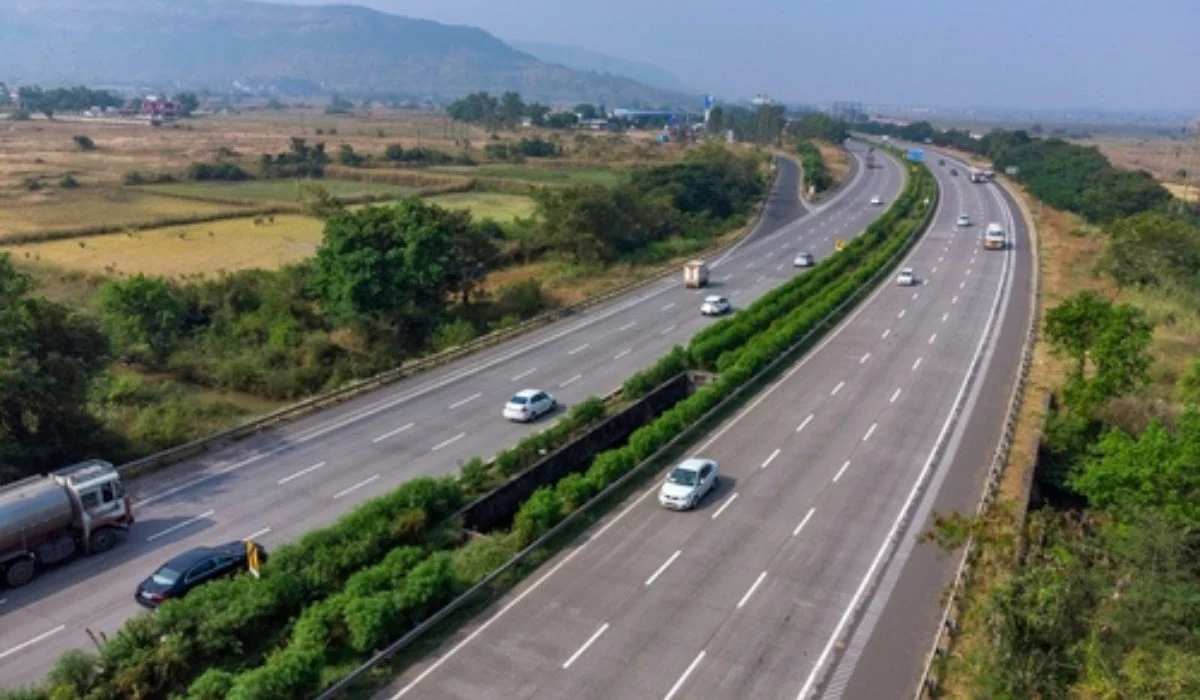
The Delhi-Saharanpur-Dehradun Economic Corridor, popularly known as the Delhi-Dehradun Expressway, stands as a testament to India’s aggressive push toward world-class infrastructure. Spearheaded by the National Highways Authority of India (NHAI) under the ambitious Bharatmala Pariyojana, this 212-kilometer greenfield project is poised to redefine the connectivity landscape between the national capital and the capital of Uttarakhand.
Once fully operational, the expressway will slash travel time between Delhi and Dehradun from a grueling six to seven hours to a mere 2.5 hours. Beyond mere convenience, the project is a strategic economic engine designed to spur real estate development, boost tourism, and streamline logistics across the states of Delhi, Uttar Pradesh, and Uttarakhand.
I. Main Facts and Project Specifications
The Delhi-Dehradun Expressway is a high-speed, access-controlled corridor designed to handle a minimum operating speed of 100 km/h. Developed on the Engineering, Procurement, and Construction (EPC) mode, the project involves an estimated investment of approximately Rs 13,000 crore.
Core Project Statistics
- Total Length: 212 km (Reduced from the current 235 km via NH-58).
- Design Speed: 100 km/h.
- Project Cost: ~Rs 13,000 Crore.
- Lanes: 12 lanes in Phase 1 (6 express lanes + 6 service lanes); 6 lanes for Phases 2, 3, and 4.
- Key Interventions: 5 road overbridges, 110 vehicle underpasses, 76 km of service roads, and 29 km of elevated sections.
- Connectivity Spurs: Includes a 51-km spur to Haridwar and a proposed 120-km greenfield link to Ambala.
The expressway begins at the Akshardham Temple in Delhi and traverses through several key districts, including Baghpat, Baraut, Shamli, and Saharanpur in Uttar Pradesh, before terminating in Dehradun. A standout feature of the project is the first 18-km stretch from Akshardham to Loni, which will be toll-free to facilitate local commuters and ease urban congestion in North-East Delhi.
II. Project Chronology: From Conception to Completion
The journey of the Delhi-Dehradun Expressway has been marked by rapid planning followed by complex execution challenges.
- 2020: The Union Government grants initial approval for the expressway as part of the Saharanpur-Delhi-Dehradun Economic Corridor.
- February 26, 2021: The official foundation stone is laid by the Union Minister for Road Transport and Highways, Nitin Gadkari, signaling the start of construction.
- 2022-2023: Construction gains momentum across all four phases. Environmental clearances are obtained for the sensitive Shivalik Hills and Rajaji National Park sections.
- Early 2024: Significant portions of Phase 1 (Delhi to Baghpat) and Phase 2 (Baghpat to Saharanpur) reach near-completion. However, local land disputes emerge as a primary bottleneck.
- April 15, 2026: Prime Minister Narendra Modi officially inaugurates the Delhi-Saharanpur-Dehradun Economic Corridor in Dehradun, marking a milestone for the project’s completion.
- Current Status: While sections like the 3.5-km Daat Kali to Asharodi stretch are already operational, the full corridor is expected to be integrated and fully open by February 2026, following the resolution of final construction gaps and finishing works.
III. Supporting Data: A Detailed Phase-wise Breakdown
The project is divided into four distinct phases, each presenting unique engineering requirements and geographical challenges.
Phase 1: Akshardham (Delhi) to Baghpat (UP)
This 32-km stretch is the most urbanized segment. To bypass the heavy congestion of North-East Delhi, 18 km of this phase is elevated. It passes through Geeta Colony, Shastri Park, and Sonia Vihar in Delhi, and Mandola and Khekra in Uttar Pradesh. This phase features 12 lanes—six for high-speed transit and six for local service traffic—ensuring that long-distance travelers and local residents do not impede each other’s movement.
Phase 2: Baghpat to Saharanpur
Spanning 118 km, this phase connects the Eastern Peripheral Expressway (EPE) junction to the Saharanpur Bypass. This segment is designed as a six-lane greenfield highway. To support the local economy and traveler convenience, the NHAI has planned amenities every 25 km, including rest stations, fuel pumps, and trauma centers. This phase includes over 60 underpasses to ensure seamless movement for village communities along the route.
Phase 3: Saharanpur to Ganeshpur
This 40-km section involves the "brownfield" development of the existing highway. It focuses on widening the current infrastructure to six lanes and building bypasses for congested towns. This phase serves as the transition point where the expressway leaves the plains of Uttar Pradesh and approaches the foothills of the Himalayas.
Phase 4: Ganeshpur to Dehradun (The Wildlife Corridor)
Perhaps the most ambitious engineering feat of the project, Phase 4 covers 20 km and passes through the ecologically sensitive Rajaji National Park and Shivalik Hills.
- Asia’s Longest Wildlife Elevated Corridor: A 12-km elevated stretch has been constructed to allow wild animals, including elephants and tigers, to pass underneath without encountering vehicular traffic.
- Daat Kali Tunnel: The phase includes a 340-meter-long tunnel near the Daat Kali temple to preserve the surrounding hills while maintaining the expressway’s gradient.
IV. Official Responses and Implementation Challenges
The execution of a project of this scale has not been without its hurdles. The Prime Minister’s Office (PMO) has been closely monitoring the progress, particularly regarding the Ministry of Road Transport and Highways’ (MoRTH) coordination with state governments.
The Mandola Land Dispute
A significant roadblock emerged in Loni’s Mandola, where a land dispute involving a 1,600-sqm parcel held up the completion of a key ramp. NHAI officials noted that a two-story structure on this disputed land prevented the final integration of the 16-km elevated section between UP Gate and the EPE. This dispute shifted the full operational timeline from December 2024 to early 2026.
Environmental Mitigation
Environmentalists and NGOs filed several Public Interest Litigations (PILs) regarding the felling of approximately 25,000 trees. In response, the NHAI and the judiciary reached a compromise where the authority committed to extensive compensatory afforestation and the construction of the aforementioned wildlife underpasses. The NHAI has highlighted that the elevated design in Phase 4 was specifically chosen to minimize the project’s footprint on the forest floor.
V. Implications: Real Estate, Tourism, and Economic Growth
The Delhi-Dehradun Expressway is more than just a road; it is a catalyst for regional prosperity.
Real Estate Appreciation
The expressway is already triggering a "boom" in micro-markets along its route:
- North-East Delhi: Areas like Mayur Vihar and Akshardham are seeing renewed interest as commute times to the suburbs drop.
- Tronica City (Ghaziabad): Previously hindered by poor connectivity, this industrial and residential hub is witnessing a surge in property inquiries.
- Saharanpur and Dehradun: The Saharanpur Bypass and the outskirts of Dehradun (near Asharodi) are becoming hotspots for holiday homes and commercial warehouses. Investors anticipate a 20-30% appreciation in land value once the full corridor opens.
Tourism and Pilgrimage
The 51-km spur to Haridwar will revolutionize the pilgrimage circuit. Haridwar, being the gateway to the Char Dham Yatra, will now be accessible from Delhi in approximately 2 hours. This is expected to double the weekend tourist footfall, benefiting the hospitality and retail sectors in Uttarakhand.
Logistics and Economic Efficiency
By reducing the travel time from 6 hours to 2.5 hours, the expressway will significantly lower logistics costs for moving goods between the agricultural hubs of Western Uttar Pradesh and the markets of Delhi. The planned connectivity to Ambala via a separate spur further integrates the industrial belts of Haryana and Punjab into this economic corridor.
VI. Conclusion: A New Era of Connectivity
The Delhi-Dehradun Expressway represents a paradigm shift in how India approaches infrastructure in ecologically sensitive zones. By balancing high-speed transit with innovative wildlife protection measures, the NHAI has created a blueprint for future projects.
While the delay to February 2026 is a minor setback for commuters, the long-term benefits—ranging from reduced carbon emissions due to smoother traffic flow to the massive economic uplift of Western UP and Uttarakhand—are undeniable. As the final phases undergo safety testing and finishing touches, the region stands on the cusp of a new era of mobility and economic integration.
Housing.com News Viewpoint
The Delhi-Dehradun Expressway is a game-changer for the residential and commercial sectors. For potential homebuyers, the corridor offers an opportunity to invest in emerging hubs like Baghpat and Saharanpur, which were previously overlooked. As the distance "shrinks," Dehradun is likely to transition from a retirement destination to a viable satellite city for professionals who prioritize lifestyle and air quality without sacrificing connectivity to the capital.
