

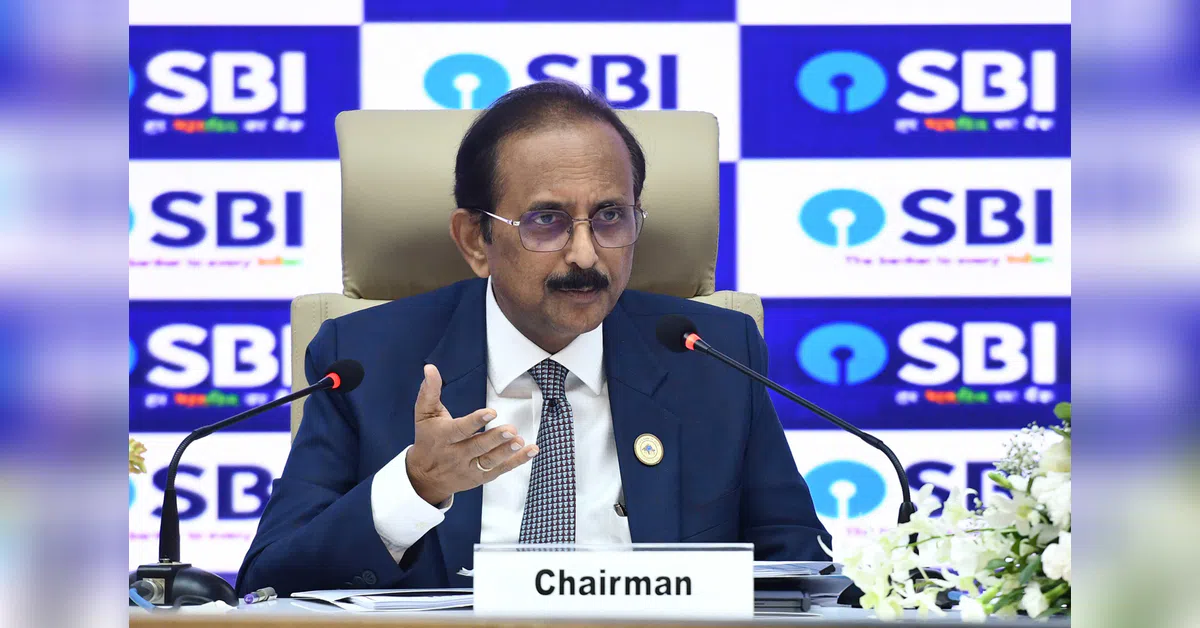
Mumbai, India – India’s largest lender, the State Bank of India (SBI), is embarking on an ambitious strategic trajectory, reaffirming the enduring importance of its vast physical branch network even as it significantly accelerates investments in cutting-edge technologies like Artificial Intelligence (AI) and advanced digital banking platforms. This dual-pronged approach, articulated by Chairman CS Setty in the bank’s FY26 annual report, underscores a clear vision: to forge a truly omni-channel banking experience that harmonizes human trust with technological efficiency.
The pronouncements from SBI’s leadership signal a strategic commitment to a "Digital First, Customer First" philosophy, aiming to deliver deeply personalized, seamless, and intuitive banking across all customer segments and channels. At its core, this strategy seeks to leverage the pervasive reach and relationship-driven model of its traditional branches while harnessing the speed, convenience, and analytical power of digital innovation.
The Unwavering Core: Physical Banking as a Pillar
Main Facts:
Chairman Setty unequivocally stated, "Physical banking will continue to remain an important pillar of our relationship-led model." This declaration comes at a time when many global banks are grappling with the declining footfall in branches due to the rapid adoption of digital services. However, SBI, with its unparalleled footprint across India, recognizes the unique socio-economic landscape of the nation, where physical presence continues to play a pivotal role.
Official Responses:
Setty further elaborated on this integrated vision: "Our endeavour will be to integrate the strength of our branch network with the speed and convenience of digital platforms, thereby creating a truly omni-channel banking experience for our customers." This statement is not merely a defensive stance but a proactive strategy to blend the best of both worlds, recognizing that a significant portion of India’s diverse populace still values and relies on face-to-face interactions for their banking needs.
Implications:
For a financial institution of SBI’s scale, which serves hundreds of millions of customers across urban, semi-urban, and rural areas, maintaining a robust branch network is not just about tradition; it’s a strategic imperative for financial inclusion and fostering deep customer trust. In many parts of rural India, a bank branch is more than just a place for transactions; it’s a pillar of community, a source of financial literacy, and a point of contact for complex financial advice that digital interfaces alone cannot yet fully replicate.
The human element in banking, particularly for significant life events like securing a home loan, planning investments, or resolving complex disputes, often requires the reassurance and expertise of a banking professional. SBI’s commitment to its branches ensures that these critical relationship-led services remain accessible, acting as crucial touchpoints that complement and enhance the digital journey. This approach allows the bank to cater to a broad spectrum of customers, from the digitally native urban youth to the elderly and those in remote areas who may have limited digital access or literacy.
Accelerating the Digital Frontier: AI, Data, and Cybersecurity
Main Facts:
Parallel to its commitment to physical banking, SBI is intensifying its focus on digital acceleration. The bank has outlined continued substantial investments in "technology, data analytics, AI, cybersecurity, and digital infrastructure." This aggressive digital push is central to its "Digital First, Customer First" strategy.
Chronology & Supporting Data (Contextual):
The journey towards digital transformation in Indian banking has been ongoing for over a decade, with a significant acceleration in recent years, spurred by initiatives like the Unified Payments Interface (UPI) and government-led digital drives. SBI, as a market leader, has been a key player in this evolution, consistently upgrading its digital offerings. The current phase, as highlighted in the FY26 report, marks a strategic shift from merely offering digital channels to deeply integrating advanced technologies like AI and data analytics to redefine customer experiences and operational efficiencies.
While specific investment figures were not detailed in the excerpts, the sheer breadth of areas identified – technology, data analytics, AI, cybersecurity, and digital infrastructure – suggests a multi-faceted and substantial financial outlay. This investment is critical to maintaining a competitive edge in an increasingly digital-first financial landscape, where fintechs and private banks are rapidly innovating.
Implications:
The investment in AI is particularly transformative. AI can revolutionize various aspects of banking, from hyper-personalizing product offerings based on individual customer behavior and financial patterns to significantly enhancing fraud detection capabilities. AI-powered chatbots and virtual assistants can provide instant customer support, freeing up human staff for more complex inquiries. Moreover, AI can streamline back-office operations, automate repetitive tasks, and provide predictive analytics for risk management and market trends.
Data analytics will serve as the backbone for these AI initiatives. By meticulously analyzing vast datasets of customer transactions, demographics, and interactions, SBI can gain unprecedented insights into customer needs, preferences, and potential pain points. This data-driven approach will enable the bank to proactively offer relevant products, optimize service delivery, and make more informed strategic decisions.
Cybersecurity, in this digital-first paradigm, is paramount. As more transactions and sensitive data move online, the threat of cyberattacks escalates. SBI’s commitment to robust cybersecurity measures is not just about compliance but about safeguarding customer trust and protecting the integrity of the financial system. This involves investing in advanced threat detection systems, secure infrastructure, and continuous monitoring to stay ahead of evolving cyber threats.
Digital infrastructure, encompassing everything from cloud computing to robust network capabilities, provides the foundational support for all these technological advancements. Without a scalable and resilient digital backbone, the promise of AI and seamless digital experiences cannot be fully realized.
Crafting an Omni-Channel Experience: The Best of Both Worlds
Main Facts & Official Responses:
Setty’s vision for "deeply personalised, seamless, and intuitive banking experiences across all customer segments and channels" directly points to the omni-channel model. This model goes beyond merely having multiple channels (multi-channel); it implies a cohesive, integrated experience where a customer can start a transaction on one channel and seamlessly complete it on another, with their journey and data preserved throughout.
Implications:
Imagine a customer initiating a loan application through SBI’s mobile app, receiving an instant preliminary approval, and then visiting their local branch to discuss specific terms with a relationship manager, who already has access to all the digitally submitted information. Or, a customer using an AI-powered chatbot for a routine query, and if the query becomes complex, being seamlessly handed over to a human agent, who has the full context of the prior digital interaction. This is the essence of the omni-channel experience SBI is striving for.
Such integration leads to several benefits:
- Enhanced Customer Satisfaction: Customers value flexibility and convenience. An omni-channel approach reduces friction and frustration, offering choices based on their preference and the complexity of their need.
- Deeper Customer Engagement: By understanding customer journeys across all touchpoints, SBI can anticipate needs, offer proactive solutions, and build stronger, more personalized relationships.
- Operational Efficiency: Streamlined processes and data sharing between channels can reduce redundancy, improve accuracy, and accelerate service delivery.
- Competitive Advantage: In a crowded banking market, an omni-channel strategy can differentiate SBI, attracting and retaining customers who seek both the reliability of a large institution and the agility of modern technology.
This integrated approach is particularly pertinent for India, where digital penetration is rapidly increasing, but a significant portion of the population still prefers or requires human interaction for complex financial decisions. SBI’s strategy acknowledges this duality, ensuring no customer segment is left behind.
Project SARAL: The Engine of Internal Transformation
Main Facts:
At the core of SBI’s transformation efforts is "Project SARAL," an initiative focused on "process re-engineering, standardisation, digital integration, and greater use of automation and AI."
Chronology & Supporting Data (Contextual):
While the annual report mentions FY26, Project SARAL likely represents a continuous, multi-year undertaking. Large institutions like SBI often initiate such internal transformation projects to modernize their operational backbone, which is crucial for supporting new customer-facing digital initiatives. The term "SARAL" itself, meaning "simple" or "easy" in Hindi, suggests a drive towards simplification and efficiency.
Implications:
Project SARAL is essentially an internal overhaul designed to make SBI more agile, efficient, and responsive.
- Process Re-engineering: This involves critically examining existing workflows, identifying bottlenecks, and redesigning them for optimal efficiency. This could mean fewer manual steps, reduced paperwork, and faster turnaround times for various banking services.
- Standardisation: Creating uniform processes across all branches and digital channels ensures consistency in service delivery. This is vital for a bank with SBI’s massive network, preventing discrepancies and ensuring a predictable customer experience.
- Digital Integration: This refers to the seamless flow of information and operations between various digital platforms and traditional systems. It ensures that customer data and transaction histories are accessible across all channels, supporting the omni-channel vision.
- Automation and AI: Automating routine tasks, using AI for data analysis, and deploying intelligent systems will significantly enhance operational efficiency, reduce human error, and free up employees to focus on more complex, value-added tasks. For instance, AI can automate credit scoring, document verification, or even initial customer query resolution, making processes faster and more accurate.
The ultimate goal of Project SARAL is to translate internal efficiencies into external benefits for the customer: faster loan approvals, quicker account opening, seamless dispute resolution, and generally more reliable and intuitive banking services. It is the foundational work that underpins the "deeply personalised, seamless, and intuitive banking experiences" Setty envisions.
Strengthening the Liability Franchise and Customer Engagement
Main Facts & Official Responses:
A strategic priority for SBI is "strengthening its liability franchise and customer engagement." Setty emphasized, "Our focus will be on building a granular, stable, and low-cost deposit base while further strengthening customer trust and loyalty." He also highlighted "significant opportunities in expanding digital onboarding, transaction banking, small and medium enterprises (SME) ecosystems, and relationship-led banking solutions."
Implications:
The "liability franchise" refers to a bank’s ability to attract and retain deposits, which are its primary source of funding. A "granular, stable, and low-cost deposit base" implies a focus on attracting a large number of individual depositors (Current Account, Savings Account – CASA deposits) rather than relying on a few large institutional deposits. CASA deposits are generally more stable and less expensive than wholesale funding.
Why is this crucial?
- Funding Stability: A strong deposit base provides a stable and reliable source of funds for lending, reducing reliance on more volatile market borrowings.
- Cost Efficiency: CASA deposits typically come at a lower cost to the bank compared to other forms of funding, directly impacting profitability.
- Customer Loyalty: A strong deposit relationship often forms the bedrock of a broader banking relationship, leading to cross-selling opportunities for loans, wealth management, and other services.
SBI plans to achieve this by:
- Digital Onboarding: Making it easier and faster for new customers to open accounts digitally, reducing friction and expanding reach.
- Transaction Banking: Offering efficient and comprehensive services for corporate and retail transactions, enhancing convenience for customers.
- SME Ecosystems: Tailoring solutions for Small and Medium Enterprises, a crucial growth engine for India, to attract their deposits and offer integrated banking services.
- Relationship-led Banking Solutions: Leveraging the branch network and personal touch to build deeper relationships, fostering trust and loyalty that translates into deposit growth.
The synergy between digital and physical channels is evident here. Digital onboarding provides speed and reach, while relationship-led banking builds the trust necessary for long-term loyalty and a stable deposit base.
Expanding Horizons: Wealth Management and SME Growth
Main Facts:
The annual report also identifies opportunities in expanding wealth management and advisory services through "technology-enabled engagement models."
Implications:
India’s burgeoning middle class and increasing affluence present a vast untapped market for wealth management. By leveraging technology, SBI can democratize access to sophisticated financial advice and investment products that were traditionally reserved for high-net-worth individuals. "Technology-enabled engagement models" could include:
- Robo-advisors: Automated platforms that provide investment advice and portfolio management based on algorithms and client risk profiles.
- Digital investment platforms: Easy-to-use apps and websites for mutual funds, equities, and other investment products.
- Hybrid models: Combining digital tools with human advisors for personalized guidance on complex financial planning.
This approach makes wealth management more scalable, cost-effective, and accessible, catering to a wider demographic.
Furthermore, the emphasis on SME ecosystems underscores SBI’s commitment to supporting India’s entrepreneurial spirit. SMEs are vital for job creation and economic growth. By offering tailored banking solutions – including credit, payment solutions, and advisory services – SBI can become a preferred partner for these businesses, fostering their growth and, in turn, expanding its own customer base and deposit franchise.
SBI’s Role in Viksit Bharat: A National Imperative
Main Facts & Official Responses:
Chairman Setty reiterated the bank’s commitment to supporting India’s growth ambitions under the government’s "Viksit Bharat" vision. He articulated, "As we move forward, our vision is to build a future-ready institution that combines technological leadership with human trust and business growth with social responsibility."
Implications:
"Viksit Bharat" (Developed India) is a national vision to transform India into a developed nation by 2047. As India’s largest public sector bank, SBI has historically played a crucial role in national development, from funding infrastructure projects to driving financial inclusion. Its current strategy directly aligns with this vision:
- Technological Leadership: By investing in AI and digital banking, SBI contributes to India’s digital economy and innovation ecosystem.
- Human Trust: Maintaining a strong branch network ensures that the benefits of financial services reach all segments of society, fostering trust and stability, which are foundations for a developed nation.
- Business Growth: By supporting SMEs, expanding credit, and offering wealth management, SBI contributes to economic expansion and job creation.
- Social Responsibility: Financial inclusion, sustainable practices, and ethical governance are integral to building an equitable and responsible developed nation.
SBI’s dual strategy is not just about its own growth but about being a catalyst for broader national progress, ensuring that economic development is inclusive and sustainable.
Key Pillars for Future Readiness: Sustainability, Workforce, Governance, and Capital
Main Facts:
Beyond its core banking operations, Setty highlighted "sustainability, workforce development, governance, and prudent capital management" as key focus areas.
Implications:
These four pillars are critical for the long-term resilience and responsible growth of any modern financial institution, especially one of SBI’s stature:
- Sustainability: This encompasses Environmental, Social, and Governance (ESG) considerations. For SBI, it means incorporating environmental impact assessments into lending decisions, promoting green financing, ensuring social equity in its operations, and adhering to high ethical standards. In an era of climate change and increasing social awareness, sustainable practices are not just ethical but also critical for long-term financial viability and reputation.
- Workforce Development: The rapid pace of digital transformation necessitates a continuous evolution of the workforce. SBI must invest in reskilling and upskilling its employees to equip them with digital literacy, AI proficiency, data analytics skills, and customer service expertise for the omni-channel environment. Managing the transition from traditional banking roles to hybrid ones will be a significant challenge and opportunity.
- Governance: Robust corporate governance ensures transparency, accountability, and ethical decision-making. This includes strong risk management frameworks, compliance with regulatory requirements, and safeguarding stakeholder interests. Given its public sector character, exemplary governance is non-negotiable for SBI.
- Prudent Capital Management: Maintaining adequate capital reserves is fundamental for a bank’s stability, resilience against economic shocks, and ability to fund future growth. SBI’s focus on prudent capital management ensures it remains well-capitalized to support its strategic initiatives and absorb potential risks.
These foundational elements are crucial for SBI to not only navigate the complexities of the modern banking landscape but also to thrive as a responsible and future-ready institution.
Conclusion: A Vision of Integrated Progress
SBI’s strategic blueprint, as outlined by Chairman CS Setty, paints a picture of a forward-looking institution that is pragmatic yet ambitious. By championing an omni-channel approach, the bank is acknowledging the diverse needs of its vast customer base while aggressively embracing the transformative power of AI and digital technologies.
The integration of its formidable branch network with cutting-edge digital platforms, driven by initiatives like Project SARAL, is designed to deliver a banking experience that is both efficient and deeply human. This strategy, coupled with a focus on strengthening its liability franchise, expanding into new growth areas like wealth management and SME ecosystems, and upholding its commitment to national development under the Viksit Bharat vision, positions SBI at the forefront of India’s evolving financial landscape.
As the bank moves forward, its dual commitment to "technological leadership with human trust and business growth with social responsibility" will be the bedrock upon which it builds a future-ready institution, poised to lead India’s banking sector into an increasingly digital yet inherently relationship-driven era.
