

Updated: May 29, 2026 02:16 AM IST
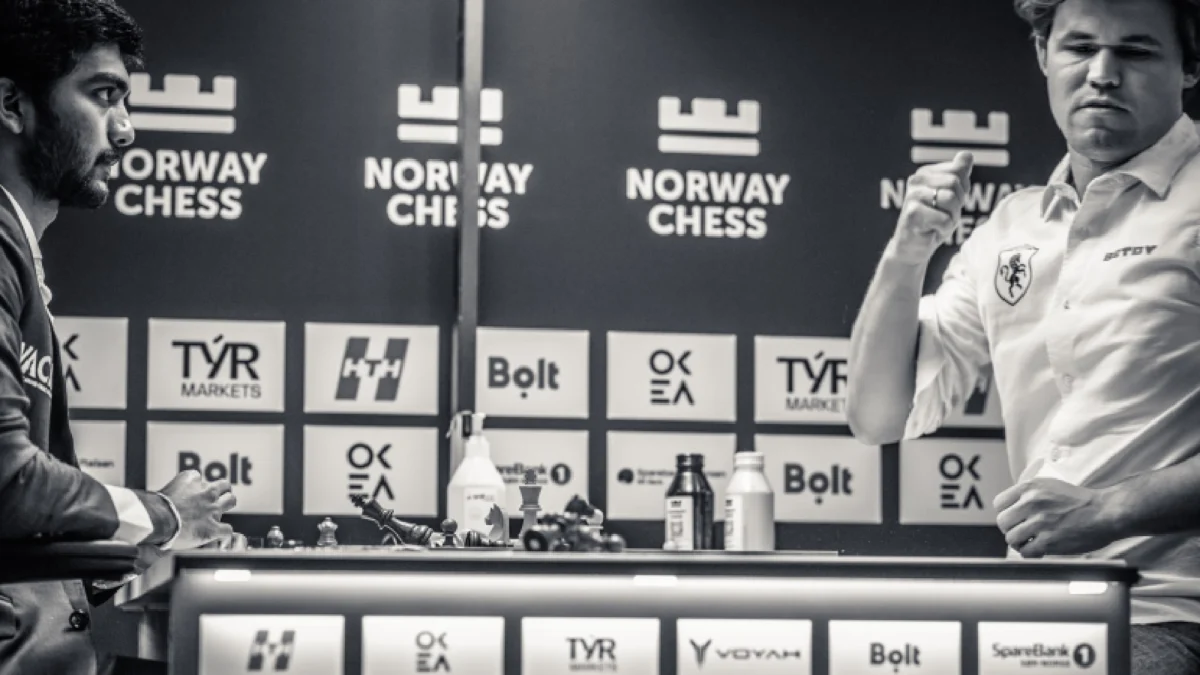
(Image: Magnus Carlsen smashes his fist on the table after losing to world chess champion Gukesh at Norway Chess. PHOTO: Norway Chess via Michal Walusza)
Main Facts
The world of professional chess, often characterized by its serene intensity and stoic composure, was momentarily shattered nearly a year ago by an unprecedented display of raw emotion. During Norway Chess 2025, the legendary Magnus Carlsen, then the reigning World Champion, was captured in a now-viral moment smashing his fist on the table after a pivotal loss to the prodigious Indian talent, D Gukesh. Fast forward to Norway Chess 2026, where the two titans were once again poised to face each other, the now-crowned World Champion Gukesh has offered his insightful perspective on the dramatic incident. In an interview conducted with the tournament organizers prior to his highly anticipated rematch with Carlsen, Gukesh described the memorable outburst as a "nice thing" that garnered "a lot of attention," ultimately drawing a fresh wave of spectators to the ancient game.
Gukesh’s comments come at a critical juncture in his burgeoning career, having ascended to the pinnacle of chess as the youngest undisputed World Champion. His mature and pragmatic take on Carlsen’s emotional reaction reflects not only his own composed temperament but also a broader understanding of how modern sports narratives captivate audiences. He argued that such expressions, while uncommon in chess, are commonplace and even expected in other high-stakes athletic endeavors. For Gukesh, the incident served to humanize the often-impassive figures of the chessboard, revealing the intense emotional undercurrents that drive elite competition.
This perspective challenges the traditional image of chess as solely a "gentleman’s game," suggesting that a touch of visible passion might, in fact, be beneficial for its continued growth and popular appeal. As Gukesh prepares for his upcoming classical World Championship title defense against Javokhir Sindarov and navigates the introduction of new formats like the "Total World Chess Championship," his measured reflections on Carlsen’s viral moment offer a glimpse into the mindset of a young champion who is acutely aware of both the game’s rich heritage and its evolving place in the global sports landscape.
Chronology
The Viral Outburst: Carlsen’s Moment in 2025
The incident that sparked this widespread discussion occurred on a tense evening at Norway Chess 2025. Magnus Carlsen, widely regarded as one of the greatest chess players of all time and at that point the reigning World Champion, was locked in a fierce battle against the then-challenger, D Gukesh. The game, a testament to Gukesh’s rising prowess, saw the young Indian outmaneuver the formidable Norwegian. As the defeat became inescapable, Carlsen, uncharacteristically, reacted with a forceful smash of his fist on the table. The image, captured by photographer Michal Walusza and quickly disseminated across social media platforms, became an instant sensation. It resonated not just within the chess community but far beyond, symbolizing the immense pressure and raw frustration that even the most composed athletes can experience at the highest level of competition.
For many, Carlsen’s reaction was shocking precisely because it deviated so sharply from the typical decorum associated with chess. Players are generally expected to maintain a poker face, regardless of the internal turmoil. Yet, this very deviation made the moment incredibly relatable, revealing the human vulnerability beneath the strategic genius. It signaled not only a loss for Carlsen but also a significant victory for Gukesh, marking a pivotal moment in his journey towards becoming World Champion. The viral nature of the smash ensured that the memory of Gukesh’s triumph, and Carlsen’s intense reaction to it, would be etched into the annals of chess history.
A Year Later: Gukesh Reflects at Norway Chess 2026
Almost a year to the day after that iconic match, D Gukesh found himself back at Norway Chess, this time not as a challenger but as the reigning World Champion. The interview, conducted by the tournament organizers before the event commenced, provided the perfect platform for Gukesh to revisit the incident that had so dramatically punctuated his ascendancy. His comments were delivered with a characteristic blend of thoughtfulness and understated confidence, reflecting his growth not only as a player but also as a public figure.
Facing Carlsen once again at the very tournament where the previous year’s drama unfolded added a layer of poetic significance to Gukesh’s reflections. It underscored the cyclical nature of rivalry in elite sports and the enduring narrative power of such moments. His willingness to openly discuss Carlsen’s reaction, and indeed to frame it in a positive light, demonstrated a maturity beyond his years, showcasing a champion who understands the broader impact of his sport on public consciousness.
From Challenger to Champion: Gukesh’s Ascendancy
The victory over Magnus Carlsen at Norway Chess 2025 was more than just another win for D Gukesh; it was a watershed moment that profoundly influenced his trajectory. At that point, Gukesh was a formidable grandmaster, but overcoming Carlsen, especially in such a dramatic fashion, provided a significant boost to his confidence and solidified his reputation as a serious contender for the World Championship title. This victory was a clear indicator of his readiness to challenge the established order.
Following this triumph, Gukesh continued his relentless march towards the top. His exceptional performance in subsequent tournaments and, most notably, his victory at the Candidates Tournament, ultimately propelled him to the classical World Championship match. There, he outplayed Javokhir Sindarov, becoming the youngest undisputed World Champion in the history of chess. The Carlsen incident, therefore, serves as a powerful symbol of the transition period, marking a point where Gukesh truly stepped into the spotlight as a player capable of defeating the very best and eventually claiming the sport’s highest honor. His current status as World Champion lends even greater weight to his reflections on the Carlsen smash, as he speaks from a position of ultimate authority and achievement in the chess world.
Supporting Data
Beyond the Board: Humanizing Chess Players
Gukesh’s assertion that Carlsen’s table smash was a "nice thing" stems from his belief that it helped humanize chess players. In a sport where deep concentration and minimal physical expression are the norms, players often appear as emotionless automatons, their inner battles hidden behind a facade of intense focus. Gukesh eloquently articulated this point: "In chess, people are generally composed even though obviously there’s a lot of things going on inside. We are not taught generally not to (react). We play in these suits and it’s a gentleman’s game." This observation highlights the unique cultural expectations placed upon chess players, contrasting sharply with the overt emotional displays common in other athletic fields.
By smashing his fist, Carlsen inadvertently peeled back this veneer, revealing the raw frustration, disappointment, and competitive fire that burns within every elite athlete, regardless of their sport. This momentary lapse in composure made him relatable to a broader audience who might not typically follow chess. It showed that even the greatest minds can succumb to the universal human experience of anger and frustration when pushed to their limits. This human element is often what draws fans to sports, allowing them to connect with athletes on a deeper, more empathetic level. Gukesh recognizes that such moments, though rare, can serve as powerful reminders that chess players are not merely calculating machines but passionate individuals invested deeply in their craft.
The Unconventional Appeal: Drawing New Audiences
A significant aspect of Gukesh’s appreciation for the viral moment is his understanding of its power to attract new audiences to chess. He stated, "Like many people get attracted to different sports or different sports personalities not just because of their skills but also the stories revolving around it. So it’s a nice thing that it got a lot of attention. A lot of people got their eyes on chess…" This observation touches upon a crucial element of modern sports consumption: the narrative. Beyond the technical skill and strategic brilliance, it is the compelling stories—of triumph, defeat, rivalry, and human drama—that often capture the public imagination.
Carlsen’s table smash created such a story. It wasn’t just a chess move; it was a dramatic event, a snapshot of intense emotion that transcended the technicalities of the game. On social media, where viral content thrives on shock, humor, or strong emotion, the image and video clips spread like wildfire. Mainstream news outlets, which might typically overlook a standard chess game, picked up on the story due to its unusual nature. This broader media exposure meant that individuals who had never considered following chess were suddenly exposed to it, perhaps sparking curiosity about the game and the players involved.
In an era dominated by short-form content and instant gratification, such viral moments serve as potent entry points for new fans. They act as "hooks," drawing people in with an intriguing narrative before they might delve into the deeper complexities of the sport. Gukesh’s pragmatic view suggests that while the purity of the game is paramount, its presentation and the stories it generates are equally vital for its continued growth and relevance in a competitive entertainment landscape.
The "Gentleman’s Game" Under Scrutiny
Gukesh’s comments implicitly put the traditional notion of chess as a "gentleman’s game" under scrutiny. While acknowledging the historical context—"We play in these suits and it’s a gentleman’s game"—he also subtly questioned whether such strict adherence to composure serves the sport entirely. His comparison to other sports, where "players get into physical fights," highlights the stark contrast in emotional expression. In football, basketball, or tennis, passionate celebrations, frustrated outbursts, and even arguments are not only tolerated but often seen as integral to the game’s entertainment value and a testament to the athletes’ commitment.
The viral reaction to Carlsen’s smash underscores just how deeply ingrained the expectation of composure is in chess. The rarity of such an incident made it newsworthy. However, Gukesh’s subsequent interpretation suggests a potential shift in perspective. He posits that perhaps the chess world has been too restrictive in its emotional displays. "Everybody has this emotion inside when they are playing a game. And it’s nice to see them finally expressing it," he noted. This statement advocates for a more authentic representation of the human experience in chess, one that allows for the natural outpouring of intense feelings.
This isn’t to say that Gukesh is calling for a free-for-all of emotional outbursts, but rather a more realistic acceptance of them as part of high-stakes competition. Such a shift could make chess more accessible and relatable, breaking down some of the perceived barriers that might keep casual observers at a distance. It challenges the sport to evolve while maintaining its intellectual integrity, finding a balance between traditional decorum and modern expectations of athletic expression.
Official Responses
Prioritizing Tradition: The Classical World Championship
As the reigning World Champion, Gukesh’s views on the various titles and formats within chess carry significant weight. When asked about the upcoming "Total World Chess Championship," a new title introduced by FIDE and the Norway Chess organizers, Gukesh’s response was unequivocal in its prioritization of the traditional format. "Especially for me, the classical world championship is clearly the most important," he stated. This declaration underscores a profound respect for the historical legacy and prestige associated with the classical format, which has been the ultimate test of chess mastery for over a century.
The classical World Championship is revered for its demanding nature, requiring deep strategic planning, endurance, and profound analytical skill over long periods. It is the title that defines a player’s place in history, cementing their status among the game’s legends. Gukesh, having just achieved this pinnacle, naturally views it as the ultimate measure of success. His comments reflect a common sentiment among top classical players who see this title as the purest and most challenging form of chess. For Gukesh, defending this title against Javokhir Sindarov is the paramount objective, an endeavor that will define his reign.
Navigating New Formats: The ‘Total World Chess Championship’
While firm in his allegiance to the classical format, Gukesh also displayed a pragmatic openness to new innovations in chess. Regarding the "Total World Chess Championship," he admitted, "I haven’t thought much about it (Total World Chess Championship) but you know it’s a new format so I’ll be interested to see how it does." This measured response suggests a champion who is willing to observe and evaluate new developments without immediately dismissing them.
The introduction of new titles and formats like the "Total World Chess Championship" often stems from a desire to modernize chess, attract new sponsors, and broaden its appeal to a wider, potentially younger, audience. Such formats might integrate rapid, blitz, or even hybrid chess variants, aiming to create more dynamic and television-friendly spectacles. FIDE and tournament organizers are continuously exploring ways to keep chess relevant and exciting in a rapidly changing media landscape.
Gukesh’s "wait and see" approach is sensible. As the classical champion, his primary focus must remain on the most prestigious title. However, his interest in observing how the new format performs indicates a recognition that the chess world is evolving. Should such new championships gain significant traction and prestige, they could eventually influence the careers and priorities of future generations of players. For now, Gukesh remains grounded in the traditional values that have brought him his greatest success.
Maintaining Focus: Gukesh’s Approach to Social Media
In the age of pervasive digital communication and instant commentary, professional athletes often find themselves inundated with external noise, particularly from social media. Gukesh, however, has adopted a disciplined approach to managing these distractions. When questioned about fan discussions on social media regarding his upcoming World Championship battle with Javokhir Sindarov, he revealed, "In general, I don’t follow a lot of chess content that’s coming out. I mean some of them might be useful, but most of it is not really something that would help me in any way. So obviously I run into some things, like just because of some people telling me things or like me hearing something from others. But I don’t look for it myself."
This strategy highlights Gukesh’s laser focus on his preparation and performance. He understands that while social media can be a source of engagement and support, it can also be a breeding ground for unhelpful speculation, criticism, or even overpraise, all of which can be detrimental to a player’s mental state. By actively limiting his exposure to online chatter, Gukesh effectively creates a mental sanctuary, allowing him to concentrate solely on the chess board, his training, and his opponent.
This approach is particularly crucial for a World Champion preparing for a title defense, where the stakes are astronomically high. It demonstrates a mature understanding of self-preservation and optimal performance psychology. Gukesh’s ability to filter out unnecessary information and maintain mental clarity is undoubtedly a significant factor in his continued success and a lesson for aspiring athletes in any field.
Implications
The Evolving Landscape of Professional Chess
Gukesh’s reflections, particularly on Carlsen’s viral moment and the introduction of new championship formats, highlight the dynamic and evolving landscape of professional chess. The game, once largely confined to intellectual circles and niche media, is increasingly embracing elements of mainstream sports entertainment. Viral moments, player personalities, and compelling narratives are becoming as crucial as the strategic intricacies of the game itself for capturing public attention. This shift implies a growing recognition that for chess to thrive in the 21st century, it must balance its rich intellectual heritage with modern demands for accessibility and engaging content.
The tension between the traditional classical format and newer, potentially faster-paced championships like the "Total World Chess Championship" exemplifies this evolution. While the classical game remains the ultimate test, organizers are exploring ways to make chess more spectator-friendly, perhaps through shorter time controls or innovative formats that combine different game types. Gukesh’s measured acceptance of these developments, even while prioritizing tradition, signifies a pragmatic approach from the new generation of champions who understand that the sport must adapt to survive and flourish.
Gukesh’s Maturing Perspective and Leadership
As the youngest undisputed World Champion, D Gukesh’s public statements carry significant weight and offer insights into the future direction of the sport. His ability to calmly analyze Carlsen’s outburst, frame it positively, and articulate a clear preference for the classical title while remaining open to new formats, showcases a remarkable level of maturity and leadership. He is not merely a player but a thoughtful ambassador for chess.
Gukesh’s comments suggest a champion who is not afraid to challenge conventional wisdom (e.g., the "gentleman’s game" facade) while simultaneously upholding the core values of the sport. His disciplined approach to media and social media further solidifies his image as a focused and self-aware leader. This blend of tradition and modern pragmatism positions him as a potentially transformative figure in chess, capable of guiding the sport through its ongoing evolution while maintaining its integrity.
What Carlsen’s Reaction Signified
Carlsen’s table smash, in hindsight, can be interpreted as more than just a momentary lapse of composure. It was a potent symbol on multiple levels. Firstly, it underscored the immense pressure at the very top of competitive chess, demonstrating that even a player of Carlsen’s caliber is not immune to the crushing weight of defeat. Secondly, it was an involuntary testament to the significance of Gukesh’s victory. For Carlsen to react so viscerally meant that Gukesh had not just won a game, but had delivered a truly impactful blow, signaling a changing of the guard or at least a powerful challenge to the established hierarchy.
Finally, it perhaps hinted at Carlsen’s own evolving relationship with classical chess. Having dominated the format for so long, his frustration might also have been a reaction to the relentless demands of the game and the rise of a new, formidable generation. The incident, therefore, serves as a complex marker, reflecting the human element in elite sports, the power dynamics between champions, and the inevitable march of progress in the chess world.
The Future of Chess Spectatorship and Player Expression
The viral success of Carlsen’s emotional display, and Gukesh’s positive interpretation of it, opens a discussion about the future of player expression and spectatorship in chess. Will future generations of players be more inclined to show their emotions, knowing that such moments can generate buzz and attract new fans? Or will the pressure to maintain composure continue to dominate?
There is a delicate balance to strike. While authentic emotional displays can humanize players and make the game more engaging, excessive or performative outbursts could detract from the intellectual gravitas that defines chess. The ideal future likely lies in finding a middle ground: allowing for genuine human reactions while maintaining the respect and decorum inherent to the sport. Gukesh’s vision suggests a chess world that is more open, more relatable, and more adept at leveraging the power of compelling human stories, all while preserving the intellectual depth that makes it such a timeless and fascinating game.
Conclusion
D Gukesh’s thoughtful commentary on Magnus Carlsen’s viral table smash offers a compelling glimpse into the mind of a young World Champion navigating the complexities of modern professional chess. His perspective, which embraces the humanizing and audience-attracting power of such emotional moments, signals a pragmatic understanding of how the sport must evolve to maintain its relevance. While firmly rooted in the tradition of the classical World Championship, Gukesh’s openness to new formats and his disciplined approach to external distractions underscore his maturity and leadership. The incident between Carlsen and Gukesh in 2025, and Gukesh’s reflections a year later, have become more than just a footnote in chess history; they are a significant chapter in the ongoing narrative of a sport that is continuously balancing its profound heritage with the demands of a dynamic and interconnected global audience.
