

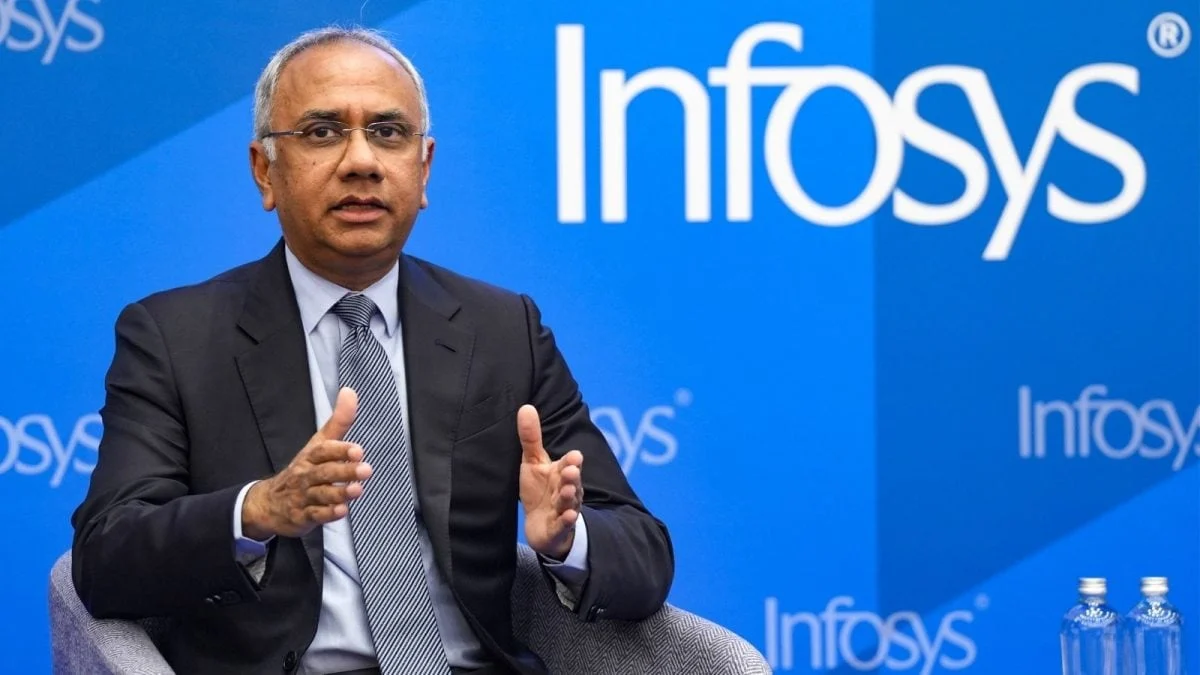
Bengaluru, India – May 29, 2026 – Salil Parekh, the Chief Executive Officer and Managing Director of Infosys, India’s second-largest IT services powerhouse, saw his annual compensation climb by 2.5% to a substantial Rs 82.6 crore (approximately $8.69 million) for the fiscal year 2026. This significant remuneration package, detailed in the company’s latest annual report, underscores the increasing prominence of performance-linked incentives and stock options in the executive pay structures of leading Indian technology firms.
The revelation comes at a pivotal moment for the global IT industry, which is grappling with a pronounced period of slower growth, heightened global economic uncertainties, and the transformative, often disruptive, influence of artificial intelligence. Parekh’s compensation package, while reflecting his leadership of a multi-billion-dollar enterprise, also invites scrutiny into executive pay disparities within a sector facing unprecedented headwinds.
Main Facts: A Deeper Look at Parekh’s Paycheck
The core components of Salil Parekh’s FY26 compensation package illustrate a strategic emphasis on long-term performance and shareholder alignment. His total earnings of Rs 82.6 crore were primarily driven by a substantial allocation of exercised stock options, which alone accounted for Rs 50.75 crore. This figure represents the largest single component of his total earnings for the year, cementing the trend of equity-linked rewards forming the bedrock of executive compensation at Infosys.
Beyond the stock options, Parekh’s remuneration included a fixed salary component of Rs 7.97 crore. This provides a stable base, acknowledging the ongoing responsibilities and leadership demands associated with steering a global enterprise of Infosys’s scale. In addition to his fixed pay, Parekh received performance-linked bonuses totaling Rs 23.35 crore. These bonuses are typically tied to the achievement of specific financial and operational targets, reflecting the company’s overall performance and strategic objectives during the fiscal year. The combination of fixed salary and performance bonus, while significant, is notably dwarfed by the gains realized from stock options, highlighting the company’s philosophy of aligning executive wealth creation directly with shareholder value.
While his earnings saw a modest increase in rupee terms, the impact of currency fluctuations presented a different picture when viewed in dollar terms. Parekh’s compensation of $8.69 million for FY26 represents a decline compared to previous years, where he earned $9.44 million in FY25 and $7.9 million in FY24. This decrease in dollar value is primarily attributed to a nearly 10% depreciation of the Indian Rupee against the US dollar over the fiscal year, underscoring the volatility that global executives face when their compensation is reported across different currencies.
Chronology: Parekh’s Journey and Infosys’s Evolution
Salil Parekh’s tenure at Infosys began in January 2018, marking a critical juncture for the company. He took the helm after a period of leadership instability and strategic challenges, succeeding interim CEO U.B. Pravin Rao. Parekh, an alumnus of IIT Bombay and Cornell University, brought with him a wealth of experience from Capgemini, where he served on the Group Executive Board. His appointment was widely seen as a move to stabilize the company and steer it towards renewed growth.
From the outset, Parekh focused on a strategy centered around digital transformation, cloud adoption, and a renewed emphasis on client relationships. Under his leadership, Infosys embarked on a journey to modernize its core offerings, invest heavily in cutting-edge technologies like artificial intelligence and automation, and expand its global footprint. This strategic pivot paid dividends, with Infosys consistently reporting robust growth figures in the years leading up to the current slowdown. The company’s stock performance largely reflected this resurgence, rewarding long-term shareholders and, consequently, enhancing the value of executive stock options.
Parekh’s current five-year term is slated to conclude in March of the upcoming year, an event that will solidify his position as the longest-serving non-founder CEO in Infosys’s illustrious history. This longevity in a top leadership role, particularly in the dynamic and often tumultuous IT sector, is a testament to the stability and strategic direction he has provided. His tenure has seen Infosys navigate through significant global events, including the unprecedented challenges of the COVID-19 pandemic, which paradoxically accelerated digital adoption and benefited IT service providers. The executive compensation philosophy at Infosys, like many of its peers, has evolved significantly over the decades. Initially, founder-led companies often had more conservative pay structures. However, as these firms matured and globalized, they increasingly adopted Western-style executive compensation models, heavily weighted towards performance incentives and equity to attract and retain world-class talent and align management interests with those of shareholders.
The historical trajectory of Parekh’s compensation reflects this broader industry trend. His earnings in FY24 and FY25, particularly the dollar figures, highlight a period of strong company performance and a relatively stable rupee, allowing for significant wealth creation through stock options. The current FY26 figures, while showing a rupee increase, are a stark reminder of the global economic forces, such as currency depreciation, that can impact even the highest-paid executives.
Supporting Data: Deconstructing the Compensation Model
To fully appreciate Salil Parekh’s compensation, it’s essential to dissect each component and understand its strategic rationale within Infosys’s broader governance framework.
Fixed Salary (Rs 7.97 crore): This component represents the base pay, a consistent remuneration irrespective of company performance. It acknowledges the executive’s day-to-day responsibilities, leadership, and expertise. For a CEO managing over 340,000 employees and a market capitalization in the tens of billions of dollars, this fixed salary, while substantial, is considered competitive within the global IT leadership landscape. It provides a safety net, allowing the CEO to focus on long-term strategy without immediate financial pressures.
Performance-Linked Bonuses (Rs 23.35 crore): This segment of Parekh’s pay is directly tied to the achievement of pre-defined key performance indicators (KPIs). These KPIs typically encompass a range of metrics including:
- Revenue Growth: A primary indicator of business expansion and market penetration.
- Profitability: Measured through operating margins, net profit, and earnings per share (EPS), reflecting efficiency and financial health.
- Client Acquisition and Retention: Crucial for sustained business and market share.
- Digital Transformation & Innovation: Progress in adopting new technologies and driving internal efficiencies.
- Operational Excellence: Metrics related to project delivery, quality, and cost management.
- Employee Satisfaction and Talent Development: Increasingly important for human capital-intensive industries.
The Rs 23.35 crore bonus suggests that Infosys met or exceeded a significant portion of its internal performance targets for FY26, despite the broader industry slowdown. This component serves as a powerful motivator, directly linking executive efforts to tangible business outcomes.
Exercised Stock Options (Rs 50.75 crore): This is the game-changer, the largest driver of Parekh’s total compensation. Stock options grant an executive the right, but not the obligation, to purchase a company’s shares at a predetermined price (the grant price or strike price) within a specified period. The value realized comes from the difference between the market price of the shares when the options are exercised and the strike price.
- Alignment with Shareholders: The primary rationale for stock options is to align the interests of executives with those of shareholders. As the company’s stock price increases, both shareholders and option-holding executives benefit. This encourages long-term strategic thinking and value creation.
- Retention Tool: Stock options typically vest over several years, meaning they cannot be fully exercised immediately. This vesting schedule acts as a powerful retention mechanism, incentivizing executives to stay with the company for the long haul.
- Market Performance: The significant Rs 50.75 crore realized from stock options indicates that Infosys’s share price performed favorably during the vesting and exercise periods, allowing Parekh to capitalize on the growth achieved during his tenure. This underscores the market’s positive perception of Infosys’s strategic direction and financial health over time.
Comparative Analysis: Peer CEO Pay
The comparison with rival Tata Consultancy Services (TCS) CEO K. Krithivasan’s earnings of $2.96 million in FY26 reveals a notable disparity. While both companies are giants in the Indian IT landscape, Parekh’s compensation is significantly higher. This difference can be attributed to several factors:
- Company Specific Compensation Policies: Each company has its own philosophy regarding executive pay, influenced by board decisions, market benchmarking, and shareholder expectations.
- Mix of Components: The ratio of fixed salary, variable pay, and equity components can vary widely. Infosys, as observed, leans heavily on equity.
- Performance Metrics: The specific targets and the extent to which they are met can lead to different bonus payouts.
- Stock Performance: The historical performance of the company’s stock directly impacts the value realized from stock options. Infosys’s stock has seen substantial appreciation under Parekh, contributing significantly to his take-home pay.
While HCLTech and Wipro are yet to release their annual reports for FY26, historical trends suggest similar structures, though the magnitudes may differ. Generally, Indian IT CEOs earn less than their counterparts in large US tech companies, but their compensation packages have been steadily increasing, reflecting the growing scale and global importance of these enterprises.
Infosys’s Financial Performance and Outlook:
For FY26, Infosys reported a revenue growth of 3.1% in constant currency terms, broadly in line with analyst expectations. This performance, while positive, indicates a deceleration compared to the high-growth periods witnessed earlier in the decade. The company’s guidance for FY27 projects revenue growth of 1.5% to 3.5% in constant currency terms, a forecast that fell below some analyst expectations (which had ranged from 2% to 4%). This conservative outlook reflects the prevailing macro-economic uncertainties and the intensifying competitive landscape. Key challenges include:
- Client Budget Constraints: Global economic slowdowns often lead clients to defer or reduce IT spending.
- Pricing Pressure: Increased competition and the commoditization of certain IT services put pressure on pricing.
- Talent Scarcity: Despite a slowdown in hiring, the demand for niche skills in AI, cloud, and cybersecurity remains high, leading to increased talent acquisition and retention costs.
Official Responses: The Rationale Behind Executive Pay
While the annual report details the compensation, it does not typically include direct quotes or official statements justifying the figures beyond the statutory disclosures. However, the rationale behind such executive compensation packages is well-established within corporate governance.
Company’s Implied Stance: Infosys, like other global corporations, would likely defend its executive compensation structure on several grounds:
- Market Competitiveness: To attract and retain top-tier global talent, compensation must be competitive with peers in the international market, not just within India. Leading a multi-billion-dollar global enterprise with hundreds of thousands of employees is a complex, high-pressure role demanding exceptional leadership skills.
- Performance Alignment: The heavy weighting towards performance-linked bonuses and stock options ensures that the CEO’s personal financial success is intrinsically tied to the company’s long-term performance and shareholder value creation.
- Shareholder Value Creation: Under Parekh’s leadership, Infosys has delivered significant shareholder returns over the years, making the gains from stock options a direct reflection of this value creation.
- Complexity of Role: Managing a company of Infosys’s scale, navigating geopolitical risks, technological shifts, and intense market competition requires strategic foresight and execution capabilities that command premium compensation.
Role of the Nomination and Remuneration Committee (NRC): The compensation for top executives is determined by the company’s Nomination and Remuneration Committee, an independent body of the Board of Directors. This committee is responsible for:
- Benchmarking: Comparing executive pay with that of similar-sized companies in the industry and across geographies.
- Performance Review: Evaluating the CEO’s performance against agreed-upon targets.
- Compliance: Ensuring that compensation adheres to all regulatory requirements and corporate governance best practices.
- Shareholder Consultation: Often, significant changes in executive compensation require shareholder approval, particularly for stock option plans. This mechanism provides a check and balance against excessive pay.
From a shareholder perspective, particularly institutional investors, the focus is often on whether the executive’s pay is "pay for performance." If the company delivers strong returns and meets its strategic objectives, high executive compensation is often tolerated, if not explicitly supported. However, in periods of slower growth or underperformance, such compensation figures can become a point of contention, leading to increased scrutiny and potential shareholder activism.
Implications: Navigating a Future of Disruption and Opportunity
Salil Parekh’s compensation package, while a testament to individual achievement and the company’s performance under his leadership, also serves as a critical data point in understanding the broader implications for Infosys and the Indian IT sector.
Impact on Infosys:
- Leadership Stability: Parekh’s extended tenure and significant compensation reflect the Board’s confidence in his ability to steer Infosys through a challenging period. This stability is crucial for long-term strategic execution.
- Employee Morale and Pay Gap: While executive pay is market-driven, the significant disparity between CEO compensation and average employee salaries can sometimes lead to questions about internal equity. Infosys, like other large IT firms, faces the ongoing challenge of balancing competitive executive compensation with fair remuneration and career progression for its vast employee base.
- Shareholder Confidence: The direct link between Parekh’s compensation and stock performance is designed to bolster shareholder confidence, assuring them that leadership’s interests are aligned with their own. However, the slightly conservative FY27 outlook may test this confidence.
IT Sector Challenges: A Transformative Era
The disclosure of Parekh’s compensation is set against a backdrop of profound shifts in the $315-billion Indian IT industry.
- Global Uncertainty: Geopolitical instability (e.g., ongoing conflicts, trade tensions), persistent inflation, and rising interest rates in key markets (North America, Europe) continue to temper client spending. Businesses are more cautious with discretionary IT projects, focusing instead on cost optimization and mission-critical initiatives. This translates into longer sales cycles and reduced deal sizes for IT service providers.
- Artificial Intelligence-Led Disruption: This is perhaps the most significant and rapidly evolving challenge. The emergence of powerful generative AI models and initiatives, such as OpenAI’s focus on services, threatens to fundamentally reshape the traditional outsourcing model.
- Automation of Tasks: AI can automate many routine coding, testing, and support tasks, potentially reducing the need for large human workforces in these areas.
- Demand for New Skills: The shift necessitates a rapid upskilling and reskilling of the workforce towards AI development, prompt engineering, data science, and ethical AI implementation.
- Pressure on Pricing: As AI tools become more sophisticated, clients may expect faster delivery and lower costs for certain services, putting pressure on IT firms’ margins.
- New Service Offerings: Conversely, AI also presents immense opportunities for IT companies to develop new AI-powered solutions, offer AI consulting, and help clients integrate AI into their operations. Infosys and its peers are heavily investing in building AI capabilities and forging partnerships.
The fact that IT stocks hit their lowest levels in three years after OpenAI’s service-focused announcement underscores the market’s sensitivity to this disruption. Infosys’s modest FY27 revenue growth forecast reflects the cautious approach necessitated by these uncertainties. The company is actively pursuing strategies to adapt, including investing in AI platforms, expanding cloud capabilities, and focusing on high-value digital transformation projects.
Future of Executive Compensation and the IT Landscape:
The trends observed in Salil Parekh’s compensation are likely to continue, with equity-linked incentives remaining a dominant feature. However, future compensation structures may increasingly incorporate metrics related to AI adoption, talent transformation, and the successful navigation of disruptive technologies. The ability of IT firms to innovate, reskill their workforce, and capture new opportunities in the AI-driven economy will be paramount.
Ultimately, Salil Parekh’s compensation for FY26 is more than just a figure; it is a snapshot of the complex interplay between individual leadership, corporate performance, strategic market positioning, and the broader economic and technological forces shaping the global IT industry. As Infosys and its peers brace for a period of both challenges and unprecedented opportunities, the effectiveness of their leadership, as reflected in such compensation structures, will remain a key indicator of their future trajectory.
