

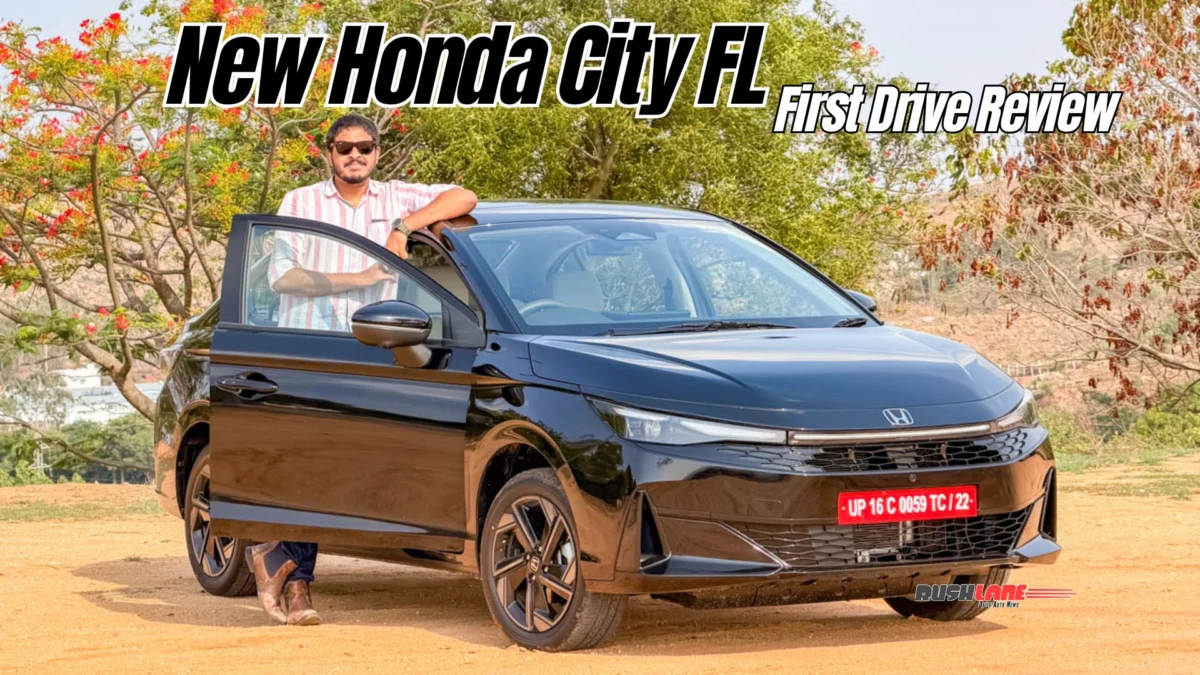
The C-segment sedan market in India has witnessed a tumultuous decade, characterized by the meteoric rise of mid-size SUVs and a subsequent recalibration of what "premium" means to the Indian consumer. Amidst this shifting landscape, one nameplate has remained a constant beacon of reliability and status: the Honda City. With the launch of the 2026 Honda City Facelift, Honda Cars India Ltd (HCIL) aims to defend its territory against a reinvigorated field of competitors, including the tech-heavy Hyundai Verna and the performance-oriented European duo, the Volkswagen Virtus and Skoda Slavia.

Priced between Rs 12 lakh and Rs 21 lakh (ex-showroom), the 2026 City Facelift is more than just a cosmetic exercise; it is a strategic attempt to blend Honda’s traditional virtues of comfort and longevity with modern demands for "sporty" aesthetics and advanced safety tech.

1. Main Facts: The 2026 Transformation
The 2026 model year (MY26) update brings a radical shift in design philosophy. For years, the City was praised for its "non-offensive" and "elegant" design—a car that looked as appropriate in a corporate parking lot as it did at a family wedding. The facelift sheds this conservative skin in favor of a much more aggressive, "street-sport" aesthetic.

Key Updates at a Glance:
- Aesthetic Overhaul: A completely redesigned fascia featuring bi-LED projector headlights and a connected LED DRL light bar.
- New Color Palette: The introduction of "Crystal Black Pearl," offering a stealthy, "blacked-out" look that caters to a younger demographic.
- Enhanced Technology: A new 10.1-inch floating infotainment system with wireless Android Auto and Apple CarPlay.
- Safety Leadership: Expansion of "Honda Sensing" (Level 2 ADAS) across more variants, starting from the mid-spec V trim.
- Comfort Upgrades: The inclusion of ventilated front seats—a long-awaited feature for the Indian climate.
- Powertrain Continuity: Retention of the 1.5L i-VTEC petrol and the high-efficiency e:HEV strong hybrid systems.
2. Chronology: The Journey of the Fifth Generation
To understand the 2026 facelift, one must look at the timeline of the current fifth-generation City:

- July 2020: The fifth-generation Honda City was launched in India amidst the global pandemic. It introduced a larger footprint, a more sophisticated 1.5L i-VTEC engine (DOHC), and a cabin that set new benchmarks for rear-seat space.
- May 2022: Honda introduced the City e:HEV (Hybrid), making it the first mainstream car in India to offer a strong hybrid powertrain and Level 2 ADAS technology.
- March 2023: A minor update aligned the engines with RDE (Real Driving Emissions) norms and introduced ADAS to the petrol variants.
- 2026: The current facelift arrives. This update represents the most significant visual change since the generation’s debut, aimed at keeping the car fresh until the next full model change, expected toward the end of the decade.
3. Design and Exterior: From Sophistication to Sportiness
The most striking change is the front fascia. Honda has moved away from the thick chrome "solid wing face" to a more intricate, honeycomb-style grille.

The New Face
The traditional reflective LED headlights have been replaced by sleeker bi-LED projector units. These are complemented by a new LED DRL signature that is split into two distinct elements and serves a dual purpose as turn indicators. For the first time in the City’s history, a connected light bar runs across the top of the grille, giving the car a futuristic "robot-eye" look at night.

In a surprising move, Honda has relocated its H-badge. It no longer sits within the grille but has been moved upward into a dedicated bumper element just below the bonnet line. Furthermore, the 2026 model has deleted traditional fog lights, replacing them with functional aerodynamic air channels that reduce drag and improve cooling.

Profile and Rear
The side profile remains largely unchanged, preserving the "Katana blade" character line that runs from the headlights to the tail lamps. However, new 16-inch dual-tone alloy wheels provide a more planted look. At the rear, the updates are subtle but effective. The tail lights now feature a "smoked" clear housing, and the rear bumper has been beefed up with a faux carbon-fiber finish diffuser and a discreet integrated spoiler on the trunk lid.

4. Interior and Technology: A Mixed Bag of Progress
Inside, the 2026 City introduces a new "Ivory and Black" dual-tone theme, replacing the previous beige-heavy interior. This ivory finish extends to the dashboard trims, seat upholstery, and door armrests, providing a bright, airy feel to the cabin.

The Infotainment Hurdle
The center stage is taken by a new 10.1-inch infotainment screen. While the inclusion of wireless connectivity is a massive win, the execution is polarizing. The screen is tilted at an angle that frequently catches sunlight, causing significant glare. Journalists testing the car in the bright sun of Bengaluru noted that the display’s peak brightness often struggles to overcome these reflections. Additionally, while the UI is snappy, the graphical interface feels somewhat dated compared to the high-resolution "glass-cockpit" designs found in the Hyundai Verna.

Creature Comforts
The standout addition is the ventilated seat function. Managed via buttons on the center console, the system offers three blower speeds. While the blowers are impressively quiet, early reviews suggest the cooling performance is conservative—ideal for long-distance comfort but perhaps lacking the "instant-chill" factor some rivals provide. Other notable features include:

- An 8-speaker premium audio system.
- Wireless charging pad with a dedicated cooling vent.
- A semi-digital instrument cluster with a 7-inch TFT MID.
- A 360-degree camera system (though resolution remains a point of critique).
5. Supporting Data: Performance and Efficiency
Honda continues to offer two distinct paths for the City: the purist’s petrol and the technologist’s hybrid.

| Specification | 1.5L i-VTEC Petrol | 1.5L Atkinson Cycle e:HEV (Hybrid) |
|---|---|---|
| Engine Power | 119 bhp @ 6600 rpm | 98 bhp (Engine) / 108 bhp (Motor) |
| Engine Torque | 145 Nm @ 4300 rpm | 127 Nm (Engine) / 253 Nm (Motor) |
| Transmission | 6-MT / 7-Step CVT | e-CVT (Single Speed) |
| Claimed Fuel Economy | 17.77 (MT) / 18.0 (CVT) km/l | 27.26 km/l |
| Rear Brakes | Drum | Disc |
Driving Dynamics
The 1.5L i-VTEC remains one of the most refined naturally aspirated engines in the world. It is "vibe-free" at idle and develops a characteristic raspy note as it approaches the 7,000-rpm redline.

The e:HEV Hybrid, however, is the star for urban commuters. It operates in three modes: EV Drive (pure electric), Hybrid Drive (engine acts as a generator), and Engine Drive (engine directly powers the wheels via a lock-up clutch). In real-world Bengaluru traffic, the transition between these modes is nearly imperceptible. While the claimed 27.26 km/l is achievable through hypermiling, spirited driving typically yields a still-impressive 20-22 km/l.

6. Official Responses and Safety Strategy
Honda’s official positioning for the 2026 City is centered on "Democratizing Safety." By offering the "Honda Sensing" suite from the V variant onwards, Honda is making Level 2 ADAS accessible to a wider audience.

The ADAS Suite Includes:
- Collision Mitigation Braking System (CMBS): Uses a camera to detect potential collisions and applies brakes automatically.
- Adaptive Cruise Control (ACC): Now with "Low-Speed Follow" in the hybrid variant.
- Lane Keep Assist (LKAS): Provides steering input to keep the car centered.
- Lead Car Departure Notification: Alerts the driver when the car ahead starts moving.
During media trials, some inconsistencies were noted in the LKAS performance on certain Indian road markings, suggesting that while the system is advanced, it still requires the driver to remain fully engaged and vigilant.

7. Implications: The Verdict for the Indian Market
The 2026 Honda City Facelift arrives at a crossroads. On one hand, it is the most well-rounded City ever built—safer, sportier, and more feature-rich. On the other hand, it faces stiff competition.

The Competition Gap
Rivals like the Volkswagen Virtus and Skoda Slavia offer 1.5L Turbo-petrol engines that produce 150 bhp, significantly out-punching the City in terms of raw performance. The Hyundai Verna, meanwhile, offers a more futuristic interior and features like powered seats and an electric "boss mode" for the rear passenger, which the City lacks.

The Honda Advantage
Where the City continues to win is in reliability and ergonomics. The "Man Maximum, Machine Minimum" philosophy is evident in the cabin layout. The seats offer superior lumbar support, and the rear legroom remains the gold standard for the segment.

Furthermore, the City is the only sedan in its class to offer a Strong Hybrid option. For buyers who prioritize fuel economy and environmental consciousness over 0-100 km/h sprint times, the City e:HEV stands in a league of its own.

Final Thought
If you are an existing Honda City owner or someone who values the peace of mind that comes with a "bulletproof" mechanical package, the 2026 facelift is a compelling upgrade. It fixes several omissions (ventilated seats, wireless tech) while maintaining the car’s legendary resale value. However, for the enthusiast looking for a "thrill-a-minute" drive or a "gadget-on-wheels" experience, the competition might still hold a slight edge. The City remains the sensible, sophisticated choice, now with a newfound "sporty" edge to keep the flame alive.
