

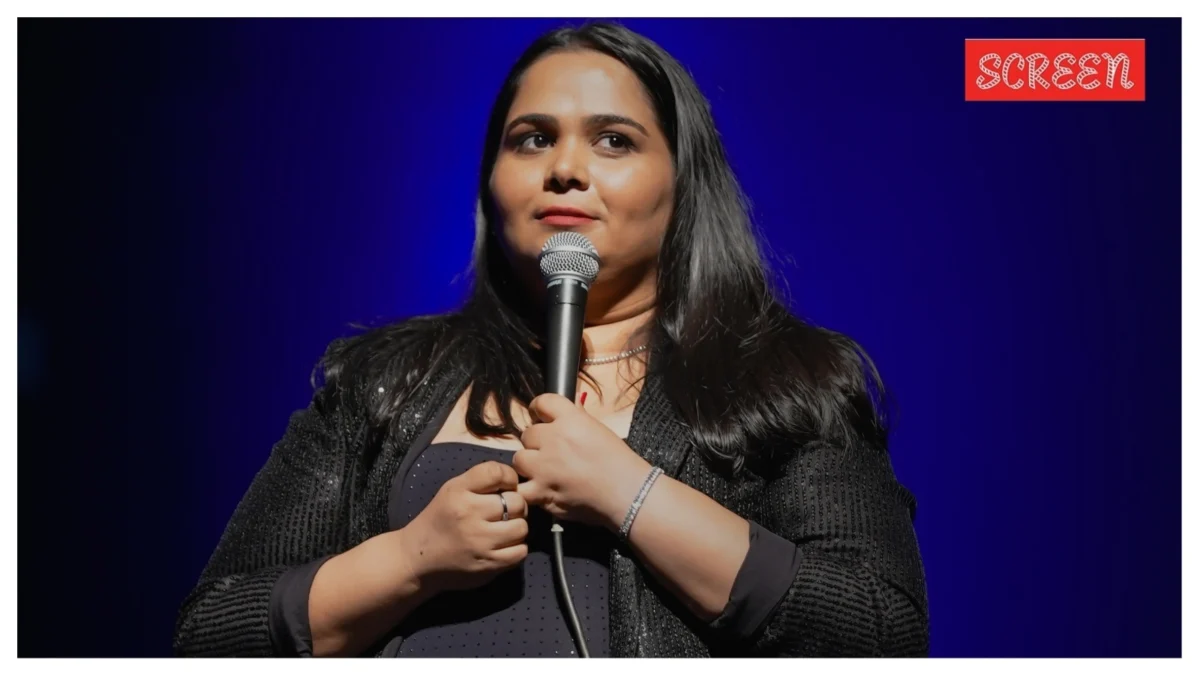
Los Angeles, CA – The air in Los Angeles last month was thick with anticipation, not just for the dazzling lights of Hollywood, but for the raw, unfiltered humor echoing from the Netflix Is A Joke Festival. Among the global roster of comedic talent, one name stood out as a beacon of Indian representation: Sumukhi Suresh. The acclaimed Indian comedian, known for her sharp wit and relatable storytelling, became the sole Indian artist to grace the prestigious festival. In an exclusive conversation with SCREEN, Suresh, ever the master of self-deprecating humor, quipped when asked if Netflix truly was a joke, "No, I was really a big joke on Netflix." Her playful retort, "You know my style, the joke is always on me," perfectly encapsulates her approach to both her craft and her burgeoning international career. Beyond the stand-up spotlight, Suresh continues to explore a diverse range of creative avenues, professing her ambition to dabble in "a thousand things so that I become one interesting person."
This interview delves deep into Suresh’s experiences at the festival, her unique perspective on cultural exchange through comedy, the evolving landscape of the Indian comedy industry, and her candid reflections on the challenges faced by female comedians.
The Art of Cultural Exchange: Authenticity Over Adaptation
The prospect of performing a culturally specific set to a predominantly Western audience at the Netflix Is A Joke Festival undoubtedly presented a unique challenge. Yet, Suresh remains steadfast in her belief that authenticity trumps pandering. "I don’t think of alienation because the moment you get into that, you have to pander to too many things," she explains. "And my stand-up is quite anecdotal. If I try and cater to everyone, my story would get diluted."
Her strategy hinges on the universality of human emotion. "Emotion-wise, it’s universal. That’s the hope," she asserts. Suresh emphasizes that she avoids over-explaining cultural nuances, as this can often dilute the comedic impact. "I just try to make sure the emotion is correct irrespective of the medium." This approach suggests a profound understanding of how humor transcends linguistic and cultural barriers, resonating on a deeper, emotional level.
When questioned about following the path of fellow comedian Vir Das, who actively translates jokes for the American audience, Suresh offers a contrasting perspective. "No, I don’t do that," she states with a characteristic laugh. "I’m just like, ‘Guys, just figure out. You’re supposed to be the developed nation. We learnt so many languages, so you also learn one, you also understand.’" While light-hearted, this response carries a subtle yet potent message about cultural curiosity. Suresh believes that Western audiences are receptive to cultural nuances as long as they spark curiosity rather than doubt. "It’s okay if you don’t laugh. But if you’re curious about the joke, then that’s a bigger victory for me." This philosophy positions her not just as an entertainer, but as a cultural ambassador, fostering understanding through genuine engagement.
Decoding the Laughter: The Subtle Art of ‘Secret Laughers’
The idea of seeking real-time validation while performing a culturally specific set, particularly by identifying audience members from her own cultural background, is met with a nuanced response from Suresh. She acknowledges the distinct personalities within the Tamil diaspora. "You have to understand that Tamil boys and girls are very shy. Even if they want to laugh at it, they’ll laugh secretly. Especially internationally, because a good percentage of the South Indian population have gone there for a very specific, skill-based or technology-based role." She elaborates, citing her brother’s academic pursuit as an example, to highlight the introverted nature of many in these communities.
However, Suresh doesn’t dismiss the subtle cues of appreciation. "But I do spot the secret laughers. If there’s a girl in the corner giggling at a Tamil reference, that’s cute." These quiet acknowledgments, for Suresh, are as validating as boisterous laughter, a testament to her ability to connect with her audience on a deeply personal level, even amidst a sea of unfamiliar faces.
Bridging the Gap: From ‘RRR’ to Regional Identities
The global phenomenon of SS Rajamouli’s "RRR" undeniably broadened the Western perception of India, moving beyond singular stereotypes. However, Suresh concedes that the journey towards nuanced regional differentiation is still a long one. "They’re very far away, yaar," she admits when asked about the West’s ability to distinguish between, say, a Tamil and a Malayali individual.
Despite this, Suresh identifies food as a powerful gateway to cultural understanding. "But there, the advantage is there’s a gamut of South Indian restaurants. That changes everything because food is really the introduction to any culture." She observes that many people learn about new cultures through seamless integration, and her aim is not to overtly "teach" but to organically pique curiosity. "Historically, we’ve been a culture which has piqued curiosity. When I go there from India, I feel like being in a superior position because I carry a gamut of experiences." This perspective underscores her confidence in the richness of Indian culture and her role in sharing it.
The Evolving Landscape of Indian Comedy: From Community to Industry
Reflecting on her 2018 assertion that comedy in India was more of a community than an industry, Suresh notes a significant evolution. "It definitely is," she states, acknowledging the commercial growth. "A lot of comedians are doing the numbers and becoming brands." However, she quickly qualifies this by emphasizing that the core spirit of community remains. "But comedians are still part of a community. That hasn’t changed."
She illustrates this with examples of ongoing camaraderie, like Tanmay Bhat opening her "Hoemonal" show or Kaneez Surka assisting with promotions in New York. "We even have a WhatsApp group where we ask each other to do this." This collaborative spirit, she believes, is what sustains the industry. The diversification of roles beyond just sketch comedy, with comedians becoming entrepreneurs and creating their own intellectual properties and audience-driven shows, has propelled comedy into a more robust industry. "So, the diversification of profiles has helped comedy become more of an industry."
The Unseen Battles: Female Comedians and the Daily ‘Cancellation’
The conversation then shifts to a sensitive topic: the "cancellation" of comedians. Suresh offers a starkly different perspective when comparing the experiences of male and female comedians. "Actually, we get cancelled every day," she states unequivocally. "Have you seen our comment sections?" She argues that for women in any industry, let alone comedy, the daily onslaught of negativity is a form of constant cancellation.
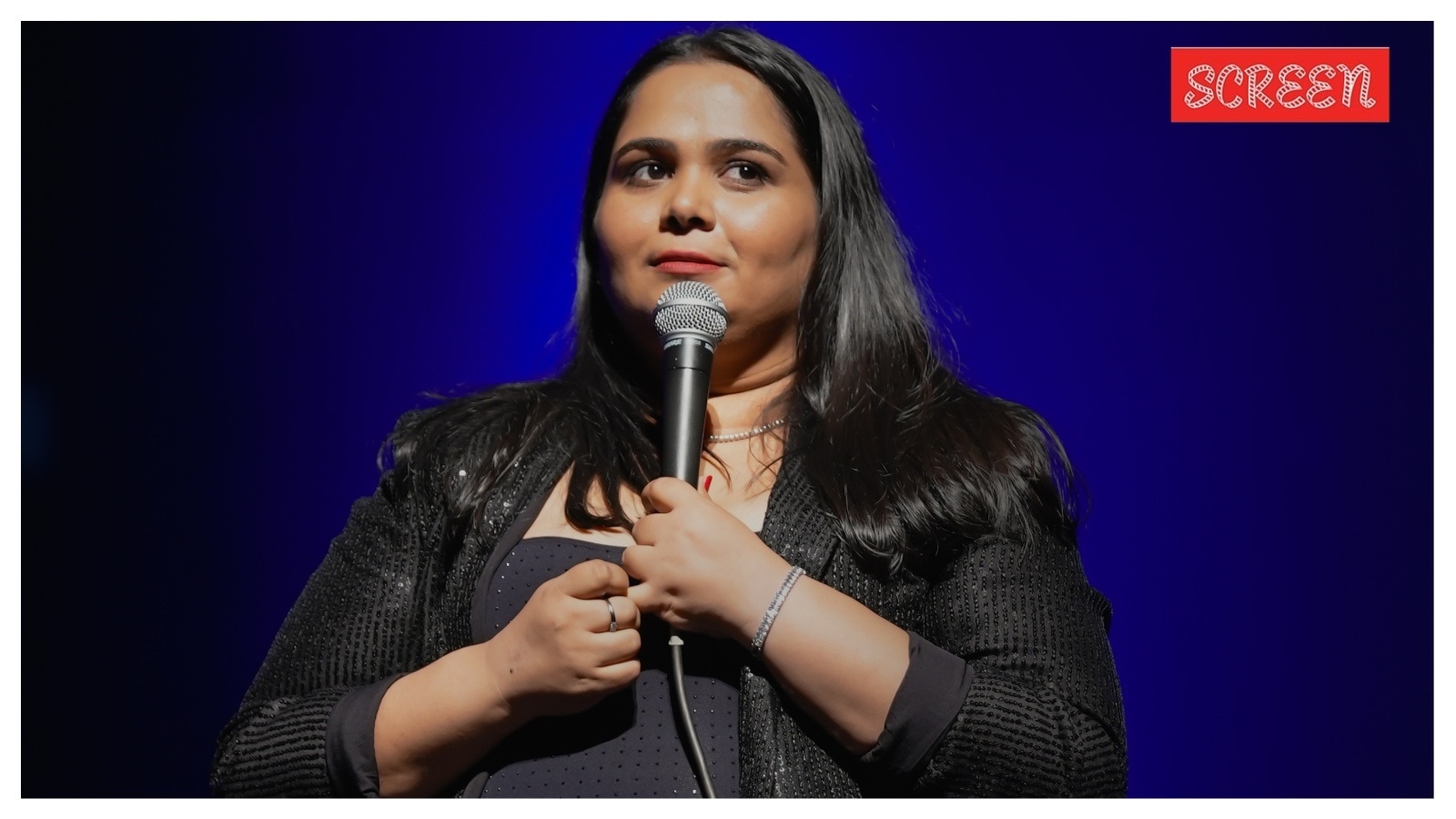
"What cancellation does is it hampers opportunities, accessibility, and exposure," she explains. While male comedians might face mass hysteria and subsequent call-outs, Suresh points out the relentless personal attacks faced by women. "We’re attacked for how we look and what we say." She vividly illustrates the uphill battle: "If men start at zero, women in every industry start at -10, constantly pushed to -12 or -14, and we keep bouncing back to -3 or -5."
Suresh critiques the notion that male comedians are cancelled for being "tees maar khan" (big shots), suggesting that the underlying societal biases are often overlooked. "The system doesn’t favour us. And we’re fine! None of us are coming and saying, ‘Aise kaise?’" She challenges the audience to question the level of adulation given to male comedians versus female comedians. "Can you give female comics as much adulation as you give the male comics? We really need to prove it to you, and then we start getting the adulation. But with a man, a little bit of abusing and bakdi is enough." She highlights the cultural lag in accepting women’s participation in the same kind of "bakdi" (irreverent humor) that is more readily associated with men.
Resilience and Entrepreneurship: A Word for Samay Raina
When asked for advice for Samay Raina, who has faced cancellation, Suresh expresses admiration for his resilience and entrepreneurial spirit. "Samay is killing it! He’s done the numbers game, and understood what he stands for. That’s phenomenal for a comic." She highlights his ability to not only advance his own career but also to champion other comedians, citing Sharon Verma as an example of a comic who has achieved success through his platform. "So, he’s clearly giving tutelage to comics, and not just taking himself forward. That’s great." This positive affirmation underscores Suresh’s belief in mutual support within the comedy community.
Navigating Setbacks: The Philosophy Behind ‘Pushpavalli’s’ Cancellation
The cancellation of Suresh’s popular show "Pushpavalli" after two seasons, despite a loyal following, while other shows with less critical acclaim are renewed, is a point of contention for many. However, Suresh approaches this with a philosophical outlook. "Every day is a new day." She emphasizes the importance of humility and reinvention, even for established creators. "When I’m pitching a new show, I know I have to go back to being a nobody. Because that’s the only way this can be navigated. Also, it’s the only way to improve my writing otherwise I’d get stuck. It becomes a very dangerous loop as a writer."
Suresh is now exploring a model where she seeks autonomy in creation before finding a distribution platform. She believes that comedy, particularly, is best experienced in its performed form, not just on paper. "Comedy is better watched than read, unless it’s a comedy book I’m writing." She draws a parallel with the script of "Schitt’s Creek," suggesting that the humor of dialogue often relies on delivery and performance.
Her perspective on "Pushpavalli’s" cancellation is remarkably sanguine. "It’s okay if Pushpavalli didn’t get renewed. When people say how can you not tell us what happened, I’m just like it’s good that I’ve stayed in your minds for a long time. I’m happy." This sentiment speaks volumes about her focus on the lasting impact of her work rather than its contractual continuation.
Collaborative Ventures and the Art of Writing
Beyond stand-up, Suresh’s creative palette extends to screenwriting. She co-wrote a film with Vir Das, describing it as an "inspirational comedy," akin to a humorous take on "Chak De! India." She expresses her trust in Das to bring it to fruition.
Her cameo in Das’s directorial debut, "Happy Patel," stemmed from a collaborative spirit. She recounts how Das, in an effort to showcase his vision to producers, created a sizzle reel. Suresh, who loves being on screen, readily agreed to participate in any capacity. The role eventually evolved into a cameo, a testament to Das’s appreciation for her talent. Her experience working alongside the legendary Aamir Khan was a highlight. "I had a blast! Aamir is a legend; he’s too good." She credits Das for creating an environment where, despite the presence of a superstar, the focus remained on the craft and the script, stripping away titles and allowing everyone to function purely as actors.
Suresh’s prolific writing career also includes a reunion with Vikramaditya Motwane for "Lust Stories 3," following their collaboration on "CTRL." She praises Motwane’s ability to grant creative autonomy and his skill in navigating different genres. "Lust Stories was full bak***di, honestly," she admits, enjoying the process of writing "sexual-ness" with a light and easy touch. She also highlights Motwane’s trust in her to contribute to non-comedy genres, citing her work on the thriller "CTRL" as a new and exciting chapter. "He’s a delight. I’d write for him forever."
Her playful lament about Anurag Kashyap potentially "dethroning" her on Motwane’s Sourav Ganguly biopic, "Dada," underscores her deep admiration for both directors. She humorously expresses her desire to co-write with Kashyap, acknowledging their shared "manmauji" (whimsical) writing styles. While she recognizes Motwane’s methodical approach, she humorously hints at the possibility of finding a way into future writing rooms, even if it requires a nudge.
Sumukhi Suresh’s journey is a compelling narrative of artistic evolution, resilience, and a profound understanding of the power of authentic storytelling. From the global stage of Netflix Is A Joke to the intricate world of Indian comedy, she continues to push boundaries, challenge perceptions, and, most importantly, make us laugh, often at ourselves. Her candid reflections offer invaluable insights into the triumphs and tribulations of navigating a complex and dynamic entertainment industry, solidifying her position as a significant voice in contemporary Indian entertainment.
