

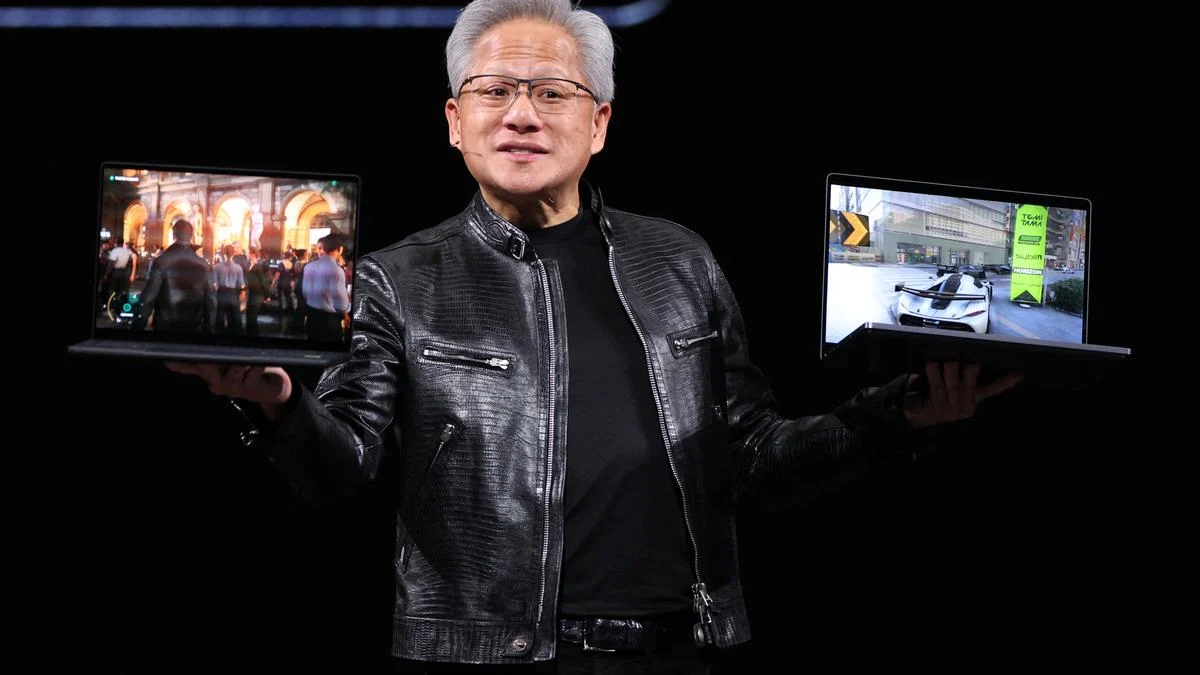
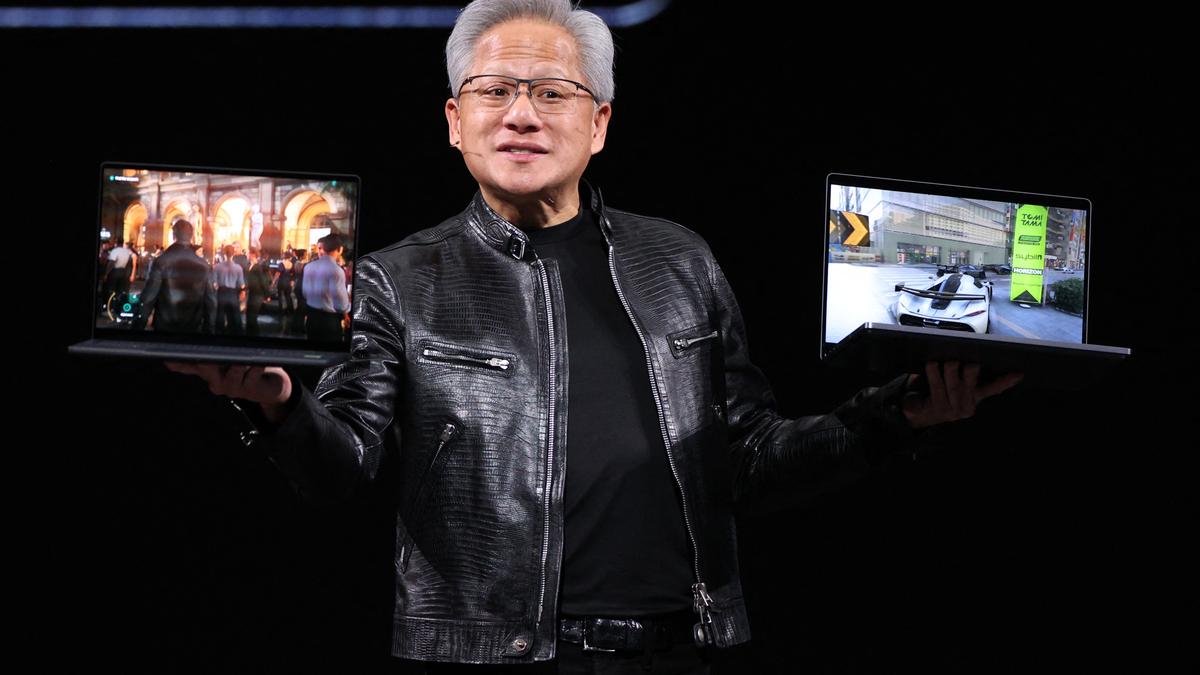
Taipei, Taiwan – June 1, 2026 – In a move poised to fundamentally reshape the personal computing landscape, Nvidia, the undisputed titan of the artificial intelligence era, today unveiled its groundbreaking RTX Spark laptop chip for Windows machines. Introduced by CEO Jensen Huang ahead of the prestigious Computex 2026 technology show in Taipei, the new processor marks Nvidia’s aggressive foray into the consumer PC market, staking a formidable claim in the nascent but rapidly accelerating domain of AI-integrated personal computers.
This strategic pivot by the world’s most valuable company, traditionally known for its dominance in data center GPUs and gaming graphics, signals an existential challenge to long-standing industry stalwarts like Intel, AMD, and even Apple. While analysts predict a hefty price tag for these next-generation devices, Nvidia’s ambition is clear: to diversify its monumental success in enterprise AI infrastructure into the everyday lives of consumers, heralding what CEO Huang boldly termed a "reinvention" of the PC itself.
Main Facts: Nvidia Unveils RTX Spark, Redefining the AI PC
Nvidia’s announcement of RTX Spark represents more than just a new chip; it is a declaration of intent to redefine the very essence of personal computing. The RTX Spark is positioned as a powerful central processing unit (CPU) meticulously engineered to integrate seamlessly with artificial intelligence, empowering Windows machines with unprecedented on-device AI capabilities. This isn’t merely about incremental improvements; it’s about embedding intelligence directly into the core of the PC, enabling a new class of applications and user experiences.
Jensen Huang, Nvidia’s charismatic chief executive, articulated this vision with characteristic zeal during his keynote speech. "Microsoft and Nvidia are going to reinvent the PC. This is going to be the new PC," Huang proclaimed, underscoring a deep collaborative effort with Microsoft to optimize every aspect of the new hardware and software stack. He emphasized the chip’s prodigious processing power, capable of tackling complex, data-intensive tasks previously confined to supercomputers or specialized servers. "If you want to run digital biology, no problem. If you want to do seismic processing, no problem. You want astrophysics, no problem," Huang asserted, painting a picture of a PC unbound by conventional limitations.
Crucially, the RTX Spark is designed to excel at running "agents"—autonomous AI entities capable of carrying out complex tasks for users with minimal human intervention. This concept moves beyond simple voice assistants, envisioning intelligent companions that can manage schedules, process data, generate content, and interact with the digital world on behalf of the user. Huang highlighted that the new computer "literally runs everything the world has ever created, plus it now runs agents, an incredible computer."
This strategic diversification is significant for Nvidia. While the company has reaped record profits from the insatiable demand for its data center GPUs, which power the global AI revolution, RTX Spark represents a deliberate push into the consumer market. By offering an end-to-end hardware solution, Nvidia aims to capture a larger share of the burgeoning AI PC market, estimated to grow exponentially in the coming years. The move implicitly challenges the long-held dominance of Intel and AMD in the CPU space for Windows PCs, while also setting up a direct confrontation with Apple, which has successfully transitioned its Mac lineup to custom ARM-based chips with strong AI capabilities. The anticipated high price point of these initial RTX Spark-powered laptops suggests a premium market segment, targeting early adopters and professionals who demand cutting-edge performance for AI-centric workflows.
A New Epoch in Computing: The Chronology of AI in PCs
The path to the AI PC, culminating in Nvidia’s RTX Spark announcement, has been a journey marked by incremental innovations and accelerating breakthroughs. Understanding this chronology is essential to grasping the profound implications of today’s revelation.
Precursors to the AI PC Era
For decades, the personal computer has been a workhorse, evolving through successive generations of processors, memory, and storage. Nvidia’s own origins are rooted in graphics processing units (GPUs), specialized chips initially designed to render complex video game graphics at high speeds. This early focus on parallel processing laid the groundwork for their later, pivotal role in AI. As researchers discovered that GPUs were exceptionally well-suited for the parallel computations required by machine learning algorithms, particularly deep neural networks, Nvidia’s trajectory began to shift dramatically.
Early attempts at integrating "intelligence" into consumer devices were often rudimentary, relying heavily on cloud connectivity. Virtual assistants like Siri, Cortana, and Alexa, while offering convenience, primarily functioned as interfaces to remote AI services. The concept of on-device AI was nascent, limited by the processing power and efficiency of existing laptop and desktop CPUs. Nvidia itself had prior forays into consumer chipsets, notably with its Tegra line in the early 2010s, powering tablets and embedded systems, some of which ran Windows devices. However, these earlier attempts lacked the critical mass of AI demand and the sophisticated architecture now embodied in RTX Spark. The vision for a truly intelligent, autonomous PC remained largely in the realm of science fiction.
The Ascent of AI and Nvidia’s Dominance
The generative AI boom of the early 2020s acted as a catalyst, transforming the technology landscape at an unprecedented pace. The emergence of large language models (LLMs) and sophisticated image generation tools captivated the public imagination, demonstrating the transformative potential of AI. This surge in AI development created an insatiable demand for high-performance computing infrastructure, with Nvidia’s GPUs becoming the de facto standard for training and deploying these massive models in data centers worldwide. The company’s market valuation skyrocketed, reflecting its indispensable position at the heart of the AI revolution.
As AI capabilities grew, so too did the desire to bring these powerful tools closer to the user. Cloud-based AI, while potent, introduced latency, privacy concerns, and reliance on internet connectivity. The industry began to converge on the idea of "on-device AI"—running AI models directly on the user’s hardware. This shift promised greater speed, enhanced privacy, reduced costs associated with cloud services, and the ability to function offline. Manufacturers like Apple, with its M-series chips, started integrating dedicated neural engines, signaling the inevitability of the AI PC. The lead-up to Computex 2026 was rife with speculation about how various tech giants would address this growing demand, setting the stage for Nvidia’s momentous announcement.
The Computex 2026 Revelation
The atmosphere at Computex 2026 in Taipei was electric, a global nexus for technological innovation. Nvidia CEO Jensen Huang’s keynote was undoubtedly the most anticipated event, and he did not disappoint. Flanked by impressive visual demonstrations, Huang articulated a vision of personal computing fundamentally transformed by AI. He unveiled the RTX Spark, not as a mere component upgrade, but as the cornerstone of a "completely re-engineered, reinvented line of PCs that has happened in 40 years."
Huang’s rhetoric was infused with the belief that this moment was as significant as the advent of the smartphone. He detailed how the RTX Spark, a powerful new CPU, was the culmination of years of research and development, optimized in tandem with Microsoft’s Windows ecosystem to deliver unparalleled performance for local AI processing. The demonstrations showcased the chip’s ability to handle demanding computational tasks, from scientific simulations to complex data analysis, all accelerated by integrated AI. The focus on "agents" was particularly striking, highlighting a future where the PC is not just a tool, but an intelligent partner capable of proactive assistance and complex task execution. This shift from Nvidia’s traditional GPU focus to a powerful CPU for consumer AI marks a pivotal moment, signaling a holistic approach to intelligent computing.
Supporting Data and Market Dynamics: The Trillion-Dollar Bet
Nvidia’s foray into the consumer AI PC market with RTX Spark is not merely a product launch; it is a calculated, multi-trillion-dollar bet on the future of computing, underpinned by a unique market position and significant technical prowess.
Nvidia’s Unprecedented Market Valuation
The backdrop to the RTX Spark announcement is Nvidia’s meteoric rise to become the world’s most valuable company, with its market capitalization topping an astonishing $5 trillion. To put this in perspective, this valuation surpasses the entire gross domestic product of major economies like Japan or India. This unprecedented ascent is almost entirely attributable to the AI boom. Nvidia’s specialized GPUs, initially designed for high-fidelity graphics, proved to be perfectly suited for the parallel processing demands of training and running complex AI models. As governments and corporations poured hundreds of billions into developing AI infrastructure, Nvidia became the indispensable supplier, holding a near-monopoly in the high-end AI accelerator market.
This dominance in data centers indirectly fuels the RTX Spark initiative. By establishing a robust hardware and software ecosystem for AI at the consumer level, Nvidia aims to create a continuous feedback loop. Programmers and developers building new AI applications on RTX Spark-powered PCs will inherently be familiar with Nvidia’s CUDA platform and other AI development tools, potentially boosting demand for Nvidia’s data center GPUs as these applications scale from local development to cloud deployment.
The Technical Underpinnings of RTX Spark
The decision to launch a powerful CPU for AI PCs, rather than solely relying on an integrated GPU, is a critical technical nuance. While GPUs excel at parallelizable tasks crucial for AI model training and inference, CPUs remain the "brain" of a personal computer, responsible for general-purpose computing, operating system management, and sequential task execution. For robust local AI models, a powerful CPU, integrated with specialized AI acceleration units (often referred to as NPUs or Neural Processing Units), is essential.
One of the key advantages highlighted for RTX Spark is its ability to provide the "memory bandwidth necessary to run robust local models without latency." This is crucial for on-device AI. Large language models and other sophisticated AI applications require rapid access to vast amounts of data. Insufficient memory bandwidth can bottleneck performance, leading to slow responses and a degraded user experience. By optimizing both the CPU architecture and memory pathways, Nvidia aims to ensure that AI agents and applications run smoothly and instantaneously on the local device, rivaling or even surpassing the responsiveness of cloud-based solutions for many common tasks. The concept of "agents" as outlined by Huang is particularly dependent on this; these autonomous entities need to rapidly process environmental data, make decisions, and execute actions, all requiring low-latency access to processing power and memory.
The Broader AI PC Market Forecast
Industry analysts are unanimous in their prediction of explosive growth for the AI PC market. Reports from major research firms suggest that AI PC shipments could account for a significant percentage of all PC sales within the next few years, potentially becoming the dominant form factor by the end of the decade. This growth is driven by several factors: the increasing sophistication of AI models, the desire for enhanced privacy and security through local processing, and the potential for unprecedented productivity and creativity gains. AI PCs are expected to offer personalized experiences, intelligent content creation tools, advanced security features, and seamless integration with future AI services.
However, barriers to adoption remain, primarily revolving around cost and the readiness of the software ecosystem. The initial high price tag of RTX Spark-powered devices might limit their reach to professional users and early adopters. The success of the AI PC will also depend heavily on developers embracing the new hardware and creating compelling applications that leverage its unique capabilities, moving beyond simple enhancements to truly transformative experiences.
Official Responses and Industry Reactions: A Shifting Power Dynamic
Nvidia’s RTX Spark announcement has sent ripples throughout the technology industry, eliciting a mixture of excitement, strategic maneuvering, and concern among competitors.
Nvidia’s Vision and Microsoft’s Partnership
Jensen Huang’s fervent articulation of a "reinvented PC" is not just marketing rhetoric; it underscores a profound strategic alliance with Microsoft. The partnership is critical for the success of RTX Spark. Microsoft, under CEO Satya Nadella, has made AI the cornerstone of its future strategy, integrating Copilot and other AI features across its software ecosystem. A deeply optimized hardware-software stack, where Nvidia’s powerful chips are meticulously integrated with Windows and its AI capabilities, is a powerful proposition. This collaboration aims to deliver a cohesive, high-performance AI experience that could potentially outshine fragmented approaches. For Microsoft, a robust hardware platform capable of running sophisticated local AI is vital for realizing its vision of an "AI-first" Windows, reducing reliance on cloud infrastructure for every AI query and enhancing user privacy.
Competitors’ Stance: Intel, AMD, and Apple
The immediate and most direct casualties of Nvidia’s aggressive move are seen to be Intel and AMD, the long-standing duopoly in the x86 CPU market for Windows PCs. Stephen Wu, a former AI software engineer and founder of the Carthage Capital investment fund, minces no words, calling the news an "existential threat" to current laptop chip designs. Wu asserts that Nvidia is "bypassing the traditional PC supply chain to build an end-to-end hardware monopoly," a strategic maneuver designed to lock in developers and users into their ecosystem. The historical dominance of Intel and AMD in general-purpose computing is now confronted by a specialized, AI-centric approach from Nvidia. While both Intel and AMD have been developing their own AI acceleration capabilities (with Intel’s Core Ultra and AMD’s Ryzen AI processors), Nvidia’s reputation as the AI leader, coupled with its deep integration with Microsoft, presents a formidable challenge.
Apple, with its highly successful M-series chips, has already demonstrated the power of custom ARM-based silicon with integrated neural engines for on-device AI. The M-series chips have allowed Apple to achieve impressive performance-per-watt ratios, a critical factor for laptops. Nvidia’s RTX Spark, also likely based on an ARM architecture given its history and the efficiency requirements for laptops, will inevitably draw comparisons to Apple’s offerings. The battle for AI PC supremacy will therefore unfold not just between Nvidia, Intel, and AMD, but also against Apple’s established, vertically integrated ecosystem. Other potential challengers or partners might emerge in this dynamic landscape, from smaller chip designers to cloud providers looking to extend their AI services to the edge.
Developer Community and User Reception
The success of RTX Spark hinges significantly on the developer community. Nvidia’s strategic move is also an attempt to get programmers to "build new tech products on their hardware," thereby boosting demand for both consumer chips and, by extension, data center GPUs as applications scale. Nvidia’s CUDA platform is already a cornerstone for AI development, giving them a significant advantage in attracting developers. The promise of powerful local AI capabilities opens up new avenues for application development, from highly personalized productivity tools to advanced creative suites and scientific simulation software.
For users, the anticipated benefits are substantial: faster, more responsive AI applications; enhanced privacy due to local processing; and entirely new functionalities enabled by AI agents. However, concerns will likely include the initial high cost of these devices, the learning curve associated with new AI-driven interfaces, and potential privacy implications of powerful local AI systems, despite their on-device nature. The industry will closely watch how users adopt these new capabilities and whether the "reinvention" truly resonates with everyday computing needs.
Implications: Reshaping the Future of Personal Computing
Nvidia’s RTX Spark represents more than just a new product; it is a catalyst for profound, long-term implications that could reshape the very fabric of personal computing, with ripple effects across economic, geopolitical, and ethical domains.
The "Smartphone Moment" for PCs
Jensen Huang’s comparison of the RTX Spark moment to the "reinvention of the phone into what we now know as the smartphone" is a powerful analogy, suggesting a fundamental shift rather than incremental improvement. Just as smartphones transformed mobile phones from mere communication devices into ubiquitous personal computers, the AI PC has the potential to elevate the personal computer from a tool for executing commands into an intelligent, proactive, and context-aware companion. Imagine a PC that anticipates your needs, offers relevant suggestions, automates complex tasks based on your habits, and interacts with you in natural language, truly understanding your intent. This vision suggests a future where human-computer interaction becomes far more intuitive and integrated, blurring the lines between user and machine.
This "smartphone moment" implies a complete overhaul of the PC experience. The operating system itself will become inherently more intelligent, with AI agents operating in the background, performing tasks, and surfacing information proactively. The potential for personalized education, advanced creative workflows, and highly efficient professional tasks is immense. The traditional desktop interface could evolve into a more dynamic, adaptive environment, responding to user context and preferences in real-time.
Economic and Geopolitical Ramifications
The introduction of RTX Spark will undoubtedly intensify competition within the semiconductor industry, potentially leading to a new arms race in AI chip development. This will have significant economic ramifications, driving further innovation and investment in advanced manufacturing, research and development, and talent acquisition. Supply chains, already under pressure from global events, may see further shifts as companies jockey for position in the AI PC market. The ability to design and produce cutting-edge AI chips is becoming a critical strategic asset, impacting national technological competitiveness.
Geopolitically, the race for AI dominance is intensifying. Nations view AI as crucial for economic growth, national security, and technological sovereignty. Nvidia’s move into consumer AI hardware strengthens its position across the entire AI stack, from data centers to personal devices. This comprehensive approach gives Nvidia immense leverage and influence, further solidifying the United States’ leadership in advanced AI technology. Other countries, particularly those with ambitions in semiconductor manufacturing and AI development, will be watching closely, assessing their own strategies to compete or collaborate in this evolving landscape.
Ethical Considerations and Future Outlook
As personal computers become more intelligent and autonomous through AI agents, ethical considerations will come to the forefront. Issues such as data privacy, algorithmic bias, and the potential for misuse of powerful local AI systems will require careful attention. While on-device AI offers privacy advantages by keeping data local, the capabilities of agents to operate autonomously raise questions about user control, accountability, and the potential for unintended consequences. The industry, policymakers, and civil society will need to engage in robust discussions to establish guidelines and safeguards for this new era of intelligent computing.
Looking ahead, Nvidia’s trajectory from a company focused on gaming graphics to the core of both enterprise and consumer AI computing is nothing short of remarkable. The RTX Spark is a testament to this evolution, positioning Nvidia not just as a chip maker, but as an architect of the future of interaction with technology. The long-term vision encompasses a world where computing is not just faster, but fundamentally smarter, seamlessly integrated into every aspect of our lives. The "reinvention" promised by Jensen Huang today at Computex 2026 is poised to be one of the most significant chapters in the ongoing story of human technological advancement.
