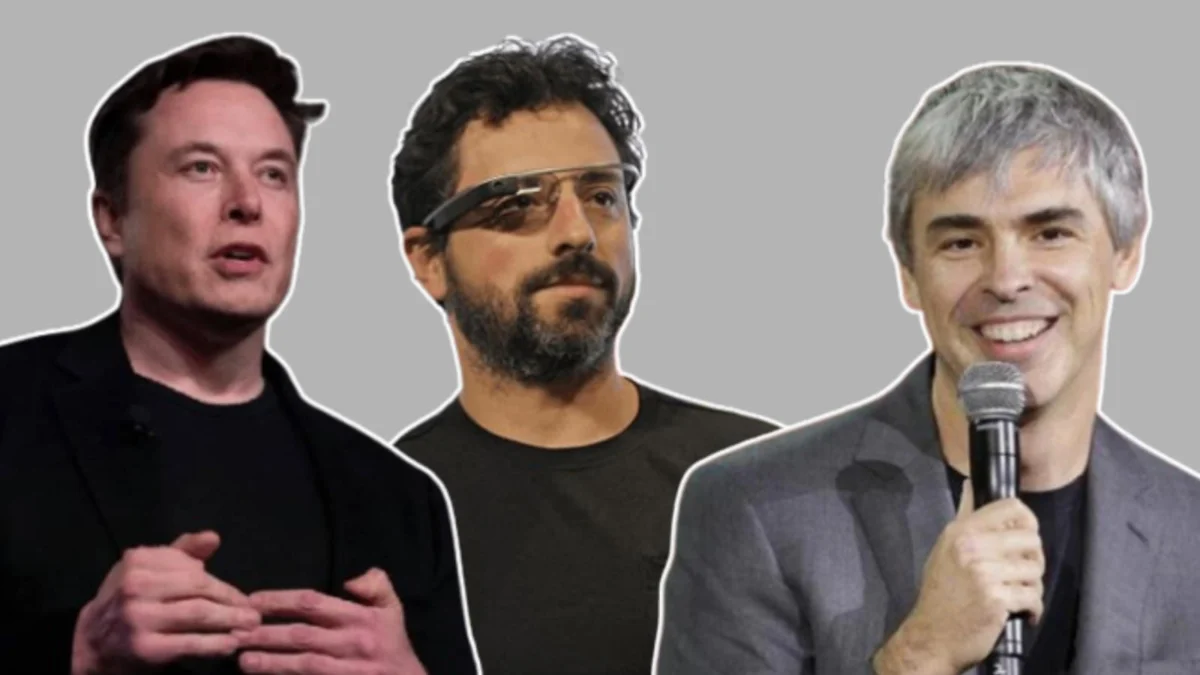
New Delhi, India – June 1, 2026 – A seismic shift has irrevocably altered the landscape of global wealth, with technology founders and executives now overwhelmingly dominating the apex of financial power. As of June 1, 2026, the latest update from the prestigious Bloomberg Billionaires Index paints a vivid picture of an economy where digital platforms, artificial intelligence, and cutting-edge space technology are not just shaping the future, but also minting fortunes on an unprecedented scale. This era marks a stark departure from merely a decade ago, when titans of oil, retail, and traditional industry held sway. Today, the narrative is undeniably digital, driven by relentless innovation and an insatiable global appetite for advanced technological solutions.
The index, a dynamic daily ranking reflecting the net worth of the world’s richest individuals, reveals Elon Musk firmly entrenched as the world’s wealthiest person, his fortune eclipsing rivals by a substantial margin. His diverse portfolio, spanning electric vehicles, space exploration, artificial intelligence, and digital infrastructure, exemplifies the multifaceted nature of modern wealth creation. The collective ascent of tech moguls like Larry Page, Sergey Brin, Jeff Bezos, and Jensen Huang underscores the profound impact of the tech sector, particularly the explosive growth fueled by advancements in AI and cloud services. While a lone luxury magnate, Bernard Arnault, maintains a formidable presence, the overarching trend is clear: the future of wealth is forged in the crucible of innovation and technological disruption.
Main Facts: A New Era of Unprecedented Wealth
The Bloomberg Billionaires Index, updated on June 1, 2026, solidifies the tech industry’s unparalleled dominance in global wealth accumulation. The list reveals a striking concentration of capital in the hands of individuals whose empires are built on software, hardware, and digital services. This year’s figures not only highlight colossal existing fortunes but also demonstrate rapid growth, with several billionaires adding tens of billions, and in some cases over a hundred billion, to their net worth within the past year alone.
At the pinnacle of this elite group is Elon Musk, whose estimated total net worth of $735 billion places him in a league of his own. His fortune has seen an astonishing increase of $116 billion this year, a testament to the continued expansion and market valuation of his sprawling ventures across diverse, high-growth sectors. Musk’s influence spans electric vehicles (Tesla), space technology (SpaceX and Starlink), artificial intelligence (xAI, Neuralink), and digital infrastructure (X, formerly Twitter). His unique ability to connect these seemingly disparate fields through a shared vision of technological advancement and disruption has created a synergistic ecosystem that continues to generate immense value.
Following Musk are the co-founders of Google, Larry Page and Sergey Brin, with fortunes of $322 billion and $299 billion, respectively. Their wealth continues to be propelled by the robust performance of Alphabet, Google’s parent company, which has strategically positioned itself at the forefront of the AI revolution. The integration of advanced AI capabilities across Google’s search, cloud, and consumer product divisions has yielded significant returns. Jeff Bezos, founder of Amazon, ranks fourth with a net worth of $289 billion, bolstered by Amazon’s enduring dominance in e-commerce and its formidable Amazon Web Services (AWS) cloud computing division, which continues to be a profit powerhouse.
The top five is rounded out by Larry Ellison, chairman and co-founder of Oracle, whose $281 billion fortune underscores the critical role of enterprise software and cloud infrastructure. His remarkable single-day gain of $21.5 billion highlights the volatility and immense potential for rapid appreciation in the tech sector. Michael Dell, founder and CEO of Dell Technologies, secured the sixth position with $229 billion, witnessing one of the largest financial gains this year at $89.1 billion, reflecting strong demand for enterprise hardware and IT solutions.
Mark Zuckerberg, co-founder and CEO of Meta, stands at seventh with $225 billion, despite a slight decline of $8.7 billion this year, indicating the ongoing investment and strategic shifts within his company’s metaverse ambitions and AI development. Jensen Huang, co-founder and CEO of Nvidia, ranks eighth with $175 billion, his fortune surging by $20.4 billion as Nvidia solidifies its indispensable role in the AI industry, providing the essential processing power for generative AI and machine learning.
The presence of Bernard Arnault, chairman and CEO of luxury goods conglomerate LVMH, at ninth place with $162 billion, serves as a powerful reminder that traditional luxury businesses, expertly managed and globally scaled, can still generate immense wealth, even amidst overwhelming tech dominance. Completing the top ten is Steven Ballmer, former Microsoft CEO and owner of the Los Angeles Clippers, with $158 billion, despite a $10.4 billion decline, illustrating the dynamic nature of investment portfolios even for seasoned tech investors.
Chronology: A Decade of Transformation – From Old Guard to New Titans
The current landscape of global wealth is the culmination of a decade-long, profound transformation. A look back to 2016 reveals a markedly different picture, where the world’s wealthiest were often synonymous with traditional industries. Names like the Koch brothers (industrial conglomerates), the Waltons (retail), and various oil magnates frequently populated the top echelons. While Bill Gates and Warren Buffett maintained strong positions, the sheer breadth and depth of tech’s current dominance were still in their nascent stages.
The Internet’s Proliferation and Mobile Revolution (2000s-2010s): The groundwork for this shift was laid much earlier with the widespread adoption of the internet and the mobile revolution. Companies like Google (Alphabet) and Amazon had already established strong footholds in search, advertising, and e-commerce. The iPhone’s launch in 2007, though outside this specific decade, catalyzed an entire app economy, pushing software and digital services to the forefront. By the early 2010s, social media platforms like Facebook (Meta) were rapidly expanding their user bases, transforming communication and advertising.
The Rise of Cloud Computing and Big Data (Early 2010s-Mid 2010s): The mid-2010s saw the exponential growth of cloud computing, led primarily by Amazon Web Services (AWS) and Microsoft Azure. This infrastructure shift allowed startups and enterprises alike to scale rapidly without massive upfront IT investments, fueling a new wave of digital innovation. Concurrently, the explosion of data generated by internet users became a valuable commodity, driving advancements in data analytics and targeted advertising, benefiting companies like Google and Meta immensely. Elon Musk’s ventures, particularly Tesla, began to gain significant traction, challenging established automotive giants with electric vehicles and advanced software. SpaceX was already making strides in reusable rocket technology, hinting at its future potential.
The AI Inflection Point: 2020s and Beyond: The true acceleration of tech wealth came in the early to mid-2020s, largely propelled by the maturation and widespread application of artificial intelligence. The breakthroughs in machine learning, deep learning, and particularly generative AI (post-2022/2023) created entirely new markets and supercharged existing ones. Companies like Nvidia, which had long been crucial for graphics processing, found their GPUs to be the indispensable backbone for AI training and inference. This positioned Jensen Huang as a central figure in the new AI economy.
Alphabet, under its "AI-first" strategy, integrated AI into virtually every product, from search algorithms to cloud services and autonomous driving (Waymo). Meta, despite its significant investment in the metaverse, also heavily pivoted towards AI for content recommendation, advertising, and long-term research. Elon Musk, with his early and aggressive bets on AI through Tesla’s Full Self-Driving capabilities, Neuralink’s brain-computer interfaces, and the more recent establishment of xAI, further solidified his position as a pioneer in this transformative field. Larry Ellison’s Oracle also made significant strides in cloud AI services, attracting large enterprise clients seeking to leverage AI in their operations.
The Evolving Landscape of Wealth Creation: This chronological shift highlights how business models themselves evolved. The move from product sales to recurring revenue streams (subscriptions, cloud services), the power of platform economies (app stores, marketplaces), and the monetization of user data became dominant paradigms. The tech titans of today are not just selling goods; they are building ecosystems, creating entirely new industries, and often operating at the cutting edge of scientific and engineering frontiers, making their empires more resilient and their wealth growth more explosive. This dynamic evolution, driven by successive waves of technological innovation, has fundamentally reshaped who holds the most significant financial power globally.
Supporting Data: Deep Dives into the Tech Triumvirate and Shifting Fortunes
The numbers from the Bloomberg Billionaires Index offer more than just rankings; they tell a story of strategic foresight, relentless execution, and market responsiveness. A closer look at the key players reveals the intricate mechanisms behind their staggering wealth.
The Tech Triumvirate: Deep Dive into the Top Earners
-
Elon Musk ($735 Billion): Musk’s colossal fortune is a testament to his audacious vision and the success of his multi-sectoral empire. Tesla continues to dominate the electric vehicle market, but its valuation increasingly reflects its AI capabilities, particularly in autonomous driving (FSD). SpaceX, with its Starlink internet constellation and ambitious Mars colonization plans, is revolutionizing space access and connectivity. Neuralink and xAI represent Musk’s direct foray into advanced AI, aiming to push the boundaries of human-computer interaction and develop general AI. X (formerly Twitter) is being refashioned as a "everything app," a digital infrastructure play. The synergy between these ventures – for instance, Starlink providing connectivity for remote Tesla vehicles or AI research from xAI informing Tesla’s FSD – creates a powerful, self-reinforcing ecosystem that justifies its market premium. His $116 billion gain this year underscores the market’s confidence in his ambitious long-term projects and their potential to redefine multiple industries.
-
Larry Page ($322 Billion) & Sergey Brin ($299 Billion): The Google co-founders continue to reap massive benefits from Alphabet’s diversified portfolio. While Google Search and YouTube remain advertising behemoths, Google Cloud Platform (GCP) has emerged as a significant player in the enterprise cloud market, directly competing with AWS and Azure. Crucially, Alphabet’s "AI-first" strategy, initiated years ago, is now paying massive dividends. DeepMind, their AI research arm, has made groundbreaking discoveries, and AI is deeply integrated into nearly every Google product, from enhancing search results and Google Maps to powering Waymo’s autonomous vehicles. Their wealth is a direct reflection of Alphabet’s successful pivot and dominance in the AI landscape, making their positions almost unassailable.
-
Jeff Bezos ($289 Billion): Amazon’s founder continues to thrive through two core pillars: its unparalleled global e-commerce network and the highly profitable Amazon Web Services (AWS). While online retail remains a massive operation, AWS is the true engine of Amazon’s profitability, providing cloud infrastructure for countless businesses worldwide. Bezos’s wealth also benefits from Amazon’s expansion into healthcare (Amazon Pharmacy, One Medical), entertainment (Prime Video), and logistics, creating a vast ecosystem that touches almost every aspect of consumer and business life. His $36 billion gain this year signifies Amazon’s enduring market leadership and continuous innovation.
-
Larry Ellison ($281 Billion): Ellison’s Oracle has made a formidable comeback, largely by successfully pivoting to cloud computing. Oracle Cloud Infrastructure (OCI) has aggressively pursued enterprise clients, often with specialized AI-ready infrastructure. The $21.5 billion gain in a single day, as reported, likely reflects a significant market reaction to a major announcement – perhaps a massive new contract win for OCI with a prominent AI startup or a surprisingly strong earnings report driven by cloud growth and AI integration in its enterprise software suites. This demonstrates the market’s high valuation of companies that can adapt and lead in critical technological shifts.
-
Michael Dell ($229 Billion): Dell Technologies, under Michael Dell’s leadership, has cemented its position as a crucial provider of enterprise IT solutions. Its substantial $89.1 billion gain this year is directly tied to the surging demand for robust computing infrastructure needed to power AI and data centers. As companies worldwide invest heavily in AI capabilities, the need for high-performance servers, storage solutions, and networking equipment – areas where Dell excels – has skyrocketed. This surge underscores the fundamental role of hardware providers in the AI revolution.
-
Jensen Huang ($175 Billion): Huang’s Nvidia has become arguably the most critical company in the generative AI era. Its Graphics Processing Units (GPUs) are the de facto standard for training and deploying AI models, making Nvidia an indispensable partner for tech giants and startups alike. The $20.4 billion increase in his fortune reflects Nvidia’s dominant market position, its innovation in AI chip architecture, and the insatiable demand for its products, solidifying its status as the picks-and-shovels provider for the AI gold rush.
The Shifting Fortunes: Winners and Losers of the Past Year
While most tech billionaires saw their fortunes swell, the past year also brought declines for some, illustrating the dynamic and sometimes volatile nature of the market:
-
Mark Zuckerberg ($225 Billion, down $8.7 Billion): Zuckerberg’s slight decline reflects the continued, massive investments Meta is making in its metaverse vision, which, while promising long-term, still requires significant capital outlay and has yet to fully materialize its returns. Additionally, Meta faces ongoing challenges in ad revenue diversification and regulatory scrutiny, which can impact investor sentiment. However, Meta’s continued advancements in AI, particularly for content recommendations and future platforms, signal a strategic long-term play.
-
Steven Ballmer ($158 Billion, down $10.4 Billion): Ballmer’s fortune, largely derived from his past Microsoft stock and subsequent investments, saw a decline. This could be attributed to broader market corrections affecting his diversified investment portfolio, or a re-evaluation of mature tech assets compared to the hyper-growth AI sector. Despite the decline, his net worth remains substantial, reflecting decades of strategic investment.
The Anomaly: Bernard Arnault and the Enduring Power of Luxury ($162 Billion)
Bernard Arnault’s position at ninth place is a powerful counterpoint to the tech narrative. As the chairman and CEO of LVMH, the world’s largest luxury goods conglomerate, his wealth is built on an entirely different foundation: brand prestige, exquisite craftsmanship, and an enduring global demand from affluent consumers. LVMH’s portfolio of over 75 prestigious brands (Louis Vuitton, Christian Dior, Tiffany & Co., Hennessy, etc.) demonstrates the resilience of the luxury market, which often proves resistant to economic downturns for its high-net-worth clientele. Arnault’s presence underscores that while tech creates new wealth at an astonishing pace, established sectors with strong global brands and careful management can maintain immense financial power. His success highlights the diverse paths to billionaire status, even in a tech-dominated world.
Official Responses: Voices from the Apex of Wealth
While direct "official responses" in the traditional sense are rare from these individual billionaires, their public statements, company reports, and strategic initiatives serve as clear indicators of their perspectives and future directions. These insights often provide a glimpse into the philosophies driving their unprecedented wealth.
Elon Musk: Known for his ambitious pronouncements, Musk frequently emphasizes the imperative of accelerating humanity’s future. "Our mission at SpaceX is to make life multi-planetary, not just for humanity’s survival, but for the sheer adventure of it," he stated in a recent interview, underscoring the long-term, visionary projects that underpin his wealth. Regarding AI, he has expressed both excitement and caution. "The future is defined by AI, and it is crucial we build it responsibly, for the benefit of all humanity. That’s the core tenet of xAI," a representative for his AI venture recently communicated, reflecting a blend of entrepreneurial drive and a sense of profound responsibility.
Larry Page and Sergey Brin: Though often more private, the Alphabet co-founders consistently align with the company’s "AI-first" ethos. In a recent investor call, Alphabet CEO Sundar Pichai, likely echoing the co-founders’ sentiment, stated, "AI is the most profound technology humanity is working on, and we are embedding it across all our products and services to make them more helpful and intuitive." This commitment to AI as a foundational technology for their vast ecosystem is the explicit strategy driving their continued financial success.
Jeff Bezos: Bezos remains focused on customer obsession and long-term vision. "We continue to innovate on behalf of our customers, whether it’s through faster delivery, expanding our product selection, or providing the foundational cloud infrastructure that powers countless businesses globally," Bezos remarked during a recent Amazon shareholder meeting, highlighting the dual engines of e-commerce and AWS that fuel his fortune. His philanthropic efforts, like the Bezos Earth Fund, also reflect his growing focus on global challenges.
Jensen Huang: As the face of Nvidia, Huang consistently champions the transformative power of accelerated computing and AI. "We are at the inflection point of a new industrial revolution, driven by AI. Every industry, every company, every scientist will be an AI company, and Nvidia is building the engines for this new era," Huang declared at a recent industry conference. His statements underline Nvidia’s indispensable role and provide context for the immense growth in his personal wealth.
Bernard Arnault: Arnault, representing the enduring power of luxury, often speaks to the timeless values of craftsmanship, heritage, and desire. "Luxury is about dreams, about exceptional quality, and about enduring brands that transcend generations. Our focus remains on creativity, excellence, and a deep understanding of what our discerning clients desire globally," Arnault commented in a rare interview with a financial publication, articulating the distinct philosophy behind LVMH’s continued dominance and his own significant wealth.
Expert Commentary: Economists and market analysts often provide broader context. Dr. Anya Sharma, a leading economist specializing in wealth distribution, recently commented, "The concentration of wealth among tech founders reflects the winner-take-all dynamics of platform economies and the exponential returns on innovation. While it fuels rapid technological advancement, it also raises critical questions about economic inequality and the immense power wielded by a handful of individuals." This perspective adds a crucial layer of scrutiny to the dazzling figures presented in the index.
Implications: Economic Concentration, Societal Impact, and the Future of Wealth
The astonishing wealth accumulated by tech titans, as highlighted by the Bloomberg Billionaires Index, carries profound implications that extend far beyond individual fortunes. It signals shifts in global economic power, raises questions about societal structures, and points to the potential future trajectories of wealth creation.
Economic Concentration and Global Influence:
The most immediate implication is the unprecedented concentration of economic power. A handful of individuals, primarily from the technology sector, now command wealth equivalent to the GDPs of entire nations. This concentration translates into immense influence – over market trends, technological direction, investment flows, and even geopolitical dynamics. Their companies, often global monopolies or duopolies in their respective fields (e.g., Google in search, Amazon in e-commerce/cloud, Nvidia in AI chips), shape consumer behavior, dictate industry standards, and drive innovation at a pace unmatched by traditional sectors. This "network effect" and "winner-take-all" dynamic in tech means that early movers and dominant platforms can accrue disproportionate value, leading to these colossal individual fortunes. The decisions made by Musk regarding space exploration, by Page and Brin on AI ethics, or by Bezos on cloud infrastructure have ripple effects across global economies and societies.
Societal Impact: Innovation vs. Inequality:
The rise of these tech billionaires presents a dual narrative of innovation and inequality. On one hand, their ventures have undeniably pushed the boundaries of human capability, leading to advancements that have transformed daily life: instant global communication, ubiquitous access to information, efficient e-commerce, revolutionary medical technologies, and the promise of sustainable energy and space travel. These innovations have created millions of jobs, albeit often highly skilled ones, and have generally improved living standards for many.
However, this rapid wealth accumulation also exacerbates wealth inequality. The vast majority of the population has not seen their wealth grow at a comparable rate, leading to social and economic disparities. Concerns about monopolies, data privacy, the ethical implications of AI, and the potential for job displacement due to automation are becoming increasingly prominent. Debates surrounding progressive taxation, antitrust regulation, and the societal responsibility of these tech giants are intensifying. While many billionaires engage in philanthropy (e.g., Bezos Earth Fund, Gates Foundation, Musk’s stated intention to use xAI profits for humanity), the sheer scale of their wealth often dwarfs even the largest philanthropic endeavors, prompting questions about systemic solutions rather than individual giving.
The Future of Wealth Creation: What’s Next?
Looking ahead, several factors will likely shape the future of wealth creation:
- Continued Tech Dominance: It is highly probable that technology, particularly AI, biotechnology, and advanced materials, will continue to be the primary engine of new wealth. The next generation of billionaires may emerge from breakthroughs in personalized medicine, quantum computing, sustainable energy solutions, or immersive digital realities beyond the current metaverse concepts.
- Space Economy: Beyond SpaceX, the nascent space economy – encompassing asteroid mining, space tourism, in-orbit manufacturing, and lunar colonization – represents a potentially enormous new frontier for wealth generation.
- Regulatory Scrutiny: As tech companies grow larger and more influential, regulatory oversight is expected to increase globally. Antitrust actions, data privacy laws, and ethical guidelines for AI could impact business models and potentially moderate the pace of wealth accumulation, particularly for existing giants.
- Geopolitical Stability and Global Markets: Global political stability, trade relations, and the performance of international markets will always play a critical role. Any significant geopolitical upheaval or economic recession could impact even the most resilient tech empires.
- Sustainability and ESG: There’s a growing investor and public demand for companies to demonstrate strong Environmental, Social, and Governance (ESG) performance. Future wealth creation may increasingly favor businesses that are not only innovative but also sustainable and socially responsible, potentially shifting capital towards "green tech" and ethical AI.
In conclusion, the Bloomberg Billionaires Index for June 1, 2026, serves as a powerful snapshot of a world fundamentally reshaped by technological advancement. While the concentration of wealth in the hands of a few tech titans raises complex societal questions, it also underscores humanity’s relentless drive for innovation and the immense potential that still lies at the frontier of scientific and technological discovery. The ongoing evolution of this landscape will undoubtedly continue to be one of the most compelling economic stories of our time.