

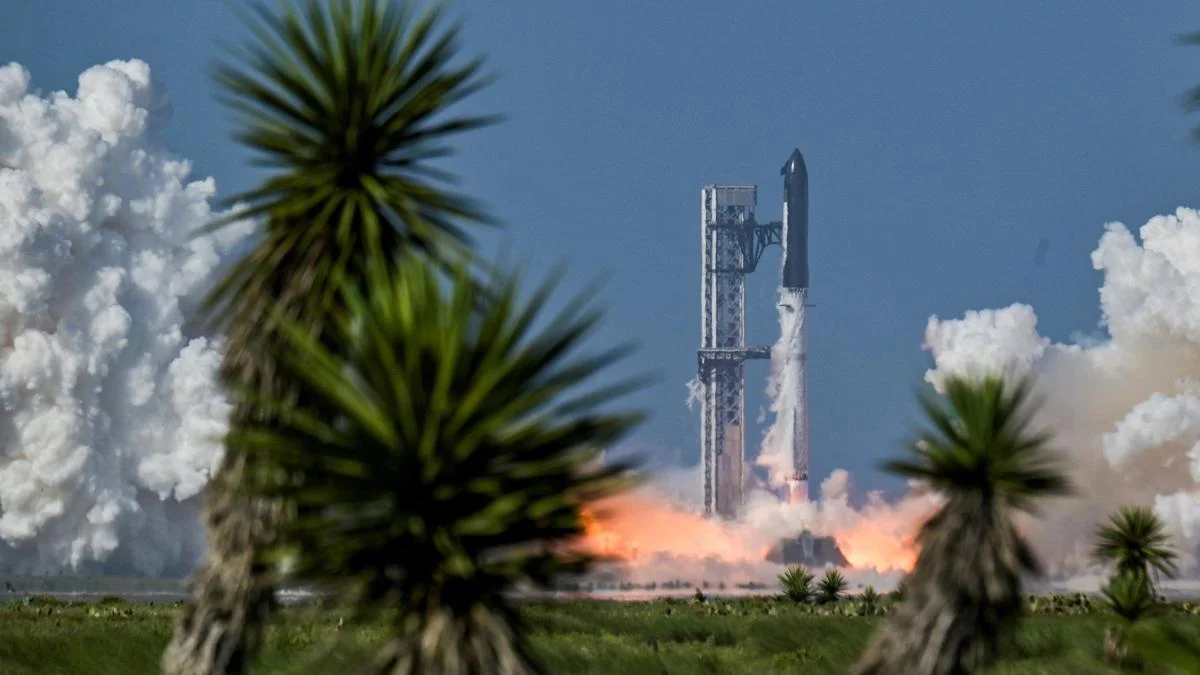
STARBASE, Texas – July 25, 2026 – In a monumental leap forward for private space exploration and NASA’s ambitious lunar return program, SpaceX’s Starship and its Super Heavy v3 booster successfully completed its 13th integrated flight test on July 24, 2026. The towering 407-foot (124-meter) vehicle, the largest and most powerful rocket ever constructed, thundered skyward from the SpaceX launch complex in Starbase, Texas, marking a critical milestone in its iterative development journey and bringing humanity closer to sustained lunar presence and eventual Martian colonization.
This latest flight, the second this year for the enhanced V3 iteration of the colossal rocket system, saw Starship achieve its primary test objectives before both stages performed controlled splashdowns in designated oceanic zones. The successful launch and initial flight profile were closely monitored by NASA, for whom Starship represents the linchpin of their Artemis program, designed to return astronauts to the Moon.
Main Facts: A Resounding Success Amidst High Stakes
The 13th test flight of the SpaceX Starship system, comprising the Starship upper stage and its Super Heavy v3 booster, was a resounding success, demonstrating significant progress in the reusable rocket’s development. Lifting off at [Specific time, if available, otherwise omit for generality] on July 24, 2026, the vehicle ascended gracefully, defying previous aborts and weather delays, to achieve its planned flight trajectory.
Crucially, the mission involved the deployment of a new batch of Starlink satellites, which were tasked with performing advanced in-orbit communication experiments, including laser links with existing constellations. Beyond its immediate payload, the flight served as a vital data-gathering exercise, particularly concerning the Starship’s robust heat shield, a critical component for safe atmospheric re-entry from deep space missions. Sensors and external cameras on the deployed Starlinks meticulously recorded the shield’s performance, providing invaluable insights for future operational flights.
The launch, broadcast globally, captivated audiences and underscored SpaceX’s relentless pursuit of fully reusable space transportation. This flight validated a series of engineering improvements and operational refinements implemented since the previous test, particularly addressing the engine ignition issues that had plagued earlier attempts. The Super Heavy booster, after propelling Starship to its target altitude, successfully executed a propulsive descent towards a planned splashdown in the Gulf of Mexico, while the Starship upper stage continued its trajectory towards the Indian Ocean, approximately 10,000 miles (16,000 kilometers) from its launch site. Neither stage was intended for recovery in this specific test, allowing for maximal stress testing of flight profiles.
The successful liftoff and initial flight phases are paramount for NASA, which has selected Starship as the Human Landing System (HLS) for its Artemis program. The space agency is banking on Starship’s unprecedented payload capacity and reusability to transport astronauts from lunar orbit to the Moon’s surface, making this test a crucial step towards the Artemis III mission, slated to return humans to the Moon by the end of the decade. Elon Musk, CEO of SpaceX, has repeatedly articulated his long-term vision for Starship: not merely a lunar lander, but the foundational vehicle for establishing a permanent human presence on Mars.
Chronology: Overcoming Obstacles on the Path to Orbit
The path to this successful 13th test flight has been characterized by SpaceX’s hallmark iterative development approach – a strategy of rapid prototyping, testing, learning from failures, and quick iteration. This philosophy, while often resulting in spectacular test anomalies, has consistently driven rapid progress.
A History of Ambitious Testing: Starship’s journey began with early prototypes undergoing hop tests at ever-increasing altitudes, eventually leading to integrated flight tests of the full Starship and Super Heavy stack. These initial integrated flights, while demonstrating the vehicle’s immense power, also exposed significant challenges, particularly concerning engine reliability and controlled descent maneuvers. Early attempts faced issues with all engines igniting on the Super Heavy booster and Starship’s belly-flop re-entry and landing flip. Each test, regardless of its outcome, provided a wealth of data critical for refinement.
The V3 Iteration: This 13th flight marked the second outing for the new "V3" version of the Starship system this year. The V3 designation signifies a series of significant upgrades to both the Super Heavy booster and the Starship upper stage. These improvements include enhanced structural integrity, optimized engine performance, and refined avionics and flight control systems. The previous V3 demo flight in May also experienced engine trouble, which, while allowing the booster to climb to its intended altitude of 125 miles (200 kilometers), ultimately prevented a fully controlled return. This experience directly informed the modifications made for the current flight.
Addressing Engine Anomalies: A major hurdle leading up to this launch was the recurring issue of engine ignition. Just last week, a launch attempt was aborted at the last second when six of the 33 Raptor engines on the Super Heavy first-stage booster failed to ignite during the pre-launch sequence. This prompted an immediate stand-down, allowing SpaceX engineers to meticulously inspect and replace the problematic engines. This swift diagnostic and repair process is a testament to SpaceX’s agile operations and the modular design of the Raptor engine array. The decision to replace the engines, rather than attempting to launch with a reduced thrust profile, underscored the company’s commitment to maximizing the probability of mission success and data collection for this critical flight.
Weather-Related Delays: Beyond the technical challenges, the launch window itself was impacted by environmental factors. The initial target launch date was shifted due to the July 16 engine-related abort. Subsequently, a planned launch attempt on Thursday, July 24, was delayed by thick clouds and adverse weather conditions associated with Tropical Storm Bertha. Launch windows for rockets as powerful and large as Starship are tightly constrained by wind shear, lightning risk, and cloud ceilings, necessitating a meticulous assessment of meteorological conditions. The eventual clear weather on July 24 provided the optimal conditions for the successful liftoff.
Supporting Data: Technical Prowess and Innovative Experimentation
The Starship system is an engineering marvel, pushing the boundaries of rocket design and performance. Its sheer scale and innovative technologies are central to SpaceX’s ambitious goals.
Dimensions and Power: Standing at an imposing 407 feet (124 meters) tall, Starship is the tallest and most powerful rocket ever built, surpassing even NASA’s Saturn V in thrust. The Super Heavy booster alone features 33 Raptor engines, generating an astounding 16 million pounds of thrust at liftoff. The Starship upper stage is powered by six Raptor engines (three sea-level optimized and three vacuum-optimized), designed for efficient operation in the vacuum of space. Both stages utilize sub-cooled liquid methane and liquid oxygen propellants, chosen for their high performance, reusability potential, and suitability for in-situ resource utilization on Mars.
The Starlink Payload and Its Mission: This flight carried a specialized batch of Starlink satellites, which were not merely passive cargo. These new generation Starlinks were designed to perform critical tests before their planned deorbit over the Indian Ocean. Once deployed from Starship’s innovative "Pez-like dispenser" mechanism – a spring-loaded door that releases satellites – the Starlinks rapidly extended their solar wings and antennas. Their primary mission was to attempt communication via lasers with older Starlink models already in orbit. This inter-satellite laser link technology is vital for reducing reliance on ground stations, improving latency, and enhancing the resilience of the Starlink constellation, which currently comprises over 10,000 satellites, making it the world’s largest. The successful demonstration of these laser links would be a significant step towards a fully interconnected and robust space internet infrastructure. The solo-flying time for these test Starlinks was expected to be no more than 20 minutes before their controlled deorbit.
Heat Shield Experimentation: A crucial aspect of this test flight was the rigorous evaluation of Starship’s thermal protection system, or heat shield. Six of the newly launched Starlinks were equipped with high-resolution cameras specifically positioned to photograph the Starship’s heat shield during its atmospheric re-entry. This external visual data is invaluable for assessing the shield’s integrity under extreme conditions.
Furthermore, the heat shield itself was heavily instrumented with sensors designed to measure the extreme pressures and temperatures experienced by the spacecraft during its high-speed passage through the atmosphere. In a particularly innovative experiment, most of the heat shield’s thermal tiles were black, as is standard, but some were deliberately painted white. This was not merely an aesthetic choice; these white tiles were intended to simulate missing tiles, a critical test to assess the shield’s robustness and its ability to withstand re-entry even with compromised sections. This experimental approach draws lessons from past spaceflight incidents, such as the Space Shuttle Columbia disaster, highlighting SpaceX’s commitment to ensuring the absolute safety and reliability of Starship’s re-entry system before it carries human crews. The data from these sensors and cameras will be meticulously analyzed to validate and refine the heat shield’s design for future crewed and uncrewed missions.

The Vision of Full Reusability: SpaceX’s ultimate goal for Starship is full and rapid reusability, a paradigm shift that promises to drastically reduce the cost of space access. While neither stage was recovered in this particular test, the long-term plan involves the Super Heavy booster performing a "catch" maneuver back at the Starbase launch pad, using a pair of giant mechanical arms integrated into the launch tower, colloquially known as "chopsticks." The company plans to replicate this audacious feat with the Starship upper stage as well, aiming for the entire system to be fully reusable, much like an aircraft. This level of reusability is projected to enable routine, affordable travel to the Moon, Mars, and beyond, fundamentally altering the economics of spaceflight.
Official Responses: NASA’s Critical Dependence and SpaceX’s Strategic Vision
The successful flight test elicited positive reactions from both SpaceX and NASA, underscoring the collaborative yet demanding nature of their partnership.
NASA’s Perspective and Artemis Requirements: NASA has made it abundantly clear that the timely and successful development of Starship is critical for the agency’s Artemis program, which aims to return American astronauts to the Moon. Starship was selected as the Human Landing System (HLS) for Artemis III, the mission intended to land the first woman and first person of color on the lunar surface. For this mission, three American astronauts and one Italian astronaut are slated to journey to lunar orbit aboard NASA’s Orion capsule, launched by the Space Launch System (SLS) rocket. Once in lunar orbit, these astronauts will transfer to a waiting Starship, which will then transport them to the lunar south pole.
"This flight is a significant step in Starship’s maturation, which is absolutely vital for Artemis," stated a NASA official, speaking on background after the launch. "We are monitoring every test closely. Our requirements for Starship are stringent: it needs to be proven reliable for sustained orbital operations, including in-orbit refueling demonstrations, and capable of safe, precise lunar landings. The practice docking with Orion in lunar orbit next year is a crucial step for crew safety and mission success. SpaceX is making commendable progress, and we look forward to the next phases of testing that will validate Starship’s capabilities as a human-rated lunar lander."
NASA needs Starship to wrap up its testing phases and achieve consistent orbital reliability soon to ensure the Artemis III timeline can be met. The practice docking exercise planned for next year is a complex maneuver that will involve the Orion capsule rendezvousing and docking with an uncrewed Starship in Earth orbit, simulating the crucial transfer operation that will take place in lunar orbit. This will be a major validation point for the integrated system.
SpaceX’s Unwavering Commitment: While SpaceX typically maintains a reserved public posture regarding test flight outcomes, the successful launch was undoubtedly met with satisfaction within the company. Elon Musk himself frequently provides updates via social media, often emphasizing the iterative nature of development and the long-term vision.
"Every flight, whether it’s a success or a partial success, brings us closer to making life multi-planetary," Musk has stated on numerous occasions. "This V3 flight demonstrates significant progress in engine reliability and overall system performance. The data from the Starlink deployment and the heat shield experiments are invaluable. We are systematically tackling the challenges of full reusability and preparing Starship for its role in enabling humanity’s future on the Moon and Mars."
SpaceX’s internal response focuses on meticulous data analysis from the flight, using the information gathered to further refine the vehicle’s design and operational procedures. The company’s engineering teams will now be dissecting every telemetry point from the Super Heavy’s ascent, the Starship’s orbital insertion, the Starlink deployment, and the heat shield’s performance to inform the design of future prototypes and the next series of test flights.
Implications: Reshaping the Future of Space Exploration
The successful 13th Starship test flight carries profound implications for the future of space exploration, ranging from near-term lunar missions to humanity’s long-term aspirations of becoming a multi-planetary species.
Enabling the Artemis Program: Starship’s role as the Human Landing System for NASA’s Artemis program cannot be overstated. Its colossal cargo capacity fundamentally changes the paradigm of lunar exploration. Unlike previous lunar landers, Starship is designed to transport not just astronauts but also significant amounts of cargo, scientific equipment, and even habitats to the lunar surface. This capability is essential for establishing a sustainable human presence on the Moon, enabling longer stays, more extensive scientific research, and the eventual development of a lunar economy. The successful progress of Starship is directly correlated with the viability and timeline of NASA’s ambitious lunar goals. Any significant delays or fundamental issues with Starship would inevitably impact the Artemis schedule.
Paving the Way for Mars Colonization: Beyond the Moon, Starship is the cornerstone of Elon Musk’s audacious vision to build a self-sustaining city on Mars. Its reusability and payload capacity are designed to facilitate the transport of hundreds of tons of cargo and hundreds of people per mission, a prerequisite for terraforming and establishing a permanent human settlement on the Red Planet. Musk’s long-term goal involves thousands of Starships launching over decades to ferry the necessary resources and personnel to Mars. The current test flights, while focused on Earth orbit and atmospheric re-entry, are directly contributing to the foundational technologies required for interplanetary travel, including deep-space navigation, long-duration life support, and extreme re-entry profiles for Mars’ thin atmosphere. The company is already booking tourist trips to Mars, as well as the Moon, signaling confidence in the vehicle’s eventual capabilities.
Revolutionizing Space Access and Economics: Starship represents a paradigm shift in space transportation. If SpaceX achieves its goal of full and rapid reusability, it promises to drastically reduce the cost of putting mass into orbit and beyond. Current launch costs are often measured in thousands of dollars per kilogram; Starship aims to bring this down by orders of magnitude, potentially to tens or even single-digit dollars per kilogram. Such a reduction would unlock unprecedented opportunities for space-based industries, scientific research, and even space tourism. It would make large-scale satellite constellations more economical, facilitate the construction of orbital infrastructure, and enable entirely new commercial ventures in space. The success of Starship could democratize space access, transforming it from a domain of national governments and large corporations into one accessible to a wider array of players.
Inspiring a New Generation: The spectacular launches and ambitious goals of Starship continue to capture public imagination worldwide. These missions inspire a new generation of scientists, engineers, and explorers, encouraging STEM education and fostering a renewed sense of possibility for humanity’s future in space. The open and iterative development process, with its visible successes and failures, provides a real-world lesson in engineering and perseverance.
Future Challenges and Next Steps: While this 13th flight was a significant success, numerous challenges remain. SpaceX must still demonstrate routine, fully controlled landings and recoveries of both the Super Heavy booster and the Starship upper stage. Crucially, in-orbit refueling – a complex maneuver involving multiple Starship tankers transferring propellant to a Starship destined for the Moon or Mars – must be perfected. This technology is vital for deep-space missions, as Starship cannot reach the Moon or Mars fully fueled from Earth without refueling in orbit. Human rating of the Starship system, involving extensive safety certifications and life support system validations, is also a formidable task ahead.
This successful 13th test flight of Starship is not merely a technical achievement; it is a powerful affirmation of humanity’s persistent drive to explore and expand its horizons. Each launch brings the dream of a multi-planetary future a step closer to reality, demonstrating the relentless progress of innovation and the boundless potential of human ingenuity. The world watches with bated breath as SpaceX continues its audacious quest to make life beyond Earth a tangible reality.
