

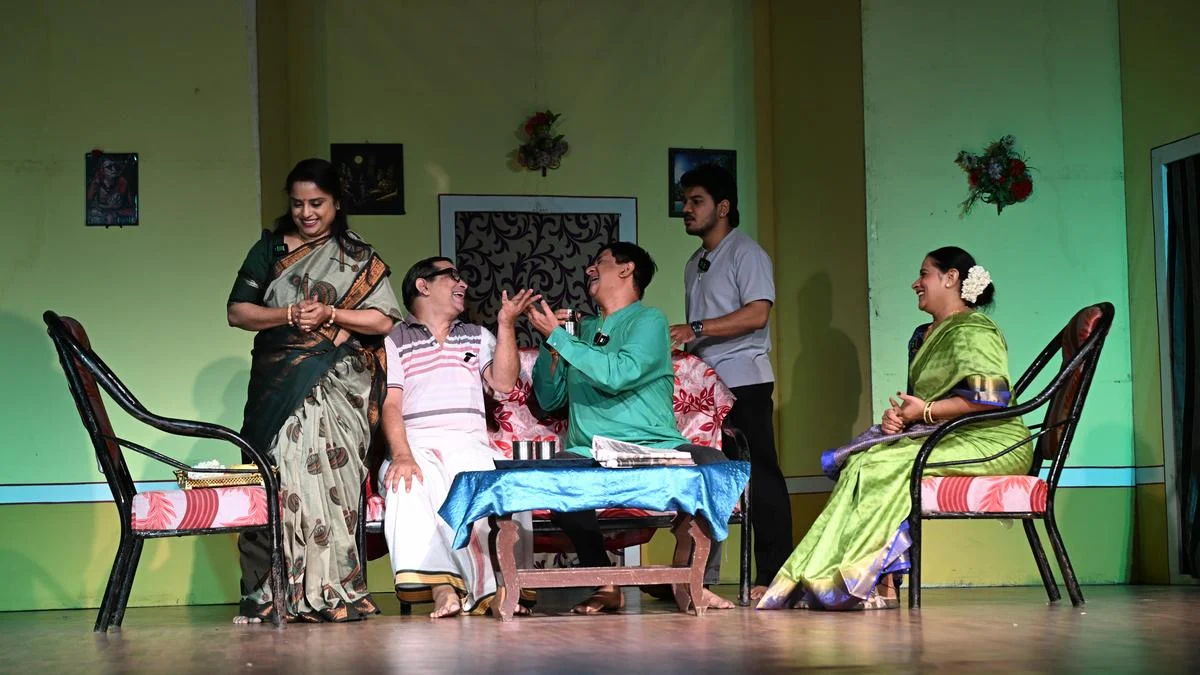
Chennai, May 29, 2026 – The stage at the prestigious Krishna Gana Sabha recently played host to "Mental Manadhil," a thought-provoking and often hilarious theatrical production that delves into the complexities of modern marriage. Inaugurated in Kolkata and now gracing Chennai audiences, this play, conceptualized by M.V. Bhaskar, with a story and dialogues penned by V. Sreevathson and directed by M.V. Bhaskar himself, offers a refreshing and candid perspective on the institution of matrimony, artfully dismantling long-held myths and celebrating the beauty of imperfection.
The Premise: Love, Expectations, and the Illusion of Sameness
At the heart of "Mental Manadhil" lies the burgeoning romance between Sundar, played by Prabhu, and Divya, portrayed by Priya Kannamma. Their love story, initially painted with the vibrant hues of youthful affection, soon becomes a canvas for contrasting expectations about marriage. Sundar, scarred by the perceived dominance of his own father, Mohan Ram (K. Subramaniam), harbors a fierce determination to be a partner who respects equality and avoids authoritarian tendencies. Conversely, Divya, deeply influenced by her upbringing, idealizes a marriage where her husband mirrors her own thoughts and desires, much like her father, Subbu (M.V. Bhaskar).
The play skillfully introduces two contrasting paternal figures, each representing a distinct approach to marital harmony. Subbu’s household is depicted as a matriarchal domain where his wife’s opinions reign supreme, and Subbu himself adopts a strategy of feigned agreement to maintain domestic tranquility. This dynamic, while seemingly amicable on the surface, subtly hints at an underlying imbalance. Divya, observing this, erroneously concludes that her parents represent the pinnacle of marital bliss, a notion the play is poised to deconstruct.
The narrative cleverly uses these contrasting family dynamics to explore the common misconception that soulmates are destined to be mirror images of each other. The play’s central argument, woven through sharp and relatable dialogues, is that true marital success lies not in identical perspectives, but in the ability to navigate differences with grace, humor, and a profound sense of mutual respect.
A Journey Through Misunderstandings and Revelations
The plot thickens as Sundar and Divya’s relationship progresses. Divya, embodying a strong resemblance to her mother’s perceived marital ideal, anticipates Sundar’s complete alignment with her viewpoints. She believes that a truly harmonious union necessitates shared interests and identical opinions. In the initial stages of their courtship, Sundar, eager to please and perhaps blinded by love, readily acquiesces to Divya’s desires, playing the role of the agreeable partner.
However, this charade proves unsustainable. The pressure of constant conformity begins to weigh heavily on Sundar, leading to a growing sense of his own identity being subsumed. The strain culminates in a pivotal moment where Sundar, unable to continue the pretense, calls off the wedding. This dramatic turn of events serves as a catalyst for introspection and forces both characters, and the audience, to confront the underlying issues.
The play doesn’t shy away from showcasing the emotional fallout of such a decision. The ensuing discussions and reflections within the narrative provide a platform for exploring the deeper nuances of relationships. It is within these moments of crisis that the wisdom of the seemingly less dominant figure, Padma (Lavanya Venugopal), Mohan Ram’s wife, comes to the fore.
Unpacking the Myth of Identical Souls
"Mental Manadhil" powerfully challenges the romanticized notion of soulmates being carbon copies of each other. The play argues that this idealized vision of matrimony, where two souls exist in perfect, unblemished harmony, is a far cry from the reality experienced by most couples. Instead, it champions a more pragmatic and resilient form of partnership.
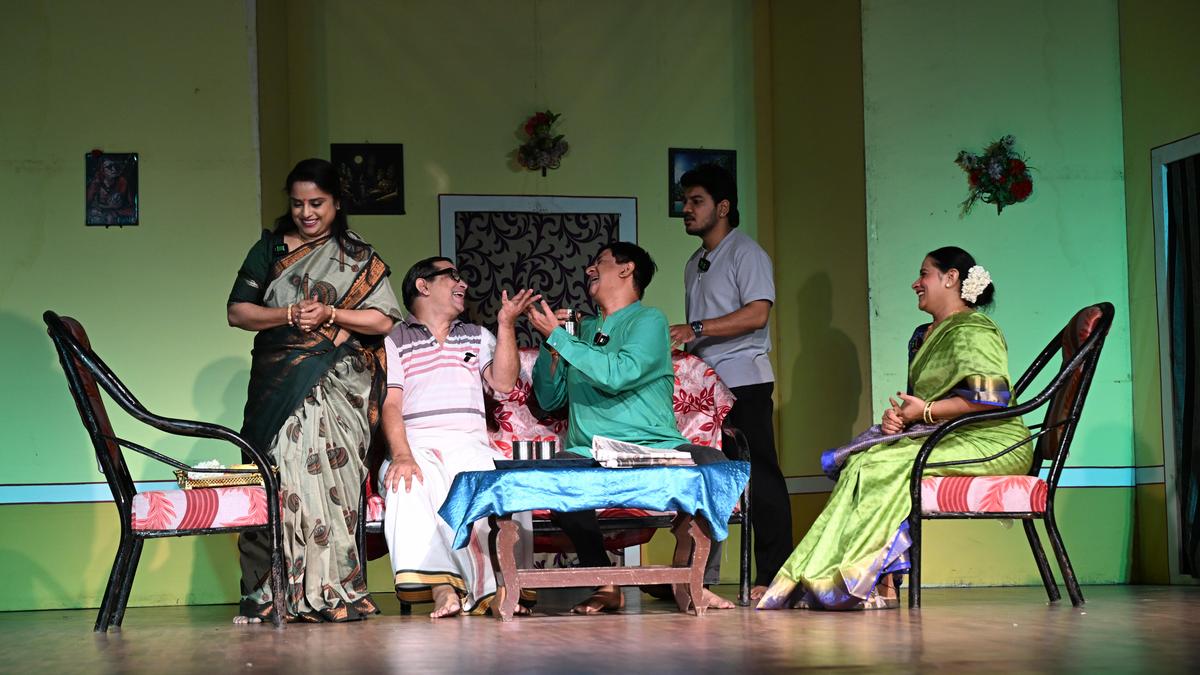
The dialogues are a significant strength of the production, described as "sharp and relatable." They capture the essence of marital dynamics, acknowledging that disagreements and differences of opinion are not indicators of failure but rather integral components of a living, breathing relationship. The play posits that marriage, in its truest form, is the "peaceful coexistence of two nervous systems," where the operative word is indeed "co-existence." This implies a continuous process of negotiation, understanding, and ultimately, resolution.
The narrative subtly contrasts the apparent happiness of Mohan Ram and Padma’s marriage with the underlying, albeit subtle, unhappiness of Subbu and his wife. Mohan Ram, far from being dominating, is portrayed as a partner who values Padma’s input, while Padma, contrary to Divya’s assumptions, is far from meek. Their happiness stems from a genuine partnership, built on mutual respect and an understanding that their differences are not impediments but rather opportunities for growth.
The Joy of Imperfection: A Transformative Message
The turning point in the play comes when Padma intervenes, offering Divya a profound perspective. She helps Divya realize that a truly successful marriage is not contingent on identical tastes or opinions. Instead, it thrives on a shared sense of humor, the ability to laugh at oneself and at life’s absurdities, and an abundance of patience. This wisdom, delivered with warmth and sincerity, begins to shift Divya’s understanding of what constitutes a fulfilling partnership.
The play effectively communicates that a marriage without "some friction to add spice" might, in fact, be lacking in vitality. The inherent challenges and occasional disagreements, when navigated with love and understanding, can strengthen the bond between partners and add depth to their shared journey.
The performances by the entire cast are lauded for their ability to "drive home the joys of an imperfect marriage." Each actor embodies their character with authenticity, making the emotional arc of the play resonate deeply with the audience. The humor, derived from relatable situations and witty repartee, serves to lighten the serious themes without trivializing them.
Broader Implications and Cultural Resonance
"Mental Manadhil" arrives at a time when societal expectations surrounding marriage are continuously evolving. In an era where individual aspirations and personal fulfillment are increasingly prioritized, the play’s message of compromise, understanding, and embracing differences holds significant relevance. It offers a refreshing counterpoint to the often-unrealistic portrayals of perfect partnerships in popular media.
The play’s success, originating in Kolkata and now captivating Chennai, suggests a universal appeal for its candid exploration of marital dynamics. It speaks to the shared human experience of navigating relationships, the challenges of reconciling individual desires with the demands of partnership, and the ultimate realization that true love often lies in accepting and cherishing imperfections.
By rejecting the myth that soulmates must be mirror images, "Mental Manadhil" encourages audiences to re-evaluate their own expectations and to embrace the inherent beauty and resilience of imperfect, yet deeply fulfilling, unions. The play serves as a timely reminder that the most enduring marriages are not those built on sameness, but on the strength of two distinct individuals choosing to walk through life together, hand in hand, embracing their differences and celebrating their shared journey. The production leaves the audience with a renewed appreciation for the complexities of love and a heartwarming understanding that the path to marital happiness is often paved with laughter, patience, and the profound acceptance of what makes each partner uniquely themselves.
