


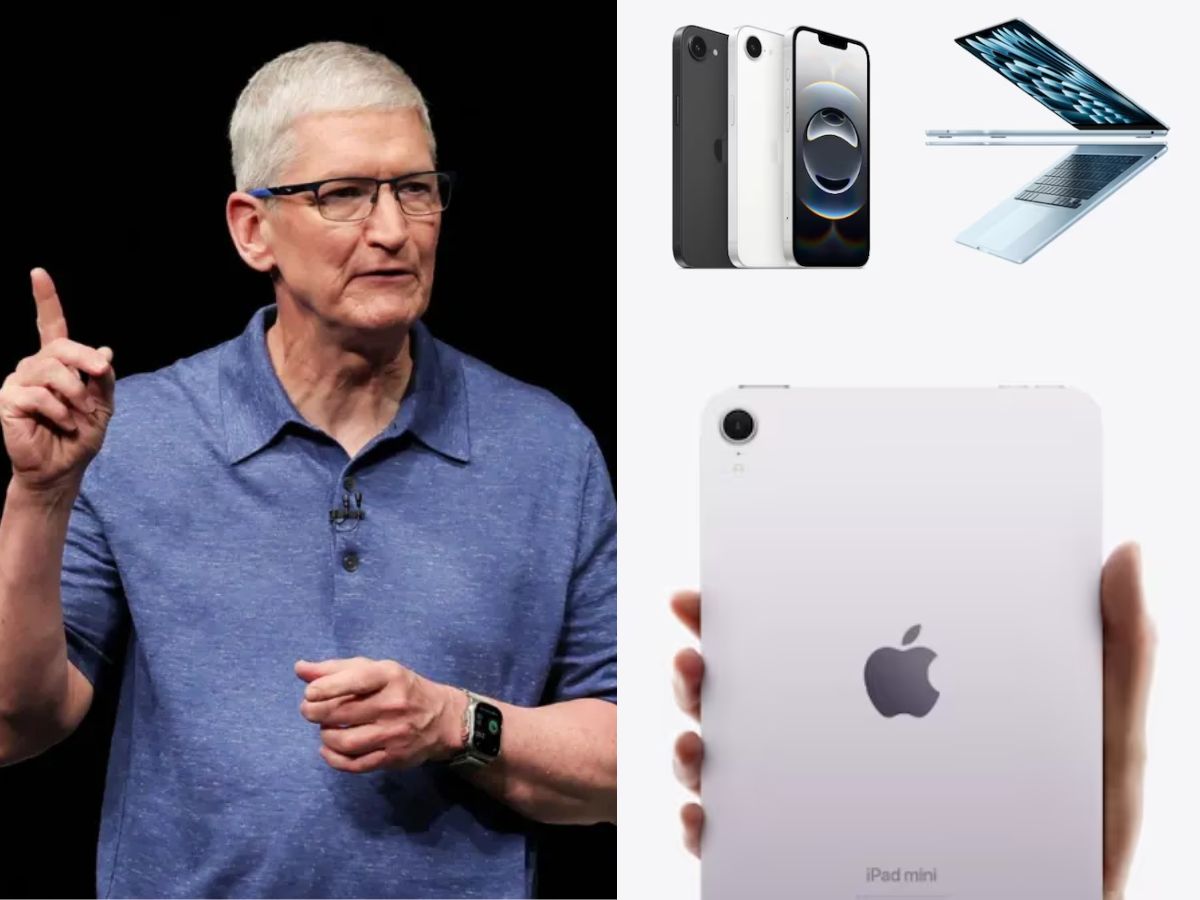
Mumbai, India – June 26, 2026 – Apple, the Cupertino-based tech giant, has enacted significant price increases across its range of MacBooks, iPads, and other products in India, with certain models now commanding up to an additional Rs 1 lakh. This unprecedented adjustment comes as a direct consequence of a severe global memory chip shortage, a crisis exacerbated by the insatiable demand from the burgeoning artificial intelligence (AI) industry. Apple CEO Tim Cook has starkly characterized the current situation as a "hundred-year flood," underscoring the extraordinary nature of the supply chain disruption and its profound impact on the consumer electronics sector.
The price revisions, which have taken immediate effect, reflect a challenging global landscape where the foundational components of modern technology – memory chips like RAM (DRAM) and NAND flash – are increasingly scarce and expensive. While India has often experienced price fluctuations due to import duties and currency variations, the current hike is directly attributed to an international component squeeze, painting a grim picture for consumers aspiring to own Apple’s premium devices.

The Core of the Crisis: AI’s Insatiable Appetite
At the heart of this global predicament lies the explosive growth of artificial intelligence. Companies like OpenAI, Google, Anthropic, and numerous others are investing billions in developing and deploying large AI models and powering massive data centers. These operations require astronomical quantities of high-performance memory to process complex algorithms, train sophisticated neural networks, and handle vast datasets. This unprecedented demand has created a bottleneck in the memory supply chain, diverting critical components away from traditional consumer electronics manufacturing.
Tim Cook’s analogy of a "hundred-year flood" is particularly resonant, highlighting a market phenomenon he claims to have not witnessed in over four decades of industry experience. This isn’t merely a cyclical market correction but a structural shift driven by a revolutionary technological wave, making the situation exceptionally challenging for manufacturers and consumers alike.
)
Chronology of a Shortage: How AI Overtook the Memory Market
The roots of the current memory crisis can be traced back several years, but its acceleration into a full-blown "flood" is a more recent phenomenon, directly tied to the rapid maturation and widespread adoption of generative AI.
Early Warning Signs (2022-2023): While memory markets are inherently cyclical, prone to oversupply and undersupply, analysts began observing unusual patterns in late 2022 and early 2023. Initial signals pointed to a recovering demand for consumer electronics post-pandemic, but alongside this, there was a nascent, yet rapidly escalating, demand for specialized memory from the burgeoning AI sector. High Bandwidth Memory (HBM), a type of advanced interface for 3D-stacked synchronous DRAM (SDRAM), became particularly sought after, driven by the needs of AI accelerators and GPUs.

The Generative AI Explosion (Late 2023 – Early 2024): The launch and widespread adoption of generative AI tools, such as ChatGPT and its competitors, marked a pivotal turning point. This created an immediate and massive surge in demand for computational power, primarily GPU-centric servers, which in turn required vast amounts of both HBM and standard DRAM and NAND flash memory for data storage and processing. Memory manufacturers, recognizing the lucrative, high-margin opportunities in the AI segment, began strategically reallocating production capacities.
Production Shift and Capacity Constraints (Mid-2024): Major memory producers like Samsung, SK Hynix, and Micron started prioritizing the development and manufacturing of HBM and other high-density, high-performance memory modules tailored for AI applications. This strategic shift, while profitable, inadvertently led to a reduction in the output of conventional DRAM and NAND flash used in smartphones, laptops, and tablets. The manufacturing processes for these advanced memory types are complex and capital-intensive, meaning capacity cannot be ramped up overnight to meet both traditional and AI demands simultaneously.
)
The "Unsustainable" Point (Early 2025 – Present): As AI demand continued to soar, the supply-demand imbalance for consumer-grade memory reached critical levels. Original Equipment Manufacturers (OEMs) like Apple found themselves facing rapidly escalating component costs from their suppliers. Tim Cook’s recent statements confirm that suppliers are passing on "huge price increases," making the previous pricing structure for consumer goods "unsustainable." This forced Apple, renowned for its tight control over supply chains and pricing strategies, to finally implement the significant price adjustments seen in India and potentially other markets globally. The situation escalated to a point where some memory providers are reportedly dedicating almost their entire output to AI clients, leaving little for the traditional consumer market.
Supporting Data: Unpacking the Memory Market Dynamics
To truly grasp the gravity of Apple’s price adjustments, it’s essential to delve into the intricate world of memory chips and the forces reshaping their market.
)
What are RAM and NAND and Why Are They Crucial?
- RAM (Random Access Memory), specifically DRAM (Dynamic Random Access Memory): This is the working memory of a computer, allowing rapid access to data for active applications. It’s crucial for multitasking, running software, and ensuring a smooth user experience. MacBooks, iPads, and iPhones all rely heavily on DRAM for their performance.
- NAND Flash: This is a type of non-volatile memory used for persistent data storage, found in SSDs (Solid State Drives) in MacBooks and iPads, as well as the internal storage of iPhones. It allows devices to store operating systems, applications, and user files even when powered off.
Both DRAM and NAND are fundamental to virtually every electronic device.
)
AI’s Unique Demands:
The AI industry doesn’t just need more memory; it needs specific types of memory and in configurations that push the boundaries of current technology.
- High Bandwidth Memory (HBM): This is a specialized, high-performance DRAM that is vertically stacked and integrated directly onto logic chips (like GPUs) using an interposer. HBM offers significantly higher bandwidth and power efficiency compared to traditional DDR (Double Data Rate) DRAM. AI training models, which involve processing petabytes of data and performing trillions of calculations, are heavily reliant on HBM to prevent data bottlenecks in their powerful GPUs. The shift of manufacturing capacity towards HBM inevitably reduces the production of standard DRAM.
- Large-Scale Data Centers: Beyond HBM, AI data centers require vast quantities of standard server DRAM and high-density NAND flash for storing massive datasets, model parameters, and intermediate computations. A single large AI model can require gigabytes to terabytes of memory just to load and operate, let alone train.
Market Projections and Supply-Demand Imbalance:
Industry analysts estimate that global AI memory demand could grow by over 50% year-over-year for the next few years, far outstripping the growth in manufacturing capacity for both HBM and traditional memory. While memory manufacturers are investing heavily in new fabs (fabrication plants), these facilities take years to build and bring online. This creates a significant supply-demand gap, particularly for the advanced nodes and specialized packaging required by AI.
)
Impact on the Broader Tech Industry:
The ripple effects of this shortage extend far beyond Apple. PC manufacturers, server builders, automotive companies integrating advanced infotainment and ADAS (Advanced Driver-Assistance Systems), and even industrial IoT device makers are all grappling with increased memory costs and extended lead times. This global bottleneck threatens to slow innovation in traditional computing and potentially drive up prices across the entire electronics ecosystem. Major memory producers, including Samsung, SK Hynix, and Micron, are strategically aligning their roadmaps and investments to capitalize on the lucrative AI segment, inadvertently intensifying the crunch for commodity memory.
Specific Price Increases in India:
The impact on Indian consumers is stark, with price adjustments reflecting the scale of the global crisis. Here’s a breakdown of the new pricing structure for key Apple products:
)
- MacBooks:
- MacBook Air: Now starts at approximately Rs 1.49 lakh (significant increase from previous entry points).
- MacBook Pro M5: The base model now costs around Rs 2.39 lakh.
- MacBook Pro M5 Max: Experiencing the largest single increase, this top-tier model now commands around Rs 5 lakh.
- iPads:
- iPad (Standard Model): Starts at approximately Rs 49,990.
- iPad Air: Now priced around Rs 89,900.
- iPad Pro: The professional-grade tablet starts at about Rs 1.39 lakh.
- Other Apple Devices:
- Mac mini: Has seen a significant price increase, though specific figures were not detailed.
- Apple TV 4K: Now approximately Rs 44,900.
- HomePod: Also priced around Rs 44,900.
It’s noteworthy that Apple has, for the time being, refrained from increasing iPhone prices. This strategic decision is likely aimed at safeguarding demand for its most popular product line, especially with new iPhone releases anticipated later in the year. However, industry analysts caution that if the memory shortage persists or intensifies, future iPhone models could also be subject to similar price adjustments.
Official Responses: Apple’s Justification and Industry Commentary
The official narrative surrounding these price hikes is centered on the unavoidable pressures exerted by the global memory crisis.
)
Tim Cook’s Unprecedented Warning:
Apple CEO Tim Cook’s pronouncements have been the most direct and impactful. His description of the situation as a "hundred-year flood" is not mere hyperbole; it conveys a deep concern about the exceptional nature and severity of the supply chain disruption. His statement that he hasn’t witnessed such a sharp rise in component costs in over 40 years of his career underscores the unprecedented challenge. Cook has publicly acknowledged that Apple was compelled to raise prices because the situation had become "unsustainable" for consumer goods, with suppliers passing on "huge price increases" that could no longer be absorbed by the company without significantly impacting its margins or product quality. This level of candor from Apple, typically tight-lipped about component costs, signals the extremity of the market conditions.
Perspective from Memory Manufacturers:
While specific direct quotes from memory manufacturers regarding Apple’s price hikes are rare, their public statements and investment strategies paint a clear picture. Companies like Samsung, SK Hynix, and Micron have consistently highlighted their aggressive push into HBM and other AI-centric memory solutions. Their quarterly earnings calls and investor presentations frequently emphasize the high growth and profitability of the AI segment. Implicitly, this prioritization means a reallocation of resources and R&D away from the commodity memory markets, leading to tighter supply and higher prices for traditional devices. They are responding to market forces, prioritizing the most lucrative and strategically important segment.
)
Industry Analyst Insights:
Analysts largely corroborate Apple’s narrative. "The memory market is in a structural shift, not just a cyclical one," says Dr. Anya Sharma, a principal analyst at TechPulse Research. "AI demand isn’t going away; it’s intensifying. This means higher prices for consumer memory chips are likely to be the new normal for the foreseeable future, at least until significant new fabrication capacity comes online, which is years away. Apple, with its premium positioning, is often the first to reflect these global component cost pressures on its finished products, especially in markets sensitive to exchange rates like India."
Other OEMs in the PC and smartphone space are also feeling the pinch, though perhaps not as acutely or uniformly as Apple, given their diverse product portfolios and pricing strategies. Many are quietly absorbing some costs or making incremental adjustments, but the underlying pressure is universal.
)
Implications: Reshaping the Market and Consumer Choices
The substantial price increases for Apple products in India carry significant implications for consumers, Apple’s market strategy, and the broader technology landscape.
For Indian Consumers:
The immediate and most direct impact is on affordability. Apple products, already positioned at the premium end of the market in India, become even more exclusive.
)
- Reduced Accessibility: The dream of owning a new MacBook or iPad becomes financially out of reach for a larger segment of the aspirational middle class. This could lead to a slowdown in adoption rates for new Apple hardware.
- Shift in Buying Patterns: Consumers might increasingly turn to older generation models, refurbished devices, or the second-hand market to acquire Apple products. This could inadvertently boost the market for pre-owned electronics.
- Competitor Advantage: While other brands might also face memory cost pressures, their ability to offer more budget-friendly alternatives could see them gain market share from Apple, particularly in the mid-range and upper-mid-range segments.
- Delayed Upgrades: Existing Apple users might extend the lifecycle of their current devices, deferring upgrades until prices stabilize or until the value proposition of new features outweighs the higher cost.
- Impact on "Premiumization": India has been a crucial growth market for Apple, driven by a growing appetite for premium goods. These price hikes could dampen this "premiumization" trend, at least for a period, as consumers re-evaluate their spending priorities.
For Apple’s Strategy in India:
India is a strategically vital market for Apple, offering immense growth potential. These price increases present a complex challenge:
- Balancing Profitability and Market Share: Apple must weigh the necessity of maintaining healthy profit margins against the risk of alienating price-sensitive consumers and losing market share. This is a delicate balancing act.
- Sales Volume Impact: While Apple’s premium brand loyalty is strong, significant price increases are almost guaranteed to affect sales volumes, at least in the short to medium term. The company will need to closely monitor sales data and consumer sentiment.
- Supply Chain Resilience: This crisis underscores the vulnerability of global supply chains. Apple, known for its sophisticated logistics, may accelerate efforts to diversify suppliers, invest in future memory technologies, or explore vertical integration opportunities to mitigate future shocks.
- Product Differentiation: With higher prices, Apple will need to emphasize its product’s long-term value, ecosystem integration, software updates, and overall user experience even more compellingly to justify the premium.
- Potential for Local Manufacturing: While primarily driven by import tariffs, the broader instability in global component markets could further incentivize Apple to expand local manufacturing in India, potentially easing some cost pressures in the long run.
Broader Market and Technological Implications:
The "hundred-year flood" of memory crisis signals profound shifts across the entire technology ecosystem:
)
- AI’s Dominance: The crisis highlights AI’s rapidly growing influence over critical component allocation. As AI continues its explosive trajectory, it will increasingly dictate the priorities of the semiconductor industry.
- Innovation vs. Cost: There’s a potential for a widening gap between the pace of AI innovation (driven by massive investments and component prioritization) and the innovation in consumer electronics, which might become more constrained by cost and component availability.
- Rethinking Memory Architecture: The shortage could spur intensified R&D into alternative memory technologies, more efficient memory architectures, or novel ways to manage data and computation with less physical memory.
- Governmental Scrutiny: Critical component shortages, especially those driven by geopolitical or rapidly evolving technological factors, could draw increased attention from governments concerned about national security, economic stability, and technological sovereignty.
- Long-Term Market Restructuring: The current environment might accelerate consolidation in the memory market or lead to new partnerships between device makers and memory suppliers to secure long-term supply.
In conclusion, Apple’s substantial price hikes in India are more than just a localized adjustment; they are a direct consequence and a stark indicator of a fundamental shift in the global technology landscape. The AI revolution, while promising unprecedented advancements, is also exerting immense pressure on the foundational components of computing. As Tim Cook’s "hundred-year flood" metaphor suggests, the industry is navigating uncharted waters, and the ripples of this memory crisis will likely be felt by consumers and corporations alike for years to come.
