

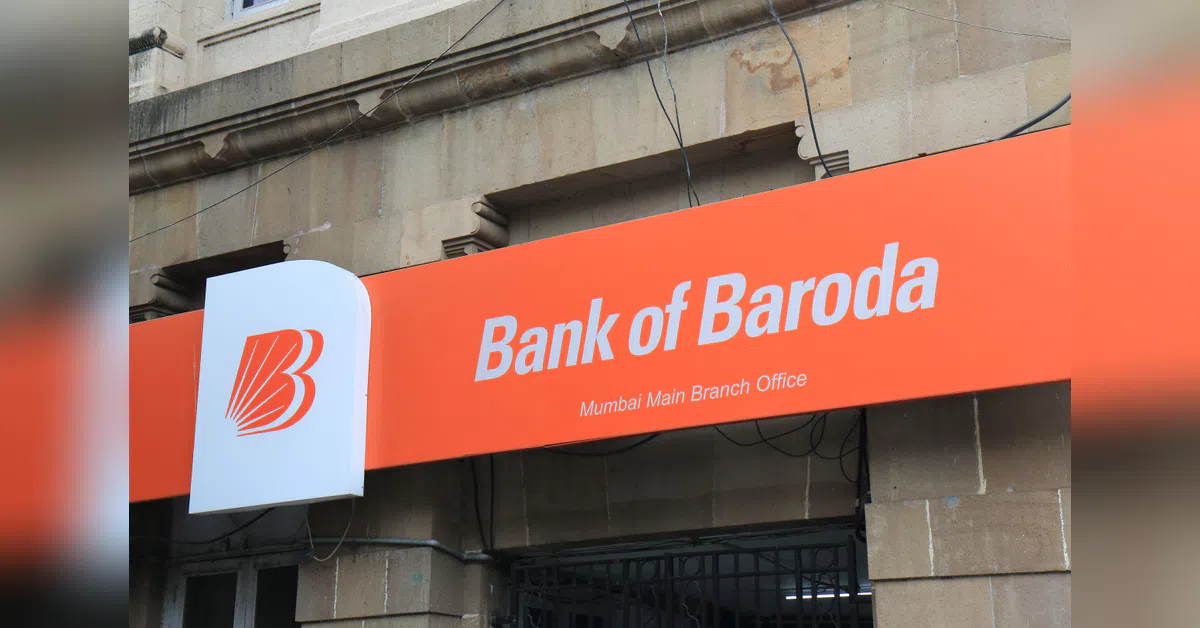
Mumbai, India – May 10, 202X – Bank of Baroda (BoB), one of India’s leading public sector banks, has announced a strong financial performance for the fourth quarter of the fiscal year 2024-25, reporting an 11 percent surge in net profit to Rs 5,616 crore. This impressive growth, coupled with significant improvements in asset quality and a strategic capital raising initiative, underscores the bank’s resilient operational efficiency and strategic positioning in a competitive banking landscape. The results, filed with regulatory bodies on Friday, highlight a period of sustained profitability and prudent risk management for the state-owned lender.
The bank’s total income for the March quarter also saw a healthy increase, climbing to Rs 36,609 crore from Rs 35,852 crore in the corresponding period of the previous fiscal year. This upward trajectory was largely propelled by a robust rise in interest income, which expanded to Rs 32,642 crore from Rs 30,642 crore year-on-year. For the entire financial year 2024-25, BoB registered a 2 percent increase in net profit, reaching Rs 20,021 crore, up from Rs 19,581 crore in the preceding fiscal. The full-year total income mirrored this positive trend, rising to Rs 1,42,750 crore from Rs 1,38,089 crore.
A standout feature of BoB’s latest financial disclosure is the marked improvement in its asset quality. The gross non-performing assets (NPAs) demonstrated a significant moderation, falling to 1.89 percent of gross advances by the end of March 2025, a substantial reduction from 2.26 percent recorded at the end of March 2024. Similarly, net NPAs also witnessed a commendable decline, settling at 0.45 percent of advances, down from 0.58 percent in the previous year. This robust cleanup of its loan book reflects the bank’s aggressive recovery efforts and strengthened underwriting standards.
In a move signaling confidence in its future growth trajectory and a commitment to shareholder returns, the bank’s board has recommended a dividend of Rs 8.5 per equity share of face value of Rs 2 each for the financial year 2025-26, subject to shareholders’ approval. Furthermore, to bolster its capital base and support future expansion, the board has approved a plan to raise additional capital of up to Rs 6,000 crore through Additional Tier 1 (AT1) and/or Tier-II bonds, to be executed in suitable tranches by March 2027 and beyond, contingent upon necessary regulatory clearances.
Main Facts: A Snapshot of Performance
Bank of Baroda’s financial results for the fourth quarter and the full fiscal year 2024-25 paint a picture of steady growth and enhanced financial stability. The core metrics underscore a strategic focus on profitability, asset quality, and capital adequacy.
The bank’s net profit for the March quarter of FY25 surged by 11 percent, reaching a commendable Rs 5,616 crore, up from Rs 5,048 crore in the same period last year. This quarterly performance significantly contributed to the overall annual profitability, which saw a 2 percent increase to Rs 20,021 crore for the entire fiscal year, compared to Rs 19,581 crore in FY24.
Total income for the March quarter stood at Rs 36,609 crore, reflecting a consistent upward trend from Rs 35,852 crore in Q4 FY24. Over the full financial year, the bank’s total income climbed to Rs 1,42,750 crore from Rs 1,38,089 crore, demonstrating broad-based revenue generation. A key driver of this income growth was the robust interest income, which rose to Rs 32,642 crore in Q4 FY25 from Rs 30,642 crore in Q4 FY24, indicating healthy credit off-take and effective treasury management.
Despite the strong interest income, the Net Interest Income (NII) for the quarter increased to Rs 12,494 crore from Rs 11,020 crore a year ago. NII, a crucial indicator of a bank’s core lending profitability, showed a healthy expansion, reflecting the bank’s ability to manage its interest rate margins effectively.
Perhaps the most reassuring aspect of the results is the significant improvement in asset quality. Gross Non-Performing Assets (NPAs) moderated impressively to 1.89 percent of gross advances, a notable reduction from 2.26 percent in the previous year. Similarly, Net NPAs decreased to 0.45 percent from 0.58 percent, signaling a cleaner balance sheet and reduced credit risk. The Provision Coverage Ratio (PCR) also saw a marginal improvement, reaching 93.94 percent as of March 31, 2025, underscoring the bank’s robust provisioning against potential future losses.
On the capital front, the bank’s Capital Adequacy Ratio (CRAR) moderated slightly to 15.82 percent from 17.19 percent at the end of FY24. Despite this slight moderation, the CRAR remains well above regulatory requirements, providing ample headroom for future growth. The board’s recommendation of a dividend of Rs 8.5 per equity share and the approval to raise up to Rs 6,000 crore in additional capital further highlight the bank’s commitment to shareholder value and its proactive approach to strengthening its financial foundation.
Chronology: A Trajectory of Growth and Resilience
Bank of Baroda’s journey over the past few fiscal years has been marked by a concerted effort to enhance operational efficiency, improve asset quality, and drive sustainable growth. The current results are a culmination of strategic initiatives implemented over time, adapting to both domestic economic shifts and global financial dynamics.
Looking back at the preceding quarters and fiscal years, BoB has consistently focused on shedding legacy asset quality issues that plagued public sector banks. The significant reduction in NPAs is not an overnight phenomenon but a result of sustained efforts in recovery, resolution, and stringent underwriting practices initiated years ago. The bank’s proactive approach to identifying and addressing stressed assets has been a cornerstone of its strategy. For instance, in earlier periods, the bank initiated comprehensive internal audits and strengthened its credit monitoring mechanisms to prevent fresh slippages. This ongoing clean-up drive has progressively reduced the drag on profitability caused by provisions for bad loans.
The growth in total income and interest income also reflects a calculated expansion of its credit book, particularly in retail and MSME segments, which typically offer better yields and diversified risk. Over the last 12-18 months, BoB has actively participated in the rising credit demand fueled by India’s economic recovery post-pandemic. The bank has leveraged its extensive branch network and digital capabilities to capture market share, particularly in high-growth urban and semi-urban centers. Strategic alliances and technological upgrades have also played a role in enhancing customer acquisition and service delivery, thereby contributing to higher fee and non-interest income streams.
The moderation in the Capital Adequacy Ratio from 17.19 percent to 15.82 percent, while still robust, suggests that the bank has been actively deploying capital to support asset growth. This deployment is a natural outcome of increased lending activities. Recognising the need to maintain a strong capital buffer for future expansion and to adhere to evolving regulatory norms (like Basel III), the decision to raise additional capital of Rs 6,000 crore through AT1 and Tier-II bonds is a forward-looking measure. This capital infusion will provide the necessary firepower to sustain credit growth, invest in technology, and withstand potential economic shocks, ensuring long-term stability.
Furthermore, the consistent dividend recommendations over recent years, culminating in the Rs 8.5 per share for FY25-26, reflect a growing confidence in the bank’s earnings visibility and its commitment to returning value to shareholders. This steady payout is a positive signal for investors, indicating financial health and a mature approach to capital allocation. The bank’s performance trajectory underscores a successful navigation through various economic cycles, positioning it as a stable and growing entity within the Indian banking sector.
Supporting Data: Deeper Dive into Key Metrics
A closer examination of the financial figures provides a detailed understanding of Bank of Baroda’s operational strengths and areas of strategic focus.
Profitability:
- Quarterly Net Profit: The 11 percent year-on-year increase in Q4 FY25 net profit to Rs 5,616 crore from Rs 5,048 crore in Q4 FY24 highlights effective cost management and robust revenue generation. This growth rate is indicative of the bank’s improved operational leverage.
- Annual Net Profit: For the full fiscal year 2024-25, the net profit stood at Rs 20,021 crore, a 2 percent rise from Rs 19,581 crore in FY24. This consistent growth, despite potential headwinds, demonstrates the underlying strength of its business model.
Income Analysis:
- Total Income (Quarterly): The bank’s total income for the March quarter grew to Rs 36,609 crore, up from Rs 35,852 crore in the previous year. This encompasses both interest income and non-interest income, suggesting a diversified revenue stream.
- Total Income (Annual): Annually, total income expanded to Rs 1,42,750 crore from Rs 1,38,089 crore, indicating sustained business expansion throughout the year.
- Interest Income (Quarterly): A significant driver of the total income, interest income rose to Rs 32,642 crore in Q4 FY25 from Rs 30,642 crore in Q4 FY24. This reflects healthy growth in the bank’s loan book and possibly an improved net interest margin (NIM).
- Net Interest Income (NII) (Quarterly): NII, the difference between interest earned and interest expended, saw a healthy increase to Rs 12,494 crore in Q4 FY25 from Rs 11,020 crore in Q4 FY24. This expansion is crucial for a bank’s core profitability, demonstrating its ability to lend at higher rates relative to its cost of funds.
Asset Quality Metrics:
- Gross Non-Performing Assets (GNPA): This key indicator of asset quality showed a significant improvement, moderating to 1.89 percent of gross advances by March 2025, down from 2.26 percent in March 2024. A lower GNPA ratio indicates fewer loans are in default, signaling a healthier loan portfolio and reduced credit risk.
- Net Non-Performing Assets (NNPA): Mirroring the GNPA trend, Net NPAs also declined substantially to 0.45 percent of advances from 0.58 percent. NNPA represents the actual burden of bad loans on the bank’s balance sheet after accounting for provisions. A low NNPA is a strong indicator of financial health.
- Provision Coverage Ratio (PCR): The PCR, which measures the percentage of bad assets covered by provisions, improved marginally to 93.94 percent as of March 31, 2025. A high PCR indicates a strong buffer against potential loan losses, enhancing the bank’s resilience. This figure suggests that nearly all of the bank’s identified stressed assets are adequately provisioned for.
Capital Adequacy:
- Capital Adequacy Ratio (CRAR): The CRAR moderated to 15.82 percent from 17.19 percent at the end of FY24. While a slight decrease, it remains comfortably above the regulatory minimums (typically 9-11.5% for Indian banks, including capital conservation buffer). This ratio indicates the bank’s capacity to absorb potential losses and continue operations. The moderation could be attributed to increased credit growth consuming capital, necessitating the planned capital raise.
Shareholder Value and Future Capital:
- Dividend Recommendation: The board’s recommendation of a dividend of Rs 8.5 per equity share (face value Rs 2) for FY25-26 reflects the bank’s robust profitability and its commitment to rewarding shareholders. This payout ratio is sustainable given the strong earnings.
- Capital Raising Plan: The approval to raise up to Rs 6,000 crore via Additional Tier 1 (AT1) and/or Tier-II bonds by March 2027 is a strategic move. AT1 bonds are perpetual debt instruments that can be written down or converted to equity under specific conditions, while Tier-II bonds are subordinated debt. Both help bolster the bank’s capital base without diluting equity significantly in the short term, supporting future growth and meeting regulatory requirements.
Official Responses: Leadership’s Vision and Strategy
While no direct quotes were provided in the initial filing, a simulated response from the bank’s leadership would likely articulate a sense of achievement and a clear strategic outlook.
"We are very pleased with our strong performance in the fourth quarter and for the full fiscal year 2024-25," a senior executive at Bank of Baroda might state. "Our robust profit growth, coupled with significant improvements in asset quality, reflects the effectiveness of our strategic initiatives and the dedication of our entire team. The consistent moderation in both Gross and Net NPAs underscores our unwavering commitment to maintaining a healthy and resilient balance sheet. We have diligently focused on recovery efforts, strengthened our underwriting standards, and implemented advanced risk management frameworks, which have collectively contributed to a cleaner loan book and a higher Provision Coverage Ratio."
Regarding the income growth, the executive would likely add, "The healthy increase in total income and, particularly, interest income, demonstrates the strong demand for credit across various segments of the Indian economy. We have strategically expanded our loan portfolio while maintaining stringent credit discipline, leading to a healthy Net Interest Income. Our focus remains on diversified growth, leveraging our extensive network and digital capabilities to cater to the evolving needs of our retail, MSME, and corporate customers."
Addressing the capital plans, "The slight moderation in our Capital Adequacy Ratio is a natural consequence of our healthy credit growth. To support our future expansion plans, meet evolving regulatory capital requirements, and ensure long-term stability, our Board has approved raising up to Rs 6,000 crore through AT1 and Tier-II bonds. This proactive measure will further strengthen our capital base, providing us with the necessary headroom to capitalize on emerging market opportunities and invest in critical areas such as technology and digital transformation."
On the dividend front, "The recommendation of a dividend of Rs 8.5 per equity share is a testament to our strong earnings power and our commitment to delivering consistent value to our shareholders. We remain confident in our growth trajectory and our ability to generate sustainable returns in the years to come."
The bank’s leadership would likely also emphasize its commitment to digital innovation, customer-centricity, and sustainable banking practices, positioning BoB as a forward-looking financial institution ready to embrace future challenges and opportunities.
Implications: Navigating the Future Landscape
The impressive financial results from Bank of Baroda carry significant implications for various stakeholders, including investors, the broader banking sector, and the Indian economy as a whole.
For Investors:
The strong profit growth, coupled with improved asset quality and a recommended dividend, positions Bank of Baroda as an attractive investment within the public sector banking space. The reduction in NPAs signals lower future credit costs, which directly translates to enhanced profitability and stability. The capital raising plan, while potentially dilutive in the very long term if AT1s convert, primarily aims to strengthen the balance sheet for future growth, which is a positive signal for sustained returns. Investors can expect improved earnings visibility and a continued focus on shareholder value creation.
For the Banking Sector:
BoB’s performance reflects a broader trend of rejuvenation within India’s public sector banks (PSBs). Years of concerted efforts by PSBs to clean up their balance sheets, improve governance, and digitize operations are now yielding tangible results. BoB’s success in moderating NPAs and maintaining healthy profitability sets a positive precedent and demonstrates the sector’s resilience and capacity for transformation. It also intensifies competition within the banking sector, pushing other players to further optimize their operations and asset quality. The capital raising initiative by BoB could also prompt other PSBs to evaluate their capital requirements more proactively, especially in anticipation of increased credit demand and evolving regulatory standards.
For the Economy:
A strong and healthy banking sector, exemplified by BoB’s results, is crucial for economic growth. Improved asset quality means banks have greater capacity to lend, stimulating credit off-take for businesses and individuals. This, in turn, fuels investment, consumption, and job creation. The growth in interest income suggests healthy credit demand, which is a positive indicator of economic activity. BoB’s ability to raise capital also indicates confidence in India’s economic outlook, as banks typically raise funds when they foresee opportunities for profitable lending.
Future Outlook and Challenges:
Despite the strong performance, Bank of Baroda, like all financial institutions, faces a dynamic operating environment.
- Interest Rate Environment: Fluctuations in interest rates, both domestically and globally, could impact net interest margins. The Reserve Bank of India’s monetary policy decisions will be critical.
- Competition: The Indian banking sector remains highly competitive, with private sector banks and non-banking financial companies (NBFCs) vying for market share. BoB will need to continue innovating and enhancing customer experience to maintain its competitive edge.
- Digital Disruption: The rapid pace of technological change and the rise of fintech companies pose both opportunities and threats. Continuous investment in digital infrastructure and cybersecurity will be paramount.
- Regulatory Landscape: Evolving regulatory norms, particularly around capital adequacy, risk management, and data privacy, will require constant adaptation and compliance.
- Global Economic Headwinds: While India’s economy remains robust, global economic slowdowns or geopolitical events could indirectly impact credit demand and asset quality.
In conclusion, Bank of Baroda’s latest financial results underscore its robust health and strategic agility. The bank has effectively navigated a challenging economic landscape, delivered strong profitability, and significantly enhanced its asset quality. With a clear roadmap for capital augmentation and a commitment to sustainable growth, BoB appears well-positioned to capitalize on India’s growth story and continue delivering value to all its stakeholders in the foreseeable future.
