

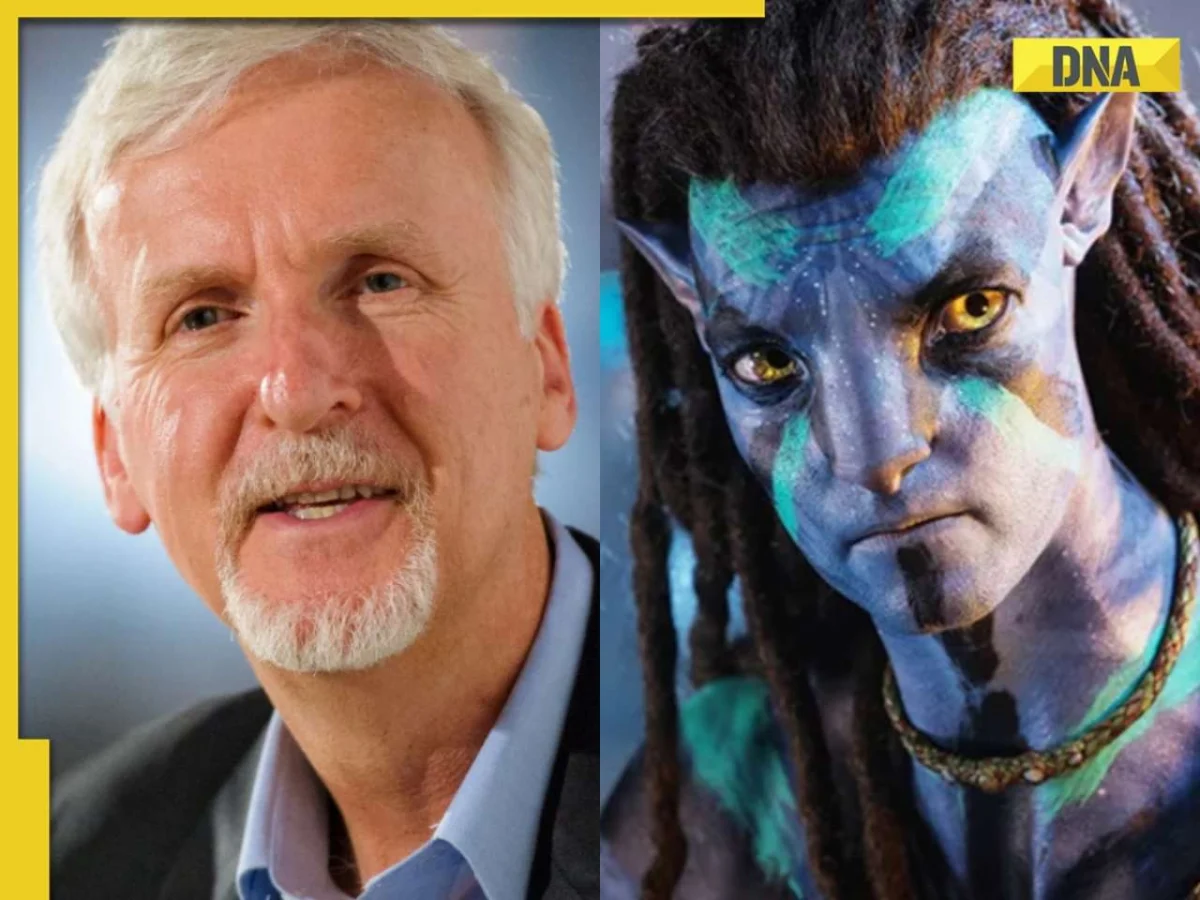
HOLLYWOOD – Acclaimed filmmaker James Cameron, the visionary behind the groundbreaking "Avatar" franchise, has unveiled his ambitious plans for the upcoming installments, "Avatar 4" and "Avatar 5." While these cinematic titans are slated for release in December 2029 and December 2031 respectively, Cameron is not merely looking forward to the storytelling; he is fundamentally rethinking the production process itself. In a recent candid discussion on The Empire Film Podcast, Cameron revealed his fervent pursuit of "new technologies to do them more efficiently," a necessity driven by the "hideously expensive and time-consuming" nature of his past productions.
This drive for optimization is not born out of a desire for mere cost-cutting, but rather a strategic imperative to make the colossal undertakings of "Avatar 4" and "Avatar 5" more manageable and sustainable. Cameron has set a bold personal benchmark: to deliver these future installments "in half the time for two-thirds of the cost." This audacious goal underscores his commitment to pushing the boundaries of filmmaking, not just in terms of narrative and visual spectacle, but also in the very methodologies employed to bring these fantastical worlds to life.
)
The journey of "Avatar" began in 2009, revolutionizing 3D cinema and setting new standards for visual effects. The saga continued with "Avatar: The Way of Water" in 2022, a testament to Cameron’s enduring passion for Pandora and its inhabitants. The third film, "Avatar: Fire and Ash," is anticipated to grace screens in 2025, further expanding the rich tapestry of this universe. However, it is the subsequent chapters, "Avatar 4" and "Avatar 5," that are currently at the forefront of Cameron’s strategic planning.
)
A Chronology of Pandora’s Expansion
The "Avatar" franchise, a cornerstone of modern cinematic innovation, has a meticulously planned trajectory that extends well into the next decade. Understanding this timeline provides crucial context for Cameron’s current pronouncements on production efficiency.

- 2009: Avatar – The original film, a monumental success, introduced audiences to the lush world of Pandora and the Na’vi, setting a new benchmark for visual effects and 3D filmmaking.
- 2022: Avatar: The Way of Water – After a significant gap, this sequel delved deeper into the aquatic realms of Pandora, further expanding the narrative and visual scope of the franchise.
- 2025: Avatar: Fire and Ash – The third installment is slated for release, promising to explore new environments and introduce new characters within the established universe.
- 2029: Avatar 4 – This upcoming film is tentatively scheduled for a worldwide theatrical release on December 21, 2029.
- 2031: Avatar 5 – The saga is set to culminate, for now, with the release of "Avatar 5" on December 19, 2031.
This ambitious release schedule, spanning over two decades from its inception to its current planned conclusion, highlights the immense scale and long-term commitment involved in the "Avatar" universe. It also underscores the inherent challenges of maintaining creative momentum and production feasibility over such an extended period.
)
The Economics of Immersion: Understanding the "Hideously Expensive" Reality
James Cameron’s candid admission about the "hideously expensive" nature of the "Avatar" films is not hyperbole; it is a reflection of the unprecedented resources and cutting-edge technology required to bring his vision to life. The creation of Pandora, with its bioluminescent flora, fauna, and the intricate details of the Na’vi culture, demands a level of digital artistry and technical sophistication that is at the forefront of cinematic innovation.
)
The cost of producing films of this magnitude involves several key factors:
)
- Advanced Motion Capture Technology: The performance capture technology used to translate actor’s movements and expressions into digital characters is incredibly complex and resource-intensive. This includes sophisticated sensor suits, high-resolution cameras, and powerful processing capabilities.
- Digital Asset Creation: The sheer volume of meticulously crafted digital assets – from alien landscapes and creatures to intricate costumes and architectural designs – requires vast teams of artists and animators working for extended periods.
- Visual Effects (VFX) Pipeline: The integration of live-action footage with extensive CGI elements necessitates a complex and demanding VFX pipeline. This involves rendering, compositing, and intricate detailing, all of which require significant computational power and specialized software.
- Performance Capture Stages and Studios: The specialized facilities required for performance capture, including large motion capture volumes and advanced rendering farms, represent substantial capital investment.
- Research and Development: Cameron’s commitment to pushing technological boundaries often involves investing in and developing new tools and techniques, which adds to the overall production cost.
The "time" factor, as Cameron emphasizes, is intrinsically linked to these costs. The intricate nature of the visual effects, the iterative process of animation and rendering, and the sheer scale of the digital environments all contribute to lengthy production schedules. This extended timeline translates directly into higher labor costs, extended studio rentals, and increased overheads.
)
Seeking the Technological Silver Bullet: Efficiency as the New Frontier
Cameron’s pursuit of "new technologies" is not a vague aspiration but a targeted strategy to address the core challenges of his productions. The goal of achieving "half the time for two-thirds of the cost" points towards a desire for technological breakthroughs that can streamline the creative and technical processes.
)
Potential areas where new technologies could revolutionize "Avatar 4" and "Avatar 5" production include:
)
- AI-Powered Animation and Asset Generation: Artificial intelligence is rapidly advancing in its ability to assist in content creation. AI could potentially be used to generate procedural environments, create background character animations, or even assist in the rigging and texturing of digital assets, significantly reducing manual labor.
- Real-Time Rendering and Virtual Production Advancements: While already a significant part of modern filmmaking, further advancements in real-time rendering engines and virtual production techniques could allow for more immediate feedback during shooting and a more integrated workflow between on-set performance and digital world building. This could reduce the need for extensive post-production work.
- Streamlined Performance Capture: Innovations in markerless motion capture, or more efficient marker-based systems, could reduce the setup time and processing requirements for capturing actor performances. Machine learning could also play a role in refining captured data.
- Cloud-Based Workflows and Distributed Computing: Leveraging the power of cloud computing for rendering and data storage can enable more efficient collaboration among global teams and allow for greater scalability of processing power, reducing bottlenecks.
- Procedural Content Generation (PCG): Further development and application of PCG techniques could allow for the creation of vast and detailed environments with less manual input, creating dynamic and responsive digital worlds.
- Machine Learning for VFX Optimization: ML algorithms could be trained to automate repetitive tasks within the VFX pipeline, such as rotoscoping, object removal, or even initial color grading, freeing up human artists for more creative endeavors.
Cameron’s "metric" of achieving such significant reductions in time and cost suggests a profound shift in how these films will be conceived and executed. It implies a move towards more integrated and automated workflows, where technology acts not just as a tool for enhancement, but as a fundamental enabler of faster, more cost-effective creation.
)
The Broader Implications for Hollywood and Beyond
James Cameron’s stated intentions for "Avatar 4" and "Avatar 5" carry significant implications for the future of filmmaking, not just within the "Avatar" franchise, but for the broader Hollywood landscape.
)
- Democratization of High-End Visuals: If Cameron’s pursuit of efficiency proves successful, it could pave the way for more filmmakers to achieve visually stunning results without the astronomical budgets currently associated with them. This could lead to a more diverse range of ambitious projects reaching the screen.
- Accelerated Production Cycles: A significant reduction in production time would not only benefit the studios financially but also allow for a more agile and responsive filmmaking process, potentially leading to more frequent releases of tentpole films.
- Evolution of Creative Roles: The increased reliance on AI and automated processes will likely lead to a redefinition of creative roles within the film industry. While some tasks may be automated, new opportunities will emerge for individuals skilled in overseeing AI systems, developing algorithms, and leveraging these technologies for artistic purposes.
- Technological Innovation as a Driving Force: Cameron’s commitment to pushing technological boundaries serves as a powerful incentive for continued investment in R&D within the VFX and filmmaking technology sectors. This will likely lead to further breakthroughs that will benefit the entire industry.
- Sustainability in Filmmaking: The pursuit of efficiency also has an environmental dimension. Reducing the time and resources required for production can contribute to a more sustainable filmmaking model.
While these future installments are still years away from their release dates, Cameron’s proactive approach to addressing the inherent challenges of large-scale filmmaking is a testament to his forward-thinking vision. His quest for technological innovation is not just about making "Avatar 4" and "Avatar 5" happen; it’s about fundamentally reshaping the economics and methodologies of blockbuster filmmaking for generations to come.
)
Beyond the immediate horizon of Pandora, Cameron is also reportedly developing a feature film adaptation of Charles R. Pellegrino’s historical non-fiction book, "The Last Train from Hiroshima." This diverse slate of projects further highlights Cameron’s continued drive to explore compelling narratives and push the boundaries of cinematic storytelling. However, it is his commitment to revolutionizing the production of the "Avatar" saga that is currently capturing the attention of the industry, signaling a new era of ambitious yet efficient filmmaking.
