

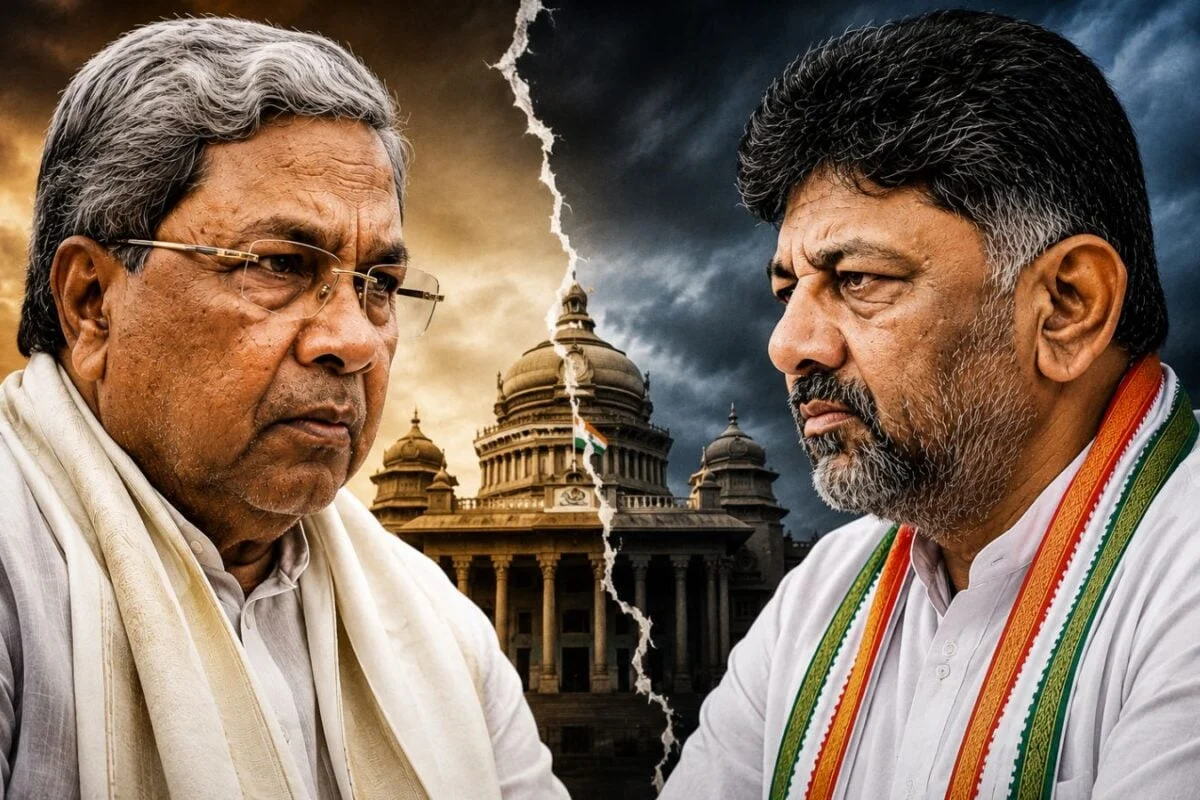
NEW DELHI, INDIA – May 26, 2026 – The corridors of power in the national capital are abuzz with intense deliberations as the Congress high command grapples with a burgeoning leadership conundrum in Karnataka. What began as speculative talks regarding a potential change at the helm, with Chief Minister Siddaramaiah’s tenure under review, has now morphed into a more immediate and strategically complex battleground: a comprehensive cabinet reshuffle. This intricate exercise is no longer merely about administrative efficiency but has become the primary mechanism through which the party seeks to balance the formidable ambitions of its two most influential state leaders, Siddaramaiah and Deputy Chief Minister D.K. Shivakumar.
Top Congress sources, speaking on condition of anonymity, reveal that the latest round of consultations in Delhi, involving Siddaramaiah, Shivakumar, Congress President Mallikarjun Kharge, and former party chief Rahul Gandhi, are framed around two critical axes: the performance of incumbent ministers and, more significantly, the delicate equilibrium of power-sharing between the Siddaramaiah and Shivakumar factions. The outcome of these discussions, particularly the allocation of key portfolios, is poised to redraw the political map of Karnataka and dictate the future trajectory of the Congress party in the southern state.
A Deep Dive into the Karnataka Conundrum
The internal dynamics of the Karnataka Congress have been a persistent source of tension since the party’s resounding victory in the May 2023 assembly elections. The initial agreement, brokered by the high command, saw Siddaramaiah assume the Chief Minister’s office, with D.K. Shivakumar taking on the role of his deputy. This arrangement, however, was widely understood to be a temporary truce, laden with unspoken promises and implicit understandings about future power transitions. As the administration approaches its mid-term, these underlying currents have surged, transforming the long-pending cabinet reshuffle into a full-blown proxy war for supremacy.
The Genesis of the Tussle
The rivalry between Siddaramaiah and Shivakumar is not new; it predates the 2023 elections and is rooted in their distinct political styles, social bases, and paths to power within the party. Siddaramaiah, a seasoned politician with a strong base among the AHINDA (minorities, backward classes, and Dalits) coalition, is known for his administrative experience and populist policies. Shivakumar, on the other hand, is a powerful Vokkaliga leader, celebrated for his organizational prowess, fundraising capabilities, and his instrumental role in rebuilding the state unit after its 2019 Lok Sabha debacle. The 2023 mandate, largely credited to the collective efforts of both leaders and the party’s popular "guarantees," reignited their competitive spirits, making the sharing of power an inherently unstable proposition. The high command’s decision to appoint Siddaramaiah as CM, while making Shivakumar his deputy and state unit chief, was a precarious balancing act designed to prevent an immediate split, but it merely postponed the inevitable.
The Delhi Parleys: A Tactical Retreat?
The recent summons to Delhi for both leaders, ostensibly to discuss governance and party affairs, quickly became a focal point for speculation about a leadership change. However, Congress sources suggest that the high command, particularly after careful assessment, has opted for a more pragmatic, short-term strategy. Rather than forcing a contentious change of guard that could destabilize the government and party ahead of crucial elections, the central leadership is now leveraging the cabinet reshuffle as a tactical maneuver. This approach allows them to address immediate grievances, reward loyalists, and signal future intentions without triggering an outright rebellion from either camp. The discussions at Indira Bhawan are thus less about who will be CM tomorrow, and more about how the current power structure can be made more palatable and functional for the foreseeable future.
The Cabinet Reshuffle: More Than Just Portfolios
For the Congress in Karnataka, this cabinet reshuffle transcends mere administrative adjustments. It has become a political scoreboard, a mechanism to gauge the influence of each faction, and a critical determinant of future power dynamics. The allocation of "meaty" portfolios – those with significant administrative authority, financial resources, and public visibility – will serve as a strong indicator of the high command’s leanings. A greater share of such departments for Siddaramaiah’s loyalists would suggest a reaffirmation of his leadership, while a strong push for Shivakumar’s camp in heavyweight ministries could be interpreted as a preparatory step for a larger role later in the term. The stakes are incredibly high, with every ministerial berth and portfolio being weighed for its political impact.
Chronology of Internal Strife
The current crisis is not an isolated event but the latest chapter in a protracted internal struggle that has periodically flared up since the Congress assumed power in Karnataka.
Post-2023 Election: The Initial Truce
Following the decisive victory in May 2023, the Congress leadership faced its first major challenge in choosing the Chief Minister. Both Siddaramaiah and Shivakumar staked strong claims, leading to days of intense negotiations in Delhi. Ultimately, the high command opted for Siddaramaiah, reportedly with an understanding of a rotational CM tenure, though this was never officially confirmed. Shivakumar was appointed Deputy CM and retained his position as state party chief. This arrangement, while averting an immediate crisis, sowed the seeds of future discord, as whispers of a "two-and-a-half-year" formula for the CM post continued to circulate.
Growing Dissatisfaction and Public Spats
Over the past year, signs of internal discontent have been increasingly visible. MLAs aligned with both camps have, at various times, expressed their frustration over portfolio allocations, lack of opportunities, and perceived sidelining. Public statements from some ministers and legislators have occasionally hinted at the deep divisions, forcing the party to issue stern warnings against airing grievances in public. Reports of Siddaramaiah’s camp feeling threatened by Shivakumar’s growing assertion, and Shivakumar’s supporters feeling their leader was not adequately rewarded for his efforts, have been a constant feature in political circles.
Repeated High Command Interventions
The Congress central leadership has been forced to intervene multiple times to quell these simmering tensions. Earlier meetings were held to discuss coordination issues, address grievances, and ensure the smooth functioning of the government, particularly in the context of implementing the party’s ambitious guarantee schemes. These interventions often involved separate meetings with each leader, followed by joint sessions, highlighting the delicate nature of managing their relationship. However, these past interventions largely focused on crisis management rather than a definitive resolution of the underlying power struggle.
The Latest Summons: A Culmination
The current Delhi consultations represent a culmination of these ongoing tensions. With the government approaching its mid-term and crucial electoral battles on the horizon, the high command can no longer afford to merely patch things up. The urgency of the situation, exacerbated by the impending Rajya Sabha elections and the need for a stable state unit for national opposition coordination, has pushed the cabinet reshuffle to the forefront as the most viable immediate solution.
Supporting Data and Political Dynamics
The decision-making process in Delhi is not just about placating individuals; it is deeply rooted in a strategic assessment of electoral demographics, administrative performance, and the broader political landscape.
Performance Metrics and Ministerial Accountability
One of the stated criteria for the reshuffle is ministerial performance. The Congress central leadership is keen to demonstrate effective governance in Karnataka, especially given its position as one of the few major states where the party is in power. Ministers whose departments have underperformed, or those who have faced public criticism, might be reshuffled or dropped. This allows the party to project an image of accountability and efficiency, crucial for maintaining public trust and countering opposition narratives. However, "performance" is often a subjective metric, and political considerations frequently override purely administrative assessments in such reshuffles. The implementation of the party’s five "guarantees" – Shakti, Gruha Jyothi, Anna Bhagya, Yuva Nidhi, and Gruha Lakshmi – is a key performance indicator, and ministers involved in their rollout are under intense scrutiny.
Factional Strengths: The Numbers Game
The internal power dynamics are heavily influenced by the numerical strength and social bases of each leader’s supporters within the legislative party.
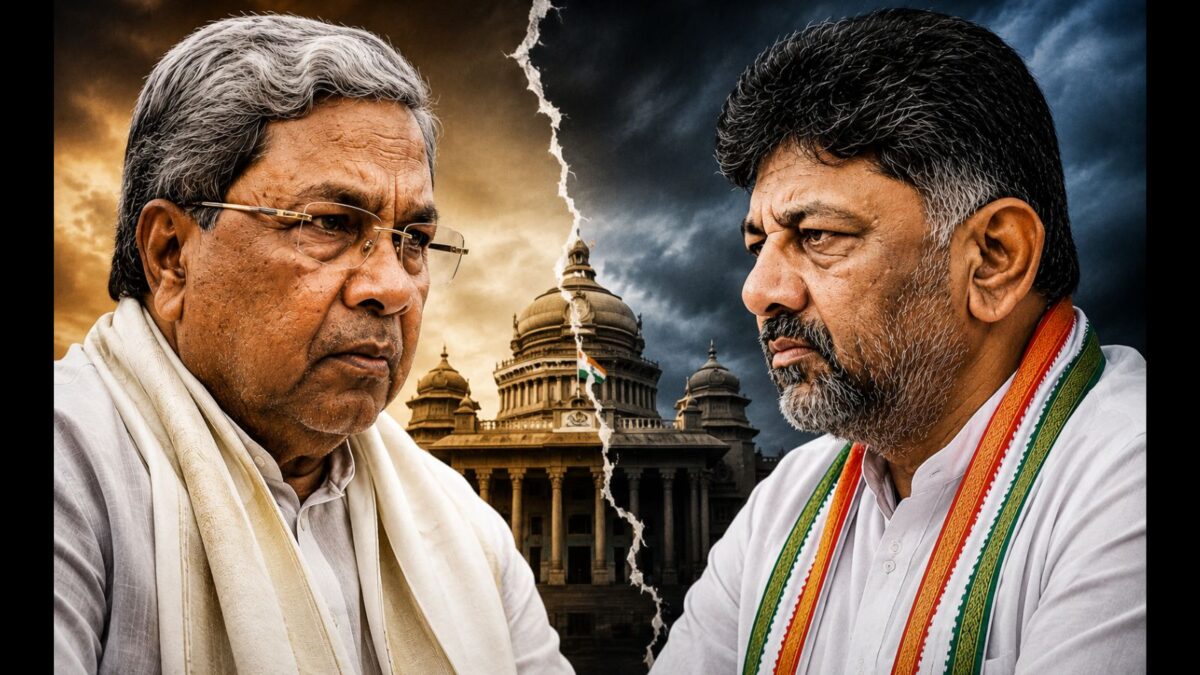
-
Siddaramaiah’s AHINDA Base: Siddaramaiah’s political strength largely stems from his ability to coalesce the support of AHINDA communities. This includes a significant portion of Dalits, backward classes, and minorities. Many MLAs from these communities view Siddaramaiah as their champion and a guarantor of their representation. Any move that diminishes his influence is likely to be met with resistance from this crucial demographic, which forms a substantial part of the Congress’s vote bank in Karnataka. His experience as a former Chief Minister also gives him a cadre of loyalists within the bureaucracy and party.
-
Shivakumar’s Vokkaliga Powerhouse: D.K. Shivakumar commands considerable influence among the Vokkaliga community, particularly in the Old Mysore region. This community is a dominant force in Karnataka politics, and Shivakumar is seen as its most prominent Congress face. His organizational skills and financial acumen are undeniable, and he played a pivotal role in the party’s campaign and resource mobilization during the 2023 elections. His camp argues that his contributions, both electorally and organizationally, warrant a more significant share of power and that alienating the Vokkaliga community could have severe repercussions for the party in future elections.
-
MLAs’ Allegiances: While exact numbers are fluid and often kept private, Congress insiders estimate that a substantial number of MLAs are broadly aligned with either Siddaramaiah or Shivakumar. These allegiances are often based on patronage, shared political history, and future aspirations. The reshuffle is thus a delicate balancing act of rewarding these loyalties without alienating the other faction, a task akin to walking a tightrope.
The Delhi Perspective: National Imperatives
The Congress high command’s involvement is not just about Karnataka; it’s intricately linked to broader national imperatives.
- Rajya Sabha Elections: Karnataka’s political stability directly impacts the Congress’s strength in the Rajya Sabha. Any internal discord could jeopardize the party’s ability to secure crucial seats, affecting its national legislative strategy.
- National Opposition Unity: As a leading voice in the national opposition, the Congress needs to project an image of strength and stability. Internal squabbles in a key state like Karnataka undermine its credibility and efforts to rally other opposition parties against the ruling BJP.
- Upcoming Local/General Elections: With local body elections and the next general elections on the horizon, a united and harmonious state unit is paramount. A divided house in Karnataka would provide ammunition to the opposition and significantly hamper the party’s electoral prospects.
Official Responses and Party Stance
Publicly, Congress leaders, including the high command, have consistently downplayed any notions of a power struggle, emphasizing unity and focus on governance.
Public Statements vs. Internal Realities
"There are no differences within the party. We are all united and working towards the development of Karnataka," is a common refrain from leaders when questioned by the media. However, behind closed doors, the discussions are far more frank and intense. Sources indicate that both Siddaramaiah and Shivakumar have presented their cases forcefully, advocating for their respective camps and highlighting their contributions to the party’s success. This dichotomy between public pronouncements and internal realities is a classic feature of Indian political parties grappling with leadership issues.
High Command’s Balancing Act
Mallikarjun Kharge, as the party president, and Rahul Gandhi, as a key decision-maker, are tasked with the unenviable job of being arbiters. Their stated goal is to ensure stability, good governance, and party unity. They are reportedly keen on preventing an open confrontation, understanding that such a scenario could lead to defections or a split, reminiscent of past crises in other states. Their strategy involves carefully listening to both sides, identifying potential compromises, and imposing a solution that, while perhaps not fully satisfying either leader, is deemed acceptable enough to maintain peace.
Ministerial Aspirations and Dissatisfaction
The prolonged delay in the reshuffle has led to palpable frustration among MLAs who aspire for ministerial berths. Many feel that their loyalty and contributions are not being adequately recognized. "We worked hard for the party’s victory, and it’s disheartening to see the delay in rewarding loyal workers," an unnamed MLA reportedly confided to a news agency. This widespread dissatisfaction puts additional pressure on the high command to act swiftly and decisively, as disgruntled MLAs could become potential sources of dissent or even defections.
Implications and Future Scenarios
The Delhi deliberations are expected to conclude with a decision that carries significant implications for Karnataka and the Congress party’s national standing. Three primary scenarios are being discussed, each with its own set of challenges and opportunities.
The Immediate Outcome: A Carefully Calibrated Cabinet
This is widely viewed as the most probable short-term resolution. Under this scenario, Siddaramaiah would continue as Chief Minister, but the cabinet reshuffle would be meticulously engineered to expand Shivakumar’s influence. This would involve granting his camp a greater number of portfolios, including some "meaty" ones with significant administrative heft and public visibility. The reshuffle would serve as a compromise formula, allowing the Congress to postpone the contentious leadership question while still signaling that Shivakumar remains central to the party’s future plans. The success of this model hinges on the high command’s ability to divide portfolios in a manner that avoids creating a perception of absolute victory for one side over the other, thus maintaining a fragile peace.
The Shivakumar Ascendancy: A Measured Transition?
A more politically challenging, yet possible, scenario involves a change of guard, with Shivakumar taking over as Chief Minister. This possibility has been floated in internal discussions, with some suggesting that Siddaramaiah could be moved to the Rajya Sabha, potentially as a senior party functionary or even a national-level role. Such a transition would require an extensive cabinet rejig, far more comprehensive than a mere reshuffle, aimed at balancing the interests of both camps during the power transfer. The high command would need to carefully manage the optics and narratives to prevent Siddaramaiah’s supporters from feeling sidelined, and to ensure a smooth handover without disrupting the government’s stability or the party’s electoral base. The "two-and-a-half-year" formula, though never officially confirmed, would likely be cited as the justification for such a mid-term change.
The Kharge Card: A National Shift
The third, though least probable, scenario involves the emergence of Congress President Mallikarjun Kharge as a compromise candidate for the Chief Minister’s post. Kharge, a veteran Dalit leader from Karnataka, has long harbored ambitions of leading his home state. His elevation would be seen as a strong message to the Dalit community and a way to resolve the intractable Siddaramaiah-Shivakumar rivalry. However, this move would trigger a major reshuffle within the Congress’s national power structure, as it would necessitate finding a new party president. This would force Rahul Gandhi and the party leadership to rethink the organizational balance at the top, making it a complex and far-reaching decision with national implications, hence its lower probability.
Long-Term Ramifications for Congress
Regardless of the immediate outcome, the handling of this leadership tussle will have profound long-term ramifications for the Congress party.
- Impact on Governance: Prolonged internal strife inevitably distracts from governance, potentially slowing down the implementation of welfare schemes and development projects. This could erode public trust and damage the party’s reputation for effective administration.
- Electoral Prospects: A disunited party heading into future elections, be it local body polls or the next Lok Sabha elections, would be at a significant disadvantage. The opposition, particularly the BJP, would capitalize on any perceived disarray.
- Message to Other State Units: The way the high command resolves the Karnataka crisis will set a precedent for other state units facing similar leadership challenges. It will send a clear message about how internal dissent is handled and how power-sharing agreements are enforced.
- Challenge of Succession Planning: The Karnataka situation underscores the broader challenge faced by the Congress in effective succession planning and managing the ambitions of regional satraps. Building a strong, unified leadership structure that can withstand internal pressures remains a critical task for the party.
As the deliberations draw to a close in Delhi, the Congress leadership is engaged in a precarious tightrope walk. The cabinet reshuffle in Karnataka is not just an administrative adjustment; it is a critical balancing act that will test the party’s ability to maintain unity, ensure stability, and chart a clear path forward amidst the formidable ambitions of its most powerful leaders. The decisions made today will undoubtedly shape the political destiny of Karnataka and the Congress party for years to come.
