

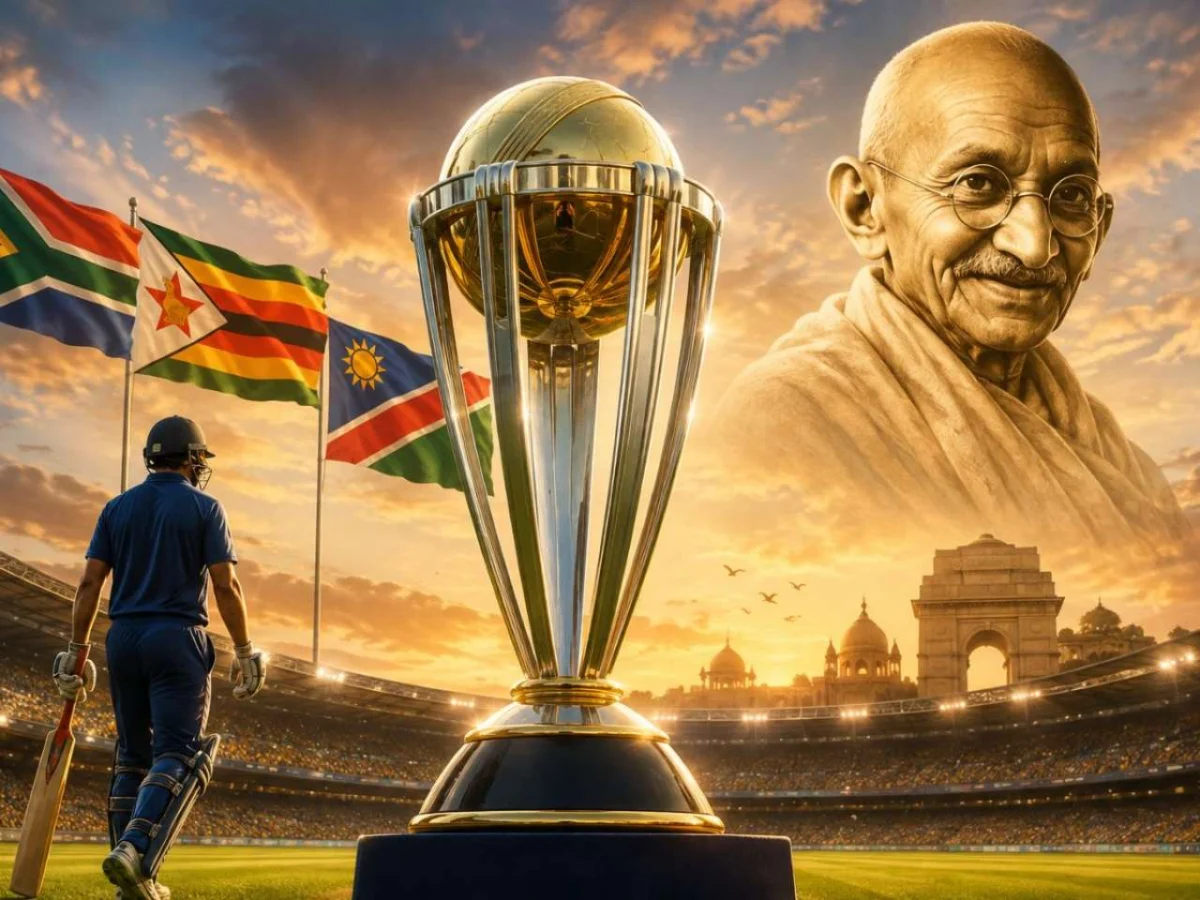
Johannesburg, South Africa – The cricketing world is abuzz with reports suggesting a profoundly symbolic start to the 2027 ICC Men’s One Day International (ODI) World Cup. The International Cricket Council (ICC) is reportedly considering kicking off the prestigious tournament on October 2, a date globally recognized as Gandhi Jayanti, the birth anniversary of Mahatma Gandhi. This proposed alignment would infuse the quadrennial event, hosted jointly by South Africa, Zimbabwe, and Namibia, with a powerful message of peace, non-violence, and historical resonance, particularly given Gandhi’s deep and formative ties to South Africa.
If confirmed, the decision would transform the opening day into more than just a sporting spectacle, elevating it to an international tribute to one of humanity’s most revered figures. The move, initially reported by Cricbuzz, indicates a strategic shift from earlier provisional schedules and underscores the ICC’s potential ambition to leverage cricket’s global platform for broader humanitarian and cultural messaging in an increasingly complex world.
Main Facts: A Symbolic Inauguration
The core of the unfolding narrative revolves around the ICC’s reported intention to inaugurate the 2027 ODI World Cup on October 2. This date is universally celebrated as Gandhi Jayanti, marking the birth anniversary of Mahatma Gandhi, India’s Father of the Nation and a global icon of non-violent resistance. The proposed opening ceremony and inaugural match would thus coincide with a day dedicated to peace and universal brotherhood.
The tournament is slated to be co-hosted by three Southern African nations: South Africa, Zimbabwe, and Namibia. This geographical context is crucial to the proposed tribute, as Mahatma Gandhi spent 21 formative years (1893-1914) in South Africa, where he first developed and honed his philosophy of Satyagraha, or truth-force, as a means of political and social protest against racial discrimination. His experiences in South Africa profoundly shaped his later leadership of India’s freedom movement.
)
This symbolic gesture, if realized, would serve multiple purposes: it would honor Gandhi’s enduring legacy, acknowledge his profound connection to one of the host nations, and potentially offer a powerful message of unity and peaceful coexistence through the universal language of sport. The 14-team tournament is expected to culminate with the final match on November 21, creating a comprehensive schedule that would span nearly seven weeks of intense cricketing action across Southern Africa.
Chronology: From Provisional Plans to Poignant Possibilities
The scheduling of a major global sporting event like the Cricket World Cup is a meticulously planned affair, often involving years of foresight, logistical negotiations, and provisional timelines. The reports of the ICC considering an October 2 start suggest a significant evolution from earlier internal discussions.

Initially, reports had indicated a provisional start date of October 8 for the 2027 World Cup. This earlier plan reportedly factored in a preceding week dedicated to warm-up matches, a common practice in multi-team tournaments to allow teams to acclimatize and fine-tune their strategies before the main competition. However, the latest intelligence suggests a re-evaluation of this schedule, specifically to align the tournament’s commencement with Gandhi Jayanti.
This reported shift from October 8 to October 2 indicates a deliberate and purposeful decision-making process within the ICC. It implies that the symbolic weight of Gandhi Jayanti has potentially taken precedence over, or at least significantly influenced, initial logistical considerations. While warm-up matches would still need to be accommodated, perhaps preceding the new October 2 start date, the decision to open the main tournament on this specific day would underscore a conscious effort to imbue the event with deeper meaning.
)
The process for finalizing such a schedule involves several layers of approval. Typically, the ICC’s Chief Executives’ Committee (CEC) and the Board would review and ratify the tournament schedule, dates, and venues. Input from host boards – Cricket South Africa (CSA), Zimbabwe Cricket (ZC), and Cricket Namibia (CN) – is paramount, as they bear the primary responsibility for on-ground logistics and operations. The potential for such a meaningful opening date would likely be a point of significant discussion and, if supported by the host nations, would gain considerable traction within the ICC hierarchy. The final announcement, once all details are ironed out and officially approved, would be a major global event in itself, setting the stage for the next chapter in ODI World Cup history.
Supporting Data: Weaving History, Values, and Sport
The proposition to begin the 2027 ODI World Cup on Gandhi Jayanti is rich with supporting context, drawing from history, global values, and the very essence of cricket as a unifying force.
)
Mahatma Gandhi’s South African Odyssey
The cornerstone of this symbolic tribute lies in Mahatma Gandhi’s profound connection to South Africa. Arriving in Natal in 1893 as a young barrister, Mohandas Karamchand Gandhi spent 21 transformative years in the country. It was here, amidst pervasive racial discrimination and the oppressive apartheid-era precursors, that he encountered firsthand the injustices of colonial rule and racial segregation. This experience became the crucible for his philosophy of Satyagraha – a unique form of non-violent civil disobedience. From challenging discriminatory laws like the Asiatic Registration Act to organizing mass movements and peaceful protests, Gandhi forged his leadership and ethical framework on South African soil. Key moments, such as his removal from a train at Pietermaritzburg, served as catalysts for his lifelong struggle against injustice. His work in South Africa, advocating for the rights of the Indian community, laid the groundwork for his eventual return to India in 1915, where he would lead the movement for independence. Therefore, launching a global tournament in South Africa on his birth anniversary is not merely a gesture but a recognition of the profound historical ties between Gandhi, India, and the African continent.
Gandhi Jayanti: A Global Beacon of Non-Violence
Gandhi Jayanti, observed annually on October 2, holds immense significance beyond India’s borders. In India, it is one of the three national holidays, commemorating the birth of the "Father of the Nation." Globally, the United Nations General Assembly, in 2007, declared October 2 as the International Day of Non-Violence. This designation reaffirms the universal relevance of Mahatma Gandhi’s philosophy, which advocates for peace, tolerance, understanding, and non-violence as pathways to resolving conflicts and building a harmonious society. By aligning the World Cup’s opening with this day, the ICC would be tapping into a universally recognized framework of human values, projecting cricket not just as a competitive sport but as a platform for promoting global solidarity and ethical principles.
)
Host Nations: A Tapestry of History and Aspirations
The choice of host nations – South Africa, Zimbabwe, and Namibia – further amplifies the significance of this proposed tribute.
- South Africa: As the primary host, South Africa’s history is inextricably linked with Gandhi. The nation’s own arduous journey from apartheid to a multiracial democracy under the leadership of Nelson Mandela, a staunch admirer of Gandhi’s principles, resonates deeply with the values of justice and equality. Hosting the World Cup’s opening on Gandhi Jayanti would be a powerful affirmation of these shared historical struggles and triumphs. South Africa also boasts world-class cricketing infrastructure, including iconic venues like Wanderers Stadium in Johannesburg, Newlands in Cape Town, and Kingsmead in Durban.
- Zimbabwe: A nation with a rich cricketing tradition, Zimbabwe’s inclusion as a co-host further broadens the tournament’s reach in Southern Africa. Venues like Harare Sports Club and Queens Sports Club in Bulawayo are well-established. For Zimbabwe, co-hosting offers an opportunity to showcase its hospitality and contribute to a global sporting event with a unique moral dimension.
- Namibia: The newest entrant to the World Cup hosting club, Namibia’s inclusion represents the ICC’s commitment to growing cricket in emerging markets. The Namibia Cricket Ground in Windhoek will be a focal point. For Namibia, this World Cup offers an unparalleled opportunity for national pride and global exposure, particularly if the tournament carries such a profound symbolic message from its very inception.
Tournament Logistics and Venues
The 2027 World Cup is set to feature 14 teams competing across 12 venues. This multi-national, multi-city approach presents significant logistical challenges but also immense opportunities for cultural exchange.
)
- South Africa’s eight venues: Wanderers Stadium (Johannesburg), SuperSport Park (Centurion, Tshwane), Newlands Cricket Ground (Cape Town), Kingsmead Cricket Ground (Durban), St George’s Park (Gqeberha), Mangaung Oval (Bloemfontein), Boland Park (Paarl), and Buffalo Park (KuGompo City, formerly East London). These stadiums are well-equipped to handle large crowds and international matches, many having previously hosted World Cup fixtures in 2003.
- Zimbabwe’s three venues: Harare Sports Club (Harare), Queens Sports Club (Bulawayo), and the newly developed Mosi-oa-Tunya International Cricket Stadium (Victoria Falls). The inclusion of Victoria Falls adds a unique tourist dimension, showcasing one of Africa’s natural wonders.
- Namibia’s single venue: Namibia Cricket Ground (Windhoek). This venue represents a significant investment in cricketing infrastructure in the region.
The distribution of matches across these venues would require meticulous planning for team travel, accommodation, security, and broadcast operations.
Cricket as a Platform in a Polarised World
The original report highlighted that the ICC’s plans come "at a time when the world order is increasingly polarised." This context is vital. In an era marked by geopolitical tensions, social divisions, and economic disparities, major global sporting events like the Cricket World Cup offer rare opportunities for collective celebration and the promotion of shared human values. By consciously aligning its opening with the International Day of Non-Violence, the ICC would be making a powerful statement, asserting cricket’s role not just as entertainment but as a medium for fostering dialogue, understanding, and peace. It’s an opportunity for cricket to transcend its boundaries and contribute meaningfully to global discourse.
)
Official Responses: Anticipation and Endorsement
As of now, the reports regarding the October 2 start date remain unofficial, originating from credible cricketing news outlets like Cricbuzz. Therefore, there has been no formal, official confirmation or denial from the International Cricket Council (ICC) or the host cricket boards. However, the potential for such an announcement elicits strong anticipated responses from various stakeholders.
The ICC’s Stance (Anticipated)
Should the ICC formally adopt the October 2 start date, its official announcement would undoubtedly emphasize the symbolic significance. The communication would likely highlight the organization’s commitment to celebrating global icons and values. It would frame the decision as a tribute to Mahatma Gandhi’s enduring legacy of peace and non-violence, particularly his profound connection to South Africa, one of the primary host nations. The ICC’s statement would probably speak to cricket’s power to unite people across cultures and nations, aligning the sport with universal humanitarian principles. They would likely underscore the message of unity and solidarity that the World Cup aims to project, especially in a world grappling with various conflicts and divisions.
)
Host Cricket Boards: A Unified Welcome (Anticipated)
The cricket boards of the host nations – Cricket South Africa (CSA), Zimbabwe Cricket (ZC), and Cricket Namibia (CN) – are expected to warmly embrace such a decision.
- Cricket South Africa (CSA): Given South Africa’s deep historical ties to Gandhi and its own journey through apartheid, CSA would likely view this as an immense honor. Their response would emphasize the shared heritage and the opportunity to celebrate a figure whose principles resonated deeply with their nation’s struggle for freedom and equality. It would be an opportunity to showcase South Africa not just as a sporting destination but as a country with a rich, intertwined history with global figures of peace.
- Zimbabwe Cricket (ZC) and Cricket Namibia (CN): While their direct historical links to Gandhi are less pronounced than South Africa’s, these boards would likely align with the broader message of peace and unity. Co-hosting a World Cup with such a profound symbolic opening would elevate their status on the global cricketing stage and provide an opportunity to participate in an event that transcends sport. They would likely express enthusiasm for the unique narrative this start date would create around the tournament.
Board of Control for Cricket in India (BCCI): National Pride (Anticipated)
The Board of Control for Cricket in India (BCCI), as the sport’s most powerful and influential governing body, would undoubtedly welcome this move with immense national pride. Mahatma Gandhi is revered as the Father of the Nation in India, and international recognition of his legacy, especially through a sport as beloved as cricket, would be a source of great honor. The BCCI’s response would likely commend the ICC for its thoughtful gesture and emphasize the cultural bridge that such an initiative builds between India, South Africa, and the global cricketing community.
)
Governmental Endorsements (Anticipated)
Beyond the cricketing bodies, governments, particularly those of India and South Africa, could offer strong endorsements. The Indian government would likely view this as a significant diplomatic and cultural triumph, reinforcing India’s soft power and the global recognition of its historical figures. The South African government would also likely welcome the move, seeing it as an affirmation of its nation’s historical significance and its commitment to human rights and peace. Such governmental backing would further solidify the symbolic weight of the opening.
Implications: A Legacy Beyond the Boundary
The potential decision to launch the 2027 ODI World Cup on Gandhi Jayanti carries far-reaching implications, impacting not only the tournament itself but also the broader relationship between sport, culture, and global diplomacy.
)
Symbolic and Cultural Impact
The most immediate implication is the immense symbolic value. For India, it would be a moment of immense national pride, seeing their revered Father of the Nation honored on a global sporting stage. For South Africa, it would reinforce its historical connection to Gandhi and its own journey towards democracy and reconciliation, tying the tournament to its profound national narrative. The opening day would transcend traditional cricketing fanfare, becoming a global commemoration of non-violence, justice, and human dignity. This alignment would elevate the World Cup beyond mere competition, imbuing it with a moral and ethical dimension that few sporting events achieve. It would create a powerful narrative that could resonate with audiences far beyond traditional cricket fans, attracting interest from those drawn to humanitarian and historical themes.
Logistical Opportunities and Challenges
While symbolically powerful, an October 2 start might necessitate adjustments to the overall tournament schedule. If the initial plan involved a week of warm-up matches before October 8, then a shift to October 2 for the main tournament would mean either starting warm-ups earlier (e.g., late September) or reducing their duration. This would require careful coordination among the ICC, host boards, and participating teams.
However, this also presents unique opportunities. The opening ceremony could be designed to incorporate elements that explicitly pay tribute to Gandhi’s life and philosophy, potentially involving cultural performances, historical presentations, and speeches from dignitaries that highlight themes of peace and unity. Educational programs or community outreach initiatives linked to Gandhi’s principles could be launched in conjunction with the tournament, leaving a lasting social legacy in the host nations.
)
Commercial and Marketing Implications
From a commercial perspective, the "Gandhi Jayanti opening" could be a significant marketing asset. Sponsors might be drawn to the unique ethical positioning of the tournament, aligning their brands with themes of peace, unity, and historical tribute. The narrative would offer compelling storytelling opportunities for broadcasters and media partners, potentially enhancing viewership and engagement globally. Merchandise and promotional campaigns could creatively integrate Gandhi’s messages, creating a distinct identity for the 2027 World Cup. The event could attract new audiences who are inspired by the underlying message, expanding cricket’s reach beyond its traditional demographic.
Precedent for Future Global Sporting Events
If successful, this move could set a precedent for how major international sporting organizations approach event scheduling. It might encourage other federations to consider aligning their marquee events with significant cultural, historical, or humanitarian dates, thereby leveraging the immense visibility of global sport to promote universal values. This could lead to a broader trend of "purpose-driven" sports events that seek to make a social or cultural impact alongside athletic competition.
)
Potential for Dialogue and Engagement
In a world often divided, an event consciously framed around Gandhi’s principles of non-violence offers a unique opportunity for dialogue and cross-cultural engagement. It could spark conversations about history, justice, and the power of peaceful resistance among diverse communities globally. Players, coaches, and fans would arrive not just for cricket, but for an event imbued with a deeper meaning, potentially fostering a more reflective and respectful atmosphere.
Addressing Criticisms or Nuances
While overwhelmingly positive, any such grand symbolic gesture can also attract scrutiny. Critics might question whether the tribute is purely performative or if it will be backed by tangible actions that promote peace and non-violence. The ICC and host nations would need to demonstrate a genuine commitment to the values being celebrated, perhaps through legacy projects or specific initiatives. Furthermore, navigating the complex political histories of the host nations alongside the Gandhi narrative would require sensitivity and careful communication.
)
In conclusion, the proposed Gandhi Jayanti inauguration for the 2027 ODI World Cup represents a powerful confluence of sport, history, and global values. If confirmed, it would not only mark the beginning of a major cricketing spectacle but also serve as a profound international tribute, echoing a message of peace and non-violence from the heart of Southern Africa to the entire world. The cricketing fraternity and global community alike will keenly await the official announcement, poised to witness what could be a truly historic and meaningful chapter in the annals of sport.
