

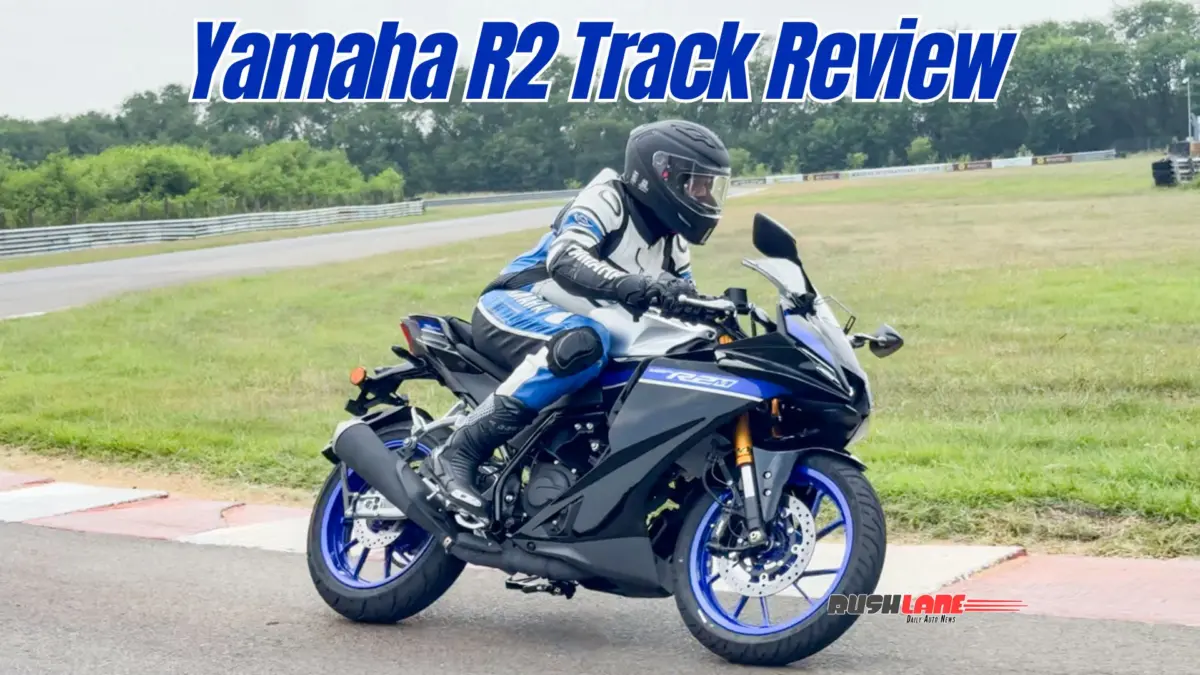
The Indian motorcycling landscape has long been dominated by a pursuit of displacement, yet Yamaha has historically carved its niche through precision engineering and surgical handling rather than brute force. For years, the YZF-R15 served as the brand’s de facto flagship, proving that a 150cc machine could command a premium price if it offered world-class dynamics. However, as of August 2026, India Yamaha Motor has officially elevated its aspirations.
The introduction of the Yamaha YZF-R2 (or simply the R2) marks a significant strategic pivot. Positioned as the new pinnacle of Yamaha’s domestic lineup, the R2 seeks to bridge the gap between the entry-level R15 and the high-performance global "R" series. With a price tag reaching into the quarter-million-rupee territory, the R2 is not just a motorcycle; it is a statement of intent.
Main Facts: The R2 Lineup and Pricing
The Yamaha R2 arrives in three distinct flavors, catering to different levels of track-focused enthusiasts. The pricing reflects Yamaha’s premium positioning in the Indian market:
- Yamaha R2 (Standard): Rs 2,30,500
- Yamaha R2 QS (Quickshifter Variant): Rs 2,39,500
- Yamaha R2 M (Range-topping Variant): Rs 2,53,000
(All prices are Ex-showroom).

While competitors like the Bajaj Pulsar RS200 and the Hero Karizma XMR 210 lean toward the "sport-tourer" philosophy, the R2 is a dedicated, race-bred supersport. Its primary target is the KTM RC 200, though it also faces internal competition from its younger sibling, the R15.
Chronology: From R15 Dominance to the R2 Era
The journey to the R2 began with the realization that the Indian enthusiast was outgrowing the 150cc segment. While the R15 Version 4.0 and the R15 M were technological marvels, the ceiling for a 155cc engine—regardless of Variable Valve Actuation (VVA)—had been reached in terms of highway cruising and top-end performance.
In early 2026, rumors began circulating regarding a "Project 200." Instead of simply boring out the existing R15 engine, Yamaha engineers opted for a ground-up development of a new platform. The R2 was officially launched in August 2026, skipping the 250cc "quarter-litre" segment to focus on the highly competitive 200cc class, where power-to-weight ratios often dictate market supremacy.
Following its launch, Yamaha invited the national media to the Madras International Circuit (MIC) in Chennai—a technical, demanding track that serves as the ultimate litmus test for any machine claiming "R" DNA.

Supporting Data: Engineering and Performance Metrics
The heart of the Yamaha R2 is an all-new 204cc single-cylinder, liquid-cooled, DOHC 4-valve engine. This powerplant is a departure from the VVA-equipped 155cc mill found in the R15.
Engine Specifications:
- Displacement: 204cc
- Peak Power: 26.23 bhp @ 10,000 RPM
- Peak Torque: 19.1 Nm @ 8,000 RPM
- Transmission: 6-speed with Slipper Clutch and Bi-directional Quickshifter (on QS and M variants).
The Power-to-Weight Advantage
The most striking data point of the R2 is its curb weight. The standard R2 tips the scales at a mere 149 kg, while the feature-packed R2 M weighs 150 kg. This lightweight construction results in a power-to-weight ratio that eclipses its rivals:
| Motorcycle | Power-to-Weight Ratio |
|---|---|
| Yamaha R2 | 176.04 bhp per tonne |
| KTM RC 200 | 154.06 bhp per tonne |
| Yamaha R15 V4 | 128.36 bhp per tonne |
This 37% improvement in power-to-weight over the R15 explains why the R2 feels significantly more "peppy" and urgent in its power delivery.
Chassis and Ergonomics
Contrary to expectations, Yamaha did not utilize the famed Deltabox perimeter frame for the R2. Instead, they developed a steel tube diamond frame paired with a unique swingarm. While some purists may find the lack of a Deltabox frame visually "lesser," the structural rigidity on the track remains high.

The ergonomics are unapologetically aggressive. With a seat height of 810 mm and rear-set footpegs, the rider is placed in a committed tuck. For riders above six feet, the R2, much like the R15, can feel cramped, reinforcing its identity as a precision tool for short, spirited bursts rather than a long-distance tourer.
Track Performance: The MIC Experience
Experiencing the R2 M at the Madras International Circuit revealed the motorcycle’s true character. The track’s technical layout, featuring a mix of fast sweeps and tight hairpins, highlighted the R2’s agility.
Handling and Cornering
The R2 is exceptionally eager to tip into corners. The effort required to transition from upright to a full lean is minimal, a testament to its centralized mass and low curb weight. Despite the absence of the Deltabox frame, the diamond frame provided ample feedback, allowing the rider to load the front end with confidence during trail braking.
The suspension, featuring preload adjustability at both ends, was tuned for the track during the media ride. It offered a composed ride, though the rear showed some sag when carrying heavier loads, suggesting that street-side adjustments will be necessary for pillion comfort.

Grip and Braking
The motorcycle comes shod with MRF tires—a REVZ-S at the rear and a ZAPPER-FX1 at the front. Under the intense Chennai sun, these tires reached optimal operating temperatures quickly, providing tenacious grip. The braking system, supported by dual-channel ABS, provided adequate stopping power, though some testers noted that a sharper "initial bite" would be welcome for aggressive track use.
Gearbox Observations
One point of contention during the track review was the 6-speed gearbox on the R2 M. While downshifts were seamless, upshifts—even with the bi-directional quickshifter—felt "notchy" at high RPMs. On several occasions, significant physical effort was required to click into the next gear. This could be attributed to the "freshness" of the test units, but it remains a point for potential owners to monitor.
Official Responses and Market Positioning
While Yamaha officials have remained tight-lipped about the specific decision to forgo the Deltabox frame, engineering representatives at the track emphasized "optimal rigidity-to-weight balance." The goal was to keep the R2 under the 150 kg mark, a feat that might have been difficult with a bulkier perimeter frame design while maintaining a competitive price point.
Yamaha’s marketing strategy for the R2 is clear: it is the "Step Up" bike for R15 owners who aren’t ready for the financial leap to a multi-cylinder R3 or R7. By pricing the R2 M at Rs 2.53 lakh, Yamaha is betting that the "R" brand equity is strong enough to justify a Rs 50,000 premium over the R15 M.

Implications: A New Benchmark for the 200cc Class?
The arrival of the Yamaha R2 has several long-term implications for the Indian motorcycle market:
1. The Displacement vs. Performance Debate
The R2 proves that a 204cc engine can outperform larger displacement bikes if the weight is kept in check. This may force competitors to focus more on weight reduction strategies (such as Li-ion batteries and lightweight alloys) rather than simply increasing engine size.
2. Pricing Pressure
At over Rs 2.5 lakh, the R2 M enters a price bracket where it faces competition from 300cc and 400cc machines like the Triumph Speed 400 or the KTM Duke 250. Yamaha is testing the limits of how much a customer is willing to pay for "handling" and "brand prestige" over raw cubic capacity.
3. The Future of the R15
With the R2 sitting so close in terms of purpose, the R15 may eventually be repositioned as a more accessible entry-point, or it may receive even more premium features to maintain its "tech-leader" status.

4. Aesthetic Trade-offs
The R2 features a more exposed engine bay and a less comprehensive fairing than the R15. This "leaner" look is a departure from the "mini-superbike" aesthetic of the R15. Whether the market prefers the R2’s raw, mechanical look over the R15’s polished, fully-faired design remains to be seen.
Conclusion
The Yamaha YZF-R2 is a polarizing yet brilliant addition to the Indian market. It defies the trend of "bigger is better" by doubling down on "lighter is faster." While the lack of VVA and a Deltabox frame might seem like a step back on a spec sheet, the real-world power-to-weight ratio and track-side dynamics tell a different story.
For the enthusiast who spends their weekends hunting apexes at the track or carving through mountain passes, the R2 offers a level of purity that few bikes in the 200cc segment can match. However, for the everyday commuter, the aggressive ergonomics and premium price may be hard pills to swallow. Yamaha has built a racer for the road; whether the road is ready for it is a question only the sales charts will answer.
