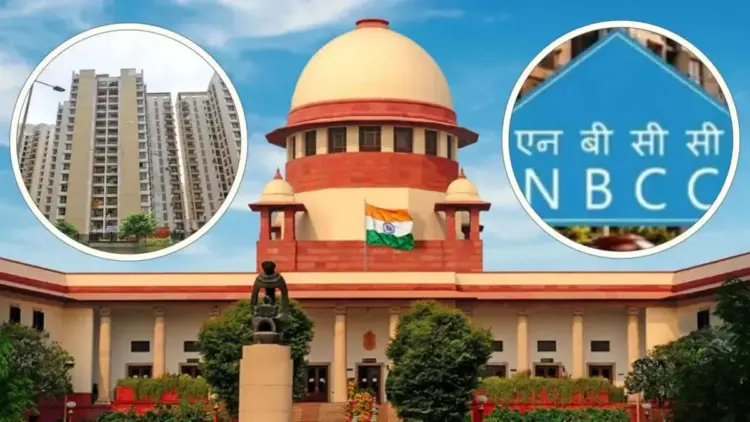
NEW DELHI, [Insert Date of Publication Here, e.g., November 7, 2026] – In a move that has sent ripples through the real estate sector and sparked a fierce legal debate, the National Buildings Construction Corporation Limited (NBCC) has controversially re-initiated the auction of 49 premium residential flats in Sarojini Nagar’s Avenue Towers. This decision comes despite an ongoing legal challenge in the Delhi High Court, where three aggrieved bidders from a previous cancelled auction are seeking redress. The audacious step by the public sector undertaking (PSU) has ignited serious questions about transparency, fairness, and potential contempt of court, placing a significant shadow over the integrity of public auctions and the trust placed by homebuyers in government-backed projects.
The current situation is a complex web of legal intricacies and ethical dilemmas, with the core contention revolving around NBCC’s alleged disregard for judicial processes and its potentially misleading representation to new prospective buyers. As the Delhi High Court prepares for its next hearing on January 12, 2027, all eyes are on how this high-stakes legal battle will unfold, and what precedent it might set for accountability within public enterprises.
The Genesis of the Dispute: A Cancelled Auction and Legal Challenge
The controversy began to brew following the cancellation of an earlier online auction for the same 49 apartments in Sarojini Nagar. This initial auction, which saw considerable interest, was abruptly called off by NBCC on October 28, 2026. The reasons cited for the cancellation remain largely opaque, fueling suspicion and resentment among the highest bidders. Three of these disappointed purchasers, whose bids reportedly exceeded the stipulated reserve price, felt unjustly treated. They contended that their legitimate offers were cancelled without any valid, demonstrable cause, leading them to believe that NBCC’s actions were arbitrary and potentially motivated by an expectation of securing a higher price.
Believing their rights were violated and that the cancellation lacked due process, these three purchasers collectively approached the Delhi High Court. Their petition challenges NBCC’s decision, arguing that it contravenes established principles of natural justice and fair play. The High Court, acknowledging the gravity of the allegations, promptly issued notices to both the Central Government and NBCC, demanding their responses within a two-week timeframe. This judicial intervention signified the court’s intent to thoroughly examine the claims and ensure justice.
Chronology of Events: A Timeline of Contention
To fully grasp the unfolding drama, a clear timeline of events is crucial:
- January 6, 2026: The Supreme Court of India delivers a landmark judgment in the case of Golden Food Products India v. State of Uttar Pradesh. This ruling unequivocally upholds the legal sanctity of public auctions, stating that a highest legitimate bid, once it surpasses the reserve price, cannot be arbitrarily cancelled without a specific and valid reason. The court explicitly noted that the authority’s mere expectation of a higher price cannot be the sole basis for rejection. This judgment now forms a critical legal precedent for the petitioners in the Sarojini Nagar case.
- October 28, 2026: NBCC cancels the initial online auction for 49 flats in Avenue Towers, Sarojini Nagar. The reasons for this cancellation are not clearly communicated, leading to dissatisfaction among the highest bidders.
- Early November 2026: Three aggrieved purchasers file a petition in the Delhi High Court, challenging NBCC’s cancellation of their bids. They allege that their highest bids, which exceeded the reserve price, were cancelled without good cause, violating principles of natural justice and the Supreme Court’s recent ruling.
- November 6, 2026: Despite the pending legal challenge and the High Court having already issued notices, NBCC restarts the auction process for the very same 49 apartments. New applications are invited for the online sale, effectively bypassing the ongoing judicial scrutiny.
- Mid-November 2026 (Approximate): The Delhi High Court issues notices to NBCC and the Central Government, requesting their responses to the petitioners’ claims within two weeks. This formal notice indicates that the matter is now officially sub judice.
- January 12, 2027: The Delhi High Court schedules the next hearing for the case, a date that will prove pivotal in determining the legality and ethical standing of NBCC’s actions.
This chronological sequence highlights a striking juxtaposition: the judicial system initiating a review, while the entity under scrutiny proceeds as if no such review exists, thereby intensifying the questions surrounding its conduct.

Supporting Data: The Sarojini Nagar Redevelopment Project and NBCC’s Mandate
The Sarojini Nagar redevelopment project is part of a larger, ambitious government initiative to transform seven General Pool Residential Accommodation (GPRA) colonies in Delhi. These projects aim to provide modern housing infrastructure for government employees, replacing dilapidated structures with contemporary, high-rise residential complexes. NBCC, as a Navratna PSU under the Ministry of Housing and Urban Affairs, plays a crucial role in executing such large-scale urban infrastructure and redevelopment projects across India. Its mandate includes not only construction but also the efficient management and sale of developed properties, often through public auctions.
The Avenue Towers in Sarojini Nagar, where these 49 flats are located, represent a premium offering within this redevelopment scheme. Such properties typically attract significant interest from buyers due to their prime location, modern amenities, and the trust associated with a government-backed developer like NBCC. The financial stakes involved in the sale of 49 flats in a prime Delhi location are substantial, underscoring the importance of maintaining absolute transparency and fairness in the auction process. Each flat represents a significant investment, often the life savings of a prospective homeowner.

The Supreme Court’s ruling in Golden Food Products India v. State of Uttar Pradesh on January 6, 2026, serves as a cornerstone of the petitioners’ argument. This judgment meticulously detailed the principles governing public auctions, emphasizing that:
- Legal Integrity of Auctions: An auction is not merely an invitation to offer but a process that culminates in a binding contract upon acceptance of the highest valid bid.
- Arbitrary Cancellation is Prohibited: Once a legitimate bid, exceeding the reserve price, is received, its cancellation requires a "specific and valid cause."
- No Rejection for Higher Price Expectation: The authority conducting the auction cannot reject the highest bid simply because it expects to fetch a better price in a subsequent auction. This protects bidders from capricious decisions and ensures the finality of the process.
- Principles of Natural Justice: Bidders are entitled to a fair hearing and transparent reasons if their bids are to be rejected, especially when they have met all stipulated conditions.
The petitioners contend that NBCC’s actions directly contravene these established legal principles, making the Supreme Court’s pronouncement a powerful legal weapon in their arsenal.

The Controversial Clause 6.5: A Veil of Misinformation?
Perhaps the most alarming aspect of NBCC’s re-auction is the content of its revised selling agreement. Clause 6.5 of this new document reportedly states that "there is no ongoing legal action over the property." This assertion stands in stark contrast to the undeniable reality: a petition is not only pending in the Delhi High Court, but the court has already issued formal notices to NBCC and the Central Government.
This blatant discrepancy has created a maelstrom of confusion and concern among potential new purchasers. Legal experts and consumer advocates are raising red flags, questioning whether this clause constitutes a deliberate attempt to mislead new buyers about the contested nature of the apartments. If new buyers proceed with purchases without being fully informed of the ongoing litigation, they could find themselves embroiled in a legal battle, facing significant financial and emotional distress. This raises serious questions about "buyer fraud" – not necessarily in the traditional sense of direct misrepresentation by a private seller, but a systemic failure to disclose critical information by a public entity, potentially leading to adverse consequences for unwitting purchasers.

Such a misrepresentation, if proven intentional, could have severe repercussions for NBCC, potentially leading to the cancellation of the new sales, compensation claims from new buyers, and further damage to its already strained credibility. It also erodes the fundamental trust that citizens place in government bodies to act with utmost honesty and integrity, particularly in matters involving substantial public interest and private investment.
Official Responses and the Silence of Accountability
As of the current reporting, NBCC has maintained that "everything is in order" regarding the restarted auction. However, this general assurance lacks specific details addressing the core concerns raised by the pending litigation and the misleading clause in its new sale document. Specific requests for clarification on why the previous auction was cancelled, how Clause 6.5 aligns with the reality of a sub judice matter, and NBCC’s justification for proceeding with the auction while under judicial scrutiny have largely been met with silence or broad, unspecific statements.

The Central Government, which also received a notice from the Delhi High Court, has yet to issue a public statement or clarification on its stance regarding NBCC’s actions. As the oversight authority for NBCC, the government’s response (or lack thereof) will be crucial in shaping public perception and potentially influencing the court’s proceedings. The absence of a detailed official explanation only intensifies the speculation and deepens the mistrust surrounding the entire process.
In journalistic practice, when a party involved in a dispute declines to comment on ongoing litigation or provides only vague responses, it is often interpreted as a strategic move to avoid making statements that could be used against them in court. However, in the context of a public sector undertaking, such reticence can also be perceived as a lack of transparency and accountability, especially when public funds and public trust are at stake.

Implications: A Broader Canvas of Impact
The ramifications of this case extend far beyond the fate of 49 flats in Sarojini Nagar. Its outcome could have profound implications for NBCC, the broader real estate market, prospective homebuyers, and the sanctity of judicial processes.
For NBCC: Reputational Damage and Legal Peril
For NBCC, a government-owned enterprise, the current controversy presents a significant reputational crisis. Its actions are under intense public and judicial scrutiny, potentially eroding the trust it has built over decades as a reliable developer of public infrastructure. Should the Delhi High Court rule against NBCC, the consequences could be severe:

- Contempt of Court: Proceeding with an auction while a matter is sub judice and notices have been issued, especially with a potentially misleading document, could be deemed contempt of court. This carries serious legal penalties, including fines and, in extreme cases, even imprisonment for officials responsible.
- Cancellation of New Auctions: The court could halt or nullify the ongoing auction, forcing NBCC to restart the process under stricter guidelines, or even reinstate the bids of the original petitioners.
- Financial Liabilities: NBCC could face demands for compensation from both the original aggrieved bidders and any new buyers who might have been misled and suffered financial losses.
- Loss of Public Trust: This episode could significantly damage NBCC’s brand image, making future public projects and auctions more challenging and subject to increased skepticism.
For Previous Buyers: A Quest for Justice
For the three petitioners, this case is a battle for fairness and the upholding of their legitimate rights. Their victory would affirm the principle that public entities cannot arbitrarily cancel bids without just cause, providing a crucial safeguard for participants in public auctions. It would reinforce the belief that the judiciary stands as a bulwark against arbitrary administrative actions.
For New Buyers: The Peril of Undisclosed Litigation
The most immediate and concerning implication for potential new buyers is the risk of investing in a disputed property. Should the court rule that the current auction is invalid, any new purchases made could be subject to cancellation or prolonged legal battles. Buyers might face:

- Financial Loss: Deposits and initial payments could be tied up indefinitely.
- Legal Entanglements: New owners might become unwilling parties to the ongoing litigation, incurring legal costs and mental distress.
- Uncertainty of Ownership: The legal status of their property could remain ambiguous for an extended period.
This scenario underscores the critical importance of due diligence for every homebuyer, even when dealing with government entities. It also highlights the responsibility of auctioning authorities to disclose all material facts, including ongoing litigation, to potential purchasers.
For Public Auctions and Governance: Setting a Precedent
This case transcends individual transactions; it is about the fundamental principles governing public auctions and the accountability of government enterprises. A strong judicial ruling in favor of transparency and fairness would:

- Reinforce Rule of Law: Affirm that no entity, public or private, is above the law and that judicial directives must be respected.
- Enhance Transparency: Potentially lead to stricter guidelines for public sector undertakings regarding disclosure of information and justification for auction cancellations.
- Restore Public Trust: Reassure citizens that public auctions are conducted equitably and that their investments are protected.
- Strengthen Natural Justice: Reiterate the importance of providing fair hearing and reasoned decisions in all administrative actions impacting individuals.
Expert Opinions: The Call for Due Diligence and Judicial Oversight
Legal experts observing the case have emphasized the seriousness of NBCC’s actions. "To proceed with an auction for properties that are the subject of ongoing litigation, especially after receiving a court notice, demonstrates a concerning disregard for judicial process," states a prominent real estate lawyer, preferring anonymity due to the sensitivity of the matter. "The claim in the new sale document that there is ‘no ongoing legal action’ is particularly problematic. It could be seen as an attempt to circumvent the court’s authority and potentially mislead prospective buyers, which has severe ethical and legal ramifications."
Another legal analyst specializing in administrative law points out, "The Supreme Court’s ruling in Golden Food Products is quite clear. An expectation of a higher price is simply not a valid reason to cancel a legitimate highest bid. If NBCC cannot provide a robust and justifiable reason for the initial cancellation, their entire subsequent process is on shaky ground."

Consumer rights advocates are urging potential buyers to exercise extreme caution. "It’s a buyer beware market, even with government-backed projects," warns a representative from a consumer protection group. "Always verify the legal status of a property, especially if there are whispers of disputes. The onus should be on the seller, particularly a PSU, to be fully transparent, but buyers must also do their homework."
Conclusion: Awaiting the High Court’s Verdict
As the Delhi High Court prepares for its hearing on January 12, 2027, the stakes are undeniably high. This case is not merely about 49 flats in Sarojini Nagar; it is a critical test of accountability for public sector undertakings, the sanctity of judicial processes, and the fundamental trust that homebuyers place in the system. The court’s verdict will send a powerful message – one that will either reinforce faith in the rule of law and transparency in public dealings, or leave a lingering doubt about the fairness and integrity of government-led initiatives. All eyes remain fixed on the judicial proceedings, awaiting a resolution that promises to shape the future landscape of public auctions and buyer protection in India.

Find your daily dose of All Latest News including Sports News, Entertainment News, Lifestyle News, explainers & more. Stay updated, Stay informed- Follow DNA on WhatsApp.