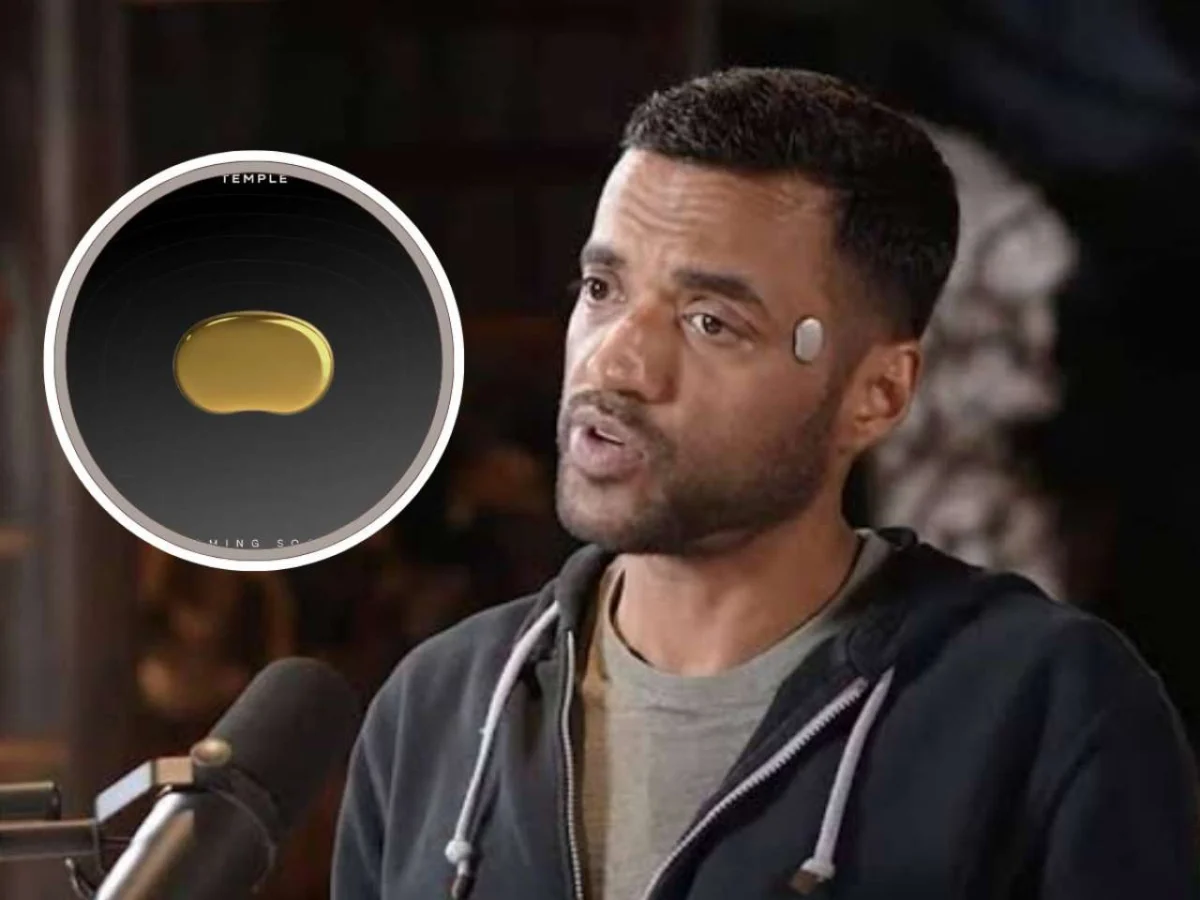
New Delhi, India – Deepinder Goyal, the visionary co-founder of food delivery giant Zomato, is once again poised to disrupt an entirely different industry: health technology. His latest venture, a sophisticated wearable device named "Temple," is slated for a launch within the next 6 to 12 months, carrying a premium price tag of approximately USD 1,000 (roughly INR 1 lakh). This ambitious project, which aims to redefine personal health monitoring by tracking a novel biomarker termed ‘entropy,’ promises to debut with a robust backing of peer-reviewed scientific studies, initially positioned as a cutting-edge wellness device.
The announcement has ignited considerable curiosity and anticipation, not just among tech enthusiasts and health-conscious consumers, but also within the investment and medical communities. Goyal, known for his relentless pursuit of innovation, is venturing into a highly competitive and regulated landscape, bringing with him a bold claim of uncovering deeper insights into the body’s metabolic state than current market offerings. The ‘Temple’ is designed as a bean-shaped garment to be worn discreetly on the forehead, distinguishing itself from wrist-based trackers and rings by focusing on real-time metabolic monitoring rather than conventional metrics like heart rate alone.
Despite acknowledging project delays and the inherent complexities of developing such advanced technology, Goyal has revealed an overwhelming early interest, with over 1 lakh individuals already applying for access to the initial batch of just 100 units. This fervent demand underscores the market’s hunger for innovative solutions in personal health, even as the scientific underpinnings of ‘entropy’ await independent validation.
The Genesis of Temple: From Food Delivery to Metabolic Insights
Deepinder Goyal’s entrepreneurial journey is marked by audacious moves and a keen eye for unmet needs. His transformation of Zomato from a restaurant discovery platform into a dominant food delivery service is a testament to his ability to scale ideas into industry-leading ventures. Now, he is channeling that same innovative spirit into the realm of health and wellness, a sector experiencing exponential growth driven by increasing consumer awareness and technological advancements.
)
The genesis of Temple appears deeply personal for Goyal. In an interview with Bloomberg, he candidly stated, "I am constructing it solely for myself. Business is a side effect of what we’re doing for ourselves." This personal motivation often fuels the most groundbreaking innovations, as founders strive to solve problems they intimately understand. It suggests that Temple is not merely a commercial endeavor but a quest for deeper self-understanding and optimization, a philosophy that resonates with a growing segment of high-performance individuals and biohackers.
While the exact timeline of Temple’s conception remains private, Goyal’s previous association with ‘Eternal,’ a venture focused on health and longevity, hints at a prolonged engagement with the principles of human well-being and performance. This background likely provided the foundational knowledge and network necessary to embark on a project as scientifically complex as Temple. The transition from facilitating food consumption to monitoring metabolic health represents a full-circle approach to wellness, addressing both input and internal processing.

The development phase has been shrouded in a degree of secrecy, typical of disruptive tech projects. However, public sightings of Goyal himself, and notably badminton star PV Sindhu, sporting the distinctive forehead-mounted device, including during the 2026 Uber Cup in April, have generated significant buzz. These early public appearances serve as powerful endorsements, particularly from an elite athlete like Sindhu, whose performance is intrinsically linked to optimal metabolic health and recovery. Such visibility not only validates the device’s comfort and wearability but also hints at its potential utility for those at the pinnacle of physical performance. The overwhelming response for early access further solidifies the public’s eagerness for what Temple promises to offer.
Unpacking "Entropy": The Core Innovation and Its Scientific Ambitions
At the heart of Temple’s ambitious claims lies its focus on "entropy" as a novel biomarker. According to Goyal and his team, this biomarker is directly correlated with metabolic rate and can provide unprecedented insights into various physiological states, including stress levels, the efficacy of meditation, recuperation quality, sleep patterns, and exercise performance. This represents a significant departure from most existing fitness trackers, which primarily rely on heart rate variability, step counts, and sleep stages derived from motion and heart rate data.
)
What is "Entropy" in a Biological Context?
While the term "entropy" is widely known in thermodynamics as a measure of disorder or randomness in a system, its application as a direct, real-time biomarker in a wearable device is novel and complex. In biological systems, a certain level of "disorder" or variability can actually be indicative of health and adaptability. For instance, heart rate variability (HRV) — the variation in time between heartbeats — is a known marker of autonomic nervous system function; higher HRV often indicates better health and resilience. A highly predictable, low-entropy system might suggest a lack of adaptability.
Goyal’s team claims to have found a novel biomarker related to entropy, suggesting they are measuring something beyond traditional HRV or other established metrics. This could involve complex algorithms analyzing micro-fluctuations in metabolic processes, perhaps through heat signatures, localized chemical changes, or even subtle electrical signals on the forehead. The forehead, rich in blood vessels and close to the brain, could offer unique access to metabolic signals not easily captured elsewhere on the body.
)
The promise is that by directly detecting these subtle changes, Temple can offer a more granular and immediate understanding of the body’s internal state. Imagine a device that can tell you, in real-time, how effectively your body is recovering from a workout, whether your meditation session truly reduced stress at a metabolic level, or how deeply restorative your sleep was beyond just hours logged. This level of insight could empower users to make more informed decisions about their lifestyle, training, and overall well-being.
The Crucial Need for Independent Validation
However, the scientific community awaits independent validation of these claims. Goyal himself acknowledges this, stating the company’s plan to release peer-reviewed studies alongside the launch. This commitment to scientific rigor is paramount. The path from identifying a novel biomarker to proving its clinical utility is long and arduous, requiring extensive research, robust methodologies, and replication by independent researchers. Without this, the concept of "entropy" as a health biomarker, however intriguing, remains speculative.
)
The challenge lies in not only demonstrating that entropy can be measured reliably but also proving its correlation with specific physiological states and, ultimately, its predictive power for health outcomes. For instance, if entropy is claimed to reflect stress, does it correlate with established stress biomarkers like cortisol? If it reflects recovery, does it align with other markers of muscle repair and energy replenishment? These are the questions that peer-reviewed studies will need to address to build credibility and trust in Temple’s core technology.
Temple in the Wearable Technology Ecosystem: A Premium Differentiator
The wearable technology market is a crowded arena, dominated by giants like Apple, Samsung, Google (Fitbit), and specialized players such as Oura Ring and Whoop. These devices track a range of metrics from heart rate, sleep cycles, and activity levels to blood oxygen saturation and skin temperature. Temple, with its USD 1,000 price point, firmly positions itself at the premium end of this spectrum, directly competing with high-end smartwatches and specialized health trackers.
)
Distinction and Design
Temple’s most striking differentiator is its form factor and primary focus. Unlike the ubiquitous wrist-worn devices or finger rings, Temple is designed to be worn on the side of the forehead. This choice of placement is likely strategic, potentially offering a more direct and less obstructed pathway to certain physiological signals related to metabolic activity. The bean-shaped garment suggests a lightweight, non-intrusive design, crucial for comfort during extended wear, including sleep and exercise.
Its emphasis on "metabolic condition in real time" rather than just heart rate is another key distinction. While many devices infer metabolic activity from heart rate and activity levels, Temple claims a more direct measurement via entropy. This could provide a significant advantage, offering deeper insights into how the body is burning fuel, managing energy, and adapting to various stressors.
)
Targeting High-Performance Athletes
Goyal’s initial target market of "high-performance athletes" is a shrewd move. This demographic is constantly seeking an edge, willing to invest in advanced technology that can optimize their training, recovery, and competitive performance. Athletes often have strict routines, highly variable physiological states, and a deep understanding of their bodies, making them ideal early adopters who can provide valuable feedback and showcase the device’s capabilities in extreme conditions. The visibility of PV Sindhu wearing the device underscores this strategic targeting. If Temple can prove its worth to elite athletes, its appeal to general consumers seeking to optimize their health could follow naturally.
The Premium Price Point
A USD 1,000 price tag places Temple in a niche market. This cost suggests advanced sensor technology, sophisticated data processing, and potentially premium materials. It also implies that Goyal is confident in the device’s unique value proposition, believing that the insights derived from "entropy" justify the investment. For comparison, high-end smartwatches like the Apple Watch Ultra 2 retail for around USD 799, while specialized recovery trackers like Whoop offer subscription models that can accumulate to similar costs over time. Temple’s upfront cost without a stated subscription model (as per the article) positions it as a significant, one-time investment in personal metabolic intelligence.
)
Regulatory Pathways: Wellness Device to Medical Device Aspirations
One of the most critical aspects of Temple’s launch strategy is its initial positioning as a "wellness device." This is a common and often necessary approach for health technology startups, as it bypasses the lengthy, costly, and rigorous regulatory approval processes required for medical devices.
Wellness vs. Medical Device Distinction
A wellness device typically aims to promote general health, fitness, or well-being, without making claims to diagnose, treat, mitigate, or prevent disease. Examples include fitness trackers that monitor steps, calories, and sleep. A medical device, on the other hand, makes specific health claims related to diagnosis, treatment, or prevention of medical conditions, requiring stringent approvals from regulatory bodies like the Food and Drug Administration (FDA) in the U.S. or the Central Drugs Standard Control Organisation (CDSCO) in India.
)
By launching as a wellness device with peer-reviewed studies, Temple can introduce its technology to the market, gather user data, and refine its algorithms without immediate regulatory burdens. This allows for a quicker market entry and iterative development based on real-world usage.
Future Aspirations for Medical Device Status
Goyal has been transparent about Temple’s long-term vision, stating, "We’re developing features that will make it a medical device. Therefore, whenever we have those functionalities, we will launch them after obtaining regulatory approvals." This indicates a clear pathway towards integrating features that might diagnose or provide actionable medical advice, such as early detection of metabolic disorders, personalized dietary recommendations based on real-time metabolic response, or even monitoring of chronic conditions.
)
The transition from a wellness device to a medical device is a monumental undertaking. It requires:
- Robust Clinical Trials: Extensive human trials to prove efficacy, safety, and accuracy of the device for its intended medical use.
- Regulatory Submissions: Detailed documentation submitted to regulatory bodies, demonstrating compliance with stringent quality management systems and manufacturing practices.
- Post-Market Surveillance: Ongoing monitoring of the device’s performance and safety once it’s on the market.
This process can take years and cost millions of dollars, underscoring the significant investment and commitment required. Goyal’s acknowledgment of this future regulatory pathway highlights the profound potential he sees in Temple beyond just general wellness. It also suggests that the current "entropy" biomarker, if independently validated, could form the basis for future medically actionable insights.
)
Implications and the Road Ahead for Temple
Deepinder Goyal’s Temple is undeniably one of the most intriguing health tech ventures on the horizon. Its potential implications span across personal health management, sports science, and the broader medical device industry.
Potential Impact:
)
- Personalized Health: If Temple can truly provide real-time, nuanced insights into metabolic health, it could revolutionize personalized wellness strategies. Users could optimize diet, exercise, and recovery protocols based on their body’s unique metabolic responses.
- Early Detection: In the long term, if approved as a medical device, Temple could potentially aid in the early detection of metabolic syndromes, diabetes, or other health conditions, shifting the paradigm from reactive treatment to proactive prevention.
- Sports Performance Optimization: For athletes, the ability to monitor metabolic recovery and stress at such a granular level could lead to unprecedented performance gains and injury prevention.
- Scientific Advancement: The research into "entropy" as a biomarker, if validated, could open new avenues of understanding human physiology.
Challenges and Hurdles:
Despite its promise, Temple faces formidable challenges:
- Scientific Validation of Entropy: This remains the paramount hurdle. Without robust, independent, peer-reviewed evidence, the claims around "entropy" will struggle to gain widespread acceptance from the scientific and medical communities. Scepticism is natural when a novel biomarker is introduced, and Goyal’s team must deliver on their promise of scientific backing.
- Regulatory Approvals: The path to becoming a medical device is notoriously difficult and lengthy. Meeting FDA or similar global standards requires immense resources, meticulous data, and an unblemished safety record.
- Market Adoption and Education: Convincing a broad consumer base to adopt a forehead-worn device, especially at a premium price, will require significant marketing and education. Users are accustomed to wrist devices; a new form factor demands a compelling reason for change.
- Data Privacy and Security: A device that collects such intimate physiological data will undoubtedly raise concerns about data privacy and security. Transparent policies and robust security measures will be crucial for user trust.
- Competition: The health tech market is dynamic and competitive. Existing players are constantly innovating, and new startups emerge regularly. Temple will need to consistently demonstrate its superior value proposition to maintain an edge.
- Timeline Slippage: Goyal himself admitted to previous delays. While understandable for such a complex project, consistent delays can erode market confidence. His candidness ("I’ve been repeating it for the past eighteen months. Thus, I’m not sure") highlights the inherent uncertainties in cutting-edge R&D.
Conclusion: A Watchful Waiting Game
)
Deepinder Goyal’s foray into health technology with Temple is a testament to his entrepreneurial courage and vision. It represents a bold attempt to push the boundaries of personal health monitoring by focusing on a potentially revolutionary biomarker. The enthusiasm for early access, the premium pricing, and the strategic targeting of high-performance athletes all point to a product poised for significant impact, should its core scientific claims hold up to scrutiny.
The next 6 to 12 months will be critical. The release of peer-reviewed studies will be the first major test, determining whether "entropy" truly unlocks a new dimension of metabolic insight. The journey from a wellness device to a potential medical device is a marathon, not a sprint, fraught with scientific, regulatory, and market challenges. Yet, if Goyal can replicate his past successes and Temple lives up to its ambitious promise, it could very well redefine how we understand and manage our own health, marking a new chapter in the convergence of technology and human well-being. The world watches with bated breath to see if Temple will indeed become the temple of metabolic wisdom it aspires to be.