

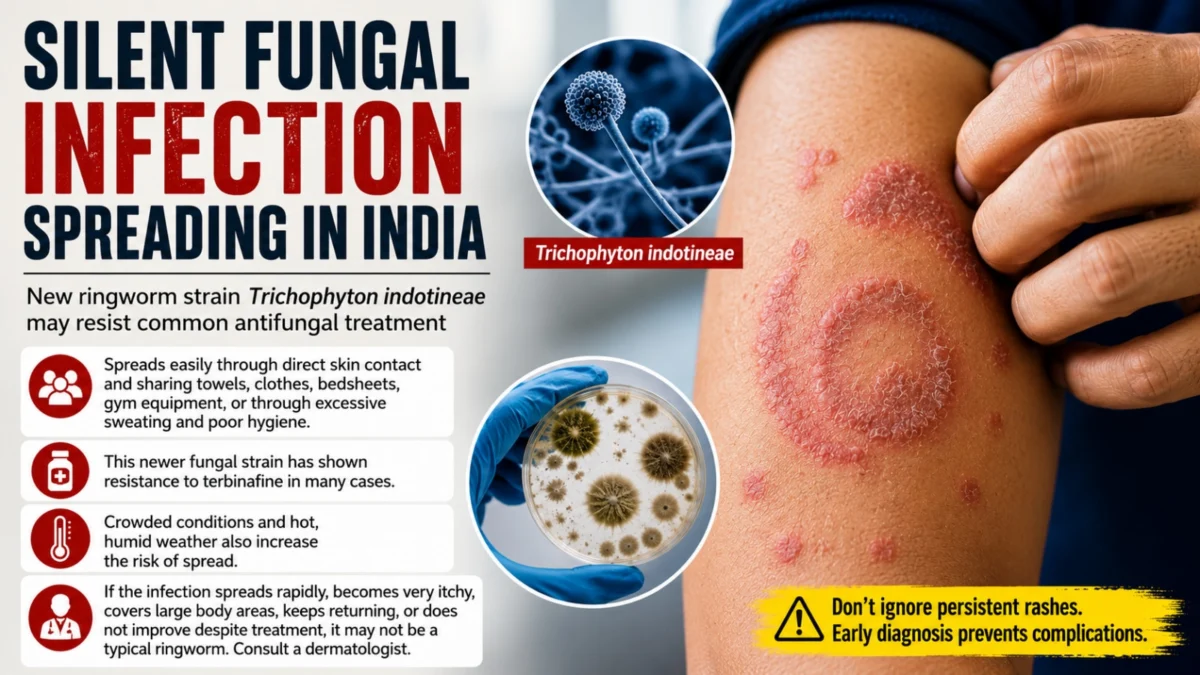
New Delhi, May 21, 2026 – A concerning new strain of ringworm, identified as Trichophyton indotineae, is rapidly spreading across India, presenting a formidable challenge to dermatologists and public health officials. Unlike its more common counterparts, this resilient fungus exhibits an alarming tendency to resist standard antifungal treatments, leading to persistent and widespread infections that cause intense itching and discomfort for affected individuals. The rise of this drug-resistant strain necessitates a re-evaluation of treatment protocols and heightened awareness regarding hygiene and early detection.
For years, ringworm, a common superficial fungal infection affecting the skin, hair, and nails, has been a familiar ailment. However, the emergence and proliferation of Trichophyton indotineae mark a significant shift in the dermatological landscape. This particular strain is proving to be exceptionally tenacious, often evading the efficacy of commonly prescribed antifungal medications. This has left many patients grappling with recurrent infections and prolonged periods of suffering, prompting a sense of urgency within the medical community.
The Growing Concern: A Strain Unlike Any Other
Dermatologists are increasingly flagging a surge in difficult-to-treat fungal skin infections, with Trichophyton indotineae being the primary culprit. Dr. Shitij Goel, Senior Consultant – Dermatology at ShardaCare Healthcity, elaborates on the evolving situation. "Yes, in recent years India has seen a rise in difficult-to-treat fungal skin infections caused by a newer strain called Trichophyton indotineae," he confirms to indianexpress.com. "The strain spreads easily and often causes extensive, itchy ringworm infections that may keep returning despite treatment."
The core of the concern lies in the phenomenon of drug resistance. This means that the arsenal of antifungal medicines that have historically proven effective against typical ringworm infections are showing diminished results against this new variant. This resistance translates into longer treatment durations, a higher likelihood of recurrence, and increased patient frustration. What might once have been a straightforward case of a stubborn fungal rash now requires a more nuanced and often prolonged therapeutic approach.
Understanding the Transmission Dynamics
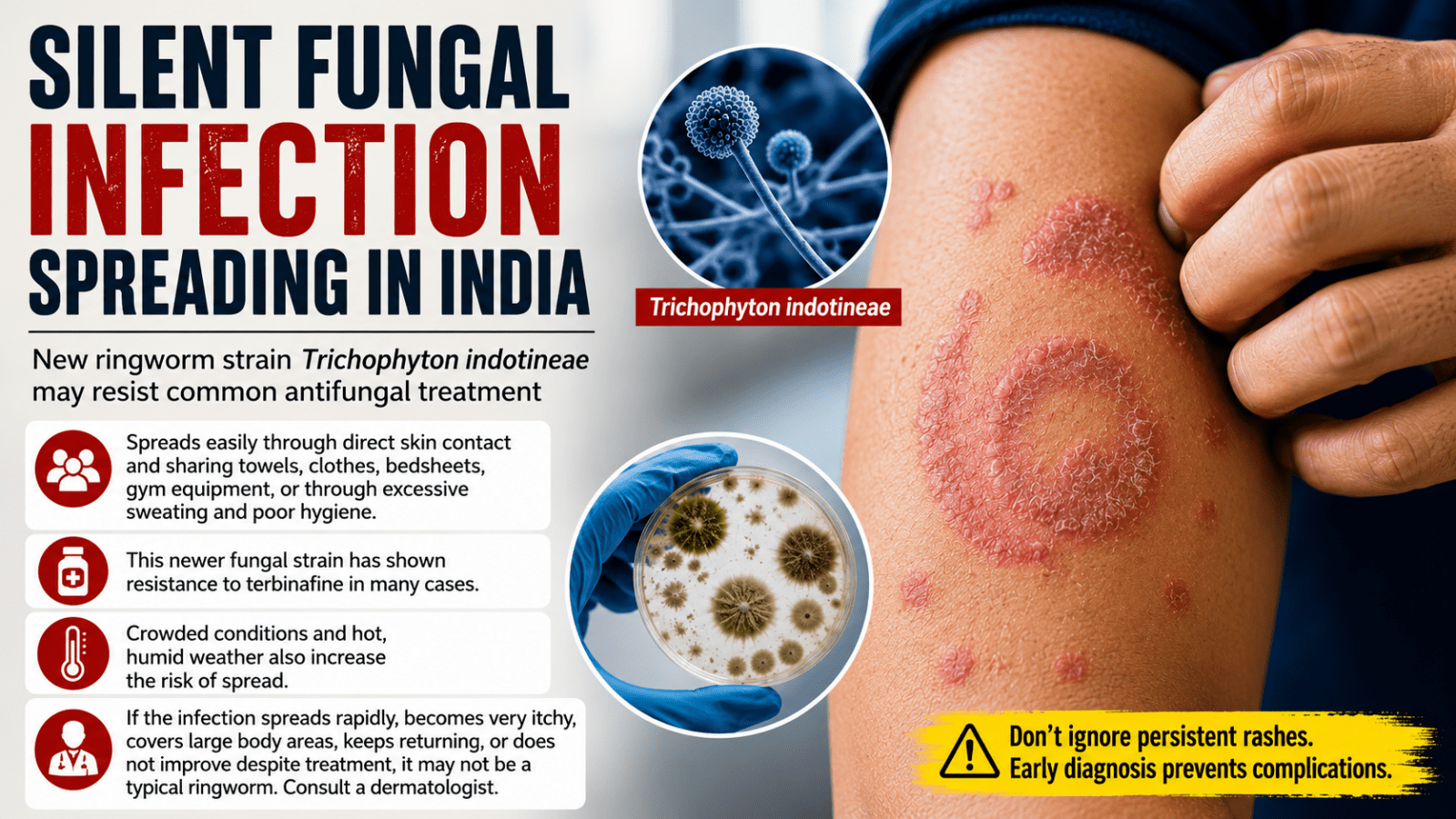
The ease with which Trichophyton indotineae spreads is a significant factor contributing to its rapid dissemination. The infection is highly contagious and can be transmitted through a variety of means:
- Direct Skin-to-Skin Contact: Casual contact with an infected individual’s skin is a primary mode of transmission.
- Sharing Personal Items: Towels, clothing, bedsheets, and even gym equipment can harbor the fungus and facilitate its spread. This highlights the importance of maintaining personal hygiene and avoiding the communal use of such items.
- Environmental Factors: The fungus thrives in warm, humid environments. Consequently, areas with high population density, inadequate sanitation, and climates characterized by significant humidity are particularly susceptible to outbreaks. Excessive sweating, a condition known as hyperhidrosis, can also create a conducive environment for the fungus to flourish and spread, as individuals may be less likely to maintain optimal hygiene in such conditions.
The widespread nature of these transmission routes means that the risk of contracting Trichophyton indotineae is elevated in crowded settings, such as public transport, schools, and sports facilities, especially during periods of hot and humid weather.
Identifying the "Super Ringworm": Beyond the Familiar
While ringworm is generally characterized by its distinct circular, red, and often itchy rash, the presentation of Trichophyton indotineae can be more aggressive and persistent. Dermatologists urge individuals to be vigilant for certain signs that might indicate a more challenging infection:
- Rapidly Spreading Lesions: If the rash appears to expand quickly across the skin, it warrants immediate medical attention.
- Intensified Itching: While itching is a common symptom of ringworm, unusually severe and persistent itching can be a red flag.
- Extensive Body Coverage: Infections that cover large areas of the body, rather than localized patches, may indicate a more resistant strain.
- Recurrent Infections: The most telling sign of a difficult-to-treat infection is its tendency to return despite undergoing standard antifungal treatment. If a ringworm infection keeps reappearing, it is highly probable that it is not a typical strain.
- Lack of Improvement with Standard Treatment: If a rash that is presumed to be ringworm does not show signs of improvement after a reasonable period of using over-the-counter or commonly prescribed antifungal medications, it is crucial to seek professional medical advice.
In cases where a ringworm infection exhibits these characteristics, a proper dermatological consultation is imperative. This often involves diagnostic procedures such as fungal testing, which can definitively identify the causative organism and its susceptibility to various antifungal agents. This allows for the formulation of a targeted and effective treatment plan.
A Chronology of Concern: From Emerging Threat to Public Health Focus
While the precise timeline of Trichophyton indotineae‘s emergence as a significant public health concern in India is still being meticulously documented, anecdotal evidence and early clinical observations point towards a growing prevalence over the past few years. Dermatologists began noticing a pattern of infections that were proving stubbornly resistant to established treatment regimens around the late 2010s and early 2020s.
Initially, these cases might have been treated as recalcitrant forms of common ringworm. However, as the number of such patients increased and the infections persisted, a distinct pattern began to emerge. Laboratory cultures and diagnostic tests started to identify a specific fungal species, Trichophyton indotineae, as the common denominator.
By the mid-2020s, the anecdotal observations had coalesced into a discernible trend, prompting dermatological associations and research institutions across India to initiate more systematic studies. These studies aim to map the geographical spread of the strain, understand its genetic makeup, and assess the full extent of its drug resistance. The increasing frequency of reports in medical journals and at dermatology conferences underscores the growing urgency to address this evolving fungal threat.
Supporting Data and Scientific Scrutiny
The growing concern is not solely based on clinical observations. Scientific research is increasingly shedding light on the characteristics of Trichophyton indotineae. Studies have begun to analyze the genetic makeup of this strain, identifying specific mutations or adaptations that may confer resistance to commonly used antifungal drugs. These drugs, such as azoles (e.g., clotrimazole, miconazole) and terbinafine, have been the frontline treatment for ringworm for decades. However, research is indicating that Trichophyton indotineae may possess mechanisms to bypass or neutralize the action of these medications.
Furthermore, epidemiological studies are crucial in understanding the scale of the problem. These studies aim to collect data on the incidence and prevalence of Trichophyton indotineae infections across different regions of India, age groups, and socioeconomic strata. The data gathered will be instrumental in informing public health strategies, resource allocation, and targeted intervention programs.
Initial findings from some of these studies suggest a potential link between the increased use of over-the-counter antifungal creams and the development of resistance. When individuals self-medicate with topical antifungals that are not potent enough or are used for an insufficient duration, it can create an environment where the fungus is exposed to sub-lethal doses of the drug. This can inadvertently select for resistant strains that can then proliferate and spread.
Official Responses and Public Health Initiatives
In response to the growing threat of Trichophyton indotineae, public health bodies and dermatological organizations in India are beginning to mobilize. While a comprehensive, nationwide, coordinated response is still in its nascent stages, several key initiatives are being considered and, in some cases, piloted:
- Awareness Campaigns: Public health campaigns are being developed to educate the general population about the signs and symptoms of this new strain of ringworm, emphasizing the importance of seeking professional medical advice rather than relying solely on self-medication. These campaigns will also highlight effective hygiene practices and preventative measures.
- Clinical Guidelines Update: Dermatological societies are in the process of reviewing and updating clinical guidelines for the management of fungal skin infections. This will involve providing healthcare professionals with updated information on the identification, diagnosis, and treatment of Trichophyton indotineae, including recommendations for drug-resistant strains.
- Research Funding and Collaboration: Increased funding for research into fungal resistance mechanisms, the development of new antifungal agents, and epidemiological studies is being advocated. Collaborative efforts between academic institutions, research centers, and healthcare providers are essential to generate robust data and translate scientific findings into practical solutions.
- Diagnostic Capacity Enhancement: Efforts are underway to enhance the diagnostic capacity at the grassroots level, ensuring that healthcare facilities are equipped to perform accurate fungal testing. This will enable earlier and more precise diagnosis, leading to more effective treatment.
- Antimicrobial Stewardship Programs: Similar to antibiotic stewardship, there is a growing recognition of the need for antifungal stewardship programs. These programs aim to promote the judicious use of antifungal medications, reduce unnecessary prescriptions, and prevent the further development of drug resistance.
The Ministry of Health and Family Welfare, along with state health departments, are expected to play a pivotal role in coordinating these efforts and ensuring their widespread implementation. Collaboration with international health organizations may also be sought to leverage global expertise in combating emerging infectious diseases.
Implications for Public Health and Individual Well-being
The rise of Trichophyton indotineae has several significant implications for public health and the well-being of individuals in India:
- Increased Healthcare Burden: The prolonged and often complex treatment required for infections caused by this strain will inevitably place a greater burden on the healthcare system, both in terms of resources and clinician time.
- Economic Impact: Chronic skin infections can lead to discomfort, reduced productivity, and absenteeism from work and school, resulting in economic losses for individuals and the nation.
- Psychological Distress: Persistent and visible skin infections can cause significant psychological distress, including anxiety, self-consciousness, and social isolation.
- Global Health Security: The emergence of drug-resistant pathogens is a global concern. If Trichophyton indotineae continues to spread unchecked, it could pose a risk to global health security, necessitating international cooperation and coordinated response strategies.
- Need for Vigilance and Prevention: The situation underscores the critical importance of maintaining good personal hygiene, practicing safe habits in public spaces, and seeking timely medical intervention for persistent skin conditions. It also highlights the ongoing need for vigilance and adaptation in the face of evolving infectious agents.
In conclusion, the emergence of Trichophyton indotineae represents a pressing public health challenge in India. The scientific community and healthcare providers are working diligently to understand and combat this resilient fungal strain. Through increased awareness, updated treatment protocols, enhanced diagnostic capabilities, and a concerted public health response, India can strive to mitigate the impact of this emerging fungal threat and protect the health and well-being of its population. The fight against drug-resistant infections requires a multi-pronged approach, and the current situation demands a renewed focus on prevention, early detection, and effective treatment.
