

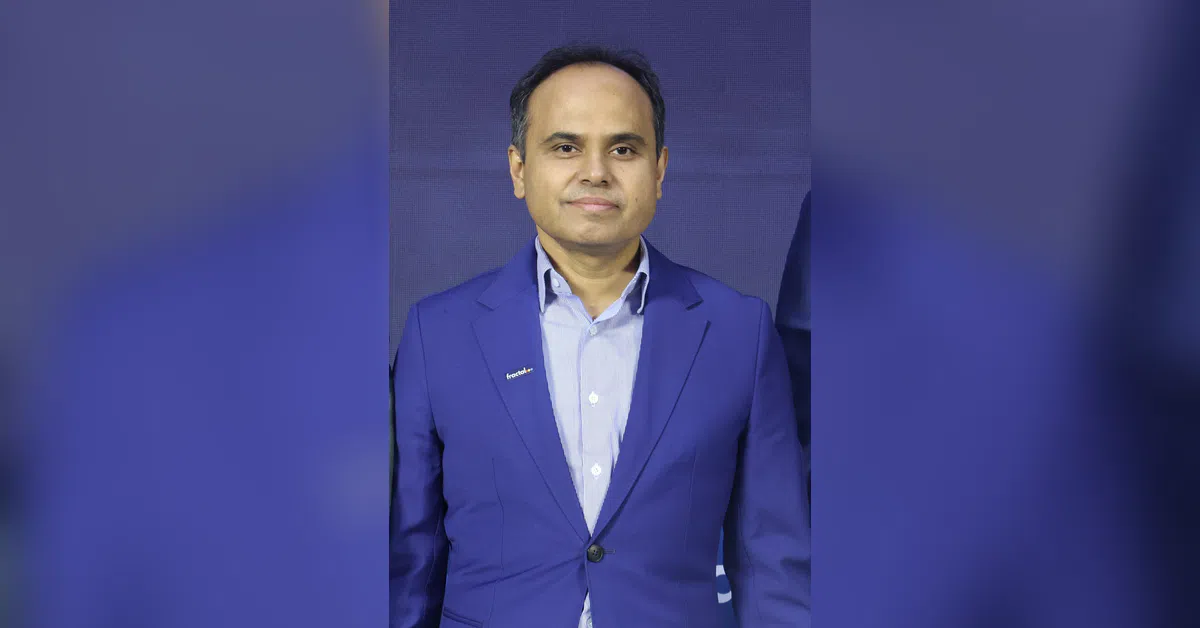
MUMBAI – In a definitive signal that the enterprise artificial intelligence (AI) sector is entering a high-growth maturity phase, Fractal Analytics, a global leader in artificial intelligence and advanced analytics, has reported a stellar set of financial results for the fourth quarter and the full fiscal year ended March 31, 2026. The company’s consolidated profit after tax (PAT) for the final quarter of the year surged to ₹116 crore, marking a 109% increase compared to the ₹55.5 crore recorded in the same period during the previous fiscal year.
This robust bottom-line performance was underpinned by a significant expansion in the Healthcare and Life Sciences (HLS) vertical, alongside a successful deleveraging strategy following the company’s recent Initial Public Offering (IPO). As enterprises worldwide transition from experimental AI pilots to full-scale production deployments, Fractal’s results underscore its position as a preferred partner for Fortune 500 companies navigating the complexities of the generative AI era.
Main Facts: A Year of Exponential Profitability
The financial report released by Fractal Analytics on Tuesday highlights a year of significant scaling. While revenue growth remained healthy at double digits, the disproportionate jump in profitability suggests that the company has successfully optimized its operational costs and shifted its mix toward higher-margin AI products and strategic consulting services.
Key Financial Highlights:
- Q4 PAT Growth: Consolidated profit after tax for Q4 FY26 reached ₹116 crore, more than double the ₹55.5 crore reported in Q4 FY25.
- Quarterly Revenue: Revenue from operations for the quarter stood at ₹886 crore, a 17% increase from the ₹757.5 crore posted in the corresponding quarter of the previous year.
- Annual Performance: For the full fiscal year 2025-26, Fractal reported a consolidated PAT of ₹287 crore, up 30% from ₹221 crore in FY25.
- Full-Year Revenue: Annual revenue crossed the ₹3,000-crore milestone, reaching ₹3,299.7 crore, representing a 19.3% growth over the ₹2,765.4 crore achieved in FY25.
- Debt Status: Following the strategic utilization of IPO proceeds, Fractal Analytics has officially declared itself a debt-free entity as of April 2026.
The company’s ability to maintain a growth rate near 20% while doubling its quarterly profits indicates a high degree of operating leverage. Analysts suggest that Fractal’s investment in proprietary AI frameworks and "AI Companions" is beginning to pay off, allowing the firm to deliver complex solutions with greater efficiency than traditional IT services models.
Chronology: The Journey to a Debt-Free Powerhouse
To understand Fractal’s current financial standing, one must look at the strategic roadmap the company followed throughout the 2025-2026 fiscal year.
Q1 & Q2 FY26: The IPO and Market Entry
The first half of the fiscal year was dominated by Fractal’s much-anticipated Initial Public Offering. The company raised substantial capital, of which ₹957 crore was earmarked specifically for strengthening the balance sheet and fueling inorganic growth. During this period, the company focused on consolidating its presence in the "Americas" region, which continues to be its primary revenue engine.
Q3 FY26: Sectoral Pivot and Generative AI Integration
By the third quarter, Fractal began seeing the fruits of its early bets on Generative AI (GenAI). While many competitors were still in the "Proof of Concept" (PoC) phase, Fractal successfully moved several large-scale projects into production, particularly within the Banking, Financial Services, and Insurance (BFSI) sector.
Q4 FY26: The Healthcare Breakthrough
The final quarter of the year saw an unprecedented surge in the Healthcare and Life Sciences (HLS) segment. This period was marked by the signing of a landmark deal with a "top five" global pharmaceutical giant, which served as a catalyst for the 82% year-over-year growth seen in this vertical during the quarter.
April 2026: Achieving Debt-Free Status
Immediately following the close of the fiscal year, Fractal acted on its IPO commitments. In April 2026, the company utilized ₹957 crore from the offering proceeds to retire its long-term debt. This move has significantly reduced interest outgo, further brightening the outlook for net margins in the upcoming FY27.
Supporting Data: Dissecting the Growth Engines
Fractal’s growth is not monolithic; it is driven by specific geographic strengths and vertical-specific dominance. A closer look at the data reveals where the company is winning the most ground.
Vertical Performance: Healthcare Leads the Charge
The standout performer of the year was undoubtedly the Healthcare and Life Sciences (HLS) division.
- Q4 HLS Growth: 82% Year-over-Year (YoY).
- Full-Year HLS Growth: 66% YoY.
- BFSI Growth: The Banking and Insurance sector maintained a steady climb, posting 32% growth for the full year.
The demand in HLS is largely driven by the need for personalized medicine, accelerated drug discovery, and field excellence in pharmaceutical sales—areas where Fractal’s AI "Companions" have shown high efficacy.
Geographic Footprint: The American Dominance and European Expansion
Fractal continues to be a global player with a heavy tilt toward Western markets:
- The Americas: This region remains the bedrock of Fractal’s business, contributing 68% of total revenue. It grew by 17% YoY in Q4, reflecting the aggressive AI adoption rates among US-based enterprises.
- Europe: Contributing 18% of the total revenue, the European market showed even higher momentum, growing by 24% YoY in the March 2026 quarter. This suggests that European firms, despite stricter regulatory environments (such as the EU AI Act), are investing heavily in compliant AI transformations.
Liquidity and Capital Structure
At the end of the fiscal year (March 31, 2026), Fractal sat on a massive cash pile of ₹2,052 crore. This liquidity provides the company with a "war chest" for potential acquisitions in the niche AI space or further R&D into specialized LLMs (Large Language Models) for enterprise use.
Official Responses: Leadership on the "AI Companion" Strategy
Srikanth Velamakanni, Group CEO of Fractal Analytics, emphasized that the company’s success is rooted in its ability to integrate AI into the actual workflow of its clients, rather than just providing abstract data insights.
"Growth was spearheaded by the Healthcare and Life Sciences (HLS) segment," Velamakanni noted during the earnings call. "We were selected as a strategic execution partner by a top five US life sciences company to deliver two flagship AI companions across commercial pharma marketing and field excellence."
The concept of the "AI Companion" is central to Fractal’s current value proposition. Unlike traditional software, these companions are designed to assist human decision-makers in real-time, using predictive analytics to optimize marketing spend and improve the efficiency of sales forces in the pharmaceutical sector.
Regarding the company’s financial health, Velamakanni expressed confidence in the post-IPO trajectory. "We ended the year with ₹2,052 crore of cash. In April, we used these proceeds to repay our long-term debt as we had committed at the time of the offering. Fractal is now debt-free."
This transition to a debt-free status is a critical milestone for the company as it seeks to maintain its "Rule of 40" status (a SaaS and tech-services metric where combined growth rate and profit margin exceed 40%).
Implications: What This Means for the AI Industry
The financial results of Fractal Analytics serve as a barometer for the broader AI and analytics industry. Several key implications can be drawn from these figures:
1. The "Industrialization" of AI
Fractal’s 100%+ profit growth in Q4 suggests that the AI industry is moving away from labor-intensive consulting toward product-led services. By creating "AI Companions" that can be deployed across different clients within the same vertical, Fractal is achieving economies of scale that were previously elusive in the analytics business.
2. Healthcare as the Next AI Frontier
While BFSI and Retail were early adopters of Big Data, the 82% growth in HLS indicates that Life Sciences is currently the most aggressive spender in the AI space. The focus on "field excellence" and "commercial pharma marketing" shows that AI is being used to solve the "last mile" problem—ensuring that data insights actually translate into sales and better patient outcomes.
3. Investor Confidence and IPO Markets
Fractal’s successful utilization of IPO proceeds to become debt-free will likely bolster investor confidence in the tech IPO pipeline. In a high-interest-rate environment, companies that use public capital to deleverage and improve net margins—rather than just burning cash for customer acquisition—are being rewarded by the market.
4. The Resilience of the US Market
Despite global economic headwinds, the 17% growth in the Americas confirms that US enterprises view AI not as a discretionary expense, but as a mandatory investment for future competitiveness. Fractal’s ability to grow with existing clients suggests a "land and expand" strategy that is working effectively.
Future Outlook: Beyond FY26
As Fractal enters FY27, the focus is expected to shift toward further international expansion and the deepening of its generative AI capabilities. With a debt-free balance sheet and over ₹1,000 crore in remaining cash (post-debt repayment), the company is well-positioned to explore M&A (Mergers and Acquisitions) opportunities, particularly in Europe or in specialized AI niches like computer vision or specialized healthcare diagnostics.
The doubling of profits in Q4 is not just a financial win; it is a proof of concept for the enterprise AI business model. As companies like Fractal continue to bridge the gap between complex data science and practical business applications, the "AI-first" enterprise is no longer a futuristic concept—it is a current financial reality.
For now, Fractal Analytics stands as a testament to the fact that in the gold rush of the AI era, the ones providing the "shovels"—the sophisticated analytics and AI implementation frameworks—are the ones reaping the most consistent rewards.
