

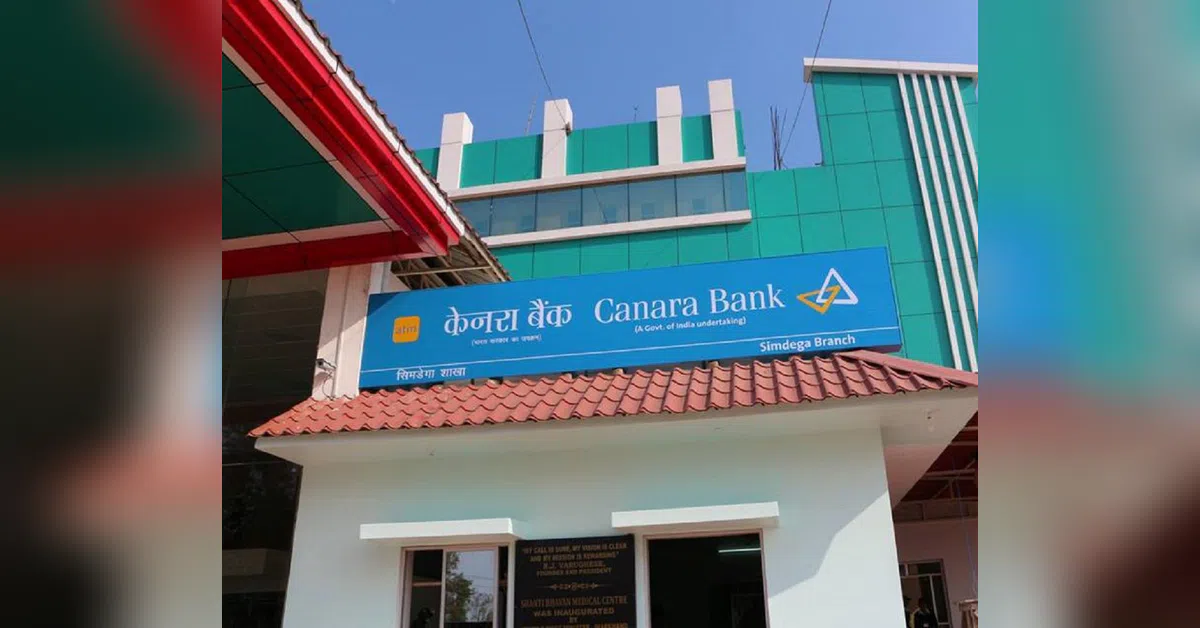
Bengaluru – State-owned banking giant Canara Bank released its financial results for the fourth quarter of the fiscal year 2025-26 (Q4FY26) on Monday, revealing a complex financial picture. While the lender witnessed a 9.9 per cent year-on-year (Y-o-Y) decline in net profit, primarily weighed down by a sharp contraction in non-interest income and treasury performance, it simultaneously reported a significant strengthening of its balance sheet and a remarkable improvement in asset quality.
The bank reported a net profit of ₹4,506 crore for the quarter ending March 31, 2026, compared to ₹5,004 crore in the corresponding period of the previous fiscal year. Despite the bottom-line pressure, the bank’s core operational metrics, including Net Interest Income (NII) and retail credit growth, remained robust, suggesting a resilient underlying business model navigating a volatile interest rate environment.
1. Main Facts: The Fiscal Snapshot
The primary driver behind the decline in profitability was a 24 per cent Y-o-Y drop in non-interest income, which fell to ₹4,824 crore. Within this segment, the treasury department faced significant challenges as hardening bond yields across the Indian economy eroded the value of the bank’s investment portfolio. Treasury income plummeted by 72.7 per cent Y-o-Y to just ₹272 crore.
However, this was partially offset by a substantial reduction in provisions. Canara Bank’s total provisions for the quarter stood at ₹2,252 crore, marking a 31.3 per cent decline from the ₹3,280 crore set aside in Q4FY25. On a sequential basis, the reduction was even more pronounced, with provisions dropping 43.2 per cent from ₹3,964 crore in Q3FY26.
Key Highlights at a Glance:
- Net Profit: ₹4,506 crore (Down 9.9% Y-o-Y)
- Net Interest Income (NII): ₹9,808 crore (Up 3.9% Y-o-Y)
- Gross NPA Ratio: 1.84% (Improved from 2.94% Y-o-Y)
- Net NPA Ratio: 0.43% (Improved from 0.70% Y-o-Y)
- Global Advances: ₹12.37 trillion (Up 15.3% Y-o-Y)
- Capital Adequacy Ratio: 17.04% (Up from 16.33% Y-o-Y)
2. Chronology: The Journey Through FY26
The fiscal year 2025-26 was a period of transition for Canara Bank. The early quarters were marked by aggressive credit off-take in the retail and MSME sectors, which provided a steady foundation for interest income. However, as the fiscal year progressed into the second half, the macroeconomic environment shifted.
By the third quarter (Q3FY26), the banking sector began anticipating a change in the monetary policy stance of the Reserve Bank of India (RBI). In the final quarter (Q4FY26), a 25-basis-point reduction in the repo rate was implemented. This move had a dual impact: it lowered the yield on the bank’s floating-rate loan book while simultaneously causing fluctuations in the bond markets.
Throughout the fourth quarter, the bank focused on "cleaning up" its balance sheet. This culminated in the March 31, 2026, status, where the bank successfully brought its Gross Non-Performing Assets (GNPA) down to ₹22,740 crore, a massive reduction from the ₹31,530 crore reported exactly one year prior. This trajectory indicates a focused management effort to resolve legacy stressed assets and improve the risk profile of the lending portfolio.
3. Supporting Data: A Detailed Financial Breakdown
Revenue and Margins
The bank’s core revenue stream, Net Interest Income (NII), showed steady growth. NII rose to ₹9,808 crore in Q4FY26, up from ₹9,442 crore a year ago. The sequential growth of 6 per cent from Q3FY26 (₹9,252 crore) highlights the bank’s ability to manage its interest-bearing assets effectively despite the repo rate cut.
The Net Interest Margin (NIM), a critical indicator of profitability, stood at 2.51 per cent for the quarter. While this was a marginal improvement over the 2.50 per cent seen in the preceding quarter (Q3FY26), it was lower than the 2.73 per cent achieved in Q4FY25. This compression in NIM over the year reflects the broader industry trend of rising cost of deposits and the immediate repricing of repo-linked loans following the rate cut.
The Treasury and Expense Factor
The "profit on sale of investments" turned into a negative ₹103 crore, a stark contrast to the ₹711 crore gain recorded in the same quarter last year. This ₹814 crore swing was the primary culprit for the profit dip. Hardening yields mean bond prices fall; as a major holder of government securities, Canara Bank had to book mark-to-market impacts or realize lower gains on sales.
On the expenditure side, operating expenses rose 4.9 per cent Y-o-Y to ₹7,874 crore. This was driven by a 14.9 per cent surge in "other operating expenses," likely linked to digital transformation costs and administrative overheads. Interestingly, staff costs saw a slight decline of 0.9 per cent, suggesting optimized human resource management or a reduction in pension-related provisions for the quarter.
Asset Quality and Provisions
The bank’s asset quality is perhaps the strongest part of the Q4 report.
- GNPA Ratio: 1.84% (vs 2.94% in March 2025)
- Net NPA Ratio: 0.43% (vs 0.70% in March 2025)
- Provision Coverage Ratio (PCR): 94.21% (vs 92.70% in March 2025)
The slippage ratio, which measures new additions to bad loans, remained controlled at an annualized 0.69 per cent. Total slippages for the quarter were ₹2,771 crore. While higher than the Q3 figure of ₹1,857 crore, the overall annual trend remains healthy.
Business Growth and Capitalization
Canara Bank’s balance sheet continues to expand at a double-digit pace.
- Global Advances: Reached ₹12.37 trillion, a 15.3% Y-o-Y increase.
- Global Deposits: Reached ₹15.68 trillion, a 9.7% Y-o-Y increase.
- Retail Lending: This was the star performer, growing by 32.9%. Within retail, Housing Loans grew 17.6% and Vehicle Loans surged 26.3%.
The bank is also better capitalized than it was a year ago. The Capital Adequacy Ratio (CRAR) improved to 17.04 per cent, with the Common Equity Tier-I (CET-I) ratio rising to 12.44 per cent, providing a significant buffer for future growth and potential economic shocks.
4. Official Responses: Leadership Perspective
Hardeep Singh Ahluwalia, Executive Director of Canara Bank—who is currently holding additional charge as Managing Director and Chief Executive Officer—addressed the media and analysts following the results announcement.
Ahluwalia was transparent about the pressures facing the bank’s margins. "Yield on advances has moderated mainly due to the 25-basis-point repo rate reduction in the last quarter," he explained. "Since around 50 per cent of our loan book is linked to the repo rate, the transmission had an impact on yields."
However, he pointed to the bank’s efficiency in managing the cost of liabilities as a saving grace. "Our cost of funds also declined by around 8 basis points during the period, which supported margins, and our NIM improved by around 9 basis points sequentially. For the upcoming fiscal year (FY27), we expect net interest margins to remain stable in the range of 2.50 per cent to 2.60 per cent."
Regarding the treasury losses, the leadership emphasized that these are cyclical and linked to broader bond market volatility, rather than inherent weaknesses in the bank’s investment strategy. The focus, according to the management, remains on "quality credit growth" and maintaining the lowest possible NPA levels in the PSU banking space.
5. Implications: What This Means for the Future
The Q4FY26 results of Canara Bank carry several implications for the bank, its shareholders, and the Indian banking sector at large.
For the Banking Sector
Canara Bank’s performance highlights the vulnerability of Public Sector Banks (PSBs) to treasury fluctuations. As large holders of government securities to meet Statutory Liquidity Ratio (SLR) requirements, PSBs often see their bottom lines hit when bond yields rise. This result may prompt other lenders to further diversify their non-interest income streams away from pure treasury gains toward fee-based income, processing fees, and third-party product distribution.
The Shift to Retail
The 32.9 per cent growth in retail loans is a significant strategic pivot. By aggressively targeting housing and vehicle loans, Canara Bank is reducing its reliance on large corporate exposures, which historically have been the source of high NPAs. This "granularity" in the loan book makes the bank’s earnings more predictable and less susceptible to the failure of a single large industrial house.
Interest Rate Sensitivity
With 50 per cent of the loan book linked to the repo rate, Canara Bank has become a "high-beta" play on RBI monetary policy. In a falling rate environment, the bank’s yields compress quickly. However, the bank has shown an ability to lower its cost of funds (deposits) to protect margins. The challenge for FY27 will be to continue attracting low-cost CASA (Current Account Savings Account) deposits as competition among banks for liquidity remains fierce.
Investor Sentiment
While the 9.9 per cent drop in profit might cause a short-term knee-jerk reaction in the stock market, long-term investors are likely to focus on the "fortress balance sheet" being built. A Net NPA ratio of 0.43 per cent and a PCR of over 94 per cent are metrics that rival the best-performing private sector banks. This suggests that Canara Bank is no longer just a "turnaround story" but is now entering a phase of sustained stability.
Conclusion
Canara Bank’s Q4FY26 performance is a tale of two halves. The "reported profit" suffered from macroeconomic factors beyond the bank’s immediate control—specifically the bond market’s reaction to interest rate cycles. Conversely, the "operational bank" is stronger than ever, with record-low bad loans, healthy capital buffers, and a booming retail franchise. As the bank enters FY27, its ability to maintain NIMs above 2.5 per cent while sustaining 15 per cent credit growth will be the key narrative to watch.
