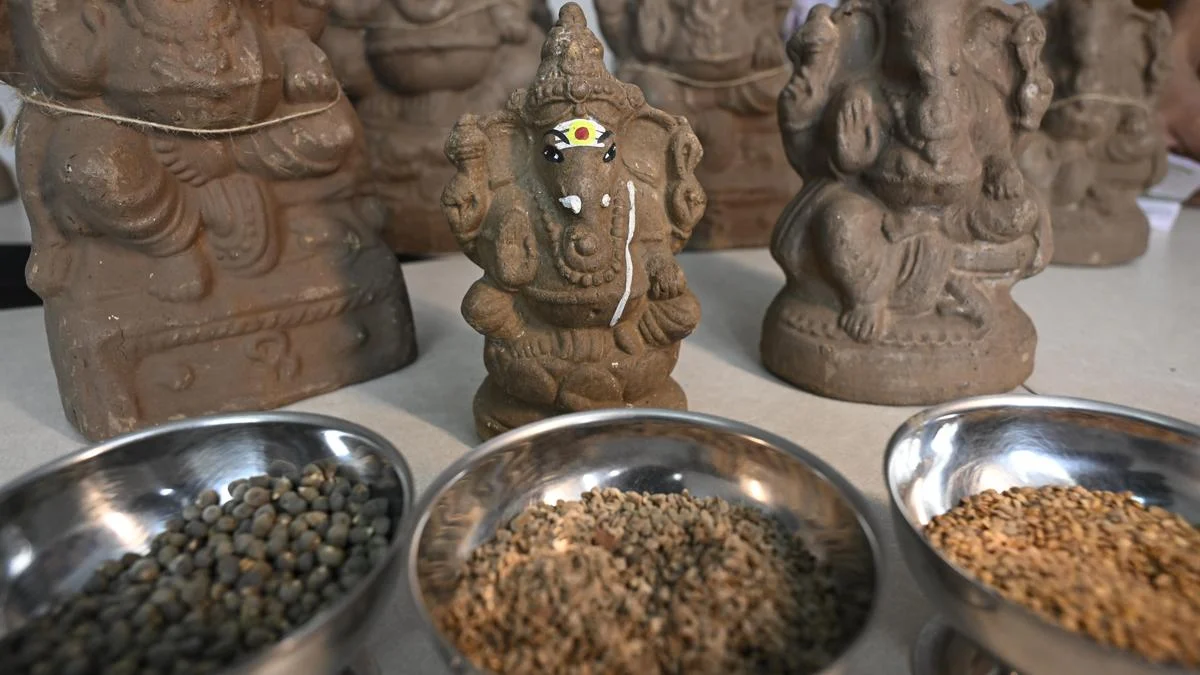
Coimbatore, India – As the vibrant hues of Ganesh Chaturthi celebrations approach, a quiet revolution is taking root in Coimbatore, transforming the traditional reverence for the elephant-headed deity into a powerful symbol of ecological consciousness. Spearheaded by the innovative "Seed Ganesha" initiative, this movement is redefining how devotees connect with their faith and the environment, turning clay idols from potential pollutants into burgeoning gardens.
The genesis of this transformative idea can be traced back to 2017, when Swarajit Alakananda, a passionate environmentalist and founder of the NGO "So Aware," found himself captivated by the roadside displays of Ganesha idols during the festive season. While their artistry was undeniable, a nagging concern, echoing a Tamil proverb about hidden dangers, prompted him to question their environmental impact. "They looked beautiful, but I wondered if there was danger lurking behind," Alakananda recalls. His deep-seated love for nature and prior involvement in lake clean-up drives fueled his contemplation. "I wondered what the idols might do to our waterbodies once they were submerged," he explains.
This concern blossomed into a revolutionary concept: what if Ganesha idols were crafted not just from earth, but from earth that held the promise of new life? What if, upon their immersion, they didn’t just dissolve, but actively contributed to the ecosystem? Thus, the "Seed Ganesha" was born – an idea that quickly captured the imagination of the city and became a resounding success.
The Genesis of a Green Revolution: From a Thought to a Movement
Swarajit Alakananda, a 32-year-old entrepreneur who also runs a tech company, "Fix Your Gadgets," channeled his environmental advocacy into tangible action. He collaborated with skilled potters from the surrounding areas of Edayarpalayam, Selvapuram, and Sundakkamuthur to develop eco-friendly variations of the traditional Ganesha idols. The groundbreaking innovation lay in embedding vegetable seeds within the clay. The brilliance of the concept was multifaceted: these idols could be immersed at home in a simple bucket of water, and as they dissolved, the embedded seeds would sprout, offering the potential to yield fresh vegetables for the entire family if nurtured.
"The core philosophy is to send back to the soil what was taken from it," Alakananda articulates, emphasizing the circularity of his creation. "Hopefully, reducing substances such as Plaster of Paris from polluting our waterbodies."
A Timeline of Transformation: From Skepticism to Widespread Adoption
The initial rollout of Seed Ganeshas in 2017 was met with overwhelming enthusiasm from both consumers and the local administration. Alakananda and his dedicated team worked tirelessly to meet the burgeoning demand. A significant endorsement came from K. Vijayakarthikeyan, who was then the Commissioner of the Coimbatore Corporation. His support provided a crucial impetus to the initiative. "We made idols with two tonnes of clay," Alakananda remembers, highlighting the scale of their initial production.
The following year marked a significant expansion. The team established a robust distribution network across the city, solidifying the presence of Seed Ganeshas in the Coimbatore market. Today, these eco-friendly idols are readily available at approximately 15 retail outlets throughout Coimbatore, a testament to their growing popularity and acceptance.
The Art and Science of Seed Ganeshas: Crafting Life from Earth
The meticulous creation of a Seed Ganesha involves a harmonious blend of traditional craftsmanship and ecological innovation. A key challenge in the early stages was convincing potters to move away from harsh chemical paints. Many artisans, accustomed to established styles, were initially hesitant to embrace a new methodology. However, Alakananda’s persistent advocacy and the growing consumer demand for sustainable products have led to a significant shift.
"I work with artisans who are able to offer a nice finish," Alakananda explains, pointing to the intricate details of the idols. "Since they cannot be accentuated by paint, they have to be shaped well by hand." This emphasis on handcrafting ensures that the idols possess an inherent beauty that transcends artificial embellishments.
The process begins with the shaping of the idols from raw clay, known as "pachai mann" in Tamil. These are then dried in the shade for over 30 days, a crucial step that ensures their structural integrity. Once dried, the idols, which are hollow, are ready for the insertion of seeds. This vital task is undertaken by a dedicated team of student volunteers, recruited from Alakananda’s tech company’s office in Ramnagar, a few days before the festival.
The seeds themselves are carefully selected, comprising a variety of vegetables such as ladies’ finger, tomato, beans, brinjal, radish, and cucumber, alongside basil (tulsi) and greens. Alakananda sources these native varieties from farmers in Thiruvannamalai, ensuring their authenticity and suitability for the local climate. A small handful of red soil and manure is added to the hollow interior, providing the initial nutrients for germination.

A unique element of the Seed Ganesha is the inclusion of greens by default. "This is to remind people to water the plants a few days after the idol is submerged," Alakananda explains. "Greens will automatically sprout, signalling the presence of a lifeform inside, in case people forget they exist." This thoughtful inclusion serves as a gentle reminder of the ongoing life cycle initiated by the immersion.
Alakananda offers Seed Ganeshas in a wide range of sizes, from a modest four inches to an impressive two and a half feet. For the larger idols, the filling is adapted. Instead of vegetable seeds, they are filled with grains like wheat, rava, corn, and aval. "The grains will be eaten by fish and birds," Alakananda notes, extending the ecological benefit to the local fauna.
Official Endorsements and Community Support: A City Embraces Sustainability
The overwhelming positive reception to Seed Ganeshas has been bolstered by the support of city officials and community leaders. The Coimbatore Corporation has recognized the environmental imperative behind such initiatives, actively promoting eco-friendly alternatives for religious observances. This collaborative spirit between grassroots movements and governmental bodies has been instrumental in the widespread adoption of Seed Ganeshas.
The initiative’s commitment to fair trade practices is also a significant aspect of its success. Alakananda ensures that the potters who craft these idols receive up to 60% of the profit, fostering economic empowerment within the artisan community. This equitable distribution of benefits reinforces the holistic approach of the Seed Ganesha movement.
Beyond Seed Ganeshas: A Wider Spectrum of Eco-Conscious Celebrations
While Seed Ganeshas have captured significant attention, the drive towards sustainable Ganesh Chaturthi celebrations in Coimbatore extends to other innovative practices as well. Rajavalli Shanmugam Arts, a crafts venture in Selvapuram, has taken significant strides in addressing the issue of paint pollution.
S. Saravana Kumar, the owner of the crafts venture, oversees a vast godown filled with Ganesha idols of varying sizes and colors. While larger idols, ranging from three and a half to ten feet, are crafted from paper mache, the smaller ones are made from clay. "We’ve made 20,000 clay idols this year," he states, underscoring the scale of their production.
Saravana Kumar acknowledges the environmental hazards posed by conventional paints. "Five years ago, I made the switch to water-based paints," he shares, explaining that his team previously used enamel-based paints. "Water-based paints are mainly composed of limestone and hence will not cause much harm to our lakes once the idols are submerged," he asserts. This proactive shift demonstrates a growing awareness within the industry of its environmental responsibilities.
Unlike decorative items like Golu dolls, Ganesha idols are not fired in kilns. They are crafted from raw soil ("pachai mann") and painted once they are completely dry. Saravana Kumar also produces idols with a varnished brown finish. The idols produced by Rajavalli Shanmugam Arts are available through reputable outlets like Poompuhar and Gandhi Sarvodaya Sangh in the city. Saravana Kumar is also actively fulfilling bulk orders for wholesale dealers in Tiruppur, Mettupalayam, Pollachi, and Udumalpet, further disseminating these eco-friendly idols across the region.
Implications for the Future: A Legacy of Green Celebrations
The Seed Ganesha initiative and the adoption of water-based paints by other artisans represent a profound shift in how religious festivals are observed. The implications are far-reaching:
- Environmental Protection: By reducing the reliance on Plaster of Paris and chemical paints, these initiatives significantly mitigate the pollution of water bodies, safeguarding aquatic life and ecosystems.
- Community Empowerment: The focus on supporting local potters and artisans ensures that the economic benefits of these sustainable practices are channeled back into the community.
- Education and Awareness: The Seed Ganesha concept, in particular, serves as a powerful educational tool, teaching children and adults alike about the interconnectedness of nature and the importance of mindful consumption. It fosters a sense of responsibility and encourages active participation in environmental stewardship.
- Cultural Evolution: These movements demonstrate that tradition and modernity can coexist harmoniously. They offer a pathway for preserving cultural practices while adapting them to meet the environmental challenges of the 21st century.
- Scalability and Replicability: The success of these initiatives in Coimbatore provides a compelling model that can be replicated in other cities and regions, fostering a nationwide movement towards greener celebrations.
As Coimbatore gears up for Ganesh Chaturthi, the air is filled not just with the scent of incense and flowers, but with the palpable promise of renewal. The earth-toned Ganeshas, imbued with the potential for life, are a testament to human ingenuity and a deep-seated respect for the planet. Swarajit Alakananda’s vision, born from a moment of concern, has blossomed into a vibrant celebration of faith and a hopeful harbinger of a more sustainable future. The journey from a clay idol to a thriving garden is a powerful reminder that even the most sacred traditions can be a catalyst for positive environmental change.
For details on Seed Ganeshas, contact: 9655667775 or visit soaware.org.in.
For information on idols from Rajavalli Shanmugam Arts, contact: 9894395589.