

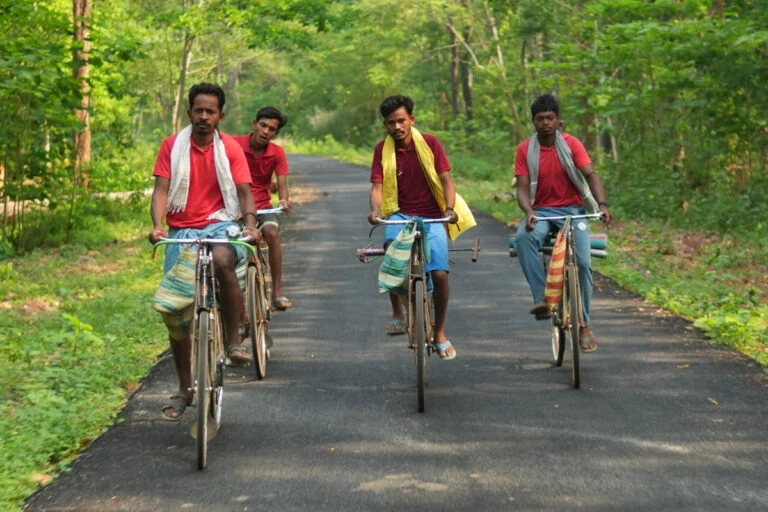
In the dense, deciduous stretches of the Bastar district in Chhattisgarh, the arrival of summer has traditionally been heralded not by the song of birds, but by the ominous scent of smoke. For decades, the forests surrounding Tiriya village were a seasonal tinderbox, where uncontrolled blazes threatened both the biodiversity of the region and the livelihoods of the indigenous Dhurwa community. However, a quiet revolution is unfolding on the forest floor. Today, the smoke is no longer a precursor to devastation, but a signal for a highly organized, community-led response.
Since 2022, the residents of Tiriya have transitioned from passive observers of state-managed forests to active stewards of their own ancestral lands. Armed with bicycles, whistles, and an intimate knowledge of the terrain, the village’s gram sabha (village council) has implemented a sophisticated patrol system that has decimated the frequency of forest fires. This shift is not merely a change in local volunteerism; it is the direct result of a landmark legal empowerment—the granting of Community Forest Resource (CFR) rights.
Main Facts: The Tiriya Model of Conservation
The transformation in Tiriya is centered on the management of over 3,000 hectares of forest land. Following the formal recognition of their rights under the Forest Rights Act (FRA) of 2006, the community established a specialized Community Forest Resource Management Committee (CFRMC). This body acts as the executive wing of the gram sabha, overseeing the protection, regeneration, and sustainable use of the forest.
The Human Sensor Network
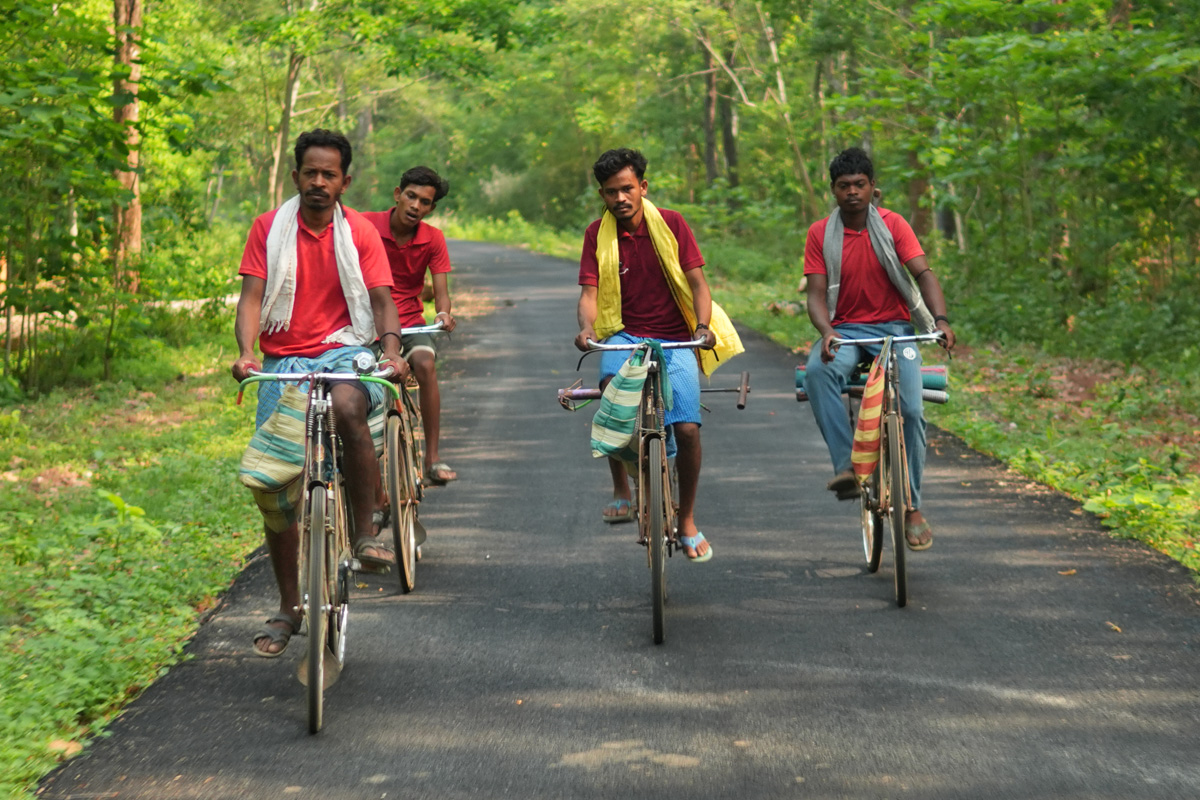
Unlike the state forest department, which often relies on satellite-based MODIS (Moderate Resolution Imaging Spectroradiometer) alerts that can have a significant time lag, Tiriya utilizes a "human sensor" network. The village is divided into patrol teams that operate in shifts. These patrols are conducted on bicycles, allowing villagers to cover vast distances of rugged forest trails quickly and quietly.
Technical Fire Management
The community’s strategy involves two primary technical interventions:
- Firelines: These are cleared strips of land where flammable vegetation is removed to create a gap, preventing a ground fire from jumping from one patch of forest to another.
- Controlled Burning: Under the guidance of elders like Loknath Nag, the community monitors "planned fires." These are small, controlled burns used to clear specific areas for the collection of Mahua flowers, ensuring the fire does not escape into the deeper canopy.
Economic and Cultural Stakes
For the Dhurwa community, forest protection is a matter of economic survival. The forest is a source of Mahua (used for food and liquor) and Sal seeds (used for oil). Furthermore, the forest floor provides wild mushrooms, a delicacy and a source of income that relies on the preservation of leaf litter. Uncontrolled fires destroy this delicate humus layer, effectively "sterilizing" the ground for the next season’s harvest.
Chronology: From State Control to Community Sovereignty
The journey of Tiriya from a fire-prone zone to a conservation model follows a clear chronological trajectory marked by legal milestones and shifting social dynamics.
Pre-2022: The Era of Exclusion and Conflict
Before the recognition of CFR rights, the forests around Tiriya were managed primarily by the State Forest Department. During this period, there was a significant "trust deficit" between the state and the indigenous population. Villagers often felt like trespassers on their own land. Because they had no legal stake in the long-term health of the forest, there was less incentive to risk their lives fighting fires. Fires were often viewed as "the department’s problem."
2022-2023: The Legal Turning Point
In the 2022-23 period, the Chhattisgarh government accelerated the implementation of the Forest Rights Act, granting Tiriya’s gram sabha formal titles to over 3,000 hectares. This was a psychological and legal watershed. The forest was no longer "government property"; it was "community property." The gram sabha immediately moved to form the CFRMC, formalizing the patrol shifts and establishing a protocol for fire detection.
2024-2025: Implementation and Scaling
With legal authority in hand, the community integrated traditional knowledge with modern coordination. They began working in closer, but equal, partnership with the Forest Department. The department provided technical advice, while the community provided the boots on the ground. During this period, the bicycle patrols became a daily fixture of village life during the dry months (February to June).
2026: Consolidation of Results
By May 2026, the system had reached a level of maturity where even single instances of smoke were detected and neutralized within hours. The village has now become a case study for other districts in Bastar, proving that community rights are the most effective tool for climate resilience.
Supporting Data: A Drastic Decline in Wildfires
The effectiveness of the Tiriya model is backed by empirical data collected by both the gram sabha and the local forest range office. The reduction in fire incidents since the community took charge is a testament to the power of localized management.
| Year | Number of Recorded Forest Fires | Status of Management |
|---|---|---|
| 2022 | 19 | Transitioning to CFR Rights |
| 2023 | 12 | Early CFRMC Implementation |
| 2024 | 7 | Established Bicycle Patrols |
| 2025 | 3 | Full Community Stewardship |
| 2026 (to May) | 1 | Mature Management System |
Data Source: Tiriya Gram Sabha and Bastar Forest Department Records.
Beyond the raw numbers, the "quality" of the forest has improved. Biodiversity surveys conducted by local environmental groups indicate a thicker undergrowth in areas previously scorched annually. The survival rate of Sal saplings has increased by an estimated 40%, ensuring the long-term regeneration of the timber and non-timber forest produce (NTFP) economy.
Official Responses: A Paradigm Shift in Governance
The success of Tiriya has prompted a re-evaluation of forest management strategies within the Chhattisgarh government. Historically, the Forest Department and tribal communities have had a contentious relationship, often clashing over land use and access.
The Forest Department’s Perspective
Local forest officials have acknowledged that they lack the manpower to monitor every hectare of the vast Bastar wilderness. "The community is our greatest asset," a senior range officer noted. "In Tiriya, we no longer just send a team when we see a satellite alert. Often, by the time the satellite registers the heat signature, the villagers have already extinguished the fire. Our role has shifted from being ‘policemen’ to being ‘partners’ and ‘facilitators’."
The Gram Sabha’s Stance
Loknath Nag, a prominent member of the CFRMC, emphasizes that the community’s motivation is rooted in a sense of belonging. "When the forest was under the department, we felt like guests. Now, we are the owners. If the forest burns, our children’s future burns. We don’t wait for a government order to pick up our bicycles; we go because it is our duty to our ancestors and our descendants."
Implications: The Global Relevance of Local Rights
The Tiriya story carries profound implications for environmental policy, indigenous rights, and climate change mitigation, both in India and globally.
1. Climate Resilience and Carbon Sequestration
As global temperatures rise, forest fires are becoming more frequent and intense. The Tiriya model suggests that the most effective way to protect carbon sinks is to empower the people living within them. By preventing the release of carbon through uncontrolled burns and promoting forest health, the Dhurwa community is making a localized but significant contribution to India’s Net Zero goals.
2. Economic Stability through NTFP
The protection of the forest ensures the stability of the Non-Timber Forest Produce (NTFP) market. In Chhattisgarh, millions of people depend on Mahua, Tendu leaves, and Sal seeds for their cash income. By reducing fire incidents, Tiriya has secured the "economic floor" for its residents, reducing the need for distress migration to urban centers.
3. A Blueprint for the Forest Rights Act (FRA)
For years, the implementation of the FRA across India has been sluggish, often hindered by bureaucratic red tape. Tiriya serves as a "proof of concept" that granting CFR rights does not lead to forest degradation, as some critics feared. Instead, it leads to more rigorous and sustainable management than state-led models can provide.
4. Reclaiming Indigenous Identity
The bicycle patrols are more than a fire-fighting measure; they are an act of reclaiming identity. For the Dhurwa, the forest is a sacred space, home to deities and ancestral spirits. By taking over the management of these lands, the community is restoring a cultural equilibrium that was disrupted during the colonial era and maintained by post-independence forest laws.
Conclusion
The forests of Bastar are no longer just a backdrop for conflict or a resource to be extracted. In the hands of the Tiriya community, they have become a living laboratory for a new kind of environmentalism—one that is inclusive, democratic, and deeply rooted in the soil. As the sun sets over the Tiriya canopy, the silhouette of a villager on a bicycle remains a powerful symbol of hope. It is a reminder that the best way to protect the planet is to trust the people who have called it home for millennia. The fire has been stayed, not by high-tech machinery, but by the simple, enduring commitment of a community that finally has the right to say: "This forest is ours."
