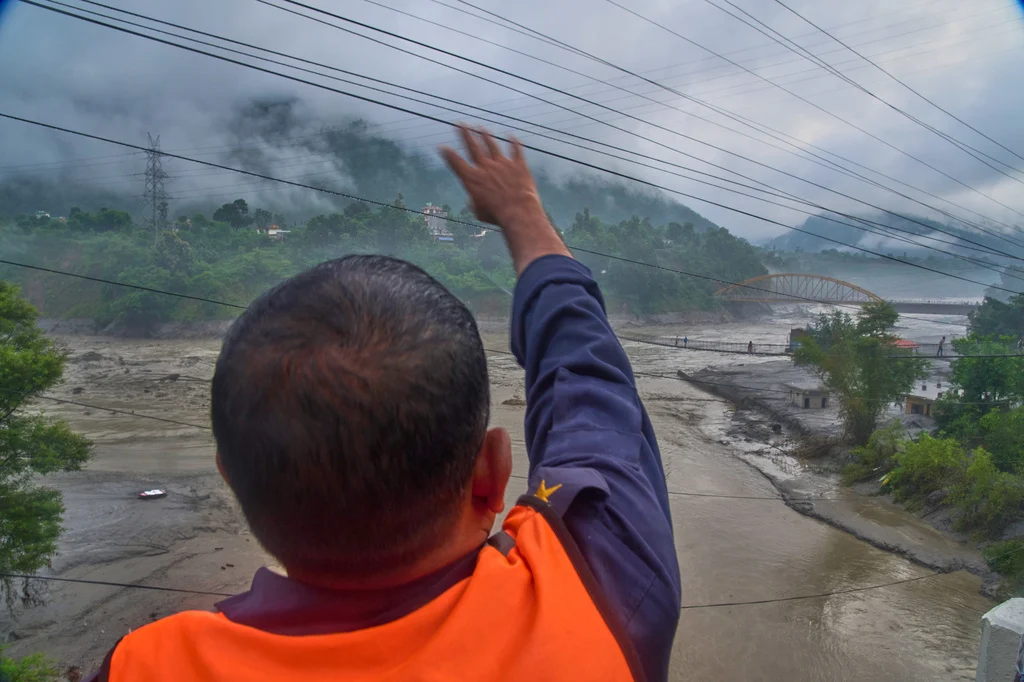
Dawadi did not wait for official confirmation. He ordered his 900 students to abandon their classrooms and sprint for higher ground. Ten minutes later, the deluge arrived. The torrent of mud, boulders, and debris slammed into the school compound with such force that, when the waters finally receded, the entire facility was buried. Only a jagged fragment of the roofline remained visible above the silt.
The survival of those 900 children is being hailed as a miracle, but experts argue it is actually a damning indictment of Nepal’s state-sponsored disaster preparedness. On that day, two distinct "systems" attempted to warn the population. One was a multi-million-dollar state mechanism relying on river sensors and automated SMS alerts. The other was an informal, decentralized network of community ties and personal phone calls.
Only the second one worked.

The Human Toll: A Tragedy by the Numbers
While the students at Tribhuvan Trishuli survived, thousands of others across Nepal were not as fortunate. According to the latest data from the National Disaster Risk Reduction and Management Authority (NDRRMA), the flash floods that began on August 26 have resulted in a staggering loss of life. As of September 3, 2026, the official death toll stands at 1,252, with another 4,216 people registered as missing.
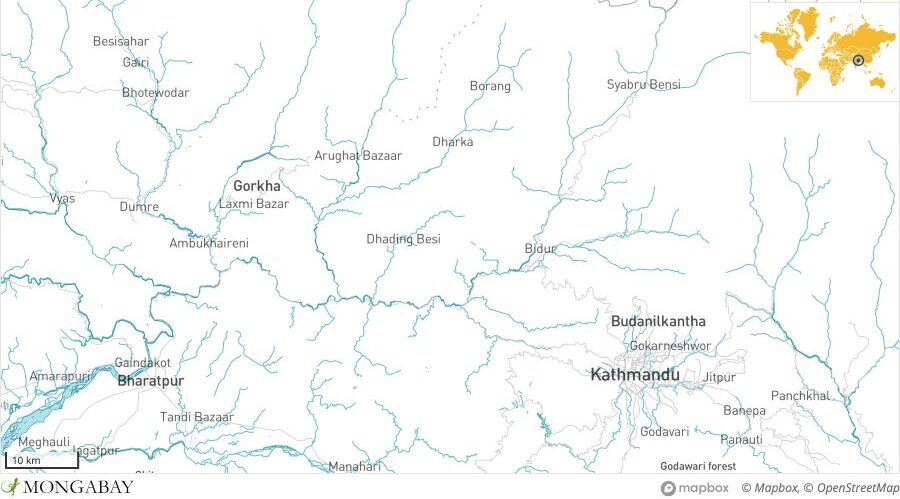
The scale of the disaster is vast, affecting approximately 1.6 million people across five districts. The Bhotekoshi and Trishuli rivers, fueled by unprecedented glacial melt and heavy rainfall near the Tibetan border, transformed from scenic waterways into engines of destruction. The flood path carved a trail of ruin from Gyirong in China through Syabru Besi and Bidur, eventually spilling into the floodplains of Chitwan.
Communication researcher Bhuwan K.C., who has been analyzing the event, notes a disturbing disparity in how information was disseminated. "While the upstream portion of the corridor received almost no information at all, the downstream areas received alerts that lacked the necessary urgency and scale to prompt action," he said. In the areas closest to the border, the window between the first sign of danger and total inundation was a mere seven minutes—a timeframe that rendered the state’s sensor-based system effectively useless.
Chronology of a Collapse: When Minutes Mean Lives
The timeline of the August 26 disaster reveals a critical lag between the physical event and the digital response.

- Pre-9:00 a.m.: Heavy surges begin in the Bhotekoshi River near Gyirong, China, crossing into Nepal.
- 9:10 a.m.: Head teacher Rajendra Dawadi receives private calls from upstream contacts. He initiates an immediate evacuation of the school.
- 9:17 a.m.: River sensors in the upper reaches are destroyed by the sheer force of the debris-laden flood.
- 9:20 a.m.: The flood hits Tribhuvan Trishuli Secondary School.
- 9:35 a.m.: Prime Minister Balendra Shah reported that the first batch of official government SMS messages was sent to residents in the Nuwakot district.
For many, the official warning arrived far too late. Chandra Bhatta, a resident of Nuwakot, reported that although the government claimed to send alerts earlier, he did not receive the 9:35 a.m. message until 9:54 a.m. "The SMS and the flood came together," Bhatta said. By the time his phone chimed, the water was already at his doorstep.
Supporting Data: The Failure of the "Generic" Alert
The Department of Hydrology and Meteorology (DHM) maintains a threshold-based warning system. When water levels cross a pre-set "danger" mark, an automated alert is triggered. However, Binod Parajuli, an official at the DHM’s flood forecasting division, admitted the system was designed for the gradual rise of monsoon floods, not the violent, instantaneous surge of a flash flood.
The content of the messages has also come under fire. An alert received in Bidur—the Nuwakot district headquarters—read: “A large flood has entered the Bhotekoshi River in Rasuwa from the Tibet side. Until further notice, residents along the banks of the Trishuli River (up to Muglin) are requested to remain in a safe location with high alert.”
Researchers argue this language is fatally flawed. Chandani Bhandari, a researcher at the University of Geneva, pointed out that the message lacked "street-level instruction" and a sense of scale. "Because official SMS warnings were generic, they failed to communicate individual vulnerability," Bhandari said. "People often think, ‘Malai ta kei hunna’ [Nothing will happen to me]. Without specific, actionable instructions on where to go and how much time they have, they stay put."
Furthermore, a 2026 scoping review of 38 peer-reviewed studies led by Bhandari found that this is a systemic issue. Over four decades, Nepali risk-communication research has repeatedly flagged that DHM alerts lack the localized detail necessary to save lives. The alerts are also sent exclusively in Nepali, leaving foreign trekkers and non-Nepali-speaking residents on major tourist routes entirely in the dark.
Official Responses: The Mandate Gap
In the aftermath of the disaster, government officials have pointed to structural and legal limitations as the primary hurdles.
Binod Parajuli of the DHM emphasized that his department’s legal mandate is strictly limited to forecasting and dissemination. "Even if we had known the full extent of the floods in the early stages, we don’t have the authority to order an evacuation," he told reporters.
Under current Nepali law, the power to "relocate" citizens rests with district, provincial, and central-level disaster management committees. However, these laws are largely designed for long-term resettlement of communities away from riverbanks or landslide-prone slopes. There is no legal mechanism that requires a flood forecast to automatically trigger a mandatory, real-time evacuation order.

This "discretionary" link in the chain of command means that even when the DHM sees a catastrophe coming, there is no "red button" that compels local police or authorities to move people by force. This gap was previously documented in a 2022 study by researchers Dinanath Bhandari and Ajaya Dixit. They found that during a 2021 rainfall disaster, the DHM accurately predicted the event, yet 120 people died because the forecast never translated into a specific command to "leave now."
The "East Rapti" Model: An Ignored Solution
For veterans of disaster management like Dinanath Bhandari, the success of the head teacher’s "informal" network is no surprise. In 2002, one of the first early warning systems on the East Rapti River in Chitwan relied on a human volunteer sitting on an elevated platform (a machan). When the volunteer saw the water rise, they sent a runner door-to-door.
"This was a named and trusted person telling fellow villagers the water was coming," Bhandari explained. "It wasn’t an unnamed official sending a message from a distant office."
As Nepal moved toward high-tech solutions, these community-based approaches were marginalized. Bhandari recalled a former NDRRMA executive dismissing manual sirens—the kind communities can operate themselves—as "a step backward." Yet, the Bhotekoshi-Trishuli flood has proven that high-tech sensors are often the first things to break, while human-to-human relationships remain resilient.

Implications: The Path Forward
The tragedy of August 26 has reignited calls for two major reforms: the implementation of "Cell Broadcast" technology and the formalization of community-led warning networks.
1. Cell Broadcast vs. SMS
A few months prior to the flood, a study by the GSMA and ITU recommended that Nepal adopt Cell Broadcast technology. Unlike SMS, which sends messages to individual phone numbers in a slow, sequential queue, Cell Broadcast hits every phone within a specific geographic tower’s range simultaneously. It works even during network congestion, can bypass "silent" modes, and can display messages in multiple languages instantly. The estimated cost for setup was between $1.75 million and $3 million. Despite the study, the system had not been implemented when the flood hit.
2. Decentralized Authority
Technology alone is not a panacea. Experts argue that the state must empower municipal-level leaders to play coordinating roles. If the law were changed to allow flood forecasts to trigger "legally binding directives," the decision to evacuate would no longer rest solely on the shoulders of individuals like Rajendra Dawadi.
"The lesson here is that we need societal linkages and community participation for any emergency communication to succeed," said Chandani Bhandari. "We need to encourage more people like the friends and relatives who called the school, and more leaders like Dawadi who acted decisively without waiting for the state."

As the Trishuli Valley begins the long process of digging out from under the debris, the story of the 900 saved students stands as both a beacon of hope and a warning. In a world of increasing climate volatility, the most sophisticated sensors may be no match for the speed of a flash flood. The backbone of survival, it seems, remains the strength of the community and the willingness of one human to call another and say: "Run."