

By [Your Name/Staff Reporter]
Published: April 21, 2026
NEW DELHI — Today marks exactly 500 years since the First Battle of Panipat, a foundational moment that reshaped the destiny of the Indian subcontinent. On April 21, 1526, Zahir-ud-din Muhammad Babur, a Timurid prince from Central Asia, defeated Ibrahim Lodi, the last Sultan of Delhi. This victory birthed the Mughal Empire, a dynasty that would rule for over three centuries, leaving an indelible mark on India’s political, social, and aesthetic fabric.
While the global imagination of the Mughal era is often tethered to the white marble splendor of the Taj Mahal, historians and conservationists are using this quincentenary to pivot the spotlight toward a vast network of "forgotten" monuments. From the syncretic temples of Vrindavan to the weathered palaces along the Varanasi ghats, these structures tell a complex story of cultural fusion that transcends modern political polarities.
I. Main Facts: The Hidden Map of Mughal Influence
The Mughal legacy is frequently reduced to a handful of "Golden Age" structures in Agra and Delhi. However, the architectural footprint of the empire is far more diverse, reflecting a period of intense cross-cultural exchange.
The Syncretic Temples of Vrindavan and Orchha
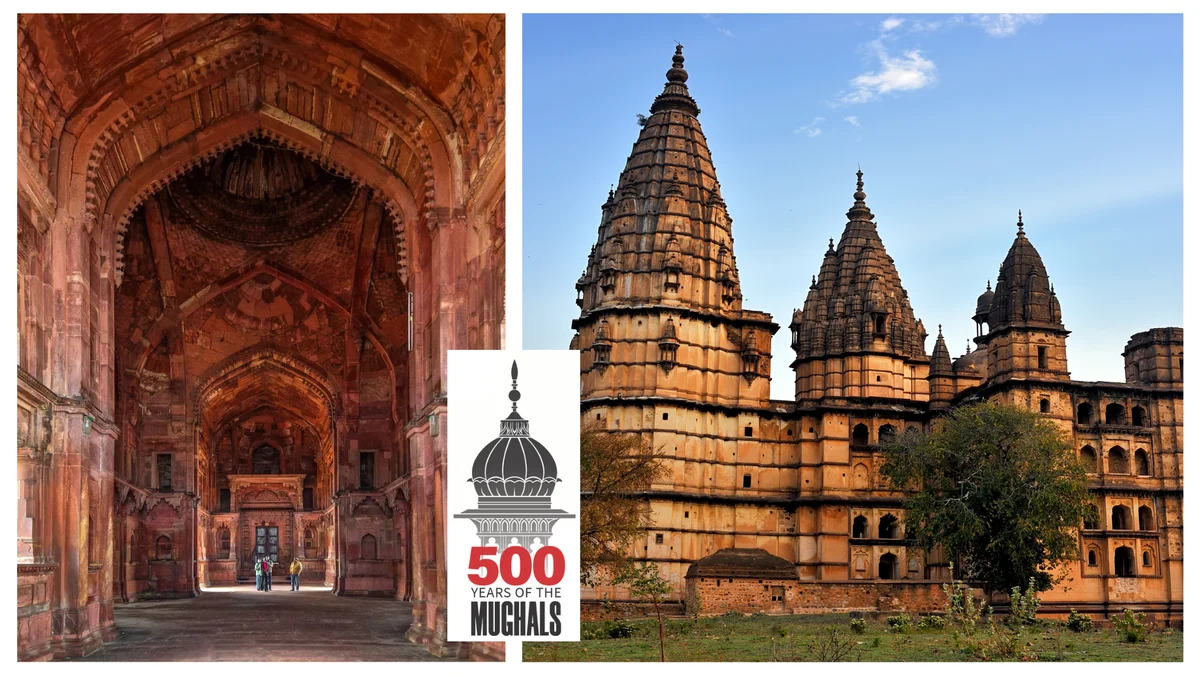
Among the most significant but overlooked sites is the Govind Dev Temple in Vrindavan. Built in 1590 under the patronage of Raja Man Singh, a high-ranking general in Emperor Akbar’s court, the temple is a marvel of red sandstone. It utilizes the same structural techniques found in Akbar’s capital, Fatehpur Sikri, including the iconic vaulted ceilings and lintel-and-bracket construction.
Similarly, in Orchha, the Jehangir Mahal stands as a testament to the friendship between the Bundela Rajput king, Bir Singh Deo, and Emperor Jahangir. The palace is a sophisticated blend of Islamic architectural features—such as domes and arches—with traditional Hindu motifs like elephants and lotus blossoms.
The Varanasi Connection
Varanasi, often seen as the spiritual heart of Hindu India, also carries deep Mughal imprints. The Man Singh Observatory (Man Mahal) at Dashashwamedh Ghat, built by the eponymous Rajput king during the Mughal era, showcases the era’s advancements in astronomy and stone masonry. These structures highlight a period where the "Mughal style" was not merely an imperial imposition but a shared language of power and prestige among the subcontinent’s elite.
II. Chronology: 500 Years of Evolution and Decline
The trajectory of the Mughal influence can be divided into four distinct phases, each leaving a unique architectural signature on the landscape.
-
1526–1556: The Formative Years (Babur and Humayun)
Babur introduced the Charbagh (four-quartered garden) concept, visible today in the remains of the Ram Bagh in Agra. His son, Humayun, brought Persian influences, culminating in the construction of his tomb in Delhi—the precursor to the Taj Mahal. -
1556–1605: The Age of Synthesis (Akbar)
Akbar’s reign saw the most significant blending of indigenous Indian and Persian styles. His construction of Fatehpur Sikri and the promotion of "Akbari Architecture" allowed for the use of red sandstone and the integration of Rajput architectural elements, which spread to religious sites in Vrindavan. -
1605–1707: The Aesthetic Peak (Jahangir and Shah Jahan)
This era moved from the ruggedness of sandstone to the delicacy of marble and pietra dura (stone inlay). While Shah Jahan focused on Agra and Delhi, the influence trickled down to provincial governors who built mosques, sarais (inns), and gardens across Punjab, Bengal, and the Deccan. -
1707–1857: Fragmentation and Colonial Transition
As central power waned, regional styles emerged. The "Late Mughal" style influenced the Nawabs of Awadh in Lucknow and the Nizams of Hyderabad, creating a hybridity that eventually met with European Baroque and Gothic influences during the British Raj.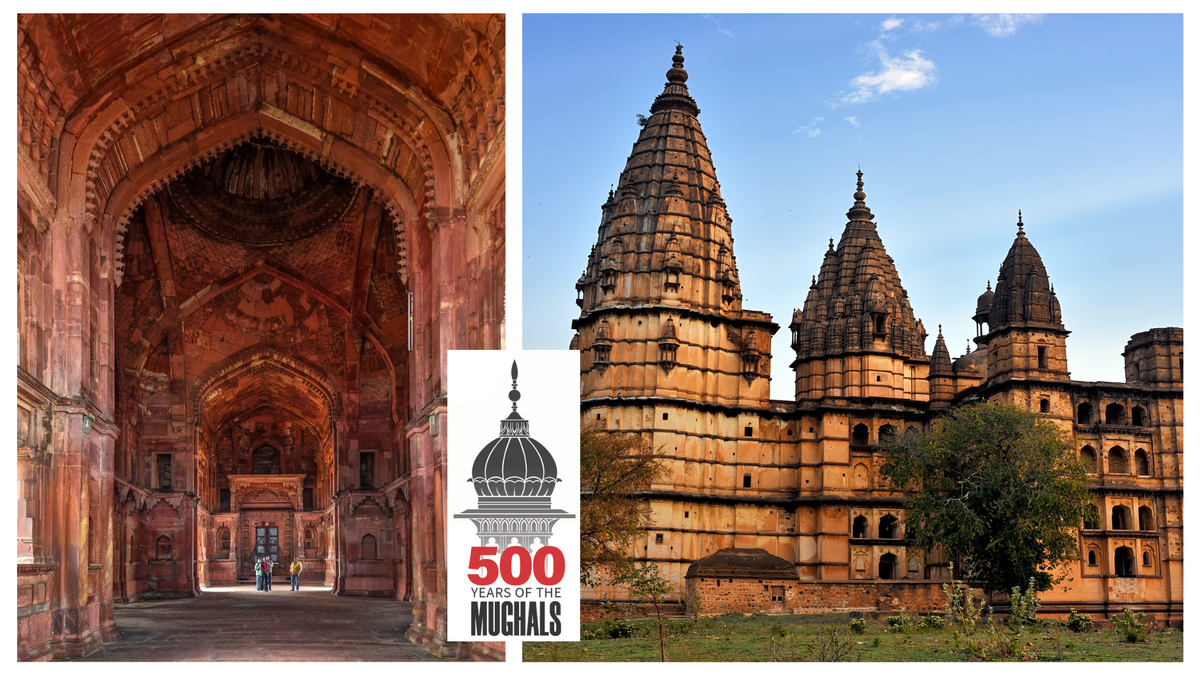
III. Supporting Data: The Scale of Heritage and Tourism
Data from the Archaeological Survey of India (ASI) and various heritage NGOs highlight a stark disparity in how Mughal history is consumed and preserved.
- The Tourism Gap: According to 2024–25 domestic tourism statistics, the Taj Mahal receives approximately 7 to 8 million visitors annually. In contrast, the Govind Dev Temple in Vrindavan and the monuments of Orchha receive less than 5% of that footfall, despite their immense historical value.
- Inventory of Sites: While there are roughly 3,600 monuments under central protection by the ASI, it is estimated that over 10,000 "minor" Mughal-era structures—sarais, stepwells (baolis), hunting lodges, and small mosques—remain unprotected and are currently being swallowed by urban expansion.
- Economic Contribution: Heritage tourism accounts for nearly 15% of India’s tourism revenue. Experts argue that diversifying the "Mughal Circuit" to include lesser-known sites in Uttar Pradesh, Madhya Pradesh, and Haryana could boost local economies by an estimated $1.2 billion over the next decade.
IV. Official Responses: The Battle Over History
The 500th anniversary comes at a time of intense domestic debate regarding the Mughal role in Indian history.
Government Stance
The current administration has maintained a complex relationship with the Mughal past. While the Ministry of Tourism continues to promote the Taj Mahal as a "Jewel of India," there has been a noticeable shift in school curricula and public discourse. Recent textbook revisions have reduced chapters on the Mughal era, focusing instead on regional resistance movements like the Marathas and Ahoms.
Academic and Expert Voices
Historians like Rana Safvi and William Dalrymple have expressed concern over the "erasure" of this history. "To view the Mughals solely as foreign invaders is to ignore the 300 years of indigenization," says Dr. Ananya Sharma, a professor of Medieval History. "These monuments are not ‘Islamic’ or ‘Persian’ in a vacuum; they are uniquely Indian. When we neglect a temple in Vrindavan because it has Mughal arches, we are neglecting our own syncretic DNA."
The ASI has officially stated that its "Mission 2030" includes the restoration of 100 lesser-known monuments, many of which date back to the 16th and 17th centuries. However, funding remains a hurdle, with the budget for conservation often eclipsed by the costs of maintaining high-profile sites.
V. Implications: Why the "Forgotten" Monuments Matter
The focus on "forgotten" Mughal monuments is not merely an academic exercise; it has profound implications for India’s future.
1. Cultural Identity and Soft Power
India’s strength has historically been its ability to absorb and synthesize diverse cultures. By showcasing the collaborative architecture of the Mughal-Rajput era, India can project a narrative of pluralism that is essential for its global image as a secular democracy.
2. Urban Conservation and Ecology
Many Mughal sites were built with a sophisticated understanding of water management. The revival of Mughal-era baolis (stepwells) and canal systems could provide sustainable solutions to modern India’s water crisis. Neglecting these sites often means losing the traditional knowledge embedded in their construction.
3. Economic Diversification
Over-tourism at the Taj Mahal is a growing concern, leading to environmental degradation and a poor visitor experience. By diverting tourists to the "Beyond the Taj" circuit—encompassing Orchha, Vrindavan, and the forgotten tombs of Haryana—the government can alleviate pressure on Agra while revitalizing rural economies.
4. The Risk of Erasure
The greatest implication is the risk of physical and cultural erasure. As historical narratives are politicized, monuments that do not fit a specific ideological mold are often left to crumble. The 500th anniversary serves as a reminder that these stones are the silent witnesses to a half-millennium of shared history. If they are allowed to disappear, the nuanced understanding of what it means to be "Indian" may vanish with them.
Conclusion
As the sun sets over the red sandstone of Panipat 500 years after Babur’s cannons first roared, the legacy of the Mughals remains a living, breathing part of the Indian landscape. The "Forgotten Monuments" are more than just ruins; they are the physical manifestations of a centuries-long dialogue between different faiths and cultures. To visit them is not just an act of tourism, but an act of reclaiming a more complete, more honest version of India’s story.
The challenge for the next century will be whether India chooses to preserve this complex tapestry or allow its threads to be pulled apart by the winds of contemporary politics. For now, the temples of Vrindavan and the palaces of Orchha stand waiting, offering a glimpse into an era where beauty was the ultimate bridge between worlds.
