

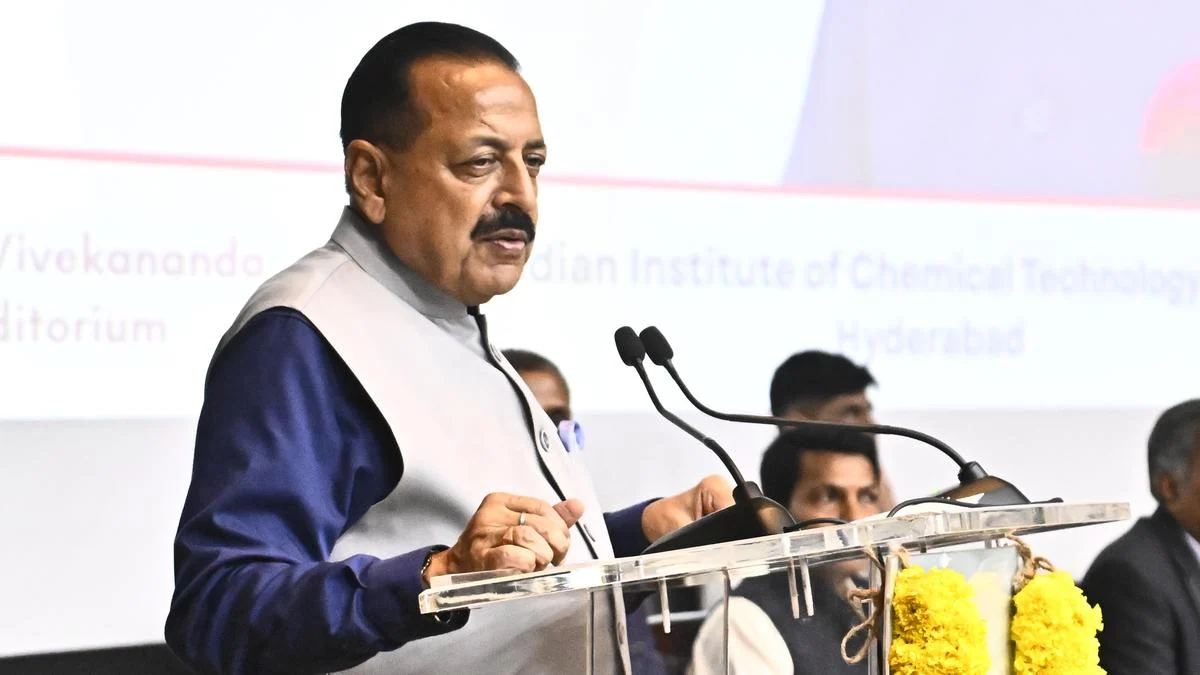
The high-profile gathering, hosted by India under its 2026 BRICS Presidency, serves as a critical forum for the five-nation bloc – Brazil, Russia, India, China, and South Africa – to strategize on leveraging scientific and technological advancements for collective progress. Dr. Singh’s remarks set the tone for the deliberations, highlighting a shared conviction that STI must be a catalyst for resilience, inclusive growth, sustainable development, and equitable partnerships across the global landscape. The meeting’s agenda reflects India’s overarching theme for its BRICS Presidency in 2026: "Building for Resilience, Innovation, Cooperation and Sustainability," a mantra designed to steer collaborative efforts towards tangible, human-centric outcomes.
A Historic Confluence: The Chronology of Collaboration
The 14th BRICS STI Ministerial Meeting in Chennai on Friday, August 21, 2026, represents a significant milestone in a decade-long journey of scientific collaboration among the member nations. The genesis of formal BRICS cooperation in science and technology can be traced back to the early 2010s, recognizing the immense potential for synergy among countries that collectively represent a substantial portion of the world’s population, economy, and scientific talent.
Early Initiatives and Frameworks (Pre-2016):
Initial engagements primarily focused on establishing foundational frameworks for cooperation. These early years saw the formation of working groups dedicated to specific scientific domains, fostering preliminary exchanges of ideas and expertise. The overarching goal was to identify common challenges and opportunities where collective research and innovation could yield greater impact than individual national efforts. Discussions often revolved around sharing best practices in R&D policy, intellectual property rights, and the promotion of scientific education.
The Momentum of Collaboration (2016-2025):
India’s first BRICS Presidency in 2016 significantly propelled the STI agenda, introducing initiatives like the BRICS Young Scientist Forum and strengthening thematic working groups. Subsequent presidencies continued to build on this momentum, broadening the scope of cooperation to include areas such as advanced materials, biomedicine, information and communication technologies, and clean energy. Annual Ministerial Meetings became crucial platforms for reviewing progress, setting new priorities, and endorsing joint projects. The BRICS STI Steering Committee and various working groups played an instrumental role in sustaining this dialogue, translating high-level ministerial directives into actionable plans and tangible outcomes. These years saw a steady increase in joint research publications, scientist exchanges, and collaborative projects, demonstrating the growing maturity and effectiveness of the BRICS STI architecture. The focus progressively shifted from merely identifying areas of cooperation to actively implementing programs that addressed societal needs and global challenges.
Chennai 2026: A Forward-Looking Agenda:
The 14th Ministerial Meeting under India’s 2026 Presidency arrived at a critical juncture. Building upon the robust foundations laid over the preceding years, the Chennai summit was designed not just to review past achievements but to undertake a comprehensive re-evaluation of BRICS STI priorities. This review aims to align cooperation with the rapidly evolving scientific and technological frontiers and, crucially, with the developmental aspirations of the diverse societies within the BRICS bloc. Dr. Singh’s inaugural address on August 21 served as the official launch of these deliberations, setting the stage for discussions that would define the next phase of BRICS STI collaboration. The selection of Chennai as the host city further underscored India’s commitment to showcasing its technological prowess and fostering international partnerships from its vibrant scientific hubs. The day’s proceedings would involve detailed discussions among the attending ministers and senior officials, culminating in potential joint declarations and roadmaps for future endeavors.

Underpinning Progress: Data and Context for BRICS STI
The assertion that emerging technologies present unprecedented opportunities is not merely rhetorical; it is backed by the collective scientific and economic might of the BRICS nations. These five countries, spanning four continents, together represent over 40% of the world’s population and roughly a quarter of the global Gross Domestic Product (GDP). This demographic and economic heft provides a formidable base for scientific inquiry, technological development, and innovation deployment.
The Power of the Bloc:
BRICS nations are characterized by diverse economies, rich cultural heritage, and rapidly growing scientific capabilities. Their combined investment in Research & Development (R&D) has been steadily increasing, signifying a strategic commitment to fostering innovation as a driver of economic growth and societal well-being. This collective investment, coupled with a vast pool of scientific talent – from researchers and engineers to innovators and entrepreneurs – positions BRICS as a pivotal force in shaping the future of global science and technology. The sheer scale of their populations also means that successful technological solutions developed within BRICS can have a monumental impact on billions of lives, providing economies of scale for deployment and significant market opportunities for innovators.
Defining Emerging Technologies:
Dr. Singh specifically cited advanced materials, biotechnology, photonics, geospatial technologies, and high-performance computing as key emerging technologies. Each of these fields holds immense potential for addressing pressing global challenges and spurring economic transformation:
- Advanced Materials: This domain encompasses the design and synthesis of novel materials with superior properties, such as lightweight alloys for aerospace, durable composites for infrastructure, smart materials with self-healing capabilities, and nanomaterials for electronics and medicine. Innovations here are critical for energy efficiency, advanced manufacturing, and next-generation medical devices.
- Biotechnology: From gene editing and synthetic biology to bioinformatics and biopharmaceuticals, biotechnology is revolutionizing healthcare, agriculture, and industrial processes. It offers solutions for disease treatment, food security through enhanced crop yields, sustainable biofuels, and environmental remediation.
- Photonics: The science and technology of light, photonics underpins fiber optic communications, laser technology, advanced imaging systems, and quantum computing. Its applications range from ultra-fast internet and medical diagnostics to precision manufacturing and defense, driving advancements in data processing and sensor technology.
- Geospatial Technologies: This field, including Geographic Information Systems (GIS), remote sensing, and Global Navigation Satellite Systems (GNSS), provides crucial tools for mapping, environmental monitoring, urban planning, disaster management, and resource allocation. It offers invaluable insights for sustainable development and informed policy-making.
- High-Performance Computing (HPC): HPC, encompassing supercomputing and advanced data analytics, is fundamental for complex scientific simulations, artificial intelligence development, climate modeling, drug discovery, and cybersecurity. It enables researchers to tackle problems of unprecedented scale and complexity, accelerating the pace of scientific discovery.
These technologies, individually and in synergy, are poised to redefine industries, improve living standards, and provide innovative solutions to some of humanity’s most intractable problems, from climate change and disease to resource scarcity and inequality.
The Global South Imperative:
Dr. Singh’s emphasis on supporting the aspirations of the "Global South" highlights a critical dimension of BRICS cooperation. The Global South generally refers to countries in Africa, Latin America, and developing Asia. These nations often face unique developmental challenges, including limited access to advanced technologies, inadequate infrastructure, and disparities in scientific capacity. By fostering an innovation ecosystem that is accessible, affordable, and sustainable, BRICS aims to bridge these gaps, ensuring that technological progress benefits all, rather than exacerbating existing inequalities. This commitment aligns with the broader international agenda for sustainable development and inclusive globalization. BRICS, as a collective of emerging economies, is uniquely positioned to champion a model of technology transfer and capacity building that resonates with the needs and priorities of the Global South.
India’s Vision: Catalyzing Innovation for a Human-Centric Future
Under its 2026 BRICS Presidency, India has articulated a clear and ambitious vision for science, technology, and innovation, rooted in the principle of human-centric progress. Dr. Singh elaborated on several flagship Indian initiatives that exemplify this approach, demonstrating how national strategies can converge with broader BRICS objectives to foster a more equitable and prosperous future.

The BRICS Presidency Theme: "Building for Resilience, Innovation, Cooperation and Sustainability" (BRICS):
This theme is more than just an acronym; it encapsulates India’s philosophy that STI should serve humanity.
- Resilience: Building societies and systems that can withstand shocks, whether from pandemics, climate change, or economic volatility, through robust technological solutions.
- Innovation: Fostering a dynamic ecosystem where new ideas and solutions can flourish, driven by research, entrepreneurship, and collaboration.
- Cooperation: Emphasizing the necessity of international partnerships to address shared challenges and leverage diverse strengths.
- Sustainability: Ensuring that technological advancements contribute to environmental protection, resource efficiency, and long-term societal well-being.
This holistic theme aims to guide BRICS cooperation towards concrete outcomes that enhance collective capabilities and address global imperatives.
Flagship Indian Initiatives as Blueprints for Collaboration:
Dr. Singh specifically highlighted India’s commitment to an "open, inclusive and human-centric approach to science and innovation" through several ambitious national programs:
- National Quantum Mission: This multi-year initiative aims to propel India to the forefront of quantum technologies, including quantum computing, quantum communication, quantum sensing, and quantum materials. It seeks to develop indigenous capabilities in these cutting-edge fields, which have the potential to revolutionize computing, secure communications, and medical diagnostics. Its focus on fundamental research and technological development offers fertile ground for BRICS partners to engage in joint R&D and talent exchange.
- National Supercomputing Mission (NSM): The NSM is a strategic program to establish a robust supercomputing infrastructure across India, significantly boosting the country’s computational power for scientific research, engineering design, and data-intensive applications. By providing access to high-performance computing resources, NSM enables breakthroughs in areas like climate modeling, drug discovery, and artificial intelligence, all of which are crucial for addressing global challenges that BRICS nations collectively face.
- BioE3 Policy (Bio-Economy, Bio-Energy, Bio-Entrepreneurship): While not explicitly named in the original text, the mention of "BioE3 Policy" likely refers to a comprehensive strategy aimed at fostering India’s bio-economy, promoting bio-energy solutions, and nurturing bio-entrepreneurship. This policy would drive innovation in biotechnology, creating sustainable economic opportunities, enhancing energy security, and developing eco-friendly industrial processes. It aligns perfectly with BRICS’ sustainability agenda and offers avenues for collaboration in biotechnological research and startup ecosystems.
- National Geospatial Policy: This policy liberalizes India’s geospatial sector, making geospatial data more accessible and fostering innovation in mapping, navigation, and location-based services. By leveraging satellite imagery, GIS, and other geospatial technologies, India aims to improve infrastructure planning, disaster response, and natural resource management. Such a policy framework can serve as a model for BRICS partners looking to harness the power of geospatial data for their developmental goals.
- Expanding Digital Public Infrastructure (DPI) Ecosystem: India’s success in building a robust DPI, including Aadhaar (digital identity), UPI (unified payments interface), and other digital platforms, has been globally recognized. This ecosystem facilitates financial inclusion, efficient delivery of public services, and fosters digital innovation. By sharing its experiences and expertise in building scalable and inclusive DPI, India offers valuable lessons for BRICS nations seeking to accelerate their own digital transformation journeys, ensuring that technology serves the common citizen.
These initiatives collectively demonstrate India’s commitment to harnessing science and technology for socio-economic transformation, directly improving people’s lives and supporting sustainable development. They provide concrete examples of how an "open, inclusive, and human-centric" approach can be translated into national policy and potentially scaled through international cooperation.
Echoes of Commitment: Official Stances and Collaborative Spirit
The 14th BRICS STI Ministerial Meeting was not merely a platform for India to present its vision, but a forum where the collective commitment of the BRICS nations to scientific and technological cooperation was reaffirmed. While Dr. Singh’s inaugural address set the tone, the very existence and ongoing work of the BRICS STI framework speak volumes about the shared objectives and collaborative spirit among member states.
Reinforcing Collective Goals:
The Press Information Bureau (PIB) release, detailing Dr. Singh’s address, served as the official communication of India’s stance and its role in guiding the BRICS STI agenda for 2026. This release underscored the acknowledgement of the critical contributions made by the STI Steering Committee, senior officials, and various STI working groups. These bodies are the backbone of BRICS STI cooperation, responsible for sustaining dialogue, identifying priority areas, and translating ministerial directives into practical collaboration and tangible outcomes. Their continuous efforts ensure that the BRICS STI architecture remains dynamic and responsive to evolving global needs.

The Strength of a Cooperative Ecosystem:
Dr. Singh highlighted that BRICS, with its vast population, scientific talent, and growing research capabilities, is uniquely positioned to foster a cooperative, responsible, and future-oriented innovation ecosystem. This statement reflects a shared understanding among member nations that by pooling resources, expertise, and intellectual capital, they can achieve breakthroughs and implement solutions that would be challenging for any single nation to accomplish alone. The spirit of cooperation extends beyond mere resource sharing; it involves mutual learning, capacity building, and the development of shared standards and best practices.
Evolving Cooperation and Shared Priorities:
The Minister noted that BRICS STI cooperation has evolved into a robust platform, encompassing diverse areas such as:
- Research Collaboration: Joint projects addressing common challenges like climate change, health security, and sustainable energy.
- Innovation Partnerships: Fostering links between research institutions, industry, and startups to translate research into marketable products and services.
- Young Scientist Exchanges: Nurturing the next generation of scientific leaders through mobility programs and collaborative research opportunities.
- Research Infrastructure: Exploring possibilities for sharing advanced research facilities and equipment to maximize their utility and impact.
- Thematic Working Groups: Focused groups dedicated to specific scientific disciplines, ensuring in-depth discussions and targeted actions.
During India’s Presidency, the comprehensive review of BRICS STI priorities is designed to ensure that these cooperative mechanisms remain relevant and impactful, aligning with emerging scientific and technological frontiers and the specific developmental aspirations of BRICS societies. This iterative process of review and recalibration is vital for maintaining the dynamism and effectiveness of the BRICS STI agenda. The official responses from other BRICS ministers, though not individually detailed in the original brief, would undoubtedly have echoed the sentiment of collective responsibility and the imperative of leveraging STI for inclusive global development, given the established nature of these ministerial meetings.
Charting the Future: Implications for BRICS and Global Science
The 14th BRICS STI Ministerial Meeting, guided by Dr. Jitendra Singh’s compelling inaugural address, carries profound implications not only for the future trajectory of BRICS cooperation but also for the broader landscape of global science and technology. The strategic calls for deeper collaboration and a human-centric approach are poised to redefine how emerging economies contribute to and benefit from the global innovation ecosystem.
For BRICS Nations: A Strengthened Collaborative Architecture:
The most immediate implication is the potential for a significantly strengthened and more integrated BRICS STI architecture. Dr. Singh’s invitation to BRICS partners to identify "ambitious yet practical pathways for deeper collaboration" suggests a move towards more concrete, outcome-oriented partnerships. This could manifest in several key areas:
- Joint Frontier Research Programs: Collaborative initiatives in areas like quantum computing, advanced AI, and space technology, pooling intellectual and financial resources to tackle grand scientific challenges.
- Innovation Financing Mechanisms: The exploration of shared funding models or venture capital funds specifically dedicated to BRICS startups and innovation projects, facilitating the translation of research into commercial applications.
- Enhanced Talent Mobility and Capacity Building: Streamlined processes for scientist exchanges, joint PhD programs, and shared training initiatives to foster a truly global scientific workforce within BRICS. This also includes targeted capacity building programs for smaller member states or specific regions within BRICS that may have nascent STI ecosystems.
- Shared Research Infrastructure: Developing a framework for BRICS nations to share access to expensive, high-end research facilities, maximizing their utilization and fostering collaborative research without redundant investments.
- Startup Partnerships and Ecosystem Integration: Creating platforms for BRICS startups to connect, collaborate, and access markets across member countries, fostering a vibrant cross-border innovation ecosystem.
- Policy Harmonization: Efforts to align STI policies, intellectual property frameworks, and regulatory environments to facilitate smoother collaboration and technology transfer.
Such deepened cooperation promises to accelerate scientific discovery, foster technological innovation, and create new economic opportunities across the BRICS bloc, ultimately enhancing their collective competitiveness on the global stage.

For India: Elevated Leadership and Global Influence:
For India, hosting this pivotal meeting and articulating a clear vision reinforces its growing leadership role within BRICS and its ambition to be a significant contributor to global science and technology. By championing an "open, inclusive and human-centric approach," India positions itself as a responsible stakeholder in the global scientific community. Its national initiatives, such as the National Quantum Mission and Digital Public Infrastructure, serve as tangible examples of how technology can be harnessed for inclusive development, offering valuable blueprints and expertise for other BRICS nations and indeed the wider Global South. This strategic positioning enhances India’s diplomatic influence and its ability to shape the discourse on critical global STI issues.
For Global Science: Bridging Divides and Addressing Shared Challenges:
The implications extend beyond the BRICS bloc to the global scientific community. A more robust and collaborative BRICS STI architecture can play a crucial role in addressing pressing global challenges, many of which transcend national borders:
- Climate Change: Joint research in renewable energy, climate modeling, and sustainable agricultural practices.
- Global Health: Collaborative efforts in vaccine development, pandemic preparedness, and affordable healthcare solutions.
- Food Security: Innovations in crop science, water management, and sustainable food systems.
- Digital Inclusion: Expanding access to digital technologies and infrastructure to bridge the global digital divide.
By fostering an innovation ecosystem responsive to global challenges and supportive of the Global South’s aspirations, BRICS can serve as a powerful force for equitable technological development. This approach directly counters trends of technological protectionism and promotes a more inclusive model of scientific progress. The emphasis on making innovation accessible and affordable is particularly vital for ensuring that the benefits of new technologies are shared widely, rather than being concentrated in a few privileged regions.
Potential Challenges and the Path Forward:
While the vision is ambitious, realizing these goals will require overcoming several challenges. These include navigating diverse national priorities, securing adequate and sustained funding for joint projects, managing intellectual property rights in cross-border collaborations, and ensuring effective coordination across different scientific and governmental institutions. However, the established history of BRICS STI cooperation, coupled with the renewed commitment articulated at the Chennai meeting, suggests a strong political will to tackle these obstacles. The call for "ambitious yet practical pathways" reflects an understanding of these complexities and a determination to forge a future-ready BRICS STI architecture that is both impactful and sustainable.
In conclusion, the 14th BRICS STI Ministerial Meeting in Chennai marks a significant inflection point, signaling a renewed commitment to leveraging science, technology, and innovation as potent instruments for collective progress. Under India’s 2026 Presidency, the BRICS bloc is poised to deepen its collaborative efforts, championing an inclusive, human-centric approach that promises to benefit not only its member nations but also the broader global community in addressing the complex challenges of the 21st century.
