

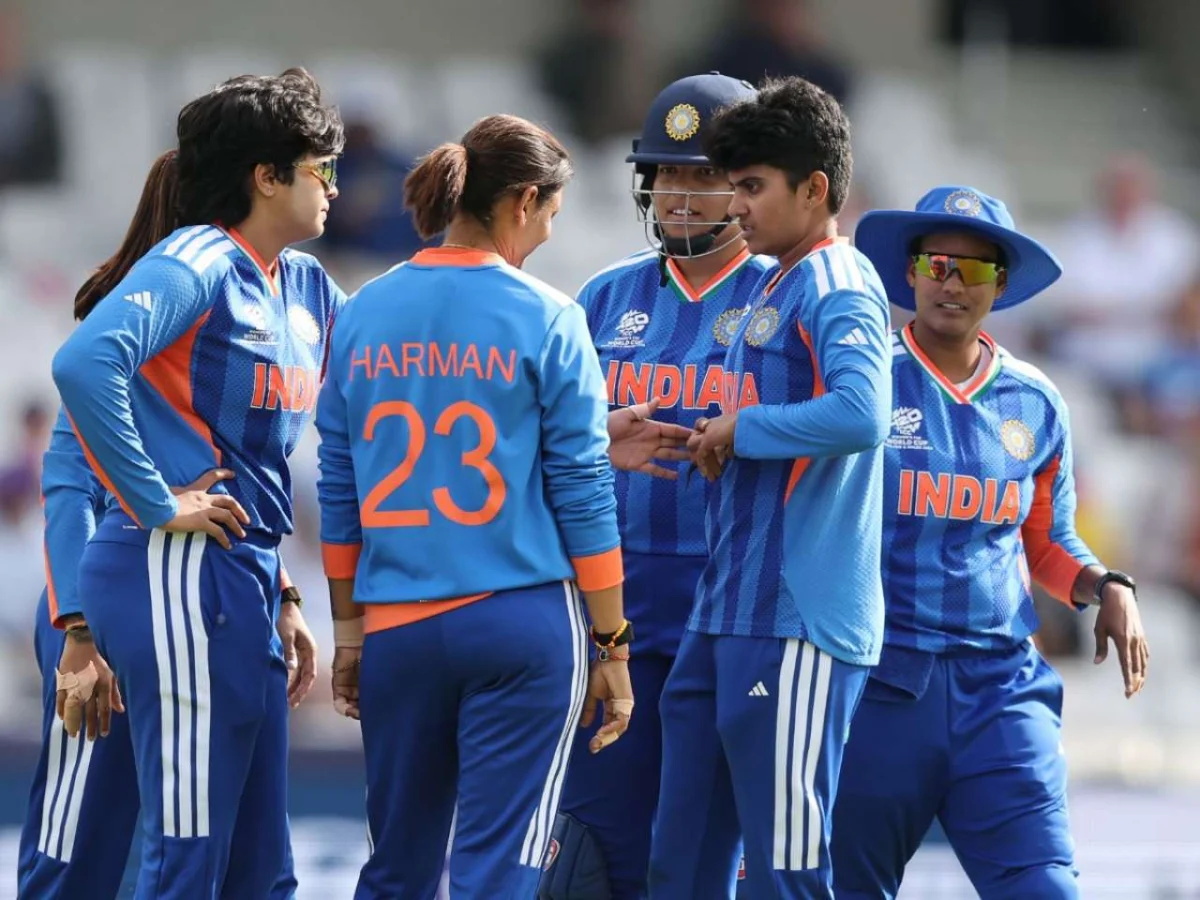
Headingley, Leeds – June 17, 2026 – In a spectacular display of power-hitting and disciplined bowling, Harmanpreet Kaur’s Indian Women’s team delivered a commanding 95-run victory over tournament debutants Netherlands at Headingley, marking their second consecutive win in the ICC Women’s T20 World Cup 2026. The match saw India breach the 200-run mark for the first time in the tournament’s history, propelled by explosive half-centuries from openers Smriti Mandhana and Shafali Verma, setting a formidable total of 209/5. The bowlers then clinically dismantled the Dutch batting lineup, wrapping up a comprehensive performance that solidifies India’s position as a dominant force in Group 1.
The resounding victory not only added crucial points to India’s tally but also significantly boosted their net run rate, an essential factor in the advanced stages of group-stage qualification. For the Netherlands, while the defeat was a harsh introduction to the intensity of a global tournament, it offered invaluable exposure and learning opportunities against one of the world’s top cricketing nations.
Chronology of Dominance: How India Secured a Historic Win
The stage was set at Headingley, a venue known for its rich cricketing history, under overcast conditions that might have initially suggested an advantage for bowlers. However, what unfolded was a testament to India’s burgeoning batting prowess and tactical acumen.
The Batting Blitz: Mandhana and Verma Unleash Havoc
The coin toss proved to be a pivotal moment. Netherlands captain Babette de Leede, perhaps swayed by the conditions, opted to field first, a decision that soon proved to be a double-edged sword. While the Dutch bowlers hoped to exploit any early swing, they were instead met with an onslaught from India’s formidable opening duo, Smriti Mandhana and Shafali Verma.
)
From the very first over, it was clear that India intended to dictate terms. Mandhana, fresh off a half-century against arch-rivals Pakistan in the previous match, continued her scintillating form. Her innings was a masterclass in elegant aggression, finding gaps with surgical precision and dispatching anything loose to the boundary. She unfurled a series of exquisite drives, powerful cuts, and even a majestic six, showcasing why she is considered one of the most aesthetically pleasing batters in women’s cricket. Mandhana’s 74 runs came off just 47 balls, studded with 11 boundaries and that solitary, impactful six, earning her the Player of the Match award. Her ability to rotate the strike while still maintaining a blistering scoring rate kept the Dutch bowlers constantly under pressure, denying them any rhythm.
Complementing Mandhana’s elegance was the raw power and fearless strokeplay of Shafali Verma. Often criticised for her inconsistency, Verma rediscovered her destructive best, playing with an uninhibited freedom that terrorised the Dutch attack. Her 55 runs off 38 balls were punctuated by 10 fours, each shot carrying the unmistakable stamp of her aggressive intent. Verma’s ability to hit through the line and clear the infield at will ensured that India capitalized on the powerplay overs, laying a rock-solid foundation for a massive total.

Together, Mandhana and Verma stitched a breathtaking 115-run partnership in just 12 overs, a testament to their complementary styles and devastating effectiveness. This opening stand not only pulverized the Dutch bowling but also instilled a sense of confidence and momentum that permeated the entire Indian innings. The partnership was a perfect blend of Mandhana’s classical strokeplay and Verma’s audacious power, leaving the Netherlands searching for answers.
Middle Order Consolidation and a Late Surge
The Netherlands finally managed to break the formidable opening stand, with Caroline de Lange providing a much-needed breakthrough. Her figures of 2/32 were the best for the Dutch, a commendable effort amidst the carnage. She managed to pick up a couple of quick wickets, momentarily stemming the flow of runs and injecting a glimmer of hope into the Dutch camp. However, the damage was already done, and India’s deep batting lineup ensured there would be no significant collapse.
)
Despite the loss of their openers, India’s middle order maintained the aggressive tempo. The stage was then set for a late-innings flourish, and Richa Ghosh stepped up to the challenge with characteristic audacity. Known for her explosive hitting, Ghosh played a crucial cameo, smashing 20 runs off a mere 8 balls. Her rapid fire knock, replete with powerful boundaries, provided the perfect impetus, propelling India past the psychological 200-run barrier and ultimately to a historic 209/5. This late surge demonstrated India’s depth and ability to accelerate even in the death overs, leaving the Netherlands with a monumental chase.
The Chase Fails Under Pressure
Facing a daunting target of 210, the Netherlands’ innings began under immense pressure. The psychological weight of such a formidable score, coupled with the quality of India’s bowling attack, proved to be an insurmountable challenge. The Dutch batters struggled to find their rhythm, and the required run rate began to spiral out of control almost immediately.
)
Captain Babette de Leede valiantly attempted to anchor the innings, top-scoring for her team with 28 runs off 27 balls. Her innings, though not enough to challenge India’s total, was a demonstration of resilience against a relentless attack. Sterre Kalis also showed flashes of brilliance with a quick 18, but these individual efforts were isolated and lacked the sustained support needed to build a substantial partnership.
Once India’s bowlers secured the initial breakthroughs, the pressure intensified, leading to an inevitable middle-order collapse. India’s left-arm spinner Shree Charani proved to be the wrecker-in-chief, delivering a spellbinding performance. Her guile, variations, and accuracy completely bamboozled the Dutch batters, as she ripped through their lineup to finish with remarkable figures of 4/19. Charani’s ability to extract turn and create doubt in the batters’ minds was instrumental in stifling any nascent partnerships.
)
Adding to the Dutch woes, opener Shafali Verma, not content with her heroics with the bat, also demonstrated her versatility with the ball. Her off-spin proved surprisingly effective, as she picked up 3 crucial wickets for just 20 runs, further highlighting her all-round capabilities. Medium-pacer Nandani Sharma then efficiently wrapped up the tail, claiming 2/22, as the Netherlands were eventually bowled out for a mere 114 in just 17.3 overs. The comprehensive nature of the bowling performance underlined India’s all-round strength and their readiness for the challenges ahead in the tournament.
Supporting Data: Records, Milestones, and Statistical Insights
The match was not just a clinical victory for India but also a record-breaking affair, etching several significant milestones into the annals of the ICC Women’s T20 World Cup 2026.
)
Individual Brilliance:
- Smriti Mandhana (India): Player of the Match for her magnificent 74 off 47 balls, including 11 fours and 1 six. This was her second consecutive half-century in the tournament, demonstrating her consistent form and pivotal role at the top of the order. Her strike rate of 157.44 was instrumental in setting the aggressive tone.
- Shafali Verma (India): Contributed a robust 55 off 38 balls (10 fours), showcasing her return to form. Her impressive bowling figures of 3/20 off 3 overs further highlighted her value as a genuine all-rounder.
- Richa Ghosh (India): Her quickfire 20 off 8 balls (strike rate 250) provided the late impetus, ensuring India crossed the 200-run mark.
- Shree Charani (India): The left-arm spinner was the pick of the bowlers, devastating the Dutch middle order with figures of 4/19 off 4 overs. This was a crucial spell that broke the backbone of the Netherlands’ chase.
- Nandani Sharma (India): Chipped in with 2/22 off 2.3 overs, effectively cleaning up the tail.
- Caroline de Lange (Netherlands): The most effective bowler for the Dutch, taking 2/32 off 4 overs, including the crucial wicket of Smriti Mandhana.
- Babette de Leede (Netherlands): The only Dutch batter to show significant resistance, scoring 28 off 27 balls.
Team Records and Tournament Context:
- Highest T20 World Cup Total for India: India’s score of 209/5 is their highest ever in the ICC Women’s T20 World Cup, surpassing their previous best. This achievement underscores the team’s evolution into a formidable batting unit capable of setting imposing targets.
- First Time Over 200: This was the first instance of India Women scoring over 200 runs in the history of the ICC Women’s T20 World Cup, a significant psychological barrier to cross.
- Dominant Opening Partnership: The 115-run stand between Mandhana and Verma was the highest opening partnership for India in this tournament, laying a solid foundation for the record total.
- Improved Net Run Rate (NRR): The 95-run victory margin significantly bolstered India’s Net Run Rate, which could be a decisive factor in determining qualification from Group 1, especially if teams finish on equal points.
- Second Consecutive Win: This victory followed India’s win against Pakistan, giving them two wins from two matches and establishing their strong credentials early in the tournament.
- Netherlands’ Tournament Debut: For the Netherlands, this match represented a steep learning curve in their maiden appearance at the T20 World Cup. Playing against a top-ranked team like India provides invaluable experience, highlighting the gap in skill and exposure they need to bridge.
Official Responses and Post-Match Reflections
While specific quotes from the post-match conference were not immediately available, the mood in both camps would undoubtedly reflect the stark contrast in their performances.
Harmanpreet Kaur, India Captain, reflecting on the dominant performance (representative quote):
"I’m incredibly proud of the team’s performance today. To put up a score like 209 against any team in a World Cup is a massive achievement, and credit goes to Smriti and Shafali for that incredible start. They set the perfect platform. Our bowlers then executed their plans brilliantly, especially Shree Charani and Shafali again, showing her all-round class. This second consecutive win gives us immense confidence and improves our Net Run Rate, which is crucial. We’re taking it one game at a time, but this momentum is exactly what we need."
)
Smriti Mandhana, Player of the Match (representative quote):
"It feels great to contribute to such a comprehensive team victory. Shafali and I discussed keeping it simple, playing to our strengths, and capitalizing on the powerplay. The pitch was good, and we just tried to hit through the line. Consistency is something I’ve been working on, and it’s rewarding to see the results. It was a complete team effort, from the batters setting the total to the bowlers wrapping it up so convincingly. We’re looking forward to the next challenge."
Babette de Leede, Netherlands Captain, on her team’s learning experience (representative quote):
"It was a tough day at the office, but this is the reality of playing against a world-class team like India. Their batters were exceptional, and we struggled to contain them once they got going. We tried our best, but the pressure was immense. For us, it’s about learning from every moment in this tournament. We showed glimpses of potential, but we need to be more consistent and clinical. This experience, though challenging, will only make us stronger as we continue our journey in international cricket."
)
Implications: India’s Ascent and Netherlands’ Learning Curve
The outcome of this match carries significant implications for both teams and the broader landscape of the ICC Women’s T20 World Cup 2026.
India’s Tournament Trajectory: A Formidable Contender
For India, this dominant victory firmly establishes them as one of the prime contenders for the tournament title. Two back-to-back wins, coupled with a boosted Net Run Rate, place them in an excellent position to qualify from Group 1. The team’s balanced performance – with both batters and bowlers firing – indicates a well-oiled machine capable of adapting to different match situations. The depth of their batting, from the explosive openers to the power-hitting lower order, and the variety in their bowling attack, from pace to spin, makes them a challenging opponent for any team.
)
The confidence derived from such a comprehensive win will be immense. It reinforces the team’s belief in their strategy and execution, fostering a winning mentality as they head into tougher encounters against other top-ranked nations. The ability to post and defend a historic total also sends a strong message to their rivals, signaling India’s intent to go all the way in the tournament. Their focus will now be on maintaining this momentum, staying injury-free, and fine-tuning their strategies for the knockout stages.
Netherlands’ Learning Curve: The Road Ahead
For the Netherlands, their tournament debut has been a baptism by fire. While the scale of the defeat might be disheartening, the experience of playing against a team of India’s caliber at a global event is invaluable. It offers a stark reality check regarding the standards required at the elite level of international cricket. The Dutch team will undoubtedly review their performance, identifying areas for improvement, particularly in their bowling execution and batting under pressure.
)
This tournament is a crucial learning opportunity for them to understand the nuances of T20 cricket at its highest level. The exposure to different playing conditions, high-pressure situations, and top-tier talent will contribute significantly to their long-term development. While qualification might seem a distant dream after such a heavy loss, their goal for the remainder of the tournament should be to put up more competitive performances, gain experience, and build a foundation for future success. The glimpses of individual talent, such as Babette de Leede’s resilience and Caroline de Lange’s bowling efforts, suggest potential that can be nurtured with continued exposure and support.
Broader Significance for Women’s Cricket
The match itself, with its high-scoring nature and individual heroics, further underscores the growing excitement and competitiveness in women’s cricket. The boundary-laden innings from Mandhana and Verma, followed by a clinical bowling display, highlights the increasing skill levels and athleticism in the sport. Such performances attract more viewers and inspire a new generation of female cricketers, contributing to the sport’s global expansion and popularity.
)
As the ICC Women’s T20 World Cup 2026 progresses, India’s dominant start sets a high bar for other teams. Their next challenge will be to maintain this consistency against equally formidable opponents, while the Netherlands will aim to bounce back and showcase their potential in their upcoming fixtures. The tournament promises more thrilling encounters as teams vie for supremacy on the world stage.
