

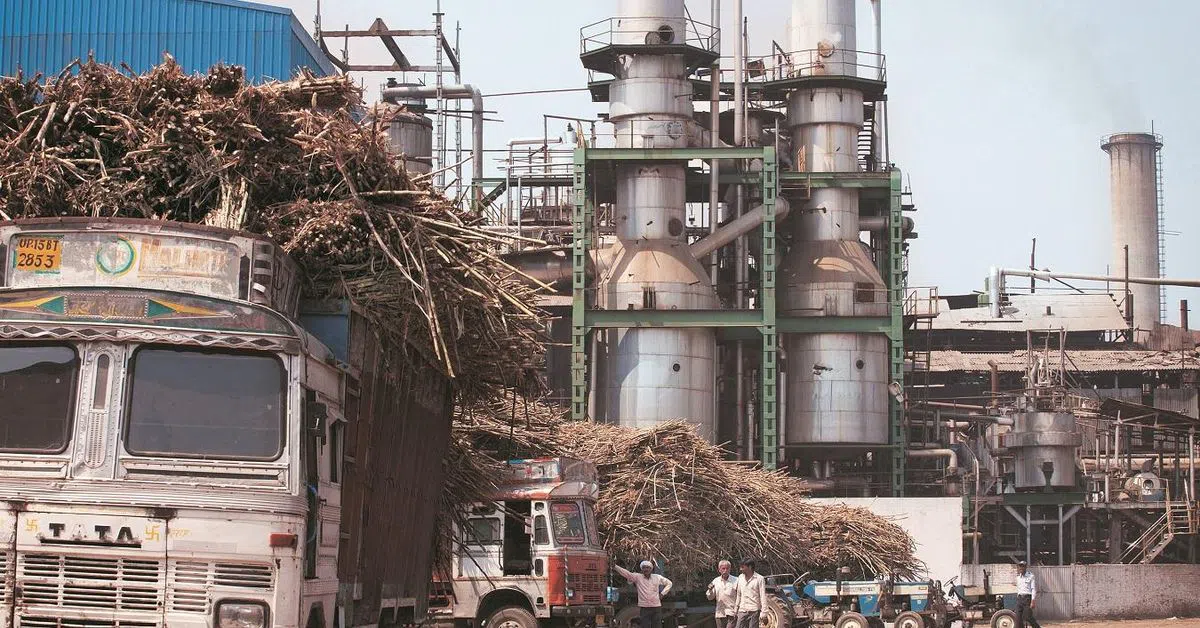
New Delhi, [Date of publication, e.g., May 15, 2026] – In a swift and decisive move, the Indian government on Wednesday implemented an immediate ban on sugar exports, effective until September 30, 2026, or until further orders. The dramatic policy shift, announced by the Directorate General of Foreign Trade (DGFT) via a notification dated May 13, alters the export status of raw, white, and refined sugar from a "restricted" category, which permitted outbound shipments under license, to "prohibited." This sweeping measure underscores the government’s paramount objective: to safeguard domestic availability and avert a critical drawdown in the nation’s sugar reserves at the close of the current sugar marketing year.
The ban, coming at a time when global sugar prices remain elevated, signals India’s unwavering commitment to ensuring food security for its vast population and stabilizing domestic prices. While the decision is expected to send ripples across the international sugar market, it reflects a growing apprehension within policymakers regarding the adequacy of India’s strategic sugar stocks, particularly in light of revised production estimates and the looming spectre of climatic uncertainties impacting future harvests.
The Unfolding Chronology: From Export Push to Prohibition
The journey to this outright export ban has been marked by a shifting agricultural landscape and evolving assessments of domestic sugar production. Initially, the outlook for the 2025-26 sugar marketing year (October to September) appeared robust, prompting the Food Ministry to adopt a relatively liberal export policy.
Initial Export Windows (2025-26 Marketing Year):
- November 2025: The government greenlit the export of a significant 1.5 million tonnes of sugar, signaling confidence in the season’s projected output. This initial allocation aimed to allow mills to capitalize on favorable international prices and manage surplus stocks.
- February 2026: Further reinforcing this optimistic stance, an additional pool of 500,000 tonnes was opened for exports, bringing the total permitted quantity to 2 million tonnes. This incremental release was based on what was then perceived as an encouraging outlook for the sugar season, as articulated by industry bodies like the Indian Sugar & Bio-energy Manufacturers Association (ISMA).
The Shifting Tides of Production:
However, as the crushing season progressed, the initial optimism began to wane. Reports from key sugar-producing states, notably Maharashtra and Uttar Pradesh, painted a less rosy picture. Deepak Ballani, Director General of ISMA, acknowledged this evolving reality, stating that "as the season progressed, sugar production in certain key states, particularly Maharashtra and Uttar Pradesh, was impacted due to lower-than-anticipated yields coupled with weather-related abnormalities, resulting in a moderation of overall actual production."
This moderation in output, driven by a confluence of factors including erratic rainfall patterns, unseasonal heatwaves, and pest infestations in some regions, forced a re-evaluation of the national sugar balance. What started as an "encouraging outlook" gradually transformed into a situation demanding caution. The government, which had previously allowed exports under a "restricted" category requiring specific licenses, now faced the prospect of dangerously low closing stocks if exports continued unchecked.
The Final Decision:
The culmination of these revised assessments and growing concerns over domestic supply led to the DGFT’s notification on May 13. The immediate reclassification of sugar exports from "restricted" to "prohibited" till September 30, 2026, was a clear and unequivocal signal that ensuring sufficient domestic supply had taken absolute precedence over export earnings. This effectively halted all fresh outbound shipments, with only specific, pre-defined exemptions remaining active.
Supporting Data and the Precarious Balance
The government’s drastic measure is rooted in a careful, albeit concerning, analysis of the nation’s sugar balance sheet. While overall production figures might appear stable or even slightly improved in some contexts, the underlying details and projected closing stocks have triggered alarm bells.
Production Figures: A Nuanced Picture:
According to ISMA data, India’s sugar production saw a 7.32 per cent rise, reaching 27.52 million tonnes till April in the 2025-26 marketing season. This increase was primarily led by higher output in states like Maharashtra and Karnataka. However, this national aggregate masks regional discrepancies and, more critically, falls short of earlier, more optimistic projections that had informed the initial export allocations. The fact that only 5 mills were operational in April compared to 19 at the same point last season further indicates a faster-than-anticipated winding down of the crushing season, suggesting that the bulk of the harvest has already occurred and future additions to stock will be minimal.
The contradiction between a reported rise in national output and the government’s export ban can be understood by considering the initial high expectations. While overall production may have increased compared to a previous low base, it was likely still below the projected figures that factored in both robust domestic demand and planned exports. The "lower-than-anticipated yields" in critical regions mentioned by Ballani would have contributed to this shortfall against internal targets, even if the national total was technically higher year-on-year.
The Critical Closing Stock Scenario:
The primary driver behind the ban is the projected closing stock at the end of the current marketing year. ISMA’s estimate for the closing stock of the last sugar season was around 3.9 million tonnes (before ethanol diversion). While Ballani maintains that the current season remains "broadly balanced" and the country is expected to maintain "adequate" closing stocks, an unnamed industry insider paints a starker picture. This insider told Business Standard that "the sugar production estimate has gone wrong for this season," and warned that the closing stock could hover around 4 million tonnes. Crucially, this level, according to the insider, "is not sufficient to meet demand."
A closing stock of 4 million tonnes, while seemingly substantial, is considered perilously low for a country with India’s consumption patterns. Experts often suggest a buffer of 6-7 million tonnes to ensure comfortable domestic availability, manage seasonal fluctuations, and guard against unforeseen supply shocks. Anything below this threshold raises concerns about potential supply shortages and upward pressure on domestic prices. The government’s decision, therefore, is a proactive measure to prevent this critical stock depletion. As the insider succinctly put it, "The government’s decision is simply to stop any more sugar from going out of the country so that we are not left with too low a balance on September 30."
Climatic Uncertainties and Future Outlook:
Adding another layer of urgency to the decision are the prevailing climatic uncertainties. Ballani himself highlighted that the government may have adopted a "precautionary approach" due to concerns relating to rainfall distribution during the ongoing monsoon period for the upcoming 2026-27 season. India’s agriculture, and particularly sugarcane cultivation, remains heavily reliant on the monsoon. Erratic monsoons, including droughts or excessive rainfall, can severely impact cane yields and, consequently, sugar production in subsequent years. The spectre of potential El Niño conditions or other adverse weather phenomena in the future seasons undoubtedly played a role in the government’s decision to err on the side of caution and prioritize domestic stock replenishment.
Official Responses and Industry Apprehensions
The export ban has elicited a mix of official explanations and cautious responses from the industry, highlighting the delicate balance between national food security and trade commitments.
Government’s Stated Rationale:
The government’s official stance, as communicated through the DGFT notification and various ministerial statements, centers on two core principles:
- Protecting Domestic Availability: This is the primary driver, ensuring that Indian consumers have uninterrupted access to sugar at reasonable prices.
- Preventing Sharp Drawdown in Closing Stocks: The fear of dangerously low reserves at the end of the marketing year, which could trigger price volatility and scarcity, is a critical concern.
Beyond these immediate reasons, the government has implicitly signaled a precautionary approach against future climatic uncertainties. With monsoon patterns becoming increasingly unpredictable and the potential for adverse weather events impacting future sugarcane crops, building robust strategic reserves is seen as a prudent long-term strategy.
Industry Perspectives: ISMA’s Measured Response:
Deepak Ballani, the Director General of ISMA, offered a nuanced perspective. While acknowledging the reasons behind the government’s decision, he also emphasized the challenges it poses for the industry.
- Production Realities: Ballani’s statement confirms that initial production estimates were indeed impacted by "lower-than-anticipated yields coupled with weather-related abnormalities" in key states. This validates the government’s underlying concern.
- "Broadly Balanced" Season: Despite the ban, Ballani maintained that the current sugar season remains "broadly balanced" and that the country is expected to maintain "adequate closing stocks." This statement, however, could be interpreted as contingent on the export ban itself, suggesting that without the ban, the balance would have been severely disrupted.
- Practical Challenges and Credibility: A significant concern raised by Ballani is the "practical challenges in honouring certain export commitments already contracted with overseas buyers." He urged the government to "permitting execution of already concluded contracts" to "help facilitate orderly trade settlement and support the credibility of Indian suppliers in the global market." This highlights the commercial implications for mills that had already secured export deals, potentially facing penalties or loss of future business due to the sudden policy change.
The Unnamed Industry Insider’s Blunt Assessment:
In contrast to ISMA’s more diplomatic tone, an unnamed industry insider provided a more direct and critical assessment. Their assertion that "the sugar production estimate has gone wrong for this season" directly challenges the earlier optimistic projections. The insider’s warning that 4 million tonnes of closing stock is "not sufficient to meet demand" underscores the gravity of the situation and the perceived necessity of the government’s intervention. This perspective suggests that the ban was not merely precautionary but a crucial corrective action in the face of an impending supply deficit.
Implications: A Ripple Effect Across Markets and Consumers
The immediate export ban on sugar from India, a major global producer and consumer, is poised to have far-reaching implications, affecting domestic consumers, the sugar industry, and the international commodity market.
1. For Domestic Consumers: Relief and Stability
The most immediate and intended beneficiaries of this ban are Indian consumers. By halting exports, the government aims to:
- Ensure Availability: Guarantee a consistent supply of sugar across the country, preventing shortages.
- Stabilize Prices: Prevent or mitigate any potential surge in domestic sugar prices, which would otherwise be driven by reduced supply and high demand. Sugar is a staple commodity, and price stability is crucial for household budgets and managing food inflation. This move aligns with the government’s broader efforts to control inflationary pressures, especially concerning essential food items.
- Bolster Food Security: Reinforce the nation’s food security framework by prioritizing internal consumption over external trade when stocks are deemed critical.
2. For the Indian Sugar Industry: Missed Opportunities and Contractual Hurdles
While the ban serves national interests, it presents significant challenges for sugar mills and the broader industry:
- Loss of Export Revenue: Mills lose the opportunity to sell sugar at potentially higher international prices, impacting their profitability. This can be particularly detrimental for mills that had specifically geared production towards export markets.
- Contractual Obligations: The immediate nature of the ban poses a serious dilemma for mills that have already signed export contracts. As Ballani noted, approximately 650,000 tonnes of sugar exports have already been physically completed, while an estimated 40,000–60,000 tonnes are understood to be in the physical export pipeline under previously concluded contracts. While the notification includes some exemptions for consignments already in the physical export pipeline, ambiguity remains for other pre-existing, but not yet shipped, contracts. This could lead to legal disputes, financial penalties, and a dent in the credibility of Indian suppliers in the global market.
- Reduced Flexibility: The ban limits the operational flexibility of sugar mills, forcing them to re-strategize their sales and inventory management solely for the domestic market.
- Impact on Ethanol Production: While not directly stated, a focus on maximizing sugar production for domestic consumption could potentially divert sugarcane from ethanol production, impacting India’s ambitious bio-fuel targets. However, the government has generally maintained a dual approach, incentivizing both.
3. For the Global Sugar Market: Price Volatility and Supply Concerns
India is the world’s largest sugar producer and a significant exporter. Its absence from the export market will inevitably have global repercussions:
- Upward Price Pressure: The ban is likely to fuel an upward trend in international sugar prices, as a major supply source is removed. This could benefit other sugar-exporting nations but will put pressure on importing countries.
- Supply Chain Disruptions: Importing nations that rely on Indian sugar will need to seek alternative suppliers, potentially leading to logistical challenges and increased procurement costs.
- Market Uncertainty: India’s unpredictable export policies (from bans to quotas) often introduce volatility into the global sugar market, making long-term planning difficult for international buyers and sellers.
4. Exemptions: Limited Relief
The government’s order does provide certain specific exemptions, designed to honor international commitments and facilitate existing trade mechanisms:
- European Union (EU) and United States (US) under CXL and Tariff Rate Quota (TRQ) arrangements: These are special trade agreements that allow specified quantities of sugar to be exported to these destinations at significantly reduced or zero customs duties. These commitments are often part of broader bilateral or multilateral trade agreements and are typically honored even during export restrictions.
- Shipments under the Advance Authorisation Scheme: This scheme allows duty-free import of inputs for export production. Exports under this scheme are generally permitted as they are tied to a value addition commitment for re-export.
- Government-to-Government Exports: These are specific export deals made directly between the Indian government and foreign governments, often for strategic or diplomatic reasons, and are usually insulated from general export bans.
- Consignments already in the physical export pipeline: This exemption aims to mitigate losses for exporters whose goods are already packed, cleared, and awaiting shipment, reducing logistical nightmares and potential wastage.
While these exemptions offer some relief, their scope is limited and does not significantly alter the overall impact of the broad export prohibition.
What to Watch Next: The Road Ahead
The next 18 months will be critical for India’s sugar sector and policymakers. Several key factors will determine the trajectory of the market and the potential for policy revisions.
- Closing Sugar Balance on September 30, 2026: This will be the most crucial indicator. The actual stock level at the end of the next marketing year will validate or refute the government’s precautionary approach. A healthy closing balance would suggest the ban achieved its objective, while a continued low stock might necessitate further long-term policy adjustments.
- Progress of the Next Monsoon (2026): The performance of the upcoming monsoon will be paramount for the sugarcane crop of the 2026-27 crushing season. Adequate and well-distributed rainfall is essential for good cane yields. Any anomalies could exacerbate existing concerns.
- Cane Availability for the Upcoming Crushing Season (2026-27): This will directly influence the sugar production outlook for the subsequent year. Farmers’ planting decisions, water availability, and climatic conditions will all play a role.
- Government’s Export Policy Review Post-September 30, 2026: The current ban is temporary, set to expire on September 30, 2026. The industry will be keenly watching whether the government revises its export policy at that juncture. A return to restricted exports, or even a complete lifting of the ban, will depend heavily on the domestic stock position and the outlook for future harvests.
- Impact on Domestic Prices and Ethanol Blending: The government will closely monitor domestic sugar prices to ensure they remain stable. Additionally, the long-term implications for the ethanol blending program, which relies on sugarcane diversion, will need careful management to balance energy security with food security.
The export ban is a stark reminder of the complexities involved in balancing agricultural policy with economic imperatives and climate realities. While it may stabilize the domestic market in the short term, its broader implications for industry profitability and India’s reputation as a reliable global sugar supplier will be a critical narrative to follow in the coming months.
