

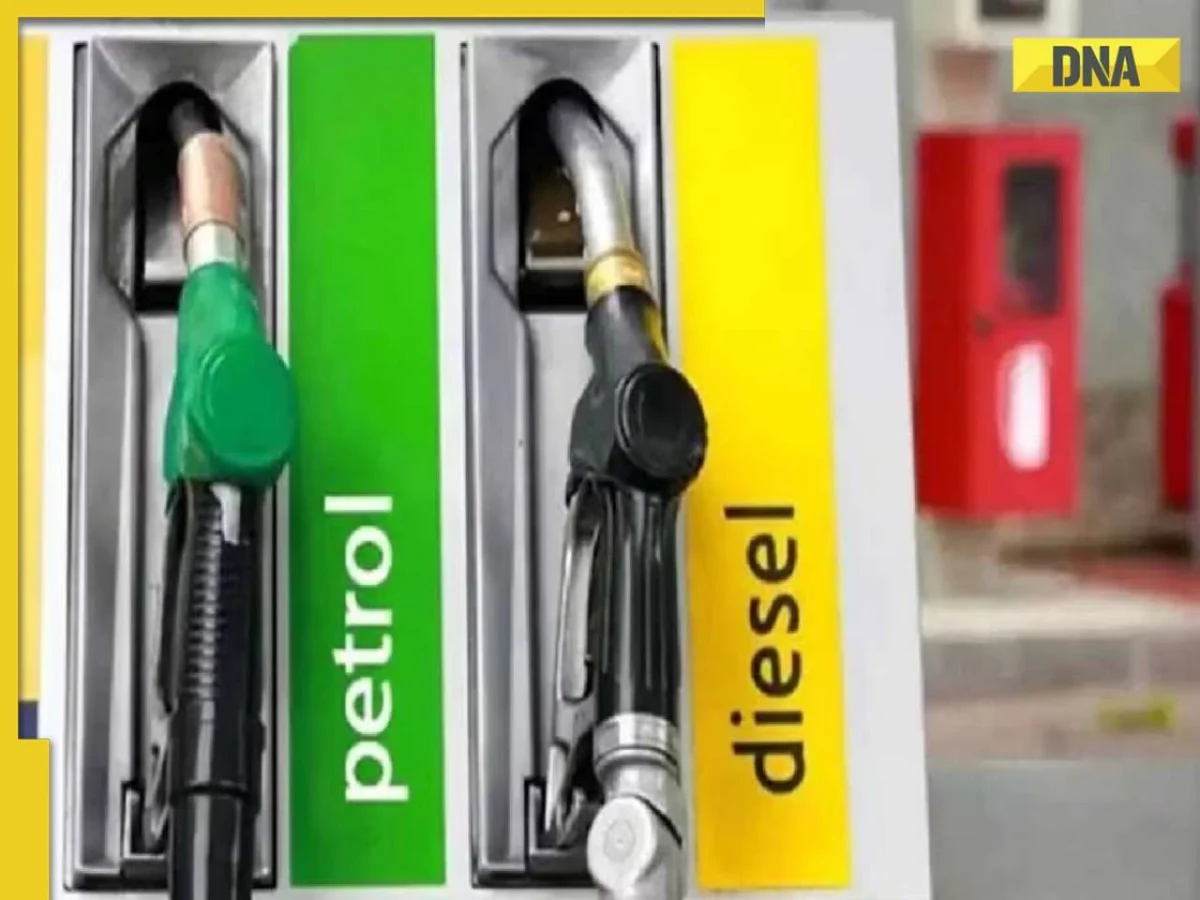
NEW DELHI, India – May 14, 2026 – In a significant development for India’s vast consumer base and economic sectors, fuel prices across the nation, including major metropolitan areas, demonstrated remarkable stability on May 14, 2026. This consistent pricing, a welcome respite for millions, underscores a complex interplay of global crude oil dynamics, domestic taxation policies, and the resilient performance of the Indian Rupee against international currencies. The stability observed today, with Mumbai’s petrol holding at Rs 103.54 per litre and diesel at Rs 90.03 per litre, is not merely a snapshot but a reflection of a carefully navigated energy landscape.
This period of equilibrium is particularly noteworthy given the historical volatility that has characterized global energy markets. For a developing economy like India, heavily reliant on crude oil imports, predictable fuel prices are a cornerstone of economic planning, directly impacting inflation, logistics costs, and consumer purchasing power. Analysts are closely watching to see if this trend can be sustained amidst an ever-evolving geopolitical and economic environment.
Main Facts: A Glimpse into Today’s Stability
The headline on May 14, 2026, across India’s financial and energy desks, is the sustained stability of retail fuel prices. Consumers in Mumbai woke up to familiar figures, with petrol priced at Rs 103.54 per litre and diesel at Rs 90.03 per litre. This consistency has been a pattern over recent weeks, offering a degree of predictability that has been largely absent in previous periods of intense market fluctuations.
While Mumbai serves as a key benchmark due to its economic prominence, similar trends were observed in other major Indian cities. For instance, in Delhi, petrol was retailing at approximately Rs 95.80 per litre and diesel at Rs 88.20 per litre. Kolkata saw petrol at Rs 106.10 per litre and diesel at Rs 92.75 per litre, while Chennai’s rates stood at Rs 101.45 for petrol and Rs 93.10 for diesel. These minor variations across cities are primarily attributable to differing state-level Value Added Tax (VAT) structures, which constitute a significant portion of the final retail price.
)
The stability is a critical indicator of market resilience and potentially effective policy measures designed to cushion domestic consumers from the immediate shocks of international crude oil price movements. The Indian government, through its various ministries and public sector oil marketing companies (OMCs), plays a pivotal role in this intricate ecosystem. Their strategic decisions on taxation, import strategies, and refinery operations directly influence the price points seen at the pump. This current stability, therefore, is not accidental but a result of deliberate efforts and a fortuitous confluence of market conditions.
Chronology of Fuel Price Evolution in India Leading to May 2026
To fully appreciate the current stability, it is essential to contextualize it within India’s recent history of fuel price management. The journey to May 2026 has been marked by periods of extreme volatility, strategic interventions, and a gradual adaptation to new global energy realities.

The decade leading up to 2026 witnessed several phases of significant price movements. The early 2020s, particularly in the wake of the global pandemic, saw unprecedented swings. From negative crude oil prices momentarily in 2020 to a sharp rebound and sustained high levels in 2021-2022 due to geopolitical tensions and resurgent demand, Indian consumers felt the pinch acutely. Retail prices surged, prompting calls for government intervention.
2020-2022: The Era of Volatility and Initial Interventions
Following the initial shock of the pandemic, global crude oil prices plummeted, but the full benefit was not entirely passed on to consumers as central and state governments increased taxes to bolster revenues. As the global economy recovered and geopolitical conflicts, particularly in Eastern Europe, escalated in 2022, crude oil prices soared past the $100 per barrel mark. This led to record high retail fuel prices in India, pushing petrol above Rs 115 in some cities and diesel past Rs 100.
In response, the Indian government undertook several measures. It implemented excise duty cuts on multiple occasions, primarily in November 2021 and May 2022, urging states to follow suit by reducing VAT. These coordinated efforts provided temporary relief, but the underlying volatility of international crude markets remained a challenge.
)
2023-2024: Navigating Geopolitical Headwinds and Economic Recovery
The years 2023 and 2024 were characterized by continued geopolitical uncertainties, including OPEC+ production cuts and fluctuating global demand patterns. India, being a major importer, diversified its crude oil sources, leveraging opportunities to procure oil at discounted rates from various countries. This strategic sourcing played a crucial role in mitigating the impact of high international prices.
During this period, the Indian Rupee also experienced some fluctuations against the US Dollar, adding another layer of complexity. A weaker Rupee makes crude imports more expensive in local currency terms, even if global dollar prices remain stable. The Reserve Bank of India (RBI) actively managed monetary policy to maintain currency stability, which indirectly supported the domestic fuel price environment.
Late 2024 – Early 2026: The Path to Stability
Towards late 2024 and through early 2025, a relative calm began to settle in the international crude oil markets. Demand growth moderated slightly, and supply from non-OPEC+ nations saw a steady increase. This period also coincided with significant investments by Indian OMCs in refining capacity and efficiency, further strengthening the domestic supply chain.
The government, learning from past volatility, adopted a more nuanced approach to fuel price management. Instead of frequent, abrupt tax adjustments, there was a greater emphasis on absorbing minor international fluctuations through the OMCs’ marketing margins and strategic crude procurement. The focus shifted towards ensuring gradual adjustments rather than sudden spikes.
By early 2026, this combination of stable global crude prices (hovering generally in the $80-90 per barrel range), a relatively stable Rupee, and a proactive domestic policy framework culminated in the sustained price stability observed on May 14, 2026. This period represents a mature phase of energy management where various levers are being effectively pulled to shield consumers from external shocks.
)
Supporting Data: Deconstructing the Price Components
The final retail price of petrol and diesel in India is a multi-layered construct, influenced by a combination of international market forces, governmental policies, and operational costs. Understanding these components is key to comprehending the current stability.
1. Crude Oil Prices: This is the primary determinant. India imports over 85% of its crude oil requirements. The international benchmark prices, primarily Brent Crude and West Texas Intermediate (WTI), dictate the base cost. On May 14, 2026, global crude prices were trading in a relatively tight range, perhaps around $85-90 per barrel for Brent, a level that OMCs find manageable for sustained retail stability given current tax structures. Any significant deviation from this range, upwards or downwards, would inevitably trigger a review of domestic prices. Factors influencing crude prices include:
)
- Global Demand & Supply: Economic growth forecasts, industrial activity, and travel patterns directly impact demand. Supply is influenced by OPEC+ decisions, US shale output, and geopolitical stability in oil-producing regions.
- Geopolitical Events: Conflicts, sanctions, and political instability in key oil-producing or transit regions can rapidly escalate prices due to supply concerns.
- Inventory Levels: Stockpiles in major consuming nations (e.g., US, China) indicate market tightness or surplus.
2. Exchange Rate (INR vs. USD): Since crude oil is purchased in US Dollars, the strength or weakness of the Indian Rupee against the Dollar is crucial. A depreciation of the Rupee means OMCs have to pay more Rupees for the same quantity of Dollar-priced crude, directly increasing import costs. Conversely, a stronger Rupee helps in lowering the import bill. The Reserve Bank of India’s robust monetary policy and India’s improving economic fundamentals contributed to a relatively stable INR in the lead-up to May 2026, preventing currency-induced price hikes.
3. Central Excise Duty: This is a fixed or ad valorem tax levied by the Central Government. It constitutes a substantial portion of the retail price. The central government has historically used excise duty as a revenue-generation tool and, conversely, as a mechanism to absorb crude oil shocks by reducing it. The current excise duty levels, after several adjustments in previous years, are calibrated to balance revenue needs with consumer affordability.
)
4. State Value Added Tax (VAT): Each state government levies its own VAT, which varies significantly across states. VAT is typically charged as a percentage of the dealer price plus excise duty, making it an ad valorem tax. This explains the difference in retail prices between cities like Mumbai and Delhi. State governments also rely heavily on VAT from fuel for their revenues. The current stability suggests that most states have maintained their VAT rates without significant upward revisions recently, contributing to overall price consistency.
5. Dealer Commission: This is the margin paid to petrol pump owners for their services. It is a fixed amount per litre and is revised periodically.
)
6. Freight Charges: Costs associated with transporting refined petroleum products from refineries to depots and then to retail outlets. These are influenced by distance, transportation mode, and logistics efficiency.
7. Refinery Processing Costs: The cost incurred by refineries to process crude oil into petrol, diesel, and other products.
)
Price Build-up Illustration (Hypothetical for May 2026, for context):
| Component | Petrol (Mumbai) – Approx. % | Diesel (Mumbai) – Approx. % |
|---|---|---|
| Base Price (Crude + Processing) | 40-45% | 45-50% |
| Freight + Dealer Commission | 3-5% | 3-5% |
| Central Excise Duty | 20-25% | 18-22% |
| State VAT | 25-30% | 18-22% |
| Total Retail Price | 100% | 100% |
This breakdown clearly illustrates that while crude oil prices are foundational, taxes (central and state) are the most significant levers influencing the final consumer price. The current stability implies a careful calibration of these tax components, alongside favorable global crude and currency conditions.
)
Official Responses: Reassurances and Strategic Outlook
The sustained stability in fuel prices has elicited cautious optimism and reaffirmations from various government ministries and public sector entities. Officials emphasize the government’s commitment to ensuring energy security and consumer welfare.
Ministry of Petroleum and Natural Gas:
A senior official from the Ministry of Petroleum and Natural Gas, speaking on condition of anonymity, stated, "The current stability is a testament to India’s diversified crude sourcing strategy and the operational efficiency of our public sector oil marketing companies. We are continuously monitoring global markets and ensuring that our energy basket is resilient against external shocks. Our priority remains to provide affordable and accessible energy to all citizens." The official further highlighted investments in domestic exploration and production, and the push towards cleaner fuels, as long-term strategies for sustainable energy security.
)
Ministry of Finance:
The Finance Ministry views fuel price stability as crucial for macroeconomic stability. A spokesperson indicated, "Predictable fuel prices are vital for inflation management and fiscal planning. The government’s prudent fiscal policies, coupled with the Reserve Bank of India’s efforts to maintain Rupee stability, have created an environment where such consistency is possible. While tax revenues from fuel remain an important component of the national exchequer, consumer welfare and economic growth are paramount considerations in our policy formulation." The Ministry acknowledged the delicate balance between revenue generation and price control, suggesting a flexible approach to tax structures if global conditions warrant.
Oil Marketing Companies (OMCs):
Representatives from leading public sector OMCs, such as Indian Oil Corporation (IOCL), Bharat Petroleum Corporation Limited (BPCL), and Hindustan Petroleum Corporation Limited (HPCL), expressed satisfaction with the current market dynamics. "Our OMCs have robust hedging mechanisms and long-term supply contracts that help mitigate short-term volatility," explained a spokesperson for one of the OMCs. "We are committed to passing on the benefits of stable crude prices to our customers while ensuring the sustainability of our operations. Continuous investment in refining technology and logistics ensures efficiency across the value chain."
)
These official responses underscore a multi-pronged strategy that combines proactive procurement, fiscal prudence, and operational efficiency to manage India’s energy landscape. There is a clear recognition of the broader economic implications of fuel prices, moving beyond just revenue collection to encompass inflation control and consumer confidence.
Implications: Far-Reaching Economic and Social Impact
The stability of fuel prices on May 14, 2026, carries significant implications across various sectors of the Indian economy and for its citizens. This predictability fosters a sense of economic certainty that can catalyze growth and stability.
)
1. For Consumers:
- Budgeting Certainty: Stable fuel prices allow households to better plan their monthly budgets, as transportation costs remain predictable. This reduces financial stress and increases discretionary spending capacity.
- Reduced Inflationary Pressure: Fuel is a fundamental input cost for almost all goods and services. Stable prices directly translate to lower or controlled inflation, making essential commodities more affordable.
- Travel & Mobility: Encourages personal travel and commuting without the constant worry of rising fuel expenses, supporting sectors like tourism and hospitality.
2. For Businesses:
)
- Lower Logistics Costs: Transport and logistics companies are major beneficiaries. Predictable diesel prices reduce operational costs, allowing them to offer more competitive freight rates. This directly impacts supply chains, from raw materials to finished goods.
- Manufacturing Sector: Industries relying on transportation for raw material procurement and finished product distribution see their input costs stabilize. This enhances their competitiveness and profitability.
- Agricultural Sector: Farmers depend heavily on diesel for tractors, irrigation pumps, and transportation of produce to markets. Stable diesel prices help keep agricultural input costs in check, benefiting both farmers and consumers through stable food prices.
- Investment & Planning: Businesses can make longer-term investment decisions with greater confidence, knowing that a key operational cost is stable. This encourages expansion and job creation.
3. For Government and Macroeconomy:
- Inflation Control: As highlighted by the Finance Ministry, stable fuel prices are a powerful tool in the fight against inflation. This provides the Reserve Bank of India (RBI) greater flexibility in monetary policy.
- Fiscal Stability: While the government balances revenue needs with consumer prices, stability allows for more predictable tax collections from fuel. It also reduces the need for emergency fiscal interventions, leading to greater fiscal discipline.
- Economic Growth: By reducing input costs for businesses and increasing disposable income for consumers, stable fuel prices create a conducive environment for sustained economic growth.
- Energy Transition: While immediate stability is positive, it also provides a steady environment for the government to push its long-term energy transition agenda. With less immediate pressure from price volatility, policymakers can focus on promoting electric vehicles, renewable energy infrastructure, and alternative fuels without creating additional economic shocks for traditional fuel users. This steady hand ensures that the transition is orderly and inclusive.
4. Environmental and Future Considerations:
While stability is currently positive, it also presents a nuanced challenge for India’s long-term environmental goals. Sustained low or stable conventional fuel prices might, in the short term, slightly reduce the urgency for some consumers and businesses to switch to electric vehicles or other cleaner alternatives. However, the government’s continued focus on promoting green energy through subsidies, infrastructure development, and policy incentives aims to ensure that the energy transition remains on track, irrespective of short-term fossil fuel price movements. The stability provides a calm environment for strategic, rather than reactive, policy implementation for a sustainable future.
)
In conclusion, the stable fuel prices observed on May 14, 2026, are a reflection of a mature and resilient energy management framework in India. It is a confluence of favorable international crude oil dynamics, a stable currency, and strategic domestic policy decisions concerning taxation and sourcing. The ripple effects of this stability are far-reaching, promising relief for consumers, predictability for businesses, and a stronger foundation for India’s ambitious economic growth trajectory. As global energy markets remain inherently dynamic, the ability to maintain such stability will be a continuous test of India’s strategic foresight and policy agility.
