

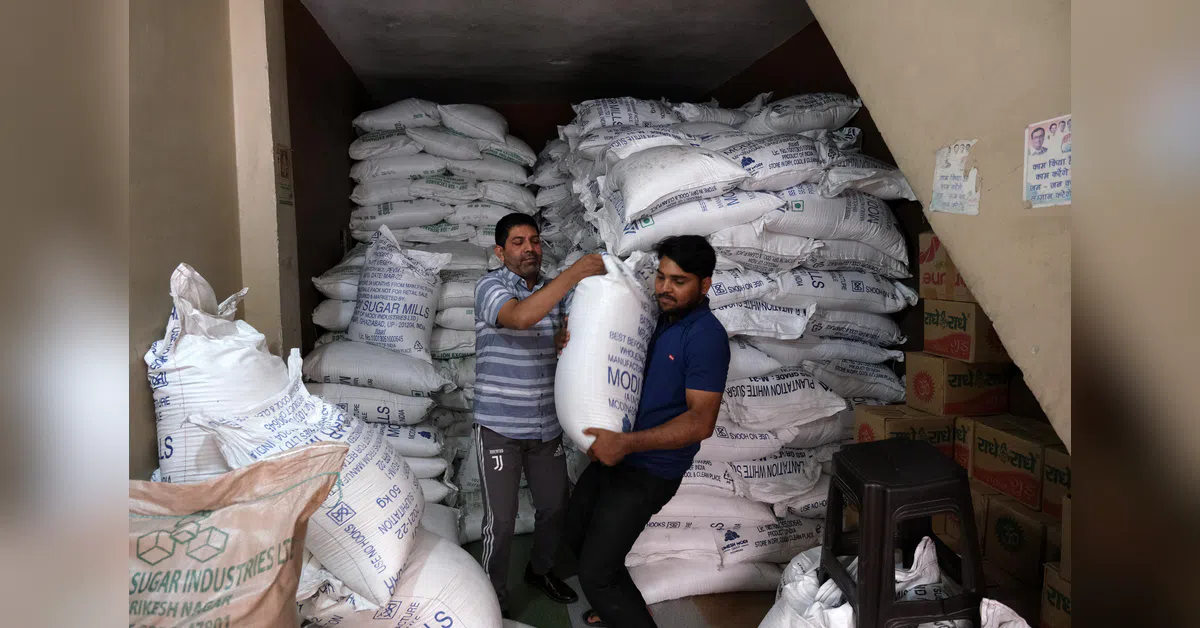
NEW DELHI, India – In a move that sent immediate shockwaves through India’s vital sugar sector, the government abruptly announced a ban on sugar exports, effective May 13, 2024, and slated to last until September 30, 2024. This sudden restriction, implemented barely weeks after an additional export window was permitted, has ignited a fierce debate, pitting the imperatives of domestic price stability and supply security against the long-term health and international credibility of one of the world’s largest sugar producers.
The decision has been met with a mixture of "shock and awe" from industry stakeholders, with some acknowledging the government’s underlying rationale to curb surging domestic prices and ensure adequate market availability, while others decried it as a "knee-jerk reaction" threatening to inflict lasting damage on both sugar mills and the millions of farmers dependent on sugarcane cultivation. The financial markets reacted swiftly, with shares of leading sugar companies plummeting by as much as 7% on the day of the announcement, reflecting investor apprehension over lost export revenues and policy uncertainty.
Main Facts: A Sudden Halt to Overseas Shipments
The core of the matter lies in the Indian government’s directive to halt all sugar exports with immediate effect, maintaining the ban until the end of the current sugar season on September 30. This decision comes at a critical juncture, as the industry was still grappling with the implications of fluctuating production forecasts and navigating international trade commitments.
Just weeks prior, the government had seemingly adopted a more liberal stance, approving an additional 0.5 million tonnes (MT) for export, on top of the initially permitted 1.5 MT for the current 2023-24 sugar season (October-September). This earlier move had instilled a degree of confidence among exporters and mills, many of whom had already entered into binding contracts with foreign buyers. The sudden reversal has, therefore, left many in a precarious position, facing potential penalties for non-fulfilment and a significant loss of anticipated revenue.
The primary stated objective behind the ban is to rein in domestic ex-mill sugar prices, which have seen a notable ascent from approximately Rs 35-36 per kilogram to almost Rs 38-40 per kilogram in recent weeks. This increase was largely driven by market anticipation of lower closing stocks at the end of the current season and a projected drop in overall production. Ensuring sufficient sugar availability for the domestic market in the coming months, particularly ahead of the festive season, is another key concern for the administration.
However, many industry observers and farmer leaders are skeptical about the efficacy and long-term wisdom of such an abrupt intervention. They argue that while the immediate goal of price stabilization might be partially achieved, the broader implications for the sector’s financial health, farmer livelihoods, and India’s standing in the global sugar trade could be profoundly negative.
Chronology of Policy Shifts and Production Realities
Understanding the current situation requires a look back at the unfolding events and evolving forecasts that set the stage for this drastic measure.
November 2023: Initial Optimism and Export Approvals
The current 2023-24 sugar season began in October with a relatively optimistic outlook. Based on initial production estimates, the Food Ministry, in November 2023, granted permission for the export of 1.5 million tonnes of sugar. This move was intended to help mills manage surplus stocks and ensure farmers received timely payments for their cane, leveraging India’s position as a significant global sugar supplier.
Early 2024: Emerging Concerns and Additional Export Window
As the crushing season progressed into early 2024, ground realities began to diverge from initial projections. Reports from key cane-growing states, particularly Maharashtra and Uttar Pradesh, indicated lower-than-expected yields. Adverse weather conditions, including erratic rainfall and unseasonal heat, were identified as primary culprits impacting sugarcane output.
Despite these emerging concerns, the government, in a seemingly contradictory move, opened an additional export window of 0.5 million tonnes, bringing the total permitted exports to 2.0 MT. However, the uptake on this additional quota was remarkably low, with only 87,587 tonnes receiving approval, signaling that even then, mills might have been cautious or found it challenging to secure new contracts.
April-May 2024: Rising Domestic Prices and Tightening Supply Outlook
The combination of revised downward production estimates and a strong domestic demand began to exert upward pressure on ex-mill sugar prices. The market, anticipating tighter closing stocks for the season ending September 2024 and potential supply constraints for the upcoming 2024-25 season, saw prices climb steadily. This inflationary trend, particularly in a staple commodity like sugar, likely triggered alarm bells within government corridors concerned about consumer welfare and broader food inflation.
May 13, 2024: The Export Ban Hammer Falls
The culmination of these factors was the government’s decision on May 13, 2024, to impose a blanket ban on sugar exports until September 30, 2024. The notification, effective immediately, caught the industry off guard, especially those who had either already shipped or were in the process of shipping sugar under existing contracts. The abrupt nature of the ban, coming without much prior warning or consultation, became a central point of contention and criticism.
Supporting Data: Unpacking the Numbers Behind the Ban
The government’s decision, while sudden, appears to be rooted in a revised assessment of the supply-demand dynamics for the current and upcoming sugar seasons. Several key data points underscore the concerns regarding domestic availability and price stability.
Revised Production Forecasts:
A senior industry official highlighted the weakening overall supply pipeline. Sugar production for the current 2023-24 season (October to September) is now expected to be around 27.95 million tonnes (MT), a significant downgrade from the earlier projection of 29 MT. This 1.05 MT reduction in output is a substantial figure, directly impacting the availability for both domestic consumption and potential exports. The primary reasons cited for this shortfall are lower-than-expected yields in key cane-growing states, especially Maharashtra and Uttar Pradesh, due to adverse weather conditions.
Tighter Closing Stocks:
The most critical concern revolves around closing stocks. The official estimates now place the closing stock for the current season at 3.8-3.9 million tonnes, a considerable drop from the 5 million tonnes recorded last year. Such a reduction indicates a much leaner buffer for the transition into the next season and raises fears of potential shortages if not managed carefully.
Rating agency ICRA further elaborated on this, projecting India’s net sugar production for 2023-24, after accounting for diversion towards ethanol, to be around 28 million tonnes, notably below earlier forecasts. With domestic consumption pegged at approximately 28.3 million tonnes and around 0.7 million tonnes already physically exported, ICRA estimates that closing stocks by September 2024 would be around 4.3 million tonnes. While this figure represents roughly two months of consumption, it is still marginally lower than previous years, making the government cautious.
Export Realities vs. Potential Savings:
The actual quantity of sugar already exported or in the pipeline further clarifies the limited impact of the ban on immediate supply. Informal reports indicate that approximately 650,000 tonnes have already been physically exported from the initially permitted quotas. An estimated 40,000-60,000 tonnes are still in the pipeline, tied to previously sanctioned contracts and awaiting shipment.
According to the senior industry official, the export ban would, "at best, help the government salvage around 0.2 million tonnes of the sweetener" that would have otherwise gone out of the country. This relatively small quantity underscores the government’s desperate attempt to bolster domestic supplies, but also highlights the limited immediate impact on the overall market balance. The industry questions how much this salvaged amount can truly add to the vast domestic demand.
Domestic Price Surge:
The rising domestic ex-mill prices from Rs 35-36 per kg to Rs 38-40 per kg in a short span served as a direct trigger for the government’s intervention. While these prices might still seem reasonable to consumers compared to global benchmarks, the government is highly sensitive to any inflationary pressures on essential commodities, particularly with general elections on the horizon in many parts of the country. The aim is to prevent a further escalation that could impact household budgets.
Official Responses: A Chorus of Concerns and Rationalizations
The government’s decision, while aimed at national food security and price stability, has elicited a range of strong reactions from key stakeholders, each with their own perspective on the immediate and long-term consequences.
Industry’s Dilemma: ISMA’s Measured Critique
The Indian Sugar & Bio-energy Manufacturers Association (ISMA), the apex industry body, while acknowledging the government’s stated rationale behind the move – primarily to ensure adequate domestic availability and check price inflation – voiced strong reservations about its abrupt implementation.
ISMA Director General Deepak Ballani highlighted the "practical difficulties" faced by mills that had already entered into "binding commitments with foreign buyers." Such sudden bans can lead to severe financial repercussions, including potential penalties for contract breaches, damage to reputation, and significant revenue loss.
Ballani urged the government to allow the execution of already concluded export contracts, even with the ban taking effect. He stated, "Permitting execution of already concluded contracts may help facilitate orderly trade settlement and support the credibility of Indian suppliers in the global market." This plea underscores a crucial concern: India’s reliability as an international trading partner. Repeated instances of sudden policy shifts can erode trust and make it harder for Indian suppliers to secure future contracts, potentially impacting the sector’s long-term export potential.
Farmers’ Outcry: Raju Shetti’s "Unwise" Criticism
Farmer leader Raju Shetti, a prominent voice for sugarcane growers, vehemently criticized the Centre’s decision, terming it "unwise." Shetti argued that the ban would inflict harm on both sugar mills and, by extension, the farmers. His primary concern revolves around the potential for "mounting dues" to farmers. When mills lose export revenue, their financial liquidity tightens, making it difficult to make timely payments for sugarcane supplied by farmers.
Furthermore, a prolonged export ban or restrictive export policies can lead to an oversupply in the domestic market, depressing cane prices in the future. Farmers, who invest heavily in cultivation based on anticipated returns, stand to suffer significant losses, potentially pushing them into debt and discouraging future cane cultivation – an outcome that could paradoxically lead to supply shortages in subsequent seasons.
Analysts’ Perspective: ICRA’s Validation of Immediate Goals
Rating agency ICRA offered a more pragmatic view, largely validating the government’s immediate objectives. Rachit Mehta, ICRA Vice President & Sector Head, noted that the export ban would indeed "help arrest any sharp rise in domestic prices while safeguarding availability, given expectations of tighter closing inventories."
From an analytical standpoint, ICRA’s assessment emphasizes the short-term benefits of the ban in mitigating inflationary pressures and ensuring food security. However, this perspective often focuses on macroeconomic stability and may not fully encompass the micro-level disruptions and financial strains experienced by individual mills and farmers.
Implications: Far-Reaching Consequences for the Sector and Beyond
The government’s sudden sugar export ban carries multifaceted implications, extending from the immediate financial health of the industry to India’s reputation in global trade and the long-term stability of the sugar economy.
Immediate Financial Impact on Sugar Mills:
The most direct and immediate consequence is felt by sugar mills. Those with existing export contracts face significant challenges. They might have to absorb cancellation costs, pay penalties to international buyers, and suffer losses from hedging positions. The sudden loss of anticipated export revenue will strain their cash flow, potentially impacting their ability to pay farmers on time for cane deliveries, leading to the "mounting dues" that farmer leader Raju Shetti highlighted. This financial pressure can also deter mills from investing in modernization or capacity expansion.
Farmer Welfare and Future Cultivation:
While the ban aims to stabilize domestic prices, its long-term impact on farmers could be detrimental. If mills struggle financially due to the ban, they might delay payments or even demand lower prices for sugarcane in future seasons. This uncertainty and financial hardship could disincentivize farmers from cultivating sugarcane, potentially leading to a reduction in acreage and, paradoxically, future supply shortages. The delicate balance between remunerative prices for farmers and affordable prices for consumers is a perennial challenge in India’s agricultural policy.
Domestic Market Stability vs. Distortion:
In the short term, the ban is expected to arrest the upward trend in domestic sugar prices, offering some relief to consumers and helping the government manage inflation. However, sustained government intervention can distort market signals. If domestic prices are artificially suppressed below market-clearing levels, it could discourage efficient production and lead to an artificial surplus that the government then struggles to offload.
International Market Repercussions:
India is one of the world’s largest sugar producers and a significant exporter. Its absence from the global export market, even temporarily, can have ripple effects on international sugar prices, potentially driving them higher. This could impact importing nations that rely on Indian sugar, forcing them to seek alternative, potentially more expensive, sources. More critically, repeated instances of sudden export restrictions damage India’s credibility as a reliable and predictable supplier on the global stage, making it harder for Indian exporters to secure long-term contracts in the future. This erosion of trust can have lasting negative consequences for the sector’s international competitiveness.
Stock Market Reaction:
The financial markets reacted sharply to the news. Shares of major sugar companies tumbled, reflecting investor concern over the immediate loss of export revenue and the broader uncertainty surrounding government policy. Dhampur Sugar Mills saw its stock tank by 6.95%, Dwarikesh Sugar Industries fell 6.65%, Uttam Sugar Mills dropped 5.60%, Bajaj Hindusthan Sugar declined 4.95%, Mawana Sugars depreciated 4.83%, and Dalmia Bharat Sugar and Industries went lower by 3.98% on the BSE. Other notable declines included Triveni Engineering & Industries (3.85%), Rajshree Sugars & Chemicals (3.42%), Sakthi Sugars (2.92%), Balrampur Chini Mills (2.52%), and Shree Renuka Sugars (2.13%). This widespread sell-off indicates deep investor apprehension about the sector’s profitability and future outlook.
Outlook for the Upcoming Season (2024-25):
Adding another layer of concern is the outlook for the upcoming 2024-25 sugar season. Forecasts suggest that the season is expected to be impacted by El Niño conditions. El Niño typically brings drier weather to parts of India, which could weigh further on sugarcane output and keep supply tight. This prospect means the government might face similar dilemmas in the future, highlighting the need for a more stable and predictable long-term sugar policy that balances the interests of all stakeholders.
The export ban on sugar underscores the delicate balancing act governments in major agricultural economies often face: ensuring food security and price stability for their citizens while simultaneously fostering a competitive and reliable agricultural export sector. While the immediate aim is to cool domestic prices and secure supply, the long-term ramifications of such sudden policy shifts for India’s sugar industry, its farmers, and its global trade standing remain a bitter pill to swallow. The coming months will reveal whether the government’s intervention achieves its desired effect without inflicting undue harm on the very industry it seeks to regulate.
