

The Indian automotive landscape witnessed a significant shift in momentum during September 2026, as the industry entered the crucial festive window. According to the latest retail and wholesale dispatch data, the top 10 best-selling passenger vehicles in the country collectively accounted for 1,91,332 units. This represents a robust year-on-year (YoY) growth of 15.45% compared to the 1,65,725 units sold by the same models in September 2025. This surge of over 25,000 units indicates a resilient consumer appetite, spearheaded largely by the resurgence of the premium hatchback segment and the continued dominance of compact SUVs.
The Main Facts: A Month of Milestones
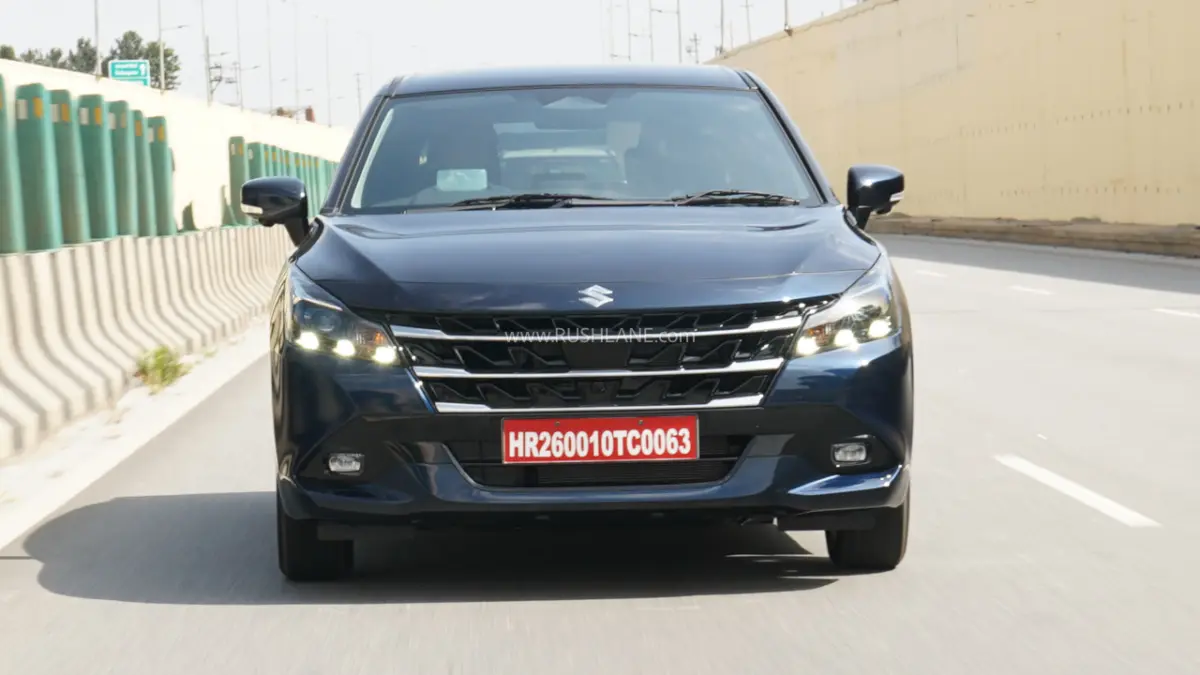
The headline story of September 2026 is the staggering performance of the Maruti Suzuki Baleno. Following the recent introduction of its updated facelift, the Baleno secured the pole position with 25,392 units. This performance not only placed it at the top of the leaderboard but also marked a near-doubling of its volume compared to the previous year.
Maruti Suzuki continues to exert a vice-like grip on the Indian market, securing six out of the ten available spots on the leaderboard. However, the competition remains fierce, with Tata Motors maintaining a strong presence with two models in the top three, while Hyundai and Mahindra each held one position.
A critical trend observed this month is the consolidation of power among the top three models. The Baleno, Tata Nexon, and Tata Punch all breached the 20,000-unit monthly sales mark—a feat rarely achieved simultaneously by three different nameplates. Together, these three models alone accounted for over 66,000 units, representing roughly one-third of the total sales of the top 10 list.
Chronology of Market Dynamics: From August Slump to September Surge
To understand the September numbers, one must look at the immediate preceding month. In August 2026, the market showed signs of stagnation as consumers delayed purchases in anticipation of festive offers and new launches. The combined sales of the top 10 models in August stood at 1,83,037 units.
As September commenced, the "festive effect" took hold. The month-on-month (MoM) growth of 4.53% (an addition of 8,295 units) was almost entirely driven by the Maruti Baleno. Interestingly, without the Baleno’s massive MoM jump of 61.26%, the overall top 10 list would have registered a decline compared to August. This suggests that while the market is growing, that growth is currently concentrated in specific high-demand refreshes rather than a universal rising tide across all segments.
The middle of the month saw a stabilization in SUV dispatches, while the final week of September—coinciding with the start of auspicious periods for vehicle delivery—saw a spike in registrations for models like the Tata Punch and the Maruti Fronx.
Supporting Data: A Detailed Breakdown of the Rankings
The performance of the top 10 models reveals a complex narrative of growth, decline, and segment shifting.
1. Maruti Suzuki Baleno (25,392 Units)
The Baleno’s performance was nothing short of extraordinary. With a 92.76% YoY growth (up from 13,173 units in 2025), it contributed 13.27% of the total sales of the top 10 models. The facelifted version has clearly resonated with buyers seeking a mix of premium features and Maruti’s legendary reliability.
2. Tata Nexon (20,456 Units)
Despite holding the second spot, the Nexon faced a YoY decline of 9.38%. This dip is attributed to increasing internal competition from the Tata Punch and external pressure from the Maruti Fronx. It is important to note that these figures include the Nexon.ev, which remains India’s best-selling electric SUV.

3. Tata Punch (20,333 Units)
The Punch continues to be a juggernaut for Tata Motors, trailing the Nexon by a mere 123 units. It registered a 27.95% YoY growth. The availability of multiple powertrains—petrol, CNG, and Electric—has allowed the Punch to capture a wide demographic of first-time car buyers.
4. Maruti Suzuki Fronx (19,282 Units)
The Fronx emerged as a "dual-growth" star, being one of the only two models on the list to grow both YoY (40.06%) and MoM (2.95%). Its crossover styling and turbocharged engine options have successfully carved out a niche between the traditional hatchback and the sub-compact SUV.
5. Maruti Suzuki WagonR (18,835 Units)
The perennial favorite of the Indian middle class grew by 22.40% YoY. While its MoM sales dipped by 6.67%, its high volume confirms that the tall-boy hatchback remains a staple of the urban commuting landscape.
6. Maruti Suzuki Dzire (17,754 Units)
The Dzire recorded the sharpest YoY decline on the list, falling 11.40%. This is largely due to the "wait-and-watch" approach of fleet operators and private buyers who are anticipating a generation update or are shifting toward compact SUVs like the Punch and Fronx.
7. Hyundai Creta (17,657 Units)
Hyundai’s flagship SUV saw a 6.38% YoY decline but an 8.40% MoM recovery. The Creta (including the Creta EV) remains the benchmark in the mid-size SUV segment, maintaining a healthy lead over its direct competitors, even if it slipped slightly in the overall rankings.
8. Maruti Suzuki Swift (17,399 Units)
The Swift grew 11.91% YoY, but suffered the largest MoM decline in the group, dropping 12.27%. This volatility suggests that the Swift’s buyer base is highly sensitive to the launch of other Maruti models, such as the Baleno facelift.
9. Mahindra Scorpio (17,313 Units)
Combining the Scorpio Classic and Scorpio N, Mahindra’s rugged SUV saw a slight 5.76% YoY dip. However, it posted a strong 11.15% MoM growth, indicating that production constraints are easing and the brand is successfully fulfilling its massive order backlog.
10. Maruti Suzuki Ertiga (16,911 Units)
Rounding out the list, the Ertiga posted a massive 39.59% YoY growth. As the only MPV in the top 10, it continues to dominate the family and commercial travel segments with virtually no direct competition at its price point.
Official Responses and Industry Sentiment
While official statements from the manufacturers are often guarded, the data allows for a synthesis of the current industry stance. Maruti Suzuki’s leadership has previously indicated that "premiumization" is the key driver of their current strategy. The success of the Baleno and Fronx validates this shift away from entry-level "budget" cars toward feature-rich vehicles.
Industry analysts suggest that the decline in models like the Dzire and the slight dip in Nexon sales are not indicative of a brand failure, but rather a "segment migration." Consumers who previously bought sedans or entry-level SUVs are now moving toward crossovers and micro-SUVs.

Market observers also point out that the inclusion of EV variants in the sales figures for the Nexon, Punch, and Creta is a strategic necessity. By blurring the lines between ICE (Internal Combustion Engine) and EV sales, manufacturers are presenting a unified front of "brand strength," even as the EV market experiences its own specific set of adoption hurdles.
Strategic Implications: What the Numbers Tell Us About the Future
The September 2026 sales data carries several long-term implications for the Indian automotive sector:
1. The Death of the "Cheap" Car?
Notably absent from the top 10 are entry-level cars like the Alto or S-Presso. The Indian consumer’s preference has moved decisively toward the ₹8 lakh to ₹15 lakh price bracket. Manufacturers are responding by packing more technology—360-degree cameras, ventilated seats, and ADAS (Advanced Driver Assistance Systems)—into smaller footprints.
2. Maruti Suzuki’s Multi-Pronged Defense
Maruti Suzuki has successfully insulated itself from the "SUV wave" by diversifying its portfolio. By having the Baleno (Hatchback), Fronx (Crossover), WagonR (Tall-boy), and Ertiga (MPV) all performing well, they have ensured that even if one segment falters, the brand maintains its 40%+ market share.
3. The Power of the Facelift
The Baleno’s 92.76% growth proves that in the current market, "newness" is the primary driver of volume. In an era of rapid technological advancement, a model that is even three years old without an update risks irrelevance. We can expect shorter product lifecycles and more frequent mid-life refreshes across all brands.
4. Tata’s SUV Dominance and the "Punch" Phenomenon
Tata Motors has successfully transitioned into an SUV-first company. The fact that the Punch—a micro-SUV—is now neck-and-neck with the Nexon suggests that Tata has mastered the art of creating "aspiration at a lower price point." The challenge for Tata moving forward will be managing the potential cannibalization between these two successful models.
5. Mahindra and Hyundai: Quality Over Quantity
While Mahindra and Hyundai have fewer models in the top 10 than Maruti, the models they do have (Creta and Scorpio) are high-margin vehicles. These brands are focusing on the "Premium SUV" segments where the profit-per-unit is significantly higher than that of a hatchback.
Conclusion: Looking Ahead to Q4 2026
As India moves into the final quarter of 2026, the momentum from September is expected to carry forward. With the Baleno leading the charge and the SUV segment remaining robust, the industry is on track for a record-breaking year. However, the 12.27% MoM drop in Swift sales and the 11.40% YoY drop in Dzire sales serve as a warning: brand loyalty is no longer a guarantee of success. In the modern Indian market, the consumer is king, and the king demands the latest features, boldest designs, and the best value for money.
The final three months of the year will likely see aggressive financing schemes and festive editions as manufacturers look to clear inventory before the 2027 model year. If the September trends hold, the battle for the top spot will remain a high-stakes game between the refreshed icons of Maruti Suzuki and the rising SUV stars of Tata Motors.
