

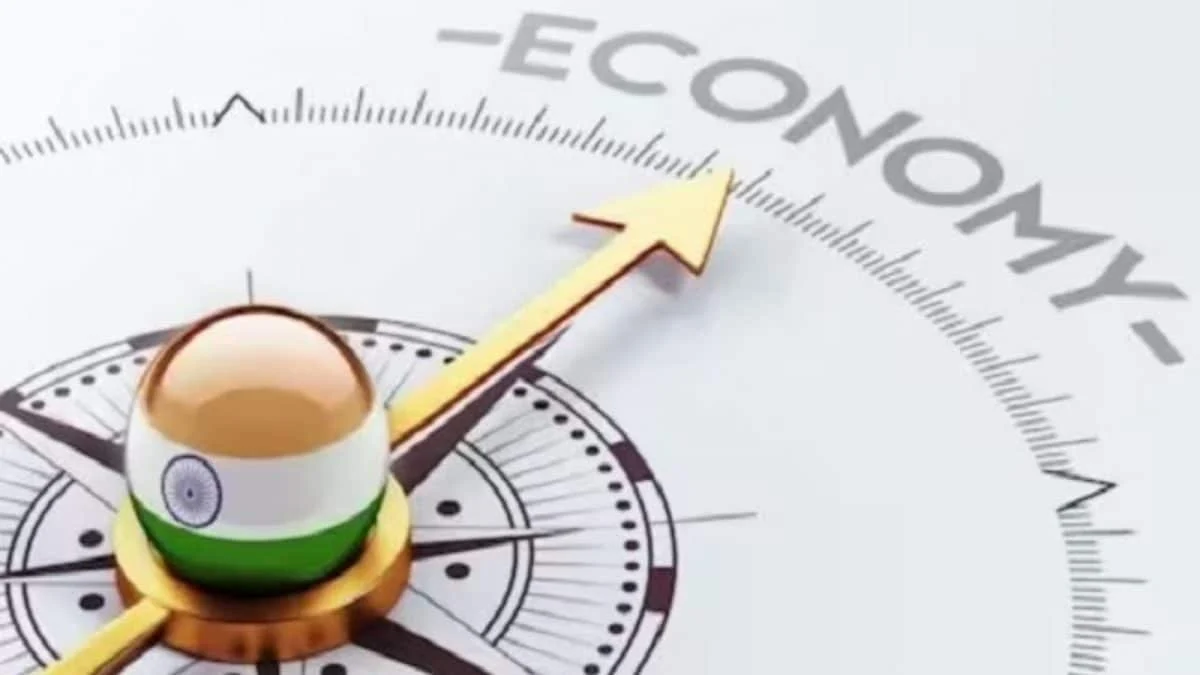
New Delhi, India – May 30, 2026 – The Indian economy, a beacon of growth in an increasingly uncertain global landscape, is charting a course of "cautious resilience," according to the Finance Ministry’s latest assessment. While robust services exports, comfortable foreign exchange reserves, and a stable labour market provide a solid foundation, policymakers are bracing for a confluence of challenges, including persistent inflationary risks, volatile global energy prices, and the critical influence of the monsoon, all demanding meticulous navigation to sustain the growth momentum into the fiscal year 2027.
The Ministry’s Monthly Economic Review for May 2026 underscores India’s inherent strengths, which have enabled it to withstand significant international turbulence. However, the report issues a clear warning: the interplay of elevated global energy prices, a depreciating rupee, burgeoning upstream cost pressures, and the looming prospect of a below-normal monsoon necessitates "sustained policy vigilance" to mitigate potential disruptions and safeguard economic stability.
A Foundation of Resilience Amidst Global Turmoil
India’s economic narrative in recent years has been characterized by its remarkable ability to absorb external shocks and maintain a respectable growth trajectory. The Finance Ministry’s report highlights several key pillars supporting this resilience.
Robust Services Exports: India’s services sector continues to be a formidable engine of growth and a significant contributor to its external balance. Driven by a thriving IT and IT-enabled services (ITES) industry, digital transformation initiatives, and a growing pool of skilled professionals, services exports have consistently outperformed expectations. These exports not only generate substantial foreign exchange but also demonstrate the economy’s evolving structure, leaning towards knowledge-based industries that are less susceptible to traditional manufacturing slowdowns. The report implicitly acknowledges that the global demand for digital services, cloud computing, and business process outsourcing remains strong, providing a crucial buffer against fluctuations in merchandise trade. This strength allows India to maintain a healthier current account balance, reducing its vulnerability to external financing shocks.
Comfortable Foreign Exchange Reserves: The nation’s foreign exchange reserves have remained at comfortable levels, acting as a vital bulwark against global volatility. These reserves provide the Reserve Bank of India (RBI) with ample firepower to intervene in currency markets, curb excessive rupee depreciation, and manage import costs, particularly for critical commodities like crude oil. A robust reserve position instills confidence among international investors and rating agencies, underscoring India’s capacity to meet its external obligations and manage potential capital outflows. This strategic asset is indispensable in an era marked by unpredictable global capital flows and geopolitical risks.
Stable Labour Market: A stable labour market is a fundamental indicator of economic health and social stability. The report points to sustained employment generation and a relatively stable unemployment rate as positive factors. This stability underpins domestic demand, which remains a key driver of India’s economic growth. Government initiatives aimed at skill development, formalization of the workforce, and support for micro, small, and medium enterprises (MSMEs) have likely contributed to this stability, ensuring that economic benefits are more widely distributed and consumer confidence remains intact.
Navigating the Inflationary Minefield: A Looming Threat
Despite these inherent strengths, the spectre of inflation looms large, presenting a formidable challenge to policymakers. The Finance Ministry has explicitly flagged concerns, observing that the growing disparity between retail and wholesale inflation rates signals an imminent pass-through of cost pressures to consumers.
Divergence in Inflation Metrics: The current divergence between retail (Consumer Price Index – CPI) and wholesale (Wholesale Price Index – WPI) inflation is a critical indicator. While WPI, reflecting input costs for producers, has been showing signs of elevation, the CPI, which directly impacts household budgets, has, until recently, shown a relatively muted response. This gap suggests that businesses are absorbing higher production costs to some extent, but this absorption is unsustainable in the long run. As the report cautions, the "pass-through to consumers, while limited so far, may not be far behind," implying that companies will eventually have to raise retail prices to protect their margins. This phenomenon, if unchecked, could lead to a broader inflationary spiral, eroding purchasing power and dampening consumer sentiment.
Global Energy Prices and Domestic Impact: The escalating global energy prices, particularly for crude oil, represent a significant inflationary impulse for India, a net importer of oil. The report highlights that recent increases in petrol and diesel prices are likely to trigger both direct and indirect inflationary effects. Directly, higher fuel costs impact transportation expenses for individuals and businesses. Indirectly, these costs feed into the prices of goods and services across the supply chain, from agriculture to manufacturing and logistics. Any further surge in international crude benchmarks, exacerbated by geopolitical tensions, could rapidly deplete the existing "inflation cushion," necessitating stronger monetary and fiscal responses. The vulnerability to global oil price shocks underscores the urgency of diversifying energy sources and enhancing energy efficiency within the economy.
The Monsoon’s Unpredictable Hand: India’s agricultural sector, which still employs a substantial portion of the workforce and contributes significantly to the GDP, remains heavily reliant on the monsoon. The report explicitly warns that an "inadequate monsoon could aggravate food inflation." A below-normal monsoon can lead to crop failures, reduced agricultural output, and consequently, higher food prices. This directly impacts household budgets, particularly for lower-income segments, and can trigger broader inflationary pressures across the economy. Furthermore, a poor monsoon can dampen rural demand, affecting sales of consumer goods, automobiles, and other discretionary items, thus posing a threat to overall economic growth. Policymakers are acutely aware that while "second-round effects and their persistence must be evident in the data for policy responses to be triggered," proactive measures to bolster agricultural resilience and manage food supply chains are paramount.
Global Headwinds and Geopolitical Tensions: A World in Flux
The Indian economy operates within a complex global environment, and external shocks invariably reverberate through its domestic landscape. The ongoing conflict in West Asia stands out as a primary source of global economic instability, exerting pressure on energy markets and supply chains worldwide.
West Asia Conflict and its Global Ramifications: The review explicitly states that the conflict has led to "elevated energy, transportation and logistics costs, which have revived inflationary pressures and renewed stagflation concerns across major economies." Beyond the immediate impact on crude oil prices, the conflict disrupts crucial shipping lanes, increases insurance premiums for cargo, and extends delivery times, leading to higher costs for global trade. For India, which relies heavily on imports for energy and exports for growth, these disruptions translate into higher import bills and reduced competitiveness for its goods in international markets. The renewed "stagflation" concerns – a dangerous combination of stagnant growth and high inflation – in major economies pose a threat to global demand for Indian exports and could trigger a broader economic slowdown.
Global Monetary Tightening and Capital Outflows: In response to persistent inflation, major central banks, particularly in advanced economies, are expected to "maintain restrictive monetary policy stances for longer than previously anticipated." This translates to higher interest rates globally, making borrowing more expensive and tightening global financial conditions. For emerging economies like India, this often leads to capital outflows as investors seek higher, safer returns in developed markets. The report notes that this has pushed "sovereign bond yields in advanced economies to multi-year highs," making emerging market assets less attractive. Energy-importing emerging economies are particularly vulnerable, facing a dual challenge of higher import bills and the pressure of capital outflows, leading to currency depreciation. While some countries have adopted energy conservation measures, "prolonged disruptions to Gulf energy supplies could further weaken global growth and intensify macroeconomic vulnerabilities across economies."
External Sector: A Pillar of Strength Amid Volatility
Despite the formidable global headwinds, India’s external sector has demonstrated commendable resilience, providing crucial support to the overall economy.
Strong Export Performance: In April 2026, India’s total exports witnessed a robust 13.6% year-on-year increase, reaching an impressive $80.8 billion. This growth was largely propelled by the strong performance of the services sector, reinforcing its role as a consistent earner of foreign exchange. The ability to increase exports amidst a challenging global trade environment speaks to the competitiveness of Indian goods and services and the effectiveness of government initiatives to promote exports. This expansion in exports helps in narrowing the trade deficit and strengthening the current account.
Narrowing Trade Deficit: A particularly positive development noted in the review is the sharp narrowing of the country’s trade deficit. In April 2026, the deficit significantly reduced to $7.8 billion, down from $11.2 billion in the corresponding month last year. A smaller trade deficit indicates that the value of goods and services imported is closer to the value of those exported, which is a favourable trend for the overall balance of payments and for the stability of the Indian rupee. This improvement can be attributed to a combination of strong export growth and potentially more judicious management of non-essential imports, alongside a moderation in global commodity prices for certain goods.
Diversified Trade Strategy: The report underscores India’s proactive approach to its external trade strategy, highlighting continued efforts to "advance its diversified trade strategy through bilateral and strategic economic partnerships." This involves actively pursuing Free Trade Agreements (FTAs) and Comprehensive Economic Partnership Agreements (CEPAs) with key global partners, reducing over-reliance on a few markets, and exploring new avenues for trade. Furthermore, "policy measures were undertaken to manage non-essential imports," suggesting a strategic effort to conserve foreign exchange and promote domestic production where feasible. This multi-pronged approach aims to enhance India’s global trade footprint while safeguarding its economic interests.
Capital Flows: A Mixed Picture
The dynamics of capital flows present a nuanced picture, with long-term foreign direct investment (FDI) remaining robust while foreign portfolio investment (FPI) has turned volatile.
FDI Resilience and Investor Confidence: In a testament to sustained investor confidence in India’s long-term growth prospects, gross foreign direct investment (FDI) inflows touched a historical peak of $94.5 billion in FY26. This record inflow signals that despite global uncertainties and short-term volatility, international investors continue to view India as an attractive destination for capital deployment. Factors contributing to this sustained interest include India’s large domestic market, ongoing structural reforms, improving ease of doing business, significant infrastructure development, and a young, aspirational demographic. FDI is particularly valuable as it represents long-term capital that contributes to job creation, technology transfer, and capacity building, laying the groundwork for future economic expansion. The report emphasizes that "Foreign exchange reserves, too, remained at comfortable levels, providing an important buffer against global volatility," reinforcing the stability that attracts FDI.
FPI Volatility and Rupee Pressure: In contrast to resilient FDI, foreign portfolio investment (FPI) flows have exhibited considerable volatility, especially since the escalation of the West Asia conflict. After registering net inflows in February 2026, FPIs withdrew a cumulative $23.6 billion from Indian markets between the start of the conflict and May 21, 2026. The bulk of these outflows was concentrated in the equity segment, reflecting "heightened global risk aversion and portfolio rebalancing away from emerging-market assets." When global investors perceive increased risk or find more attractive returns elsewhere, they tend to pull funds out of emerging markets, which can put significant depreciating pressure on the domestic currency, in this case, the Indian rupee. A depreciating rupee, while potentially boosting exports, simultaneously makes imports more expensive, fueling imported inflation.
Divergence in Debt vs. Equity Flows: Interestingly, while equity markets witnessed substantial outflows, debt markets showed a turnaround in May, registering net inflows of approximately $455 million till May 21. This divergence could be attributed to several factors, including the potential inclusion of Indian bonds in global indices, which attracts passive inflows, or a perception that Indian sovereign debt offers relatively attractive yields compared to other markets, even amidst global monetary tightening. However, the overall FPI trend remains a concern, necessitating careful monitoring by financial authorities.
The Path Forward: Sustained Vigilance and Coordinated Action
Looking ahead, the Finance Ministry’s outlook remains cautiously optimistic, predicated on proactive and coordinated policy responses. The report concludes that the intricate balance between maintaining robust growth and keeping inflation under control will demand continuous synergy across monetary, fiscal, and structural policy measures throughout FY27.
Persistent Global Uncertainties: The global economic landscape is expected to remain fraught with uncertainties. Elevated crude oil prices, driven by geopolitical instability and supply-demand imbalances, are likely to persist, maintaining pressure on India’s import bill and domestic inflation. Tighter global financial conditions, stemming from sustained restrictive monetary policies in advanced economies, will continue to influence capital flows, potentially leading to further FPI volatility and pressures on the Indian rupee. These factors are collectively anticipated to "keep investor sentiment cautious and contribute to continued volatility in portfolio flows."
Policy Coordination as a Cornerstone: The emphasis on "continued coordination across monetary, fiscal and structural policy measures" is critical.
- Monetary Policy: The Reserve Bank of India (RBI) will play a pivotal role in anchoring inflation expectations and managing liquidity. Its decisions on interest rates will need to strike a delicate balance between curbing inflation and supporting economic growth, considering both domestic cost pressures and global financial conditions. The RBI’s credibility in inflation targeting will be crucial.
- Fiscal Policy: The government’s fiscal stance will be equally important. Prudent fiscal management, targeted expenditure to boost productive capacity, and rationalization of non-essential spending can help manage demand-side inflationary pressures. Fiscal incentives for key sectors, infrastructure development, and social welfare programs will need to be carefully calibrated to support growth without exacerbating inflation.
- Structural Reforms: Beyond immediate monetary and fiscal interventions, ongoing structural reforms are essential for long-term resilience. These include measures to improve the ease of doing business, enhance labour market flexibility, boost manufacturing competitiveness through initiatives like Production Linked Incentive (PLI) schemes, streamline logistics, and invest in human capital. Reforms in agriculture, particularly those aimed at improving supply chain efficiency and reducing post-harvest losses, will be crucial in mitigating food inflation risks.
In essence, India stands at a critical juncture, poised for continued economic expansion but simultaneously confronted by formidable challenges. The Finance Ministry’s latest assessment serves as a timely reminder that while the economy possesses significant inherent strengths, sustained policy vigilance, proactive management of risks, and strategic coordination across all arms of governance will be indispensable to navigate the complexities of the domestic and global economic environment and ensure a stable and prosperous future. The path ahead requires agility, foresight, and an unwavering commitment to prudent economic stewardship.
