

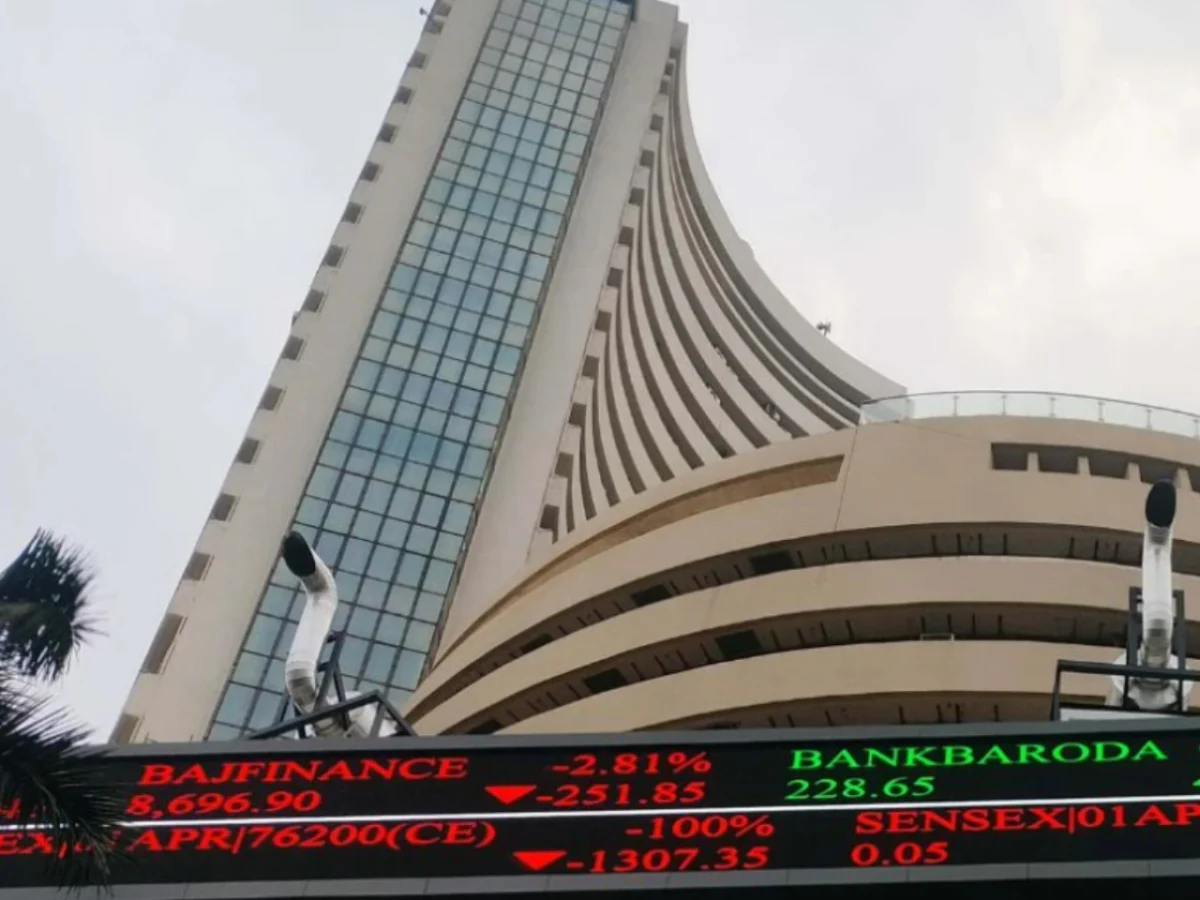
Mumbai, June 24, 2026 – The Indian equity markets experienced a day of intense volatility on Wednesday, June 24, 2026, as investors grappled with cautious global cues and the lingering aftershocks of a staggering Rs 5.77 lakh crore investor wealth wipeout in the preceding session. While robust performances from the IT sector and select banking stocks provided crucial support, persistent weakness in automobiles, metals, and insurance kept benchmark indices largely flat, with the Nifty 50 hovering around the 23,820 mark. The day underscored a market in search of stability, balancing improving domestic fundamentals against a backdrop of global uncertainty.
Main Facts: A Market in Flux
Wednesday’s trading session opened with a sense of apprehension, following Tuesday’s significant downturn. The BSE Sensex initially gained, while the NSE Nifty 50 tracked a marginal increase, signalling an attempt at recovery. However, the gains proved fragile, reflecting deep-seated investor caution. The market’s resilience was primarily attributed to defensive buying in technology and pharmaceutical stocks, alongside a mild technical rebound in some banking heavyweights. Conversely, rate-sensitive sectors like auto and insurance, coupled with commodity-linked metals, faced considerable selling pressure, effectively capping overall market upside.
The overarching narrative for the day was one of sectoral rotation and selective stock picking. Investors, still reeling from the previous day’s significant losses, demonstrated a clear preference for companies perceived as having strong fundamentals and clearer earnings visibility, particularly those less exposed to immediate global economic headwinds or interest rate fluctuations. The day’s trading painted a picture of a bifurcated market, where strong individual performances were offset by broad-based weakness in other key segments, leading to a largely flat close for the Nifty despite intraday swings.
Chronology of a Volatile Day
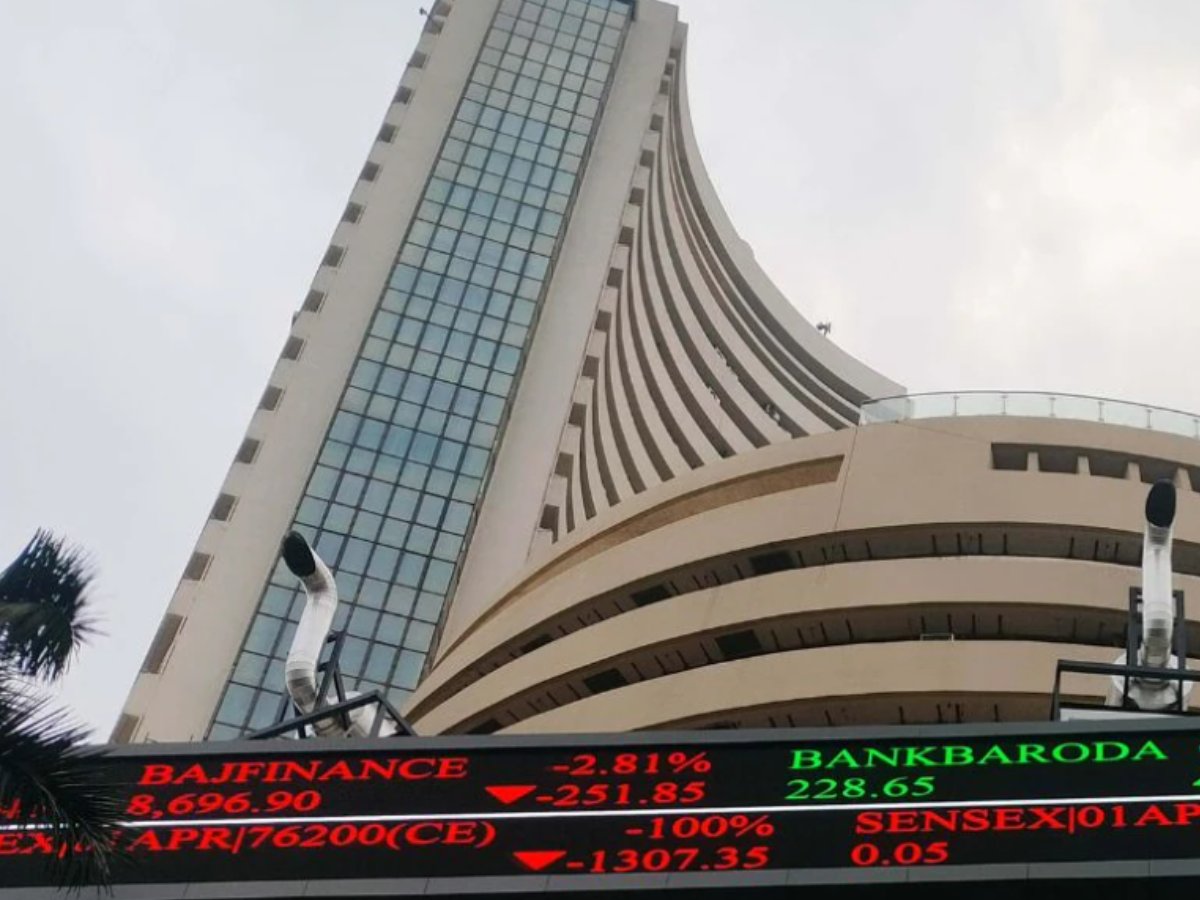
The trading day commenced with a cautious yet hopeful tone. The BSE SENSEX opened at 76,229.76 against Tuesday’s close of 76,200.68, quickly moving to touch an early high of 76,514.79. Similarly, the NSE NIFTY 50 began its day at 23,795.80, slightly below its previous close of 23,824.10, before attempting to rally to an intraday high of 23,895.30. These initial gains, however, proved unsustainable as selling pressure emerged in key sectors.
)
By 09:51 AM, the Sensex was trading at 76,310.90, up by 110.22 points or 0.14 per cent, indicating a moderate uplift from its opening. The Nifty, lagging slightly, was marginally in the red at 09:53 AM, down 1.85 points or 0.01 per cent at 23,822.25. This early divergence highlighted the mixed sentiment pervading the market, with the Nifty struggling to hold onto positive territory due to the drag from heavyweights in auto, metal, and insurance sectors.
Throughout the morning, market participants observed a tug-of-war between buying interest in IT and certain financial stocks and persistent profit-booking or liquidation in other segments. This dynamic kept both indices within a relatively narrow range, preventing any decisive breakout in either direction. The day’s trajectory was a testament to the fragile investor confidence, where every positive trigger was met with counter-balancing caution, ensuring the market remained firmly within a volatile, sideways trend. The Nifty ultimately closed largely flat around the 23,820 mark, reflecting the balanced yet tense interplay of market forces.

Supporting Data: The Numbers Behind the Movements
The financial figures from Wednesday’s session underscore the nuanced performance of the Indian market. The BSE SENSEX, despite opening marginally higher, ultimately struggled to sustain significant gains, registering an increase of 131.29 points or 0.17 per cent to stand at 76,331.97 points. The NSE NIFTY 50, a broader representation of the market, mirrored this subdued performance, recording a minor increase of 3.95 points or 0.02 per cent, settling at 23,828.05 points by mid-day.
The market’s underlying volatility was evident in its intraday ranges. The Sensex traded between a low of 76,121.59 and a high of 76,514.79, while the Nifty saw swings between 23,789.25 and 23,895.30. These fluctuations underscored the rapid shifts in sentiment and the intense battle between buyers and sellers.
)
Sectoral Performance and Key Stock Movements (Early Trends):
-
Top Gainers (Nifty):
)
- Tech Mahindra: Led the pack with a robust surge of 2.66% to 2.75%, trading around Rs 1,452.90 to Rs 1,454.50. This performance was indicative of renewed interest in the IT sector.
- Dr Reddy’s Laboratories: Rose by 2.47% to Rs 1,333.50, highlighting a defensive tilt towards pharmaceutical stocks.
- ICICI Bank: Climbed 1.61% to Rs 1,359.65, demonstrating strength in select private sector banks.
- Infosys: Added 1.37% to Rs 1,043.40, further solidifying the IT sector’s positive contribution.
- Other notable gainers included TCS, HCL Tech, HDFC Bank, Kotak Bank, Trent, Apollo Hospitals, IndiGo, Adani Enterprises, Bajaj Finance, Asian Paints, LT, and Power Grid, which saw gains ranging from 0.23% to 0.94%.
-
Top Losers (Nifty):
- Bajaj Auto: Was the biggest laggard, sliding 2.56% to Rs 9,768.00, reflecting broader weakness in the auto sector.
- Maruti Suzuki: Declined 1.36% to Rs 13,266.00, reinforcing the pressure on automotive manufacturers.
- Metal Stocks: Tata Steel, Hindalco, and JSW Steel fell between 1.42% and 1.61%, indicative of global commodity price concerns.
- Grasim: Slipped 1.23%, adding to the materials sector’s woes.
- Insurance Companies: HDFC Life and SBI Life each dropped nearly 2%, underscoring vulnerability in the financial services segment.
- Other significant contributors to the downside included Bharti Airtel, NTPC, Reliance Industries, Hindustan Unilever, Wipro, Titan, ONGC, Bajaj Finserv, SBI, and Adani Ports, with over 30 stocks in the Nifty 50 trading in the negative territory.
Macroeconomic Indicators:
The Indian Rupee remained under pressure, trading near 94.67–94.89 against the US Dollar, a factor that often heightens investor caution due to its implications for imports, inflation, and foreign capital flows. Conversely, crude oil prices offered some relief, easing to around $76–$79 per barrel following a historic US-Iran peace deal, which typically bodes well for India, a major oil importer. However, "residual anxieties regarding the final implementation of the accord" tempered the optimism from lower crude prices.
)
Official Responses and Expert Insights
Market experts provided valuable perspectives on the underlying dynamics of Wednesday’s volatile session, offering both explanations for current trends and guidance for investors.
Abhishek Bhilwaria, Partner at BhilwariaFinserv, articulated the market’s struggle for equilibrium. "Both the indices are trading on a mixed and highly volatile note as the market attempts to stabilise after a sharp sell-off that wiped out nearly Rs 5.77 lakh crore in investor wealth," he stated. Bhilwaria highlighted several immediate headwinds, primarily global in nature. "Local equities are facing immediate headwinds from global tech-led de-rating, particularly following an earnings revenue guidance cut from IT major Accenture and profit-booking in Asian tech giants like South Korea’s Kospi and Taiwan’s market."
)
He further elaborated on the geopolitical and currency factors influencing investor sentiment. "Furthermore, while a historic US-Iran peace deal recently eased crude oil prices to around $76–$79 per barrel and lowered geopolitical risk, residual anxieties regarding the final implementation of the accord, paired with a depreciating Indian Rupee trading near 94.67–94.89 against the US Dollar, continue to keep investors cautious." Bhilwaria also pointed out the visible "sectoral rotation," observing that "defensive counters like Nifty Pharma surging, alongside a mild technical rebound in select software heavyweights, while rate-sensitive sectors like Bank Nifty face consolidation after a massive 8% June rally." This observation underscores a strategic shift in capital towards safer havens and sectors perceived to be more resilient.
Piyush Jhunjhunwala, Founder & CEO of Stockify, echoed the sentiment of a market seeking stability amidst global flux. "Trading within the Sensex & Nifty indicates that there’s an attempt at finding stability between improving levels of domestic fundamentals and uncertainty of the world," he commented. Jhunjhunwala noted the selective nature of current investment strategies. "There was a significant correction on yesterday’s close; investors are now selectively placing buy orders on quality shares based on current valuations correlated with lower crude prices and Reserve Bank action." However, he also stressed the persistent risk aversion. "However, investors remain risk-averse due to uncertainty over the economic ramifications of continued changes in US Federal Reserve policy, as well as flows from FIIs and weakness in global technology-based equities."
)
Both experts underscored the pivotal role of global factors, particularly US monetary policy and international tech performance, in shaping the Indian market’s trajectory. Their insights collectively paint a picture of a market driven by a complex interplay of international developments, domestic economic resilience, and a cautious approach to capital allocation.
Implications for Investors and the Broader Economy
The sustained volatility and the significant wealth erosion witnessed in recent sessions carry profound implications for both individual investors and the broader Indian economy. The market’s current state of flux demands a disciplined and strategic approach, moving away from short-term speculative plays.
)
Immediate Investment Strategy:
Abhishek Bhilwaria advised investors to note the immediate technical support zones: around 76,400–76,500 for the Sensex and 23,600–23,800 for the Nifty. He emphasized the importance of a long-term perspective. "They should maintain a disciplined, staggered investment approach rather than chasing short-term momentum, focusing strictly on high-quality large-caps and defensive companies backed by concrete earnings visibility." This strategy aims to mitigate risks associated with market swings and capitalize on fundamental strength.
Piyush Jhunjhunwala further elaborated on the virtues of a value-oriented approach. "Now is not an opportune time to chase share price movement based on momentum. Investors should be focused on purchasing fundamentally sound companies with reasonable prospects for being able to generate sustainable earnings while trading at fair prices," he stated. This advice highlights the importance of intrinsic value over transient market sentiment. He also stressed the need for a well-thought-out investment plan. "Continued volatility is expected in the markets; thus, evidence suggests that a disciplined investment strategy, as well as developing an allocation schedule, will provide far greater returns than making investment decisions by speculating over shorter periods of time."
)
Broader Economic Implications:
The "global tech-led de-rating" and the guidance cut from Accenture suggest potential headwinds for India’s robust IT services sector, which is a major contributor to exports and employment. While a "mild technical rebound" was observed, sustained global tech weakness could impact future earnings and investor confidence in this crucial sector.
The depreciating Rupee, trading near 94.67–94.89 against the US Dollar, poses a dual challenge. While it makes Indian exports more competitive, it simultaneously increases the cost of imports, potentially fueling domestic inflation. This could put pressure on the Reserve Bank of India (RBI) regarding its monetary policy decisions, especially concerning interest rates. Any hawkish stance from the RBI, aimed at curbing inflation, could further impact rate-sensitive sectors like banking, auto, and real estate, which thrive on lower borrowing costs.
)
The easing of crude oil prices due to the US-Iran peace deal is a significant positive for India, given its heavy reliance on oil imports. Lower crude prices help manage the current account deficit, reduce import bills, and provide relief from inflationary pressures. However, the "residual anxieties" about the deal’s implementation imply that this benefit might not be entirely stable or long-lasting, requiring continuous monitoring.
The "uncertainty over the economic ramifications of continued changes in US Federal Reserve policy" and FII flows remain critical factors. Any perceived shift in the US Federal Reserve’s stance on interest rates can trigger capital outflows from emerging markets like India, directly impacting liquidity and market sentiment. Foreign Institutional Investors (FIIs) are key drivers of market momentum, and their risk-averse posture or withdrawal can significantly dampen market performance.
)
Future Outlook:
The market is likely to remain susceptible to global news flows, particularly concerning inflation data, central bank policies (especially the US Fed and RBI), and geopolitical developments. Corporate earnings results in the upcoming quarters will also play a crucial role in shaping investor confidence and driving sectoral performance.
In this environment, "the accumulation of wealth over the long run is going to depend more on selecting quality securities than on timing the markets," as Mr. Jhunjhunwala succinctly put it. Investors are urged to focus on strong company fundamentals, robust balance sheets, and consistent earnings growth rather than getting swayed by short-term market noise. A well-diversified portfolio, strategically allocated across different asset classes and fundamentally strong sectors, will be key to navigating the anticipated continued volatility and achieving sustainable long-term returns. The current period, while challenging, also presents opportunities for discerning investors to accumulate quality assets at potentially attractive valuations.
