

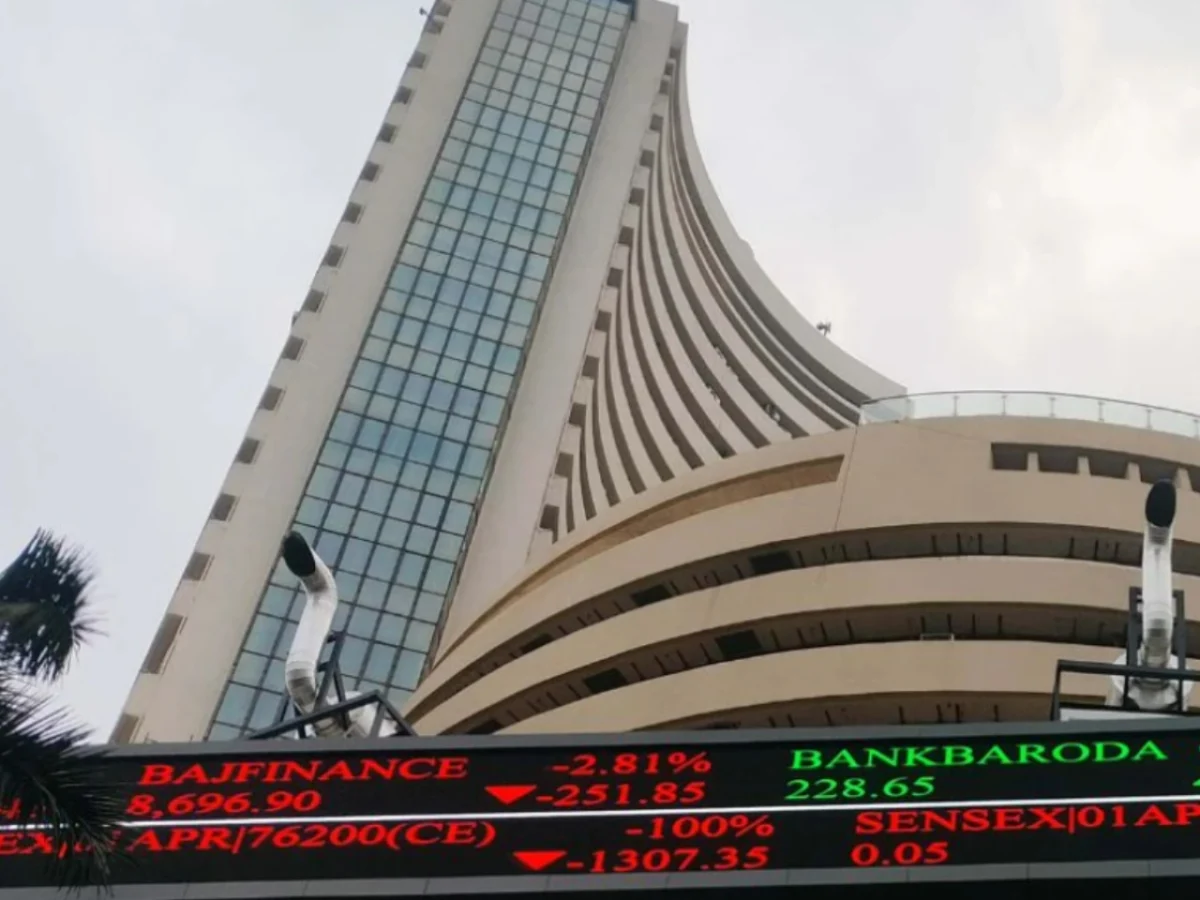
Mumbai, India – July 1, 2026 – Indian benchmark indices, the Sensex and Nifty, commenced trading on a positive note on Wednesday, July 1, 2026, demonstrating resilience amidst a backdrop of mixed global cues and persistent geopolitical uncertainties. Early trade saw a significant uplift driven by robust performances in sectors such as automotive, fast-moving consumer goods (FMCG), pharmaceuticals, and cement, signaling a potential shift in investor sentiment towards more defensive and domestically-focused segments. Conversely, select financial and information technology (IT) stocks experienced downward pressure, capping broader market gains and highlighting the selective nature of the day’s rally.
The early hours of trading presented a nuanced picture: while the overall market trend pointed upwards, the underlying dynamics suggested a cautious approach from investors, influenced by a confluence of domestic resilience and external headwinds. Key triggers for the day’s movements included ongoing geopolitical tensions in the Middle East, initial concerns over weak monsoon projections, the dichotomy of continued foreign institutional investor (FII) selling against strong domestic institutional investor (DII) buying, and fluctuating global commodity prices. This intricate web of factors shaped the early market narrative, prompting experts to advise a stock-specific and fundamentally driven investment strategy.
Main Facts: A Resilient Opening Amidst Global Jitters
On Wednesday morning, July 1, 2026, Indian equities opened in the green, defying some of the subdued sentiment observed in international markets. The BSE Sensex, India’s bellwether index, climbed by 279.27 points, or 0.37%, to reach 76,757.94 by 9:50 am. Simultaneously, the NSE Nifty, representing the broader market, advanced by 81.75 points, or 0.34%, settling at 23,947.50 during the same period. This initial surge was predominantly powered by strong buying interest in sectors traditionally considered defensive or linked to domestic consumption and infrastructure.
The automotive sector, often seen as a barometer for consumer confidence, led the charge, supported by encouraging June auto sales data. FMCG stocks also demonstrated robust performance, benefiting from their non-cyclical nature and consistent demand. The pharmaceutical sector, a perennial safe haven, found favor amidst ongoing global health concerns and stable demand. Furthermore, cement companies, buoyed by expectations of continued infrastructure development, contributed positively to the market’s ascent.
)
However, the rally was not uniform. The upward momentum was partially offset by weaknesses in specific segments, particularly within the financial and information technology sectors. This selective market action underscores a cautious investor approach, where capital is being strategically deployed into areas perceived to offer stability and growth visibility in the current economic climate. The market’s ability to absorb international volatility and maintain a positive trajectory in early trade points to underlying domestic strengths, albeit with an awareness of prevailing global challenges.
Chronology of Early Trade: A Morning of Measured Gains
The trading day for Indian equities began with an air of tentative optimism on July 1, 2026. The initial opening bell saw both the Sensex and Nifty register gains, indicating a readiness among domestic investors to capitalize on what was perceived as attractive valuations after recent market dips.

9:15 am – Market Open: The Sensex opened around 76,478, and the Nifty around 23,865, both immediately ticking upwards, setting the tone for a positive start. The initial minutes saw bargain hunting, particularly in the auto and FMCG segments.
9:30 am – Initial Momentum Builds: As the market settled into its rhythm, the positive momentum began to solidify. Sectoral flows became clearer, with auto, FMCG, pharma, and cement stocks witnessing sustained buying. Early reports of June auto sales data provided a fillip to the automotive segment, reinforcing investor confidence. Conversely, some profit-booking and cautious sentiment began to emerge in the IT and financial spaces, perhaps due to global tech sector concerns or ongoing regulatory reviews.
)
9:50 am – Key Milestones Reached: By 9:50 am, the Sensex had comfortably surpassed the 76,700 mark, trading at 76,757.94, up 0.37%. The Nifty, mirroring this strength, reached 23,947.50, a gain of 0.34%. At this juncture, specific stocks began to stand out. Mahindra & Mahindra (M&M) and Hindustan Unilever (HUL) were leading the pack, both showing gains of 2.34%. Maruti Suzuki followed suit with a 1.91% increase. Titan also contributed significantly with a 1.65% rise. Other notable gainers included Eternal (+1.44%), Asian Paints (+1.31%), Adani Ports (+1.27%), UltraTech Cement (+1.15%), and Sun Pharma (+0.78%). Even some IT majors like TCS (+0.68%) and Infosys (+0.54%) showed marginal gains despite the overall sector’s drag, indicating a highly selective buying approach. Meanwhile, early laggards included Bajaj Finserv, dropping 1.8%, and Tech Mahindra, down 1.54%.
10:00 am – Sustained Growth with Sectoral Shifts: Just ten minutes later, by 10:00 am, the market continued its upward trajectory, albeit with some minor shifts in leadership and a widening gap between gainers and losers within sectors. M&M extended its gains to 2.67%, HUL to 2.53%, Nestle India notably jumped 2.49%, and Maruti climbed 2.20%. Titan further rose to 1.86%. Reliance Industries also saw increased buying, up 1.07%. However, the pressure on IT stocks intensified, with Tech Mahindra becoming the biggest loser at -2.19%, followed by Bajaj Finserv at -1.70%, and HCLTech at -1.22%. Banking heavyweights like HDFC Bank and ICICI Bank also edged lower, contributing to the financial sector’s cautious performance. Out of the 50 stocks on the Nifty, 28 advanced, while 22 declined, illustrating the bifurcated nature of the market’s early rally. This snapshot confirmed that while the broader indices were up, the gains were concentrated, and specific sectors faced headwinds.
)
Supporting Data: Dissecting the Market’s Components
The early morning trade on July 1, 2026, provided a wealth of data points that painted a detailed picture of the Indian market’s health and underlying drivers.
Benchmark Performance (as of 9:50 am):
)
- BSE Sensex: 76,757.94 points, up 279.27 points (0.37%)
- NSE Nifty: 23,947.50 points, up 81.75 points (0.34%)
Sectoral Performance:
- Leading Gains: Auto, FMCG, Pharmaceuticals, Cement. These sectors demonstrated robust buying interest, likely due to a combination of defensive characteristics, domestic demand resilience, and positive news flows (e.g., June auto sales).
- Capping Gains/Dragging: Select Financials and IT names. The IT sector, in particular, faced headwinds, possibly due to global tech slowdown concerns, while financial stocks showed mixed performance, with some large banks facing selling pressure.
Top Gainers (as of 9:50 am & 10:00 am):
)
- M&M: +2.34% (Rs 3141.95 at 9:50 am) -> +2.67% (at 10:00 am)
- Hindustan Unilever (HUL): +2.34% (Rs 2168.50 at 9:50 am) -> +2.53% (at 10:00 am)
- Maruti: +1.91% (Rs 14,390.00 at 9:50 am) -> +2.20% (at 10:00 am)
- Titan: +1.65% (Rs 4478.15 at 9:50 am) -> +1.86% (at 10:00 am)
- Nestle India: Not explicitly mentioned at 9:50 am, but +2.49% by 10:00 am.
- Other significant contributors: Eternal (+1.44%), Asian Paints (+1.31%), Adani Ports (+1.27%), UltraTech Cement (+1.15%), Sun Pharma (+0.78%), TCS (+0.68%), ITC (+0.57%), Infosys (+0.54%), Axis Bank (+0.49%), Bharti Airtel (+0.46%), Reliance (+0.42% at 9:50 am -> +1.07% at 10:00 am), Power Grid (+0.24%), SBI (+0.21%), BEL (+0.16%), Kotak Bank (+0.15%), HDFC Bank (+0.11%), and Bajaj Finance (+0.07%).
Top Losers (as of 9:50 am & 10:00 am):
- Bajaj Finserv: -1.8% (Rs 1749.30 at 9:50 am) -> -1.70% (at 10:00 am)
- Tech Mahindra: -1.54% (Rs 1383.55 at 9:50 am) -> -2.19% (at 10:00 am)
- HCLTech: Not explicitly mentioned at 9:50 am, but -1.22% by 10:00 am.
- Other laggards: L&T -0.51%, Tata Steel -0.37%, NTPC -0.36%, IndiGo -0.35%, ICICI Bank -0.28%, and Trent -0.21%.
Institutional Investor Activity:
)
- FIIs (Foreign Institutional Investors): Continued to be net sellers, indicating ongoing outflows of foreign capital from Indian equities. This trend can often exert downward pressure on markets, especially in large-cap segments.
- DIIs (Domestic Institutional Investors): Demonstrated strong buying support, acting as a crucial cushion against FII selling. This robust domestic participation, often through mutual funds and insurance companies, highlights growing local confidence and capital allocation towards the Indian market.
Technical Levels (as per Abhishek Bhilwaria, BhilwariaFinserv – Partner):
- Nifty Support: 23,650–23,750
- Nifty Resistance: 24,000–24,050
- Sensex Support: 76,000
- Sensex Resistance: Near 76,900
These levels serve as critical psychological and trading benchmarks for intraday and short-term movements, with a breach potentially signaling a shift in market momentum.
Global Market Overview (as of July 1, 2026, early trade):
)
- US Futures: Dow Jones was down 0.34% (at 52,141.86), while the S&P 500 gained 0.79% (at 7,499.36) and the Nasdaq jumped 1.52% (at 26,213.72). This mixed picture suggests a divergence, possibly driven by specific sector performances or pre-market earnings reports.
- Asian Markets: Broad gains were observed across much of Asia. Taiwan Weighted was up 1.99% (at 47,044.00), Shanghai Composite +1.08% (at 4,138.65), and Nikkei 225 +0.87% (at 70,674.00). This regional strength could be attributed to various factors including recovery hopes, local economic data, or specific policy announcements.
- GIFT Nifty: Traded 0.22% higher at 24,058.00, suggesting a cautiously optimistic sentiment for Indian indices among international participants, though an earlier reading had it down by 26 points, indicating volatility.
- Laggards in Asia: Hang Seng slipped 0.64% (to 22,881.02), and KOSPI fell 1.00% (to 8,392.11), reflecting specific economic or political pressures in those regions.
Commodities and Currencies:
- Brent Crude: Rose 0.36% to $73.21 per barrel, indicating steady global demand or supply concerns.
- WTI Crude: Gained 0.33% to $69.73 per barrel, mirroring Brent’s trend.
- Gold: Dropped 0.80% to $3,975.62, often seen as a risk-off asset, its decline could suggest a slight return to risk appetite or strengthening dollar.
- Dollar Index: Firmed 0.13% to 101.29, indicating a stronger US dollar against a basket of major currencies.
- USD/INR: Remained flat at 94.6675, suggesting relative stability of the Indian Rupee against the US Dollar despite global currency movements.
Cryptocurrency Market:
)
- Bitcoin (BTC): Started July under continued selling pressure, briefly falling to around $57,700. This followed a challenging June, where BTC ended down 20.45%, leaving nearly 45% of the total Bitcoin supply "underwater" – meaning purchased at prices higher than the current market value. The strengthening dollar and the Japanese yen’s slide to a 40-year low were cited as contributing factors.
Official Responses: Expert Insights and Market Commentary
The early market movements and the broader economic landscape elicited various interpretations and advice from financial experts. Their perspectives collectively painted a picture of a market navigating complex domestic and global factors.
Abhishek Bhilwaria (BhilwariaFinserv – Partner) highlighted the immediate drivers: "The Sensex and Nifty opened with gains, trading near 76,647 and 23,913, respectively, driven by a recovery attempt amidst geopolitical tensions in the Middle East and weak early monsoon projections." He further emphasized the dual nature of institutional flows, noting, "While FII selling persists, DII support and June auto sales data offer a cushion." Bhilwaria also provided critical technical levels for investors to monitor, including "Nifty support at 23,650–23,750 and resistance at 24,000–24,050, alongside Sensex support at 76,000 and resistance near 76,900." His advice underscored the importance of technical analysis in understanding short-term market dynamics.
)
Piyush Jhunjhunwala (Stockify) offered a more holistic view of the market sentiment: "Today’s market is kind of showing a cautious but still sturdy tone, with the Sensex and Nifty managing to recover a bit after the recent dips." He attributed this resilience to "bargain buying in auto, plus a few specific defensive segments." However, Jhunjhunwala cautioned that overall investor sentiment remains "pulled around by a bunch of global and local triggers," citing "geopolitical unease in West Asia, crude oil prices moving around, and US Treasury yields rising," which collectively "are keeping global risk appetite on a leash." He reiterated the institutional flow dynamics: "Foreign institutional investors, FIIs, have continued as net sellers, though, and in contrast, there’s been fairly strong buying from domestic institutional investors, DIIs, which has helped limit the downside impact." For investors, his core message was clear: "Don’t overreact to the short-term noise; keep the discipline." He anticipates a period of consolidation, suggesting, "Markets may stay in a range for a while until there’s clearer visibility on global macroeconomic shifts, US economic data, expectations on interest rates, and the geopolitical situation."
Hitesh Tailor (Technical Research Analyst at Choice Broking) focused on the pre-market indicators and immediate outlook: "With Gift Nifty trading around 23,978, down by 26 points, the market is indicating subdued opening cues for domestic indices." He observed that "The softer Gift Nifty trend suggests a cautious start, and traders are likely to remain watchful near key support and resistance levels during the session." His analysis points to the interconnectedness of global and domestic sentiment, with the Gift Nifty often acting as a bellwether for Indian market openings.
)
Akshat Siddhant (Lead Quant Analyst, Mudrex) provided specific commentary on the cryptocurrency market, highlighting the challenges faced by Bitcoin: "Bitcoin started July under continued selling pressure, briefly falling to around $57,700 as the dollar strengthened, while the Japanese yen’s slide to a 40-year low affected risk assets." He detailed the extent of the recent downturn, stating, "BTC ended June down 20.45%, leaving nearly 45% of the total Bitcoin supply underwater, a level last seen in 2019." Looking ahead, Siddhant emphasized the significance of upcoming policy signals: "Investors are now focused on Fed Chair Kevin Warsh’s speech, which could shape expectations for monetary policy in the months ahead. A dovish tone from the Fed chair could help Bitcoin reclaim the support at $60,000. However, a hawkish narrative could extend the decline toward the key $55,000 support zone." This analysis underscores the direct impact of macroeconomic policy, particularly from the US Federal Reserve, on the highly sensitive crypto market.
Implications: Navigating Volatility and Identifying Opportunities
The early trading session on July 1, 2026, and the expert commentary surrounding it, offer several critical implications for investors and the broader economic outlook. The market’s current state suggests a period of heightened selectivity and strategic positioning rather than broad-based exuberance.
)
For Investors: A Prudent and Disciplined Approach
The consensus among experts leans towards a cautious yet opportunistic investment strategy. Abhishek Bhilwaria explicitly advises, "Investors are advised to adopt a stock-specific approach, focusing on defensive sectors like pharma and healthcare during this volatile phase." This guidance is particularly pertinent given the current blend of domestic strengths and global uncertainties. Defensive sectors are typically less impacted by economic cycles and global shocks, offering a relative shield against market turbulence.
Piyush Jhunjhunwala reinforces this long-term perspective: "Long-horizon participants should keep their attention on companies with fundamentals that actually look solid, plus earnings visibility that stays healthy, rather than chasing momentum because that can get messy." This advice is crucial for mitigating risks associated with short-term speculative movements. He also emphasizes diversification: "Diversification across industry pockets, staggered entries via SIPs [Systematic Investment Plans], and holding enough liquidity are still the more sensible playbook choices right now." These strategies are designed to average out investment costs, reduce risk concentration, and provide flexibility in a dynamic market environment. Jhunjhunwala remains optimistic about India’s long-term potential despite near-term challenges: "Near-term turbulence might keep popping up, but India’s structural growth narrative continues to point toward a constructive long-term investment outlook for patient investors." This suggests that underlying economic fundamentals in India remain strong, promising future returns for those who can withstand short-term fluctuations.
)
Market Outlook: Cautious Optimism with Defined Boundaries
Hitesh Tailor’s assessment of the near-term outlook is "cautiously optimistic despite subdued Gift Nifty indications." He believes that "Supportive global cues and continued strength in domestic institutional buying may help limit downside, though investors are likely to remain selective after the recent corrective phase." The interplay of global sentiment and robust DII activity is expected to provide a floor for the market, preventing significant downturns. However, the market’s ability to "sustain above key support levels will be crucial for maintaining stability," and a "decisive move above immediate resistance could restore bullish momentum in the sessions ahead." This highlights the importance of technical levels in determining the market’s short-to-medium-term trajectory.
Broader Economic and Geopolitical Impact:
)
- Geopolitical Tensions (Middle East): The ongoing tensions contribute to global risk aversion, influencing crude oil prices and investor confidence. While Indian markets showed resilience, a significant escalation could still impact trade routes, commodity costs, and overall economic stability.
- Monsoon Projections: "Weak early monsoon projections" are a critical domestic concern. India’s agriculture sector heavily relies on the monsoon, and a deficient monsoon can lead to reduced agricultural output, higher food inflation, and subdued rural demand, potentially dampening overall economic growth. This factor will be closely monitored in the coming weeks.
- Crude Oil and Inflation: Rising Brent and WTI crude prices, even if modest, pose an inflationary risk for India, a major oil importer. Sustained high oil prices can impact corporate margins and consumer spending, potentially prompting the Reserve Bank of India to maintain a hawkish stance on interest rates.
- US Monetary Policy (Fed Chair Speech): The impending speech by Fed Chair Kevin Warsh holds significant implications, not just for global financial markets but specifically for the cryptocurrency space. A "dovish tone" could signal looser monetary policy, potentially boosting risk assets like Bitcoin, while a "hawkish narrative" could extend declines. This demonstrates how global central bank policies exert a far-reaching influence across asset classes.
- FII vs. DII Dynamics: The continued FII selling, offset by DII buying, underscores a maturing Indian market where domestic capital is increasingly playing a stabilizing role. While FII outflows can create short-term volatility, strong DII participation indicates confidence in India’s long-term growth story and provides essential liquidity.
In conclusion, the Indian market’s performance on July 1, 2026, reflects a complex interplay of internal strengths and external pressures. While specific sectors demonstrated robust growth, the overall sentiment remains one of cautious optimism. Investors are advised to prioritize fundamental analysis, diversification, and a long-term perspective to navigate the prevailing volatility, recognizing India’s structural growth narrative amidst a globally uncertain environment. The coming weeks will be crucial in observing how geopolitical developments, monsoon progression, and global monetary policy signals shape the market’s trajectory.
