

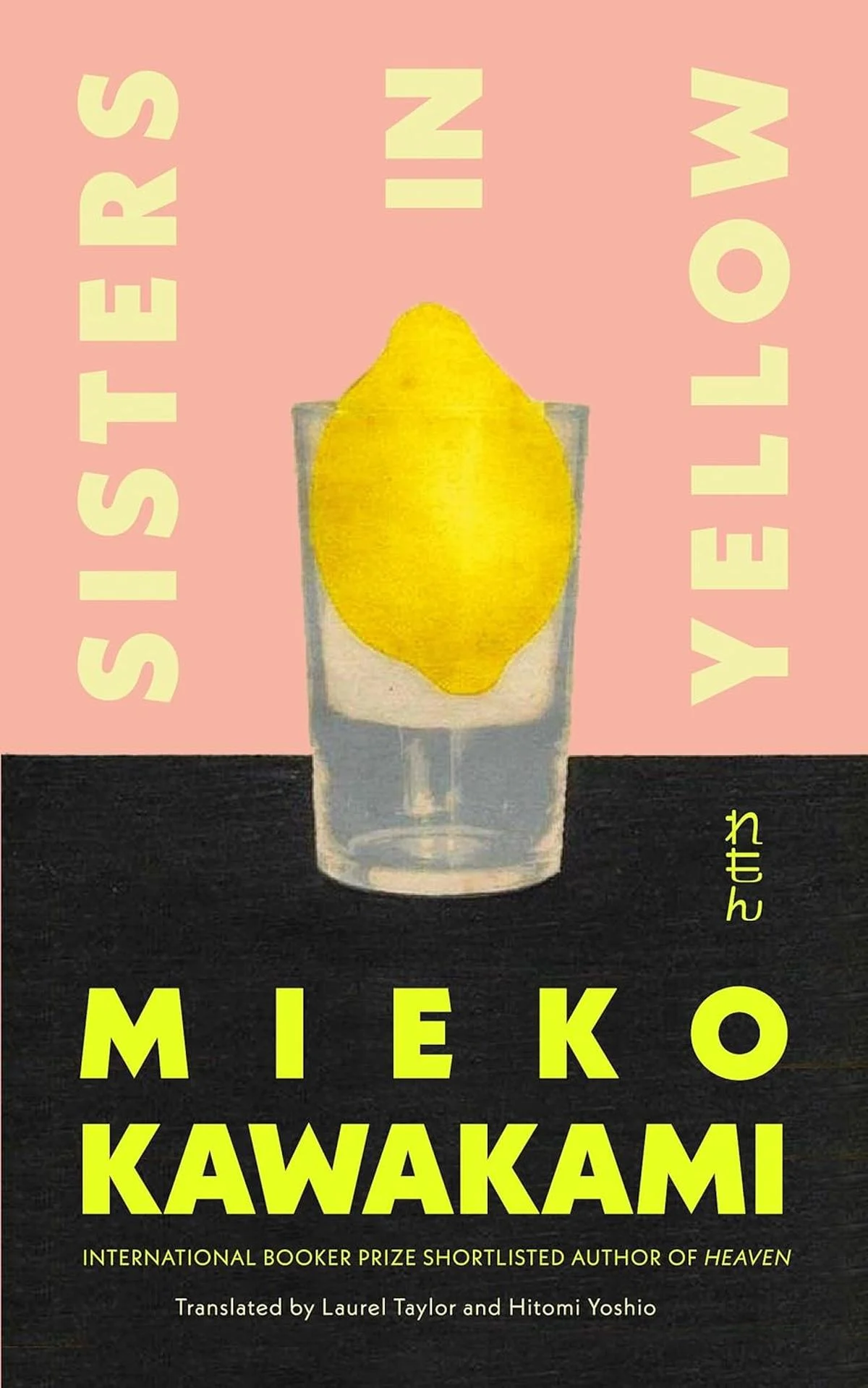
The neon-drenched streets of Tokyo have long served as a canvas for literary exploration, but few contemporary writers navigate its shadows with the surgical precision of Mieko Kawakami. In her latest novel, Sisters in Yellow, translated into English by the formidable duo of Laurel Taylor and Hitomi Yoshio, the International Booker Prize-shortlisted author returns to the themes that have defined her career: the vulnerability of the female body, the crushing weight of economic precariousness, and the resilient, often desperate, bonds formed in the margins of society.
Moving beyond the visceral physiological focus of Breasts and Eggs and the harrowing psychological depths of Heaven, Sisters in Yellow is a sprawling, atmospheric epic that functions as both a noir-tinted thriller and a scathing indictment of late-capitalist Japan. It is a work that draws heavily from Kawakami’s own history—a history she famously refers to as her graduation from "hostess university"—to paint a portrait of the "world at night" that is as authentic as it is heartbreaking.
Main Facts: A Narrative of Marginalization and Memory
At its core, Sisters in Yellow is the story of four women—Hana, Kimiko, Ran, and Momoko—whose lives intersect in the flickering twilight of 1990s Tokyo. These are women for whom the "Economic Miracle" of Japan is a distant myth. They exist in the "grey zones" of the city, residing in dilapidated housing, surviving on a rotation of convenience store bento boxes and instant ramen, and finding their only solace in the "canned laughter" of television variety shows.
The novel’s inciting incident occurs in the present day, when 40-year-old Hana encounters a newspaper report detailing the arrest of her former mentor and friend, Kimiko. Charged with a litany of crimes including abduction, battery, and blackmail, Kimiko’s sudden reappearance in the public eye acts as a violent rupture in Hana’s settled life. This discovery serves as the gateway to a massive retrospective narrative, transporting the reader back to the mid-90s, a period of profound social and economic transition in Japan.
Kawakami utilizes this framework to explore the "invisibility" of the underclass. As the narrative suggests, these women are so far removed from the social safety net that should they vanish, "few would know or care." Yet, within this void, they construct a "chosen family," centered around a small, smoke-filled bar named Lemon—a name chosen by Hana for its feng shui associations with yellow, the color of prosperity and hope.
Chronology: From the 1990s Bubble Burst to the Present Day
The chronological structure of the novel is essential to understanding its thematic weight. By anchoring the story in the 1990s, Kawakami captures Japan during its "Lost Decade," a period following the collapse of the asset price bubble. This was a time when the traditional structures of Japanese society—lifetime employment, the nuclear family, and steady upward mobility—began to disintegrate, leaving the most vulnerable members of society to fend for themselves.
The Flight from Domesticity (Early 1990s)
The journey begins with Hana’s escape. At fifteen, she flees a home defined by neglect and an unreliable mother. Her arrival in the "world at night" is not a descent into depravity, but a quest for agency. She meets Kimiko, an older woman who is both maternal and enigmatic, a figure who offers Hana a path forward in the form of managing "Lemon."

The "Springtime of Youth" at Lemon
The mid-90s chapters represent the novel’s heartbeat. This is where the "Sisters in Yellow" are formed. Hana recruits Ran and Momoko, two other young women adrift in the city. For a brief, shimmering period, the bar becomes a sanctuary. Despite the seediness of their surroundings and the demands of the "night work," the women experience a sense of belonging. Kawakami masterfully captures the sensory details of this era: the smell of stale cigarettes, the warmth of oshibori (hot towels), and the neon glow that masks the decay of the buildings.
The Catastrophe and the Spiral (Late 1990s)
The narrative takes a dark turn when Lemon is destroyed in a fire. This event serves as a metaphor for the fragility of the lives they have built. Without the bar, the women are forced into increasingly desperate situations. The "yellow corner" of hope that Hana meticulously cultivated begins to gather dust as the reality of their economic status becomes inescapable. It is during this period that the moral compromises begin—leading to the "questionable decisions" and criminal activities that eventually result in Kimiko’s arrest decades later.
The Present-Day Reckoning
The novel circles back to the 40-year-old Hana. This framing device allows Kawakami to reflect on the long-term trauma of poverty. Hana is no longer the optimistic teenager seeking "prosperity" through feng shui; she is a woman haunted by the ghosts of her past, forced to reconcile the caring woman she knew as Kimiko with the criminal described in the headlines.
Supporting Data: Socio-Economic Realism and the "Hostess" Experience
To enrich the narrative, Kawakami integrates granular details about the mechanics of survival. One of the more controversial aspects of the novel—noted by critics as both fascinating and "rambling"—is the deep dive into the technicalities of credit card fraud and the predatory nature of the grey-market economy.
This isn’t merely filler; it serves as supporting data for Kawakami’s larger argument about systemic inequality. By detailing how the poor are forced into "black" or "grey" work, she illustrates how the legal and financial systems are rigged against those without capital. As the character En, a restaurant owner, tells Hana: "People with money make the rules to help themselves, and poor people get sucked dry."
Kawakami’s own background provides the "data" for the novel’s authenticity. Having worked in the Osaka and Tokyo nightlife industries before her literary ascent, she understands the hierarchy of the "water trade" (mizu shōbay). She captures the specific linguistic nuances of the bar world and the psychological toll of "keeping men company." This lived experience elevates the book from a mere social commentary to a visceral, first-person account of a subculture often caricatured in Western media.
Official Responses: Critical Reception and Authorial Context
Since its release, Sisters in Yellow has garnered significant attention from the international literary community. Critics have praised Kawakami’s ability to render the "texture" of the 1990s with such fidelity. The collaboration with translators Laurel Taylor and Hitomi Yoshio has been lauded for maintaining the rhythmic, sometimes breathless quality of Kawakami’s prose while navigating the complex slang of the Japanese underworld.

However, the novel has not been without its detractors. Some reviewers have pointed to its "didactic" nature, noting that Kawakami occasionally pauses the narrative to deliver "lectures" on the nature of money and class struggle. The "overly long exposition" regarding character backgrounds and the mechanics of crime has also been a point of contention, with some suggesting the novel’s 500+ page length could have been tightened.
Despite these critiques, the consensus remains that Kawakami is a vital voice in contemporary world literature. Her ability to blend the "thriller" genre with high-concept social critique places her in a lineage of Japanese writers like Natsuo Kirino (author of Out), who also explore the dark underbelly of female life in urban Japan.
Implications: The Enduring Legacy of the "Invisibles"
The implications of Sisters in Yellow extend far beyond the borders of Japan. At its heart, the novel is a global story about the feminization of poverty and the ways in which society fails those who do not fit into traditional roles.
1. The Critique of Meritocracy
Kawakami’s work serves as a powerful rebuttal to the idea of meritocracy. Through the characters of Hana and her sisters, she demonstrates that hard work and "unbridled optimism" are often no match for systemic barriers. The "canned laughter" they watch on TV is a constant reminder of a world that is "distracting" them from their own exploitation.
2. The Power of the "Chosen Family"
In a society like Japan’s, where blood lineage and corporate loyalty are traditionally paramount, Kawakami’s emphasis on "sisterhood" among strangers is a radical act. The novel suggests that when the state and the biological family fail, individuals must create their own systems of support. The "holding each other up" that the four women engage in is presented as the only true form of resistance against a "brutal" life.
3. The Persistence of Hope
Perhaps the most profound implication of the novel is the resilience of hope. Despite the "despair in the yellow paint" and the "dreary lives" of the protagonists, Hana remains a figure of quiet persistence. The "yellow" of the title is not just a feng shui superstition; it represents a refusal to be completely extinguished by the darkness of the city.
In conclusion, Sisters in Yellow is a monumental, if imperfect, achievement. It is a slow-burn narrative that demands patience but rewards the reader with a profound understanding of the human condition. Mieko Kawakami has once again proven that she is the preeminent chronicler of those who live in the shadows of the "disco ball" city, reminding us that even in the deepest despair, there is a "yellow corner" waiting to be found.
