

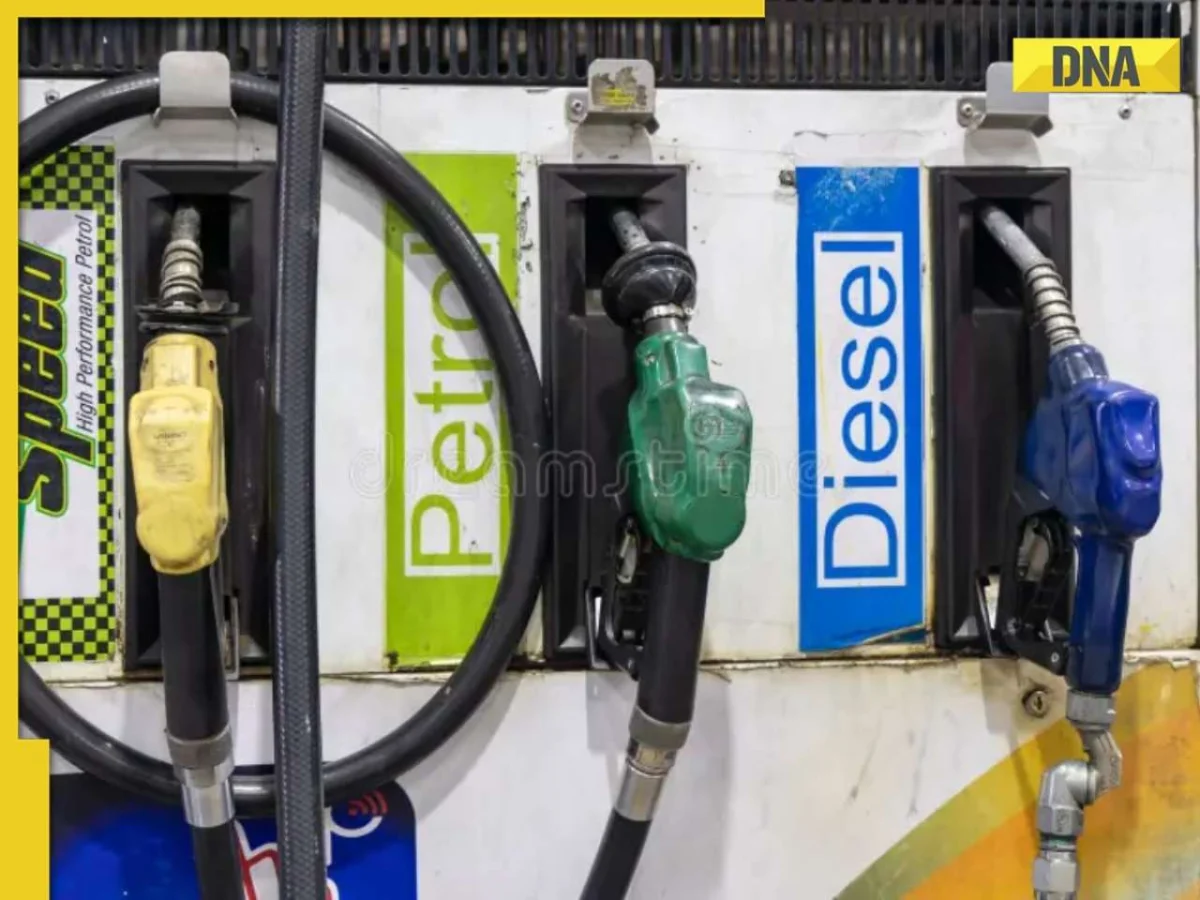
Mumbai, India – May 26, 2026 – India’s crucial fuel prices exhibited remarkable stability across major cities today, a welcome relief for consumers and a significant indicator of the nation’s economic resilience. In the bustling financial hub of Mumbai, petrol maintained its price at ₹111.21 per litre, while diesel was held firm at ₹97.83 per litre. This consistent pricing, which reflects a broader national trend, is largely attributed to a confluence of steady global crude oil market dynamics and the Indian government’s meticulously managed domestic tax policies.
The stability observed on May 26, 2026, extends beyond Mumbai. Preliminary reports from other metropolitan centres indicated similar trends, with Delhi’s petrol hovering around ₹96.72 and diesel at ₹89.62. Kolkata saw petrol at approximately ₹106.03 and diesel at ₹92.76, while Chennai recorded petrol at ₹102.63 and diesel at ₹94.24. This widespread calm in fuel prices underscores a period of predictable energy costs, offering a much-needed foundation for economic planning and household budgeting across the diverse Indian landscape. The current scenario contrasts sharply with periods of acute volatility, highlighting the strategic measures undertaken by both global and domestic players to foster a more stable energy environment.
Chronology: Navigating a Year of Fluctuations and Strategic Stability
The consistent fuel prices witnessed on May 26, 2026, are not an isolated event but rather the culmination of a year-long journey marked by careful policy calibration and a degree of global market stabilization. The path to this current plateau has involved navigating complex geopolitical landscapes, adapting to evolving global demand patterns, and implementing domestic strategies aimed at insulating consumers from external shocks.
Early 2025: Post-Election Dynamics and Policy Foundations
Following the national elections in late 2024, the Indian government, fresh with a renewed mandate, began laying the groundwork for its economic and energy policies for the ensuing term. The Union Budget presented in early 2025 outlined key fiscal priorities, which included a clear commitment to energy security and inflation control. While no drastic changes were made to fuel taxation immediately, the government signalled its intent to use strategic oil reserves and diversify import sources to mitigate future price volatility. There was a conscious effort to avoid any policy shifts that might disrupt economic recovery or burden the common citizen, especially after a period of global economic adjustments. Discussions around a long-term roadmap for sustainable energy and a gradual transition away from fossil fuels also gained momentum, influencing investor sentiment and market expectations.
)
Mid-2025: Global Volatility and Domestic Resilience
The middle of 2025 saw renewed, albeit contained, volatility in the international crude oil markets. Geopolitical tensions in Eastern Europe and parts of the Middle East flared intermittently, causing temporary spikes in Brent and WTI crude futures. Decisions by the OPEC+ alliance regarding production quotas also played a significant role, with market analysts closely scrutinising every announcement. However, India demonstrated remarkable resilience. The government’s proactive approach to crude procurement, including long-term contracts and leveraging its diplomatic ties to secure diversified supplies from non-traditional sources, proved instrumental. This strategic foresight allowed India to largely sidestep the worst of the international price shocks, ensuring that the impact on domestic consumers was buffered through a combination of stable import costs and calibrated excise duty adjustments. The Reserve Bank of India also played a crucial role in maintaining rupee stability, preventing adverse currency movements from inflating the import bill.
Late 2025: Pre-Budget Anticipation and Market Expectations
As the year drew to a close, anticipation built around the upcoming Union Budget for fiscal year 2026-27. Industry associations and consumer groups actively lobbied for various considerations, from calls for rationalisation of state-level VAT on fuels to demands for increased transparency in pricing mechanisms. The Ministry of Petroleum and Natural Gas, alongside the Finance Ministry, engaged in extensive consultations, carefully weighing the need for revenue generation against the imperative of maintaining affordable energy prices. Government statements during this period often reiterated a commitment to a balanced approach, emphasizing the importance of predictable energy costs for sustaining economic growth. This period also saw a slight easing of global crude prices as concerns over a potential global recession tempered demand forecasts, providing some breathing room for importing nations like India.

Early 2026: Budget Impact and Market Adaptation
The Union Budget 2026, presented in February, largely upheld the government’s commitment to stability. While there were no major tax cuts on fuel, the government refrained from any increases, signalling its intent to maintain the current revenue structure while prioritizing inflation management. The budget also allocated significant funds towards enhancing India’s refining capacity and investing in alternative energy infrastructure, indicating a long-term vision for energy security that goes beyond just crude oil imports. Oil Marketing Companies (OMCs) adapted to these policy frameworks, focusing on operational efficiencies and optimizing their crude procurement strategies. The market, both domestic and international, largely absorbed the budget’s implications without significant disruption, leading to a period of relative calm in the weeks that followed.
Leading up to May 26, 2026: The Current Plateau
The period immediately preceding May 26, 2026, has been characterized by a delicate equilibrium in the global oil markets. Brent crude, the international benchmark, has largely traded within a stable band of $80-$85 per barrel for several weeks, influenced by balanced supply-demand fundamentals. Modest global economic growth forecasts have kept demand steady without creating excessive upward pressure, while OPEC+ has maintained its production discipline, preventing an oversupply. Domestically, the government’s consistent tax regime, coupled with a relatively stable Indian Rupee against the US Dollar, has translated directly into the steady retail prices observed across the country. The OMCs, operating within predictable parameters, have been able to maintain their pricing without significant adjustments, thus delivering the stability that consumers experienced on this day.
)
Supporting Data: The Economic Tapestry Behind Fuel Prices
Understanding the stability of fuel prices on May 26, 2026, requires a detailed examination of the complex interplay between global crude oil dynamics, domestic taxation, currency exchange rates, and India’s strategic energy policies. Each element contributes significantly to the final price consumers pay at the pump.
Global Crude Oil Market Dynamics
The international crude oil market is a highly intricate ecosystem, sensitive to geopolitical shifts, economic forecasts, and production decisions.
)
- Supply Side: The stability in global crude prices leading up to May 26, 2026, was largely underpinned by a balanced supply scenario. OPEC+ nations, particularly Saudi Arabia and Russia, continued their coordinated production cuts, preventing a significant glut. Non-OPEC producers, such as the United States (shale oil), Brazil, and Norway, maintained steady output, but not at levels that would overwhelm the market. Geopolitical risks, while ever-present, were relatively contained, avoiding major disruptions to key shipping lanes or production facilities. Furthermore, investments in new exploration and production projects remained cautious, reflecting a long-term shift towards energy transition, thus limiting potential for sudden supply surges.
- Demand Side: Global economic growth in 2026, while moderate, has provided consistent demand for crude. Major consuming nations like China, having navigated its post-pandemic recovery, showed stable, albeit not explosive, demand for industrial and transportation fuels. The US economy maintained a steady pace, contributing to consistent energy consumption. India itself, as one of the fastest-growing major economies, continued to be a significant driver of global oil demand. Industrial activity, air travel, and road transportation patterns across the globe collectively ensured a steady absorption of available supply without creating excessive pressure on prices.
- Specific Benchmarks: Brent crude, the international benchmark, traded consistently within the $80-$85 per barrel range in the weeks preceding May 26, 2026. West Texas Intermediate (WTI), the US benchmark, typically traded at a slight discount to Brent, reflecting regional supply-demand dynamics and logistical factors. This relative narrow trading range for both benchmarks was a primary driver of the domestic price stability.
Domestic Taxation and Pricing Mechanism
India’s fuel prices are heavily influenced by a multi-layered tax structure and a dynamic pricing mechanism.
- Central Taxes: The Union government levies various duties on petrol and diesel, primarily in the form of excise duty, road and infrastructure cess, and an agricultural infrastructure development cess. These duties are fixed and do not fluctuate with crude oil prices, providing a stable revenue stream for the government. Historically, these duties have been adjusted by the government to either cushion consumers from international price spikes or to capitalize on lower crude prices for revenue generation. On May 26, 2026, these duties remained unchanged, reflecting the government’s current fiscal stance.
- State Taxes: Each state government imposes its own Value Added Tax (VAT) on petrol and diesel. VAT is typically ad valorem, meaning it is a percentage of the base price, which means it fluctuates with the base price of fuel. However, many states also have a fixed component or a cap. The variability in VAT rates across states explains why fuel prices differ significantly from one state to another. States rely heavily on fuel taxes as a significant source of revenue, funding various development projects and public services.
- Dealer Commission: A fixed commission is paid to petrol pump dealers for their services, covering operational costs and profit margins.
- Pricing Mechanism: Since June 2017, India has adopted a daily dynamic pricing mechanism for petrol and diesel. Under this system, prices are revised every morning at 6 AM, based on the average international crude oil prices of the preceding fortnight and the rupee-dollar exchange rate. This mechanism aims to ensure that price changes are swiftly passed on to consumers, reflecting real-time market conditions and reducing the need for large, infrequent price hikes. The stability on May 26, 2026, indicates that the average international prices and exchange rates remained largely consistent over the preceding fortnight.
Rupee-Dollar Exchange Rate Impact
Given that India imports over 85% of its crude oil requirements, the exchange rate between the Indian Rupee (INR) and the US Dollar (USD) plays a pivotal role in determining the landed cost of crude. A stronger rupee makes imports cheaper, while a weaker rupee makes them more expensive. In the period leading up to May 26, 2026, the Indian Rupee exhibited relative stability against the US Dollar, largely due to prudent monetary policies by the Reserve Bank of India (RBI), healthy foreign exchange reserves, and robust foreign direct investment inflows. This stability in the currency market was a critical factor in preventing an escalation of domestic fuel prices, even as global crude saw minor fluctuations.
)
India’s Strategic Oil Reserves and Diversification
India has invested significantly in building strategic petroleum reserves (SPR) at various locations. These reserves act as a crucial buffer against supply disruptions and price volatility, allowing the government to release crude into the market during emergencies. Furthermore, India has actively diversified its crude oil import sources, moving beyond traditional Middle Eastern suppliers to include nations like the United States, Russia, and various African and South American countries. This diversification strategy reduces India’s reliance on any single region, enhancing its energy security and bargaining power in the international market, which ultimately contributes to price stability for domestic consumers.
Official Responses and Stakeholder Perspectives
The consistent fuel prices on May 26, 2026, elicited various reactions from official government bodies, oil marketing companies, industry experts, and consumer groups, each viewing the situation through their respective lenses.
)
Government’s Stance
The Ministry of Petroleum and Natural Gas (MoPNG) and the Ministry of Finance swiftly acknowledged the stable fuel prices, highlighting them as a testament to the government’s robust energy policies and economic management. A spokesperson from the MoPNG stated, "The stability in petrol and diesel prices on May 26, 2026, reflects our unwavering commitment to energy security and consumer welfare. It is a direct outcome of our proactive approach to diversify crude oil imports and the prudent fiscal management by the Ministry of Finance, which has balanced revenue needs with the imperative of keeping inflation in check." The Finance Ministry underscored the broader economic benefits, noting that "predictable fuel costs are crucial for maintaining macroeconomic stability, supporting industrial growth, and moderating inflationary pressures, thereby directly benefiting the common citizen." The government also reiterated its long-term vision for transitioning towards cleaner fuels, but emphasized that the current stability in fossil fuel prices provides a necessary bridge during this transition period.
Oil Marketing Companies (OMCs) Viewpoint
Leading Oil Marketing Companies such as Indian Oil Corporation (IOC), Bharat Petroleum Corporation Limited (BPCL), and Hindustan Petroleum Corporation Limited (HPCL) expressed cautious optimism. Senior executives indicated that the stable global crude oil prices and a steady rupee-dollar exchange rate had allowed them to maintain healthy operational margins and avoid significant revenue losses that often accompany volatile markets. "Consistent pricing allows us to better plan our procurement, refining, and distribution operations," commented a senior official from IOC. "It also reduces the burden of frequent price revisions, allowing us to focus on enhancing service delivery and investing in infrastructure upgrades, including expansion of our EV charging networks and alternative fuel stations." However, OMCs also emphasized the ongoing need for a flexible taxation structure that can adapt to future global shocks, ensuring their financial health remains robust.
)
Industry Experts and Economists
Energy analysts and economic think tanks largely lauded the period of stability. Dr. Rakesh Sharma, a prominent energy economist, observed, "The current stability is a confluence of disciplined OPEC+ production, moderate global demand, and crucially, India’s adept handling of its import portfolio and fiscal policy. It’s a sweet spot for the Indian economy." He further added, "However, one must remain vigilant. Geopolitical risks are never far away, and any major supply disruption or a sudden surge in global demand could quickly alter this equilibrium. The government’s continued focus on strategic reserves and long-term contracts will be paramount." Economists pointed out that stable fuel prices would significantly contribute to moderating core inflation, providing the Reserve Bank of India with more headroom for monetary policy decisions.
Consumer Associations
While welcoming the stable prices, consumer associations used the occasion to reiterate their long-standing demand for further reductions and greater transparency. "While we appreciate the stability, ₹111 for petrol in Mumbai is still a substantial burden for many households," stated a representative from the All India Consumer Rights Association. "We urge both central and state governments to consider rationalizing their respective tax components, especially VAT, to provide more substantial relief to the common man. The current stability presents an opportune moment to revisit these tax structures." Consumers, while relieved from daily fluctuations, remained hopeful for a downward revision, especially given the perceived gap between international crude prices and retail fuel prices.
)
Transport Sector
The transport and logistics sector, a major consumer of diesel, particularly benefited from the predictability. Trucking associations reported greater certainty in their operational costs, allowing for more stable freight rates. This stability translates into reduced pressure on supply chain costs for various industries. "When diesel prices are stable, our planning becomes easier, and we can pass on predictable costs to our clients, benefiting the entire economy," remarked the president of a national transporters’ body. However, public transport operators continued to advocate for specific subsidies or tax concessions, citing the ongoing need to keep commuter fares affordable amidst other rising operational expenses.
Implications: A Ripple Effect Across the Economy
The sustained stability in fuel prices, as observed on May 26, 2026, has far-reaching implications, creating a ripple effect across various sectors of the Indian economy and influencing both short-term performance and long-term strategic decisions.
)
Economic Stability and Inflation Control
Perhaps the most significant implication of stable fuel prices is their contribution to overall macroeconomic stability. Fuel is a critical input cost for almost every sector, from manufacturing and agriculture to services and transportation. Predictable fuel prices directly translate into predictable production costs, which helps moderate inflation. Both the Wholesale Price Index (WPI) and the Consumer Price Index (CPI) are highly sensitive to fuel prices. When fuel costs are stable or decline, inflationary pressures ease, providing relief to households and businesses alike. This stability also gives the Reserve Bank of India more flexibility in managing interest rates, potentially fostering an environment conducive to investment and growth.
Consumer Spending and Disposable Income
For the average Indian household, fuel is a significant recurring expense, especially for daily commuters and those reliant on personal vehicles. Stable fuel prices free up a portion of household budgets, potentially increasing disposable income. This can lead to a boost in consumer spending on other goods and services, stimulating demand across various sectors of the economy. The psychological impact of predictable prices also builds consumer confidence, encouraging more planned expenditure rather than a conservative approach driven by uncertainty.
)
Sectoral Impacts
- Agriculture: Diesel is indispensable for modern agriculture, powering tractors, irrigation pumps, and harvest machinery. Stable diesel prices directly reduce input costs for farmers, enhancing their profitability and contributing to stable food prices. This has a direct positive impact on rural incomes and food security.
- Logistics and Supply Chain: The logistics sector thrives on predictability. With stable diesel prices, freight costs become more consistent, allowing logistics companies to offer stable rates and optimize their operations. This efficiency reduces the overall cost of goods, benefiting manufacturers, retailers, and ultimately, consumers. A stable supply chain is crucial for a large, diverse economy like India’s.
- Manufacturing: Industries across the manufacturing spectrum, from cement and steel to textiles and consumer goods, rely on fuel for power generation (especially in regions with grid instability) and for transporting raw materials and finished products. Stable fuel costs reduce operational expenses, improve profit margins, and enhance the competitiveness of Indian manufacturers both domestically and internationally.
- Automotive Industry: Fuel prices significantly influence consumer purchasing decisions in the automotive sector. Stable petrol and diesel prices might temporarily ease the urgency for some consumers to switch to Electric Vehicles (EVs) solely based on running costs, though the environmental and technological advantages of EVs remain compelling. However, overall affordability and predictability in running costs can also support sustained demand for conventional vehicles.
Government Revenue and Fiscal Health
Fuel taxes are a substantial source of revenue for both the central and state governments. While stable prices might limit the potential for significant increases in ad valorem taxes (like VAT), the predictability of revenue streams allows for better fiscal planning. This steady income is crucial for funding infrastructure projects, social welfare schemes, and other developmental initiatives. It also helps the government meet its fiscal deficit targets, contributing to overall financial prudence and investor confidence in the economy.
Energy Transition and EV Adoption
The stability in fossil fuel prices presents a nuanced challenge and opportunity for India’s ambitious energy transition goals. While lower or stable fossil fuel prices might marginally slow down the immediate impetus for some consumers to switch to EVs or other renewable energy sources, the government’s long-term commitment to climate goals and energy independence remains strong. Stable prices could allow for a more structured and less disruptive transition, enabling strategic investments in EV charging infrastructure, battery manufacturing, and renewable energy projects without the added pressure of immediate energy cost crises. The government can use this period to bolster incentives for green technologies, ensuring the transition progresses steadily.
)
Future Outlook
The outlook for India’s fuel market remains a delicate balancing act. While the stability witnessed on May 26, 2026, is a positive sign, the global energy landscape is inherently prone to volatility. Potential risks include renewed geopolitical conflicts, unexpected shifts in OPEC+ policy, a sudden surge or slump in global economic growth, and unforeseen natural disasters impacting oil production. Domestically, managing the complex interplay of central and state taxes will continue to be a challenge, particularly in the face of varying fiscal priorities.
Nevertheless, India’s strategic foresight in diversifying its energy mix, building robust strategic reserves, and maintaining a prudent fiscal approach positions it well to navigate future uncertainties. The current period of stability offers a valuable opportunity for continued investment in energy infrastructure, acceleration of renewable energy adoption, and further strengthening of domestic refining capabilities, ensuring that India’s energy future remains secure, affordable, and sustainable. The calm at the pumps on May 26, 2026, thus serves not just as a snapshot of current conditions but also as a hopeful indicator of India’s evolving prowess in managing its energy destiny.
