

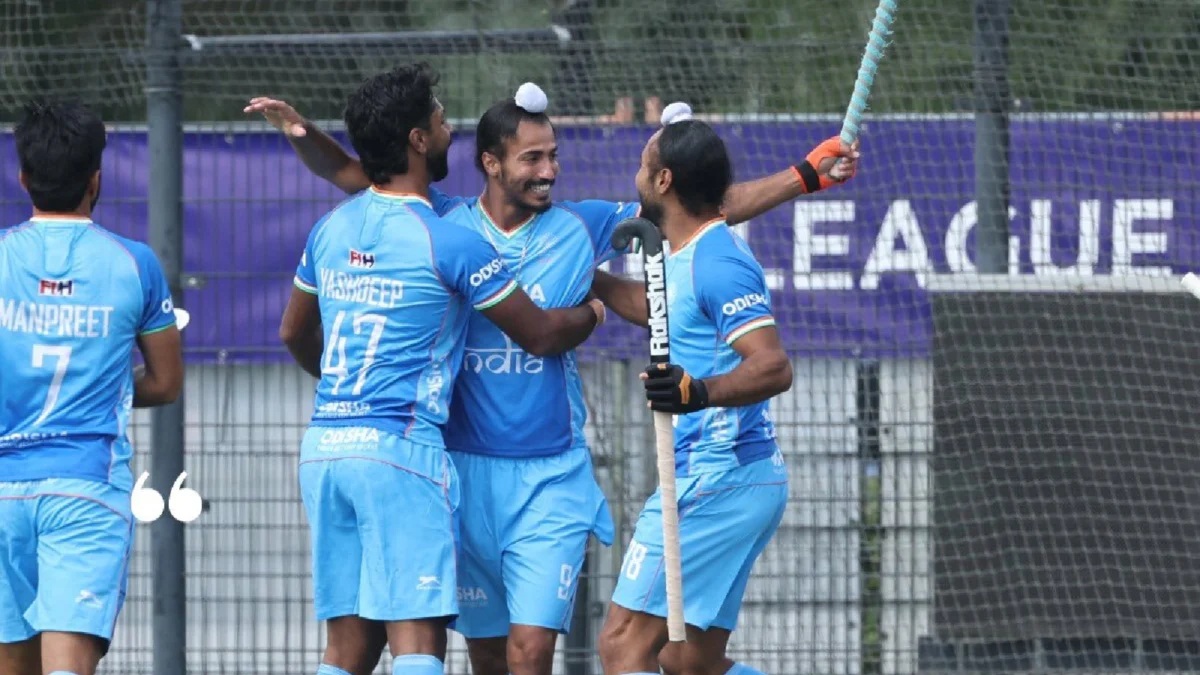
Rotterdam, Netherlands – June 14, 2026 – The Indian men’s hockey team commenced their crucial European leg of the FIH Pro League with a hard-fought 2-3 defeat against reigning Olympic champions and hosts, the Netherlands, in Rotterdam. Despite twice coming from behind with a display of remarkable resilience and skill, the young Indian squad ultimately succumbed to a late winner from the Dutch, marking a challenging start to a demanding tour. The match was particularly significant for veteran midfielder Manpreet Singh, who etched his name into the annals of Indian hockey history by equalling the legendary Dilip Tirkey’s record of 412 international caps, a testament to his enduring career and unparalleled dedication.
The encounter, played under the watchful eyes of an expectant home crowd, showcased a high-octane battle between two of the world’s premier hockey nations. India, known for their attacking flair and recent strides on the global stage, faced a formidable Dutch side that leveraged their home advantage and superior experience. The narrow margin of defeat, however, highlighted India’s growing competitiveness and their ability to push even the strongest opponents to their limits, offering a glimmer of hope despite the opening loss.
A Battle of Wits and Will: The Match Chronology
The opening fixture of the FIH Pro League’s European leg promised a spectacle, and both teams delivered a gripping contest that kept spectators on the edge of their seats. The ebb and flow of the game, marked by dramatic comebacks and decisive moments, painted a vivid picture of modern international hockey.
First Quarter: Dutch Dominance and Indian Resilience
The match kicked off with the Netherlands asserting their intent immediately, demonstrating why they are considered Olympic champions. Playing on their home turf, the Dutch squad, characterized by their fluid passing and aggressive pressing, seized control of possession from the outset. Their relentless attacking forays quickly earned them a series of penalty corners – a formidable weapon in modern hockey. Within the first three minutes, the hosts had already won four consecutive penalty corners, putting immense pressure on the Indian defence.
It was from one such opportunity that the deadlock was broken. In the 3rd minute, Miles Bukkens showcased his predatory instincts, unleashing a powerful reverse stick finish that found its way past Indian goalkeeper Suraj Karkera. The goal served as an early wake-up call for the Indians, who found themselves trailing against a high-calibre opponent.
However, India’s response was swift and emphatic, a testament to their newfound mental fortitude. They refused to be intimidated by the early setback and began to find their rhythm. Just seven minutes later, in the 10th minute, India equalized through Dilpreet Singh. The goal was a product of brilliant vision and execution, initiated by a sensational long pass from captain Harmanpreet Singh, who, from deep within his own half, threaded a precise ball through the Dutch defence. Dilpreet latched onto it, displaying excellent composure to slot it home and bring India level at 1-1. The first quarter concluded with the scores tied, setting the stage for an intriguing battle.
Second Quarter: Netherlands Regain Control
The second quarter saw the Netherlands once again attempting to stamp their authority on the game. They continued to hold a larger share of possession, probing the Indian defence with intricate passes and quick counter-attacks. Suraj Karkera, in the Indian goal, was called into action multiple times, making crucial saves and demonstrating agility to keep the Dutch attackers at bay. His performance was vital in preventing the hosts from extending their lead during this period of sustained pressure.
Despite Karkera’s heroics, the Dutch persistence eventually paid off. In the 23rd minute, Koen Bijen capitalized on a moment of indecision and a defensive lapse within the Indian circle. A ball that the Indian defence failed to clear effectively fell to Bijen, who made no mistake in putting it away, restoring the Netherlands’ lead and sending them into halftime with a 2-1 advantage. The Indians, while showing flashes of brilliance, struggled to maintain consistent attacking pressure against the disciplined Dutch defence.
Third Quarter: India’s Resurgence and a Crucial Blow
The halftime break seemed to rejuvenate the Indian squad, as they emerged with renewed vigour in the third quarter. Demonstrating a tactical shift and an increased sense of urgency, India began to control the tempo of the game, dictating play in the midfield and pushing higher up the pitch. Their proactive approach quickly earned them their first penalty corner of the match.
The subsequent set-piece routine was executed with precision and flair. In the 33rd minute, Sukhjeet Singh, showcasing his clinical finishing, converted the penalty corner with a clever variation that caught the Dutch defence off guard. The ball was injected, trapped, and then deflected past the Dutch goalkeeper, making the scoreline 2-2 and igniting hopes of an Indian upset.
However, the joy was short-lived. The Netherlands, champions for a reason, responded with remarkable swiftness and clinical efficiency. Just seven minutes later, in the 40th minute, they earned a penalty corner of their own. Executing their own variation, Tijmen Reyenga unleashed a powerful drag-flick that rocketed past the Indian goalie, once again regaining the lead for the hosts. This goal, coming late in the third quarter, proved to be the decisive moment of the match, dampening India’s momentum just as they had found their rhythm.
Fourth Quarter: Desperate Measures and Final Whistle
Trailing 2-3 heading into the final quarter, India launched a desperate offensive. They threw everything they had into finding another equalizer, pushing more players forward and taking greater risks. The intensity of their attacks increased, and they created several half-chances and entered the Dutch circle multiple times. However, the experienced Dutch defence, now with a lead to protect, held firm. They absorbed the pressure, showing tactical discipline and organized defending, denying India any clear-cut scoring opportunities.
Despite their valiant efforts and fighting spirit, India could not breach the Dutch defence for a third time. The final whistle blew, confirming a narrow 3-2 victory for the Netherlands. While the result was a loss, India’s performance, especially their ability to twice claw their way back into the game, offered significant positives for the coaching staff and fans alike.
Supporting Data: Milestones, Analysis, and Context
The opening match of the FIH Pro League European leg was more than just a scoreline; it offered a wealth of insights into the current state of both teams, highlighted individual brilliance, and underscored the broader implications for international hockey.
Manpreet Singh’s Historic Milestone:
The match was a landmark occasion for veteran midfielder Manpreet Singh, who, by stepping onto the field, earned his 412th international cap for India. This incredible achievement saw him draw level with the legendary defender and former captain, Dilip Tirkey, as the most-capped Indian male hockey player. Manpreet, an Arjuna Awardee and former captain himself, has been a pivotal figure in Indian hockey for over a decade. Known for his exceptional vision, tireless work rate, and ability to control the midfield, he has been the engine room of the Indian team, guiding them through numerous triumphs, including the historic bronze medal at the Tokyo Olympics. His longevity and consistent performance at the highest level speak volumes of his dedication, fitness, and unwavering commitment to the sport. While the result of the match was not ideal, this personal milestone serves as a poignant reminder of his immense contribution to Indian hockey, inspiring a new generation of players. Dilip Tirkey, a towering defender and revered leader, set a benchmark for commitment, and Manpreet’s ability to match that record solidifies his place among the pantheon of Indian hockey greats.
India’s Performance Analysis:
Despite the loss, India demonstrated several commendable aspects. Their resilience and fighting spirit were evident in their ability to equalize twice against the reigning Olympic champions on their home turf. This mental toughness, often a point of concern for Indian teams in the past, appears to be a growing strength under the current coaching setup. Individual brilliance shone through in Harmanpreet Singh’s sublime assist for Dilpreet’s goal and Sukhjeet Singh’s clinical finish from the penalty corner. Goalkeeper Suraj Karkera also put in a commendable shift, making several crucial saves, especially in the second quarter, to keep India in the contest.
However, areas for improvement were also apparent. The team’s defensive lapses, particularly in conceding the second goal after failing to clear the ball inside the circle, highlight the need for greater concentration and communication under pressure. The penalty corner defence, while improved, still needs refinement, as evidenced by the decisive winning goal from a Dutch variation. Consistency across all four quarters remains a challenge; while India started the third quarter strongly, they struggled to maintain the same level of intensity for the entire 60 minutes. The inability to hold onto a drawn scoreline after equalizing twice suggests a need for better game management in critical phases.
Netherlands’ Strengths and Strategy:
The Dutch side, as expected from Olympic champions, displayed a well-rounded and clinical performance. Their control of possession and ability to create multiple penalty corner opportunities early in the game showcased their attacking prowess. Their clinical finishing from set-pieces and open play, particularly Reyenga’s winning goal, underlined their efficiency. Playing at home, they also benefited from the passionate support of their fans, which often provides an added psychological edge. Their ability to respond quickly after India’s equalizers demonstrated their composure and experience in high-pressure situations.
FIH Pro League Context:
The FIH Pro League serves as a crucial platform for top national teams to test their mettle against each other in a highly competitive environment outside of major tournaments. For India, this European leg is vital for several reasons:
- Preparation for Major Tournaments: With the Olympic Games and World Cups on the horizon, the Pro League offers invaluable match practice against elite opposition, allowing the team to fine-tune strategies and test new combinations.
- Ranking Points: Performance in the Pro League directly impacts world rankings, which are crucial for seeding in major tournaments.
- Team Cohesion and Development: It provides opportunities for younger players to gain international experience and for the squad to build stronger cohesion and understanding under competitive pressure.
- Adapting to Conditions: Playing in Europe allows the team to adapt to different playing conditions, weather, and travel demands, simulating the challenges of major international events.
Historical Rivalry:
The rivalry between India and the Netherlands in hockey is steeped in history. Both nations boast rich legacies in the sport, with multiple Olympic medals and World Cup titles between them. Matches between these two powerhouses are often fiercely contested, characterized by skillful play and tactical battles. This latest encounter in Rotterdam merely added another chapter to their storied rivalry, reinforcing the competitive nature of their contests.
Official Responses and Team Sentiment (Implied)
While official statements and detailed quotes from the team management and players are typically released post-match, a professional journalistic analysis can infer the likely sentiments and key messages emerging from both camps.
From the Indian Camp:
The coaching staff, led by figures like Head Coach Craig Fulton, would undoubtedly acknowledge the team’s fighting spirit and the positive aspects of their performance, particularly their ability to recover from deficits. However, they would also emphasize the critical areas for improvement. A likely statement would revolve around: "We showed great character to come back twice against a top side like the Netherlands. This resilience is something we’ve been working on, and it’s good to see it on display. However, we also know we need to be more consistent defensively and improve our penalty corner conversion rate. These are crucial lessons that we will take forward. Manpreet’s milestone is a testament to his incredible career, and we’re proud of his achievement, even if the result wasn’t what we hoped for."
Captain Harmanpreet Singh might echo these sentiments, highlighting the learning experience: "It was a tough game, as we expected against the Olympic champions. We fought hard, but a few moments of lapse cost us. We will review the match, learn from our mistakes, and come back stronger. The focus is now entirely on our next game against Germany."
Manpreet Singh, reflecting on his historic achievement, would likely express a bittersweet feeling: "It’s an honour to equal Dilip paaji’s record, a moment I’ll cherish. But as a team, we play for the win, and it’s disappointing not to get the three points. We showed glimpses of what we can do, and we need to build on that fighting spirit."
From the Netherlands Camp:
The Dutch coaching staff and captain would naturally express satisfaction with securing a win in their opening home game against a strong opponent. Their focus would likely be on the positive start to their campaign while acknowledging India’s challenge. A hypothetical statement might be: "We are pleased with the three points. India pushed us hard, and it was a very competitive match. We showed good composure to regain the lead multiple times and close out the game. There are always areas to improve, but this is a good start to our home leg of the Pro League."
Implications: Looking Ahead
The outcome of this opening fixture carries significant implications for both teams as they navigate the demanding schedule of the FIH Pro League.
For India:
The loss, while narrow, means India starts their European leg without points. This puts added pressure on their subsequent matches. The primary implication is the need for immediate rectification of errors, particularly in defensive solidity and penalty corner efficacy. The team’s ability to compete with the world’s best is clear, but translating that competitiveness into consistent wins requires tightening up critical aspects of their game. The positive takeaway is the confirmed presence of a strong fighting spirit, which will be crucial in the remaining matches. The upcoming clash against Germany becomes even more critical, as India will be eager to secure points and build momentum.
For the Netherlands:
The victory provides a strong start to their home leg of the Pro League, reinforcing their status as a dominant force in international hockey. It boosts their confidence and adds valuable points to their league tally. The narrow margin, however, might serve as a reminder that no opponent can be underestimated, even on home turf.
Broader Picture:
This match underscored the incredibly competitive nature of international hockey, where margins are fine, and even momentary lapses can be decisive. The FIH Pro League continues to serve its purpose as a crucial testing ground, pushing teams to perform at their peak consistently. The focus for all participating nations remains on building towards future major tournaments, refining strategies, and nurturing talent.
The Road Ahead:
India will have little time to dwell on this defeat as they face another formidable opponent, Germany, in their next match. Scheduled for June 17th, this encounter will be another litmus test for the Indian squad, offering an immediate opportunity to demonstrate their capacity to learn from mistakes, adapt, and secure vital points in their quest for Pro League success. The ability to bounce back quickly will be paramount for India as they aim to make a strong statement in the European leg.
