

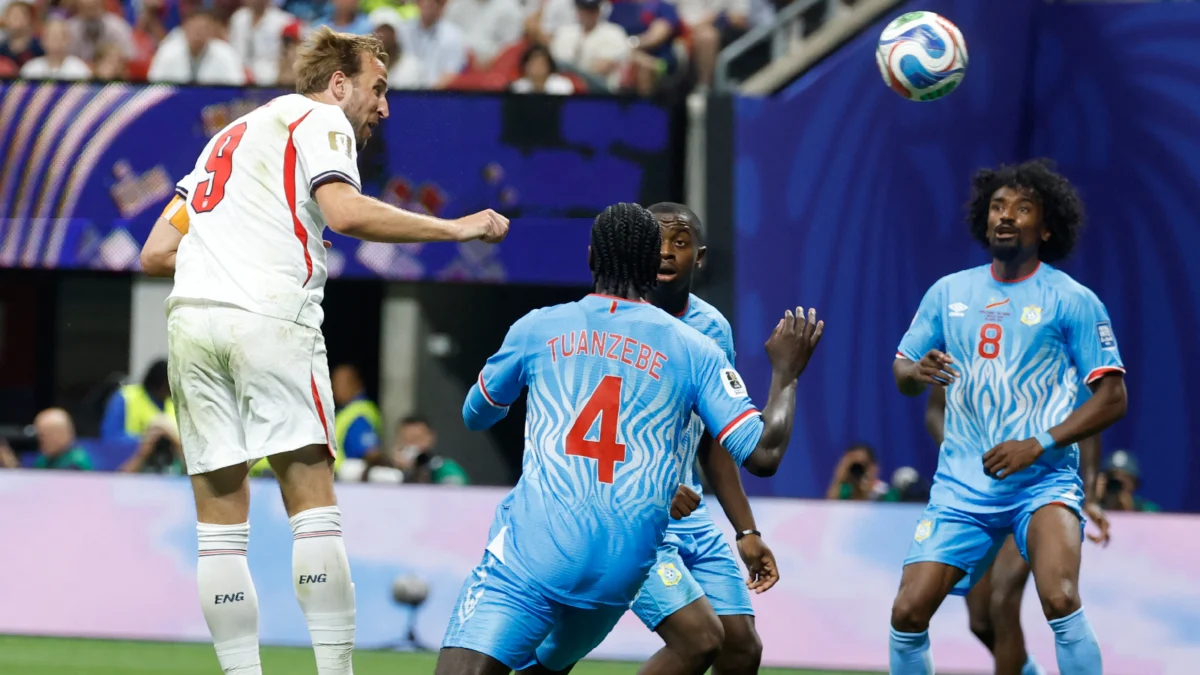
Atlanta, USA – July 1, 2026 – In a pulsating encounter that will forever be etched into the annals of World Cup history, England’s talismanic captain, Harry Kane, delivered a performance of unparalleled individual brilliance, scoring two late goals within 11 minutes to snatch victory from the jaws of a monumental upset. His extraordinary brace condemned a valiant Democratic Republic of the Congo side, who had defiantly led for 69 minutes, to heart-wrenching despair in a Round of 32 clash that captivated the globe.
The final whistle at the Mercedes-Benz Stadium in Atlanta triggered contrasting scenes of jubilation and profound heartbreak. As England’s players wheeled away in frenzied celebration, the brave men of Congo, who had pushed a footballing superpower to its absolute limit, collapsed to the turf, their dreams of a historic World Cup shock shattered in the most brutal fashion. Yet, even in defeat, their courage and tactical discipline had secured a place in the tournament’s memory, requiring the intervention of one of the world’s most lethal and mentally resilient strikers to deny them their moment in the sun.
The Crucible of Atlanta: A World Cup Thriller
The atmosphere in Atlanta was charged with the palpable tension of a World Cup knockout fixture. England, one of the perennial favourites, entered the match burdened by expectation, their squad boasting a wealth of Premier League and European talent. Across from them stood the Democratic Republic of the Congo, affectionately known as the Leopards, a team largely considered underdogs but possessing an undeniable spirit and a growing reputation for tactical shrewdness.
The stakes were immense. For England, it was a step towards ending decades of major tournament drought; for Congo, it was an opportunity to write the most incredible chapter in their footballing history, a chance to echo the feats of past African giants who had defied predictions on the grandest stage. The pre-match narrative focused on England’s attacking prowess versus Congo’s expected defensive fortitude. Few, however, could have predicted the seismic shift in the narrative that was about to unfold.
Congo’s Audacious Opening: A Nightmare Unfolds for England
The match kicked off with England attempting to assert their dominance, but their early possession was often ponderous, lacking the incisiveness required to dismantle a well-drilled Congolese defence. The Three Lions seemed preoccupied with breaking down their opponents’ expected low block, a focus that proved to be their undoing just six minutes into the game.
A collective groan swept through the English contingent in the stadium as their worst nightmare rapidly materialised. Djed Spence, a fourth-choice right-back pressed into service due to the injuries of Reece James, Tino Livramento, and Jarell Quansah, misjudged a seemingly innocuous long ball. The trajectory of the pass sailed over his head, leaving him sheepishly watching as the ball dropped into acres of space behind him.
Waiting patiently for the lapse was Brian Cipenga, unmarked and seemingly forgotten by the English backline. He took a cool, composed touch, allowing the magnitude of the unexpected gift to register. The next second, with an air of clinical precision, Cipenga unleashed a shot past a slightly bemused Jordan Pickford, whose initial position offered little protection. The net rippled, and the stadium erupted – a roar from the Congolese faithful mixed with stunned silence from the English.
The Ghosts of Tournaments Past
England’s players and supporters looked crestfallen, hands on heads, mouths agape. The spectres of past World Cup and European Championship heartbreaks, the familiar narrative of underperformance and early exits, came rushing back with a chilling urgency. It was not merely Spence’s isolated error; the entire England backline appeared disorganised, resembling a group of kids suddenly unleashed in a park rather than a cohesive unit. The dynamism and directness of Congo’s forwards had clearly surprised Gareth Southgate’s men, who seemed ill-equipped to deal with the sheer belief emanating from their opponents. This was not just a test of character and skills; it was a profound challenge to England’s belief in themselves.
A Defensive Masterclass: Mpasi’s Unyielding Wall
Buoyed by their early lead, Congo settled into a defiant, almost impenetrable defensive shape. They executed a masterclass in what could only be described as a Congolese version of Catenaccio, meticulously organised, disciplined, and relentless in their pressing. Three lines of shimmering blue shirts formed an unyielding wall, frustrating England’s increasingly desperate attempts to find an equaliser. Every pass was contested, every run tracked, and every shot attempt met with a stout block or a swift interception.
At the heart of this defensive resilience stood Lionel Mpasi, the Democratic Republic of Congo’s goalkeeper, who delivered a performance for the ages. Mpasi transformed into an impassable guardian, thwarting England with a string of reflex saves that defied belief and ignited the Congolese bench. England, turning off the hand-brake and injecting more urgency into their play, saw Declan Rice put in an inspired shift, dictating tempo and threading killer passes. One such pass found Jude Bellingham, whose powerful shot seemed destined for the net, only for Mpasi to pull out a quicksilver save, diving full stretch to his left to parry it wide.
England’s Mounting Frustration
The English onslaught continued, but Mpasi remained an insurmountable barrier. Shortly after Bellingham’s attempt, Axel Tuanzebe produced a crucial block to divert a shy shot from Harry Kane. The rebound fell invitingly into Marcus Rashford’s path, who looked certain to score, only to watch his former Manchester United teammate Aaron Wan-Bissaka clear it off the goal-line with a last-ditch, heroic intervention.
As half-time approached, England’s frustration grew. Mpasi ambushed another powerful, low header from Bellingham, springing to his left with incredible agility. Then, just before the whistle, he denied Kane himself, his sturdy legs rebounding a point-blank volley from six yards out, leaving the England captain with his head in his hands.
The second half began much as the first had ended, with England dominating possession and territory, pushing relentlessly into Congo’s half. Within seven minutes of the restart, Mpasi produced another double save, first parrying a fierce drive from outside the box, then scrambling to his feet to block the follow-up shot from a lurking Bukayo Saka. The crowd, largely English, began to murmur, their hope treading on thin ice, dripping away with every passing moment. The narrative of a historic upset was solidifying with every tick of the clock.
The Captain’s Call: Kane’s Resurgence
With just over a quarter of an hour remaining and England staring down the barrel of a humiliating exit, the stadium was muted, almost resigned. It was in this moment of profound crisis that Harry Kane, England’s captain, leader, and record goalscorer, decided to take matters into his own hands. For 75 minutes, he had toiled, often isolated, his efforts stifled by Congo’s suffocating defence and Mpasi’s heroics. But a man who had suffered heartbreaks in three major tournaments (World Cup and Euros) was not prepared for a crueller end to his own World Cup journey.
The Equaliser: A Header of Pure Will
The breakthrough arrived in the 75th minute. A cross, delivered with pinpoint accuracy from the left flank, found Kane in a crowded penalty area. Surrounded by a circle of blue shirts, he seemed to defy gravity, leaping higher than everyone else. With a neck muscle-straining effort, he met the ball with immense power and direction, heading it past the hitherto infallible Mpasi. The Congolese goalkeeper almost clawed it away, a testament to his incredible instincts, but the force and precision were irresistible. The net bulged.
The stadium erupted. A collective roar of relief, mixed with renewed hope, washed over the English fans, transforming the arena in Atlanta into a cacophony reminiscent of Wembley or Old Trafford. Kane himself screeched and gestured to the audience, imploring them to bring the roof down. Congo’s 70 minutes of pure, glorious resistance had been cruelly ended, but the match was far from over. The score was 1-1, and the momentum had irrevocably shifted.
History Denied, Legacy Forged: The Iconic Winner
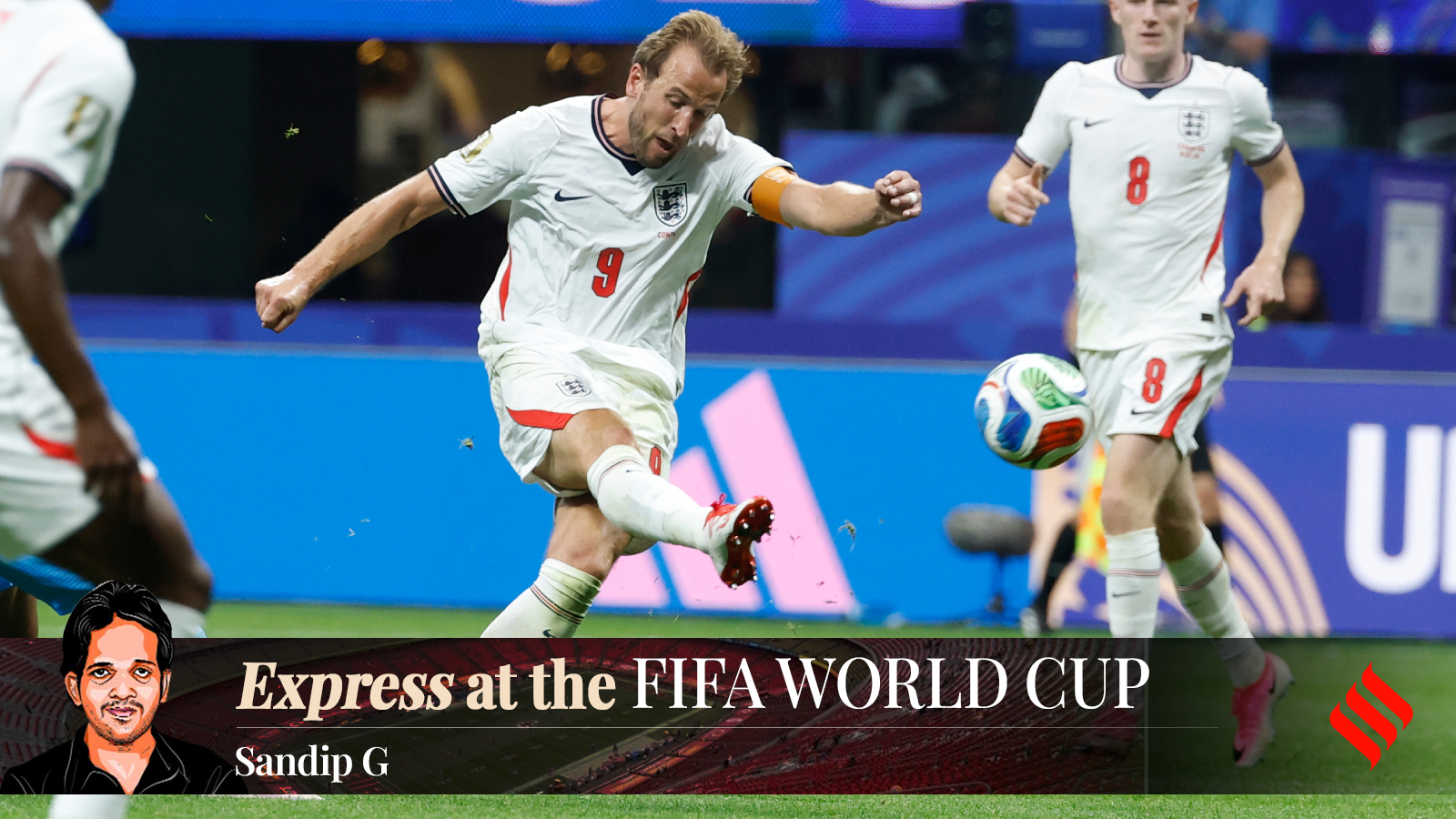
The equaliser had injected a surge of adrenaline into England, and a creeping sense of dread into Congo. The game, which had been played almost entirely in Congo’s half for the preceding 45 minutes, now felt like an inevitable tide pushing against a weakening dam. Just 11 minutes after his first, Harry Kane delivered the knockout blow, a goal that could well become an iconic moment in English football.
When he received the ball on the edge of Congo’s box, his back was initially facing the goalkeeper, men in shimmering blue converging around him. But this was Kane in a moment of pure inspiration. He escaped his markers with a deceptive turn, then paced languidly to his left, creating a sliver of space. In one fluid motion, he swivelled and unleashed a rising shot. The ball flew past Mpasi, who, despite his heroic efforts, could do nothing but watch as it nestled into the top corner.
A Cruel Twist of Fate for the Leopards
The goal was a masterpiece of individual technique, vision, and sheer will. It was a cruel, cruel end to Congo’s resistance, an almost unbearable conclusion to their valiant effort. As England wheeled away in delirious celebration, the Congolese players sank to the ground, tears streaming down their faces. Their dream, so close to becoming reality, had been snatched away by the singular brilliance of one man. The World Cup would not forget their courage, their tactical discipline, or the incredible performance of Lionel Mpasi, but it took one of the most lethal strikers in the world, a man inspired in the second half, to deny them a slice of history.
Kane’s Redemption: A Hero’s Journey
Catching his breath after the match, still unable to fully recollect the blur of events, Kane offered a succinct summary of his defining moment: “We have hero moments, for me it was today.” This understated reflection belied the monumental significance of his performance. It was a display that transcended mere technique and vision, serving as a testament to his indomitable will.
For years, Harry Kane has been lauded as one of the finest strikers of his generation, yet often mocked for the lack of major trophies in his cabinet, for the supposedly poor choices made when joining clubs, and for the collective failures of England in clutch moments. England’s captains are, historically, often associated with tragic flaws and combustibility under pressure. But in Atlanta, Kane shattered those narratives. He had long been a beloved figure, but this performance, this redemption, would elevate him to an entirely new pedestal in the hearts of English fans.
Beyond Technique: The Power of Mentality
When all his colleagues looked lost and lumbering, running on fumes, Kane alone showed up. He lifted his troops, not just with his goals, but with the sheer force of his presence and determination. His goals were not just strikes of precision; they were acts of defiance against the narrative of English capitulation, against the rising tide of despair. He could have imagined the public fury back home, the media-scavenging, the end of careers, and the disillusionment that would have followed a defeat to Congo. Instead, England would croon thankfully: “It was Kane that saved the King.” This was a moment of profound personal and national redemption.
Official Responses and Echoes of Relief
The immediate aftermath was dominated by a profound sense of relief within the England camp. While there were no immediate post-match press conferences beyond Kane’s brief quote, the sentiment was clear. Manager Gareth Southgate, often under immense scrutiny, would undoubtedly breathe a sigh of relief. His tactical adjustments, though perhaps slow to materialise, combined with the individual brilliance of his captain, had saved England from a catastrophic early exit.
The English media, which had been preparing headlines of crisis and disaster, pivoted sharply to praise. The narrative shifted from impending doom to heroic comeback, from collective failure to individual brilliance. For Congo, while official responses would be laced with disappointment, there would also be immense pride. Their coach would commend their tactical discipline, their fight, and their ability to stand toe-to-toe with one of the world’s best teams for such an extended period.
Implications: The Road Ahead for England and a Legacy for Congo
For England, this dramatic victory is a double-edged sword. While it propels them into the quarter-finals and demonstrates an invaluable resilience and fighting spirit, it also exposes significant vulnerabilities. The defensive lapses that led to Congo’s early goal, the disorganisation in the backline, and the struggle to break down a well-organised opponent for long periods will be serious concerns for Southgate. The team cannot always rely on the individual heroics of one man. Lessons will need to be learned quickly if they are to progress deeper into the tournament against stronger opposition. However, the psychological boost of such a comeback, the belief that they can overcome adversity, could prove to be an invaluable asset.
For the Democratic Republic of the Congo, the defeat, though painful, marks a significant moment in their footballing journey. They arrived at the World Cup as underdogs but depart having earned the respect and admiration of fans worldwide. Their courage, their tactical intelligence, and the standout performances of players like Lionel Mpasi and Brian Cipenga will have put Congolese football firmly on the global map. This performance is a foundation upon which future success can be built, inspiring a new generation of footballers in the nation. They may have been denied a slice of history, but they forged a legacy of bravery and defiance that the World Cup, and indeed football, will not soon forget.
The Atlanta thriller will be remembered as a testament to the unpredictable drama of the World Cup, a narrative woven with the threads of audacious underdog spirit and the undeniable brilliance of a global superstar. Harry Kane’s heroics ensured England’s survival, but Congo’s courage ensured the match would be cherished as one of the tournament’s most memorable encounters.
