

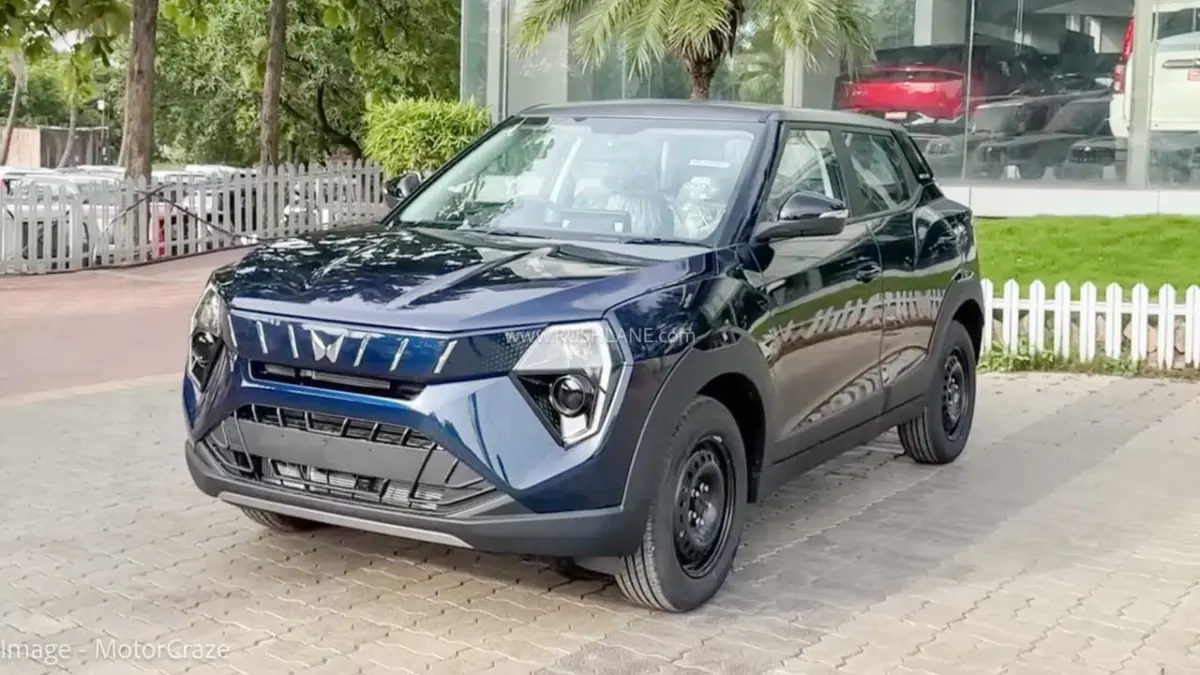
Introduction: Filling the Final Void in Mahindra’s Portfolio
Mahindra & Mahindra, a titan of the Indian automotive landscape, is currently navigating a period of unprecedented expansion. From the rugged terrains dominated by the Thar OG and Scorpio N to the futuristic, high-tech corridors of the electric vehicle market with the recently unveiled BE 6 Sporteq, the brand has been meticulously checking every box in the consumer preference list. However, one significant gap has remained in their passenger vehicle (PV) lineup: the absence of a factory-fitted Compressed Natural Gas (CNG) offering.
That void is scheduled to be filled on October 15th, 2024, with the official launch of the Mahindra XUV3XO CNG. This move marks a pivotal moment for the manufacturer, as it transitions from a diesel-heavy legacy toward a "quad-fuel" strategy, mirroring the versatility of its primary rival, the Tata Nexon. As the Indian market increasingly leans toward eco-friendly yet cost-effective mobility, the XUV3XO CNG is not just a new variant—it is a strategic necessity.
Main Facts: The Technical and Market Positioning of the XUV3XO CNG
The Mahindra XUV3XO (formerly the XUV300) underwent a massive rebranding and structural update earlier this year, positioning itself as a premium, feature-rich sub-4-meter SUV. The upcoming CNG iteration is expected to leverage the existing 1.2-liter MPFI (Multi-Point Fuel Injection) turbocharged engine. This is a critical distinction, as most CNG vehicles in India utilize naturally aspirated engines. By opting for a turbo-CNG setup, Mahindra aims to provide the fuel economy of gas without sacrificing the "zip" and torque associated with its brand identity.
Key Specifications and Expectations:
- Engine: 1.2L Turbocharged MPFI Petrol.
- Power Output: While the petrol version produces approximately 110 bhp and 200 Nm of torque, the CNG variant will likely see a 10-15% reduction in output, settling around 95-100 bhp.
- Transmission: A 5-speed manual gearbox is certain; however, industry rumors suggest Mahindra might explore an AMT or even a specialized automatic pairing to rival the Nexon i-CNG’s AMT offerings.
- Target Competitors: Tata Nexon i-CNG and Maruti Suzuki Brezza S-CNG.
- Launch Date: October 15, 2024.
The XUV3XO CNG will likely be offered in mid-to-high spec trims (potentially the MX3, AX5, and AX5L), ensuring that customers do not have to choose between "green" fuel and "premium" features like the panoramic sunroof, Level 2 ADAS, and dual-zone climate control.
Chronology: Mahindra’s Evolving Relationship with Alternative Fuels
To understand the significance of the XUV3XO CNG, one must look at Mahindra’s historical trajectory regarding alternative fuels.
- The Early Experiment (2017-2019): Mahindra’s first real foray into the CNG PV space was the KUV100 Trip. However, this was largely targeted at the fleet and taxi segment. The product saw limited success in the private buyer market, leading Mahindra to focus more on its mHawk diesel engines, which were the gold standard for efficiency and power at the time.
- The Post-BS6 Pivot (2020-2022): With the implementation of BS6 emission norms, many manufacturers (like Maruti Suzuki) abandoned diesel. Mahindra, however, doubled down on diesel, refining their engines to meet strict standards while others exited the space. During this period, CNG was viewed as a "budget" fuel, and Mahindra preferred to maintain its premium "SUV Specialist" image.
- The Rise of the Quad-Fuel Segment (2023-Present): The market landscape shifted when Tata Motors introduced the "Twin Cylinder" technology, proving that CNG cars could have usable boot space. Simultaneously, the price gap between diesel and petrol narrowed, and CNG infrastructure expanded rapidly across India.
- The XUV3XO Rebirth (May 2024): Mahindra launched the XUV3XO, a heavily revised version of the XUV300, featuring a new design language and segment-first features. The platform was designed to accommodate various powertrains, setting the stage for the EV (XUV400/3XO EV) and now the CNG variant.
- October 15, 2024: The scheduled launch of the XUV3XO CNG, marking Mahindra’s official return to the alternative fuel PV market.
Supporting Data: The Competitive Landscape
The sub-4-meter SUV segment is the most contested category in India. The introduction of a CNG variant is a direct response to the sales volumes currently enjoyed by Maruti Suzuki and Tata Motors.
Price Comparison (Estimated Ex-Showroom):
- Tata Nexon i-CNG: Rs 8.35 lakh – Rs 14.59 lakh.
- Maruti Suzuki Brezza S-CNG: Rs 9.44 lakh – Rs 12.10 lakh.
- Mahindra XUV3XO CNG (Expected): Rs 9.10 lakh – Rs 13.50 lakh.
The Power Struggle:
One of the most compelling data points is the performance delta. The Maruti Brezza S-CNG uses a 1.5L naturally aspirated engine producing roughly 87 bhp in CNG mode. The Tata Nexon i-CNG uses a 1.2L Turbo engine producing 100 bhp. Mahindra’s 1.2L Turbo engine is known for having the highest torque in its class (petrol); if Mahindra can tune the CNG variant to maintain at least 170 Nm of torque, it will become the most powerful and driveable CNG SUV in its segment.
The Boot Space Challenge:
The biggest hurdle for the XUV3XO is its luggage capacity. The standard XUV3XO offers approximately 295 liters of boot space—the smallest in its class. In contrast, the Nexon i-CNG uses a dual-cylinder setup tucked under the floor to maximize space, while the Brezza uses a single large tank that consumes nearly the entire trunk. Mahindra faces a choice:
- Option A: Adopt a single tank, effectively eliminating the boot.
- Option B: Invest in a dual-cylinder layout to remain competitive with Tata.
- Option C: Position the tank under the body, though this raises concerns regarding ground clearance and safety.
Official Context and Engineering Philosophy
While Mahindra has not released a formal "Official Statement" regarding the exact specifications, internal sources and recent investor meets highlight the company’s "Freedom of Choice" philosophy. Mahindra’s leadership has frequently stated that they want to provide the "Power of Choice" to the Indian consumer—whether they want the torque of a Diesel, the smoothness of a Petrol, the sustainability of an EV, or the economy of a CNG.

Engineering-wise, the XUV3XO CNG is expected to feature a "Direct Start in CNG" mode, a feature pioneered by Tata that allows the car to ignite using gas rather than requiring a petrol start first. Furthermore, Mahindra is expected to focus heavily on safety. Given that the XUV3XO platform is based on the SsangYong Tivoli (which achieved high safety ratings), the integration of the CNG kit will involve reinforced rear structures to ensure that the added weight and the pressurized tank do not compromise the vehicle’s 5-star safety potential.
Implications: What This Means for the Consumer and the Industry
The launch of the Mahindra XUV3XO CNG has several far-reaching implications:
1. The End of the "Diesel Only" Reputation
For decades, Mahindra was the "Diesel King." By launching a competitive CNG SUV, they are successfully rebranding as a modern, multi-energy manufacturer. This allows them to capture the urban commuter market—buyers who want an SUV for the "status" but need the low running costs of a hatchback for daily city crawls.
2. Pressure on Maruti and Tata
Until now, the Brezza and Nexon have split the CNG SUV market. The XUV3XO brings something neither of them fully masters: a combination of high-end luxury features (like the Level 2 ADAS and a massive sunroof) paired with a turbocharged CNG engine. This may force Maruti to update the Brezza with more premium features and Tata to further refine the Nexon’s build quality.
3. Impact on the Retrofitment Market
The mention of Renault and Nissan offering CNG retrofitment for the Kiger and Magnite highlights a growing trend. However, factory-fitted kits like the one in the XUV3XO offer better insurance terms, integrated warranties, and superior safety tuning. Mahindra’s entry likely signals the beginning of the end for third-party CNG kits in the premium sub-compact segment.
4. Environmental and Regulatory Compliance
With Corporate Average Fuel Efficiency (CAFE) norms becoming stricter in India, Mahindra needs high-mileage, low-emission vehicles to offset the carbon footprint of their larger SUVs like the Scorpio and XUV700. The XUV3XO CNG will be a vital tool in balancing their fleet emissions, allowing them to continue selling their larger "gas guzzlers" without facing heavy regulatory penalties.
5. Resale Value and Total Cost of Ownership (TCO)
CNG vehicles typically command a higher resale value in the Indian used car market compared to high-mileage petrol cars. For the consumer, the XUV3XO CNG represents a "hedge" against fluctuating fuel prices. With petrol hovering near Rs 100/liter in many states, a CNG variant that offers 25-28 km/kg will drastically reduce the TCO for owners driving more than 1,500 km per month.
Conclusion: A New Benchmark in the Making?
The Mahindra XUV3XO CNG is more than just another variant; it is a calculated strike at the heart of the Indian automotive market’s most profitable segment. If Mahindra manages to solve the boot space puzzle—likely through a dual-cylinder arrangement—and prices it within a Rs 90,000 premium over the petrol variants, they could see a significant surge in bookings.
On October 15th, the industry will not just be looking at a price tag; they will be looking to see if Mahindra has successfully engineered a vehicle that offers the "Thrills" of a Mahindra with the "Bills" of a commuter. For the Indian car buyer, the choice in the sub-4m SUV segment is about to get a lot more complicated—and a lot more interesting.
