

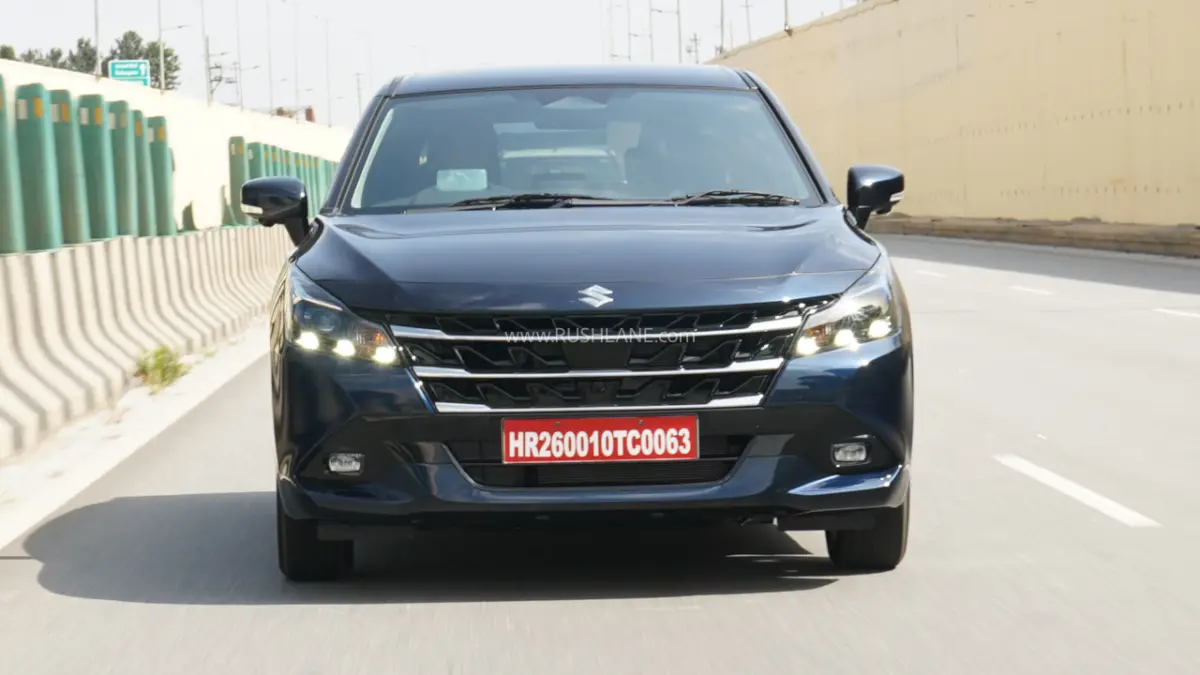
The Indian automotive landscape witnessed a significant surge in momentum in September 2026, driven by a combination of festive season optimism, high-profile product refreshes, and a stabilizing supply chain. Leading the charge was the recently facelifted Maruti Suzuki Baleno, which reclaimed its throne as India’s best-selling vehicle with a dominant performance. The top 10 selling cars in the country collectively accounted for nearly two lakh units, signaling a robust recovery for the passenger vehicle (PV) segment.
In total, the top 10 models registered sales of 1,91,332 units, marking a 15.45% year-on-year (YoY) growth compared to the 1,65,725 units sold in September 2025. This volume increase of over 25,000 units highlights a maturing market where consumers are increasingly gravitating toward premium features and trusted nameplates.
Main Facts: Maruti Suzuki’s Dominance and the SUV Shuffle
The September 2026 sales data reaffirms Maruti Suzuki’s iron grip on the Indian market, with the manufacturer securing six out of the top ten positions. However, the narrative is not just about volume; it is about the strategic success of specific models.
- The Baleno Effect: The Maruti Suzuki Baleno was the undisputed star of the month, recording 25,392 units. This represents a staggering 92.76% YoY growth. The facelifted version has clearly resonated with the urban youth and family buyers alike, accounting for 13.27% of the total sales of the top 10 list.
- The Tata Duopoly: Tata Motors continues to exert immense pressure on the mid-range segment. The Nexon and the Punch secured the second and third spots, respectively. Both models crossed the 20,000-unit milestone, with only 123 units separating them. Notably, these figures include their highly successful Electric Vehicle (EV) counterparts.
- The Rise of the Crossover: The Maruti Fronx has solidified its position as a major volume driver, finishing fourth with 19,282 units. Its 40.06% YoY growth suggests that the "SUV-styled hatchback" segment is one of the fastest-growing niches in the country.
- The SUV Stalwarts: Despite a slight YoY dip, the Hyundai Creta and Mahindra Scorpio remain the preferred choices for those seeking larger footprints. The Scorpio, combining the Classic and N variants, continues to be a cash cow for Mahindra, even as it faced a 5.76% YoY decline.
Chronology: From August Lull to September Surge
To understand the September 2026 performance, one must look at the sequential growth from August 2026. The market saw a month-on-month (MoM) increase of 4.53%, adding 8,295 units to the tally.
In August, many buyers remained on the sidelines, anticipating the launch of the Baleno facelift and festive discounts. As dealerships began fulfilling bookings for the new Baleno in September, the model saw a massive MoM jump of 61.26%, growing from 15,746 units in August to 25,392 units. This single-model surge was the primary engine behind the entire industry’s MoM growth; in fact, the Baleno’s volume gain of 9,646 units actually offset declines seen in five other top-10 models.
The middle of the month saw a flurry of activity as Navratri preparations began. Tata Motors and Hyundai ramped up dispatches of the Nexon and Creta to ensure stock availability for the high-demand period. However, the Swift and Ertiga saw MoM declines of 12.27% and 8.67% respectively, likely due to internal production realignments at Maruti Suzuki to prioritize the high-demand Baleno and Fronx.

Supporting Data: A Detailed Breakdown of the Top 10
The performance of the top 10 models reveals a bifurcated market: those riding the wave of newness and those feeling the heat of competition.
The High Performers (YoY Growth)
- Maruti Baleno: 25,392 units (Sept ’26) vs. 13,173 (Sept ’25). Growth: 92.76%.
- Maruti Fronx: 19,282 units (Sept ’26) vs. 13,767 (Sept ’25). Growth: 40.06%.
- Maruti Ertiga: 16,911 units (Sept ’26) vs. 12,115 (Sept ’25). Growth: 39.59%.
- Tata Punch: 20,333 units (Sept ’26) vs. 15,891 (Sept ’25). Growth: 27.95%.
- Maruti WagonR: 18,835 units (Sept ’26) vs. 15,388 (Sept ’25). Growth: 22.40%.
The Models Under Pressure (YoY Decline)
- Maruti Dzire: 17,754 units (Sept ’26) vs. 20,038 (Sept ’25). Decline: 11.40%. This represents the sharpest decline in the list, suggesting a cooling interest in the sub-compact sedan segment in favor of micro-SUVs like the Punch and Fronx.
- Tata Nexon: 20,456 units (Sept ’26) vs. 22,573 (Sept ’25). Decline: 9.38%. Despite the drop, it remains the best-selling SUV in the country.
- Hyundai Creta: 17,657 units (Sept ’26) vs. 18,860 (Sept ’25). Decline: 6.38%.
- Mahindra Scorpio: 17,313 units (Sept ’26) vs. 18,369 (Sept ’25). Decline: 5.76%.
Monthly Volatility (MoM)
While the YoY figures provide a long-term view, the MoM data highlights immediate consumer sentiment. The Maruti Swift saw the most significant monthly contraction, dropping from 19,832 units in August to 17,399 in September. This 12.27% slide suggests that some potential Swift buyers may have "upgraded" their choice to the Baleno facelift once it became available in showrooms.
Official Responses and Industry Sentiment
Industry analysts and manufacturer representatives have weighed in on these figures, pointing toward a shift in the "value-for-money" equation.
A senior spokesperson from Maruti Suzuki commented on the Baleno’s success: "The response to the 2026 Baleno Facelift has exceeded our internal projections. By integrating advanced tech suites and a more aggressive design language, we have managed to retain our core hatchback audience while attracting buyers who were previously considering entry-level SUVs. Our production facilities are currently operating at near-peak capacity to minimize the waiting period for the festive season."
Tata Motors’ marketing division highlighted the resilience of their "New Forever" range: "Both the Nexon and Punch continue to dominate their respective sub-segments. The inclusion of EV variants in these numbers shows that the Indian consumer is no longer hesitant about electric mobility, provided it comes in a trusted, rugged package. We expect these numbers to climb further as we head into the peak of the festive quarter."
Automotive analyst Rajat Gupta of AutoInsight India noted, "The September data is a clear indicator of ‘Premiumization.’ We see models like the Baleno, Fronx, and Creta performing well, while traditional entry-level favorites or older sedan designs like the Dzire are seeing a pullback. Consumers are willing to pay more for safety features, sunroofs, and connected car tech, which are now standard expectations in the top 10 list."

Implications: What This Means for Q4 2026
The September sales figures set a high bar for the remainder of the 2026 calendar year. Several key implications emerge from this data:
1. The "SUV-ification" of Hatchbacks
The success of the Baleno and Fronx suggests that the traditional hatchback is not dying; it is evolving. By adding "muscular" styling, higher ground clearance, and premium interiors, Maruti has successfully shielded its hatchback kingdom from the onslaught of small SUVs.
2. The EV Integration
With Tata’s numbers heavily bolstered by the Nexon EV and Punch EV, other manufacturers will likely accelerate their electrification plans. The fact that a "top 10" list now inherently includes thousands of electric units proves that EVs have moved from the periphery to the mainstream.
3. The Sedan Struggle
The double-digit decline of the Maruti Dzire is an omen for the sub-four-meter sedan segment. Unless these models receive radical redesigns or hybrid powertrains, they risk being cannibalized by crossovers that offer similar pricing with more perceived "status" and utility.
4. Festive Inventory Management
With a 15.45% YoY growth in the top 10 alone, the industry is heading into October and November with high inventory levels. The challenge for dealers will be managing the mismatch between high-demand models (like the Baleno) and slower-moving stock. We can expect aggressive discounting on models that saw declines this month, such as the Swift and Dzire, to clear space for 2027 model-year arrivals.
In conclusion, September 2026 has been a landmark month for the Indian auto industry. While Maruti Suzuki remains the volume king, the battle for the "Number Two" spot between Tata and Hyundai is tighter than ever. As the Baleno leads the charge, the focus now shifts to whether this momentum can be sustained through the year-end, or if inflationary pressures will finally begin to dampen the spirits of the Indian car buyer.
